
Tag: History
-

Echoes of Empire: Unresolved Colonial Trauma and Its Role in Shaping Philippine Political Dynamics and Social Fragmentation
A Multidisciplinary Path to Healing the Filipino Psyche through Trauma-Informed Care and Cultural Change
Prepared by: Gerald A. Daquila, PhD. Candidate
10–16 minutesABSTRACT
The Philippines, molded by over 350 years of Spanish and American colonial rule, bears the enduring marks of collective trauma, manifesting in political corruption, social fragmentation, and a fractured national psyche. This dissertation investigates the hypothesis that unresolved colonial trauma significantly contributes to the nation’s current challenges, particularly politicians’ self-enrichment at the expense of the common good, societal fragmentation, and deficits in systems and critical thinking.
It explores whether cultural attitudes like bahala na (fatalistic resilience) stem from this trauma. Drawing from psychology, sociology, anthropology, history, and political science, this study evaluates supporting and challenging evidence, assesses the potential for healing the Filipino psyche, and proposes a culturally responsive trauma-informed care (TIC) framework integrated with a cultural change model to address societal artifacts.
By reclaiming pre-colonial strengths—such as kapwa (shared identity), communal values, and indigenous wisdom—this work outlines pathways to foster unity, critical thinking, and sustainable change. Written for a broad audience, it balances academic rigor with accessible storytelling, offering practical steps to initiate and sustain healing through community-driven efforts and policy reforms.
Table of Contents
- Introduction: A Nation Carrying History’s Weight
- Conceptual Framework: Collective Trauma and the Filipino Psyche
- Defining Collective Trauma
- Colonialism’s Enduring Legacy in the Philippines
- Manifestations of Trauma in Philippine Society
- Political Dynamics: Corruption and Self-Enrichment
- Societal Fragmentation and Lack of Systems Thinking
- The Bahala Na Attitude: A Trauma Artifact?
- Evidence Supporting the Trauma Hypothesis
- Psychological Roots: Colonial Mentality and Internalized Oppression
- Historical Foundations of Political and Economic Dispossession
- Evidence Challenging the Hypothesis
- Filipino Resilience and Agency
- Alternative Explanations: Post-Colonial and Global Factors
- Healing the Filipino Psyche: Is Recovery Possible?
- Reclaiming Pre-Colonial Strengths
- Challenges to Collective Healing
- Trauma-Informed Care for a Collective Psyche
- Adapting TIC Principles for the Philippines
- Culturally Responsive Interventions
- A Cultural Change Model to Sustain Healing
- Initiating Change: Where to Begin
- Sustaining Gains through Systems and Community
- Multidisciplinary Lens: Weaving Insights Across Disciplines
- Conclusion: Envisioning a Unified Future
- Glossary
- References

Glyph of the Living Archive
You are not just reading the Records — you are becoming them.
1. Introduction: A Nation Carrying History’s Weight
Imagine a nation of over 110 million people across 7,641 islands, each island a thread in a vibrant tapestry of cultures, languages, and histories. The Philippines pulses with resilience and creativity, yet it grapples with deep challenges: rampant political corruption, stark economic inequality, environmental crises, and a fragmented sense of nationhood. Politicians often enrich themselves at the expense of the common Filipino, perpetuating a cycle of distrust and division.
Many trace these issues to a colonial past spanning over 350 years—Spanish rule (1565–1898), American governance (1898–1946), and a brief Japanese occupation during World War II. Could these struggles stem from unresolved collective trauma, a wound etched into the Filipino psyche, manifesting in societal fragmentation, a lack of systems and critical thinking, and even the cultural attitude of bahala na?
This dissertation examines whether the Philippines’ current state—particularly its political dynamics and social fragmentation—can be attributed to colonial trauma. It explores how trauma manifests in politicians’ self-interest, societal disconnection, and attitudes like bahala na, and evaluates the potential for healing. Grounded in multidisciplinary research from psychology, sociology, anthropology, history, and political science, this study proposes a trauma-informed care (TIC) framework integrated with a cultural change model to address these artifacts.
By anchoring interventions in pre-colonial strengths like kapwa (shared identity) and communal wisdom, it outlines practical steps to initiate and sustain healing. Written for a wide audience, this work weaves scholarly rigor with empathetic storytelling to inform, inspire, and chart a path toward unity.
2. Conceptual Framework: Collective Trauma and the Filipino Psyche
Defining Collective Trauma
Collective trauma occurs when a group experiences large-scale, shared suffering—such as oppression, violence, or cultural erasure—that disrupts social cohesion, identity, and values across generations (Alexander, 2012). Unlike individual trauma, it reshapes collective narratives and behaviors, often embedding itself in cultural attitudes and institutions. In the Philippines, colonialism inflicted systemic trauma through cultural suppression, economic exploitation, and social fragmentation (David & Okazaki, 2006).
Colonialism’s Enduring Legacy in the Philippines
Spanish colonization imposed forced Christianization, land dispossession, and a feudal system, dismantling indigenous governance and spiritual practices (Agoncillo, 1990). American rule introduced cultural assimilation and economic dependency, fostering a colonial mentality that prioritized Western ideals (Constantino, 1978). These disruptions fractured communal bonds, suppressed indigenous knowledge, and laid the foundation for modern political and social challenges (Enriquez, 1992).
3. Manifestations of Trauma in Philippine Society
Political Dynamics: Corruption and Self-Enrichment
Philippine politics is marred by politicians’ penchant for self-enrichment, often at the expense of the common good. Political dynasties, controlling over 70% of congressional seats, perpetuate patronage systems rooted in colonial hierarchies (Teehankee, 2013). Corruption scandals, such as the 2013 pork barrel scam, highlight how public funds are siphoned off, deepening public distrust and economic inequality (Hutchcroft, 1991). This behavior reflects a fragmented psyche, prioritizing individual gain over collective welfare, a legacy of colonial divide-and-rule tactics.
Societal Fragmentation and Lack of Systems Thinking
The Philippines exhibits societal fragmentation, with regional, ethnic, and class divides hindering national unity. A lack of systems thinking—evident in disjointed urban planning, inadequate disaster preparedness, and reactive governance—exacerbates challenges like poverty and environmental degradation (Bankoff, 2003). Critical thinking is often stifled by rote education systems inherited from colonial models, limiting collective problem-solving (Bautista, 2000). These issues suggest a psyche shaped by trauma, struggling to envision interconnected solutions.
The Bahala Na Attitude: A Trauma Artifact?
The Filipino phrase bahala na (roughly “leave it to fate”) reflects a mix of resilience and fatalism. While often viewed as adaptive, enabling Filipinos to cope with uncertainty, it can also manifest as passivity or avoidance of systemic change (Pe-Pua & Protacio-Marcelino, 2000). Scholars suggest bahala na may trace back to colonial trauma, where powerlessness under oppressive rule fostered reliance on fate over agency (Lagmay, 1977). This attitude may reinforce fragmentation by discouraging collective action against corruption or inequality.
4. Evidence Supporting the Trauma Hypothesis
Psychological Roots: Colonial Mentality and Internalized Oppression
Colonial mentality, the internalized preference for Western culture over Filipino identity, remains prevalent. Studies show Filipinos often favor foreign products, languages, and appearances, reflecting self-denigration rooted in colonial education systems (David & Okazaki, 2006). This mindset undermines national pride and fuels political apathy, enabling corrupt leaders to thrive (Tuason et al., 2007).
Historical Foundations of Political and Economic Dispossession
Colonial policies created enduring inequalities. The Spanish encomienda system concentrated wealth among elites, a structure mirrored in modern political dynasties (Anderson, 1988). American economic policies tied the Philippines to global markets, fostering dependency and poverty (Corpuz, 1989). These historical roots sustain a fragmented society where self-interest overshadows collective goals.
5. Evidence Challenging the Hypothesis
Filipino Resilience and Agency
Despite trauma, Filipinos demonstrate resilience. The concept of kapwa fosters community support, seen in mutual aid during crises (Enriquez, 1992). Movements like the 1986 People Power Revolution highlight agency, challenging the notion of a permanently damaged psyche (Ileto, 1998).
Alternative Explanations: Post-Colonial and Global Factors
Some argue that current challenges stem more from post-colonial mismanagement and global pressures than colonial trauma. Neoliberal policies and globalization have widened inequality, independent of historical wounds (Bello, 2005). Weak institutions and elite capture, while rooted in colonialism, are perpetuated by modern governance failures (Quimpo, 2005).
6. Healing the Filipino Psyche: Is Recovery Possible?
Reclaiming Pre-Colonial Strengths
Pre-colonial Filipino society valued kapwa, communal responsibility, and harmony with nature (Enriquez, 1992). Indigenous practices, such as babaylan (spiritual leadership) and consensus-based governance, offer models for unity and critical thinking (Salazar, 1999). Reviving these strengths can counter fragmentation and colonial mentality.
Challenges to Collective Healing
Healing faces obstacles: entrenched political dynasties resist change, economic pressures limit resources, and cultural globalization dilutes indigenous identity (Teehankee, 2013). Overcoming these requires sustained, grassroots efforts and systemic reforms.

Glyph of Echoes of Empire
From fractured echoes, truth and healing emerge.
7. Trauma-Informed Care for a Collective Psyche
Adapting TIC Principles for the Philippines
Trauma-informed care emphasizes safety, trust, empowerment, collaboration, and cultural sensitivity (SAMHSA, 2014). For a collective psyche, TIC can be adapted through community dialogues, public education, and policy reforms that address trauma’s societal impacts. For example, programs fostering kapwa can rebuild trust eroded by corruption (Mendoza, 2018).
Culturally Responsive Interventions
Interventions must align with Filipino values. Community-based initiatives, like bayanihan (collective effort), can promote healing through shared projects, such as reforestation or cooperative enterprises (Pe-Pua & Protacio-Marcelino, 2000). Integrating indigenous knowledge into education can counter colonial mentality and foster critical thinking.
8. A Cultural Change Model to Sustain Healing
Initiating Change: Where to Begin
Healing begins with grassroots efforts:
- Community Dialogues: Facilitate discussions on colonial trauma and its manifestations, using kapwa to build empathy and unity (Mendoza, 2018).
- Education Reform: Integrate decolonized curricula emphasizing Filipino history, critical thinking, and systems thinking (Bautista, 2000).
- Policy Advocacy: Push for anti-corruption measures and equitable resource distribution to address systemic inequalities (Hutchcroft, 1991).
Sustaining Gains through Systems and Community
A cultural change model, such as Kotter’s 8-Step Process (Kotter, 1996), can guide transformation:
- Create Urgency: Highlight the cost of corruption and fragmentation to galvanize action.
- Build a Coalition: Unite community leaders, educators, and activists.
- Develop a Vision: Promote a unified, decolonized Filipino identity.
- Communicate the Vision: Use media and arts to inspire change.
- Empower Action: Support community initiatives and policy reforms.
- Generate Short-Term Wins: Celebrate local successes, like transparent governance in select municipalities.
- Consolidate Gains: Institutionalize reforms through laws and education.
- Anchor Change: Embed kapwa and critical thinking in cultural norms.
Sustainability requires ongoing community engagement, monitoring of reforms, and global partnerships to address economic pressures (Bello, 2005).
9. Multidisciplinary Lens: Weaving Insights Across Disciplines
Psychology illuminates colonial mentality and bahala na as trauma responses (David & Okazaki, 2006). Sociology reveals how fragmentation perpetuates inequality (Hutchcroft, 1991). Anthropology highlights pre-colonial strengths for healing (Salazar, 1999). History contextualizes political dynamics (Agoncillo, 1990), while political science offers strategies for systemic reform (Teehankee, 2013). This integrated lens ensures a holistic approach to understanding and addressing trauma’s artifacts.
10. Conclusion: Envisioning a Unified Future
The Philippines’ challenges—political corruption, societal fragmentation, and cultural attitudes like bahala na—reflect the enduring wounds of colonial trauma. Yet, the Filipino psyche, resilient and rooted in kapwa, holds immense potential for healing. By adapting trauma-informed care and leveraging a cultural change model, the nation can reclaim its pre-colonial strengths, foster critical and systems thinking, and build a unified future.
This journey begins with communities, educators, and leaders working together to transform trauma into triumph, ensuring a Philippines where the common good prevails.
Crosslinks
- Transforming Philippine Society: A Multidisciplinary Vision for Holistic Renewal — Converts historical reckoning into policy, culture, and institution-building you can verify on the ground.
- Breaking the Cycle of Scarcity and Power in the Philippines — Dismantles patronage/vote-buying loops with transparency rails, citizen audit rites, and dignity floors.
- Rewriting the Past in a Post-Scarcity World — Truth-telling → amends → reparative structures; keeps memory compassionate and actionable.
- The Illusion of Scarcity: Unraveling the Mindset that Shapes Our World — Retires the “kulang” script that fuels extraction and factionalism; restores sufficiency and shared flow.
- The Future of Power: From Domination to Stewardship — Puts authority on trusteeship footing: charters, COI walls, public ledgers, and audit cadence.
- Codex of the Living Hubs: From Households to National Nodes — Barangays as healing nodes: mutual-aid rings, subsidiarity, and local councils that re-knit trust.
- Pieces of the Self: Soul Fragmentation Across Psyche, Society, and Spirit — Maps fractured identities (colonial/modern/indigenous) and offers clean retrieval and reintegration.
11. Glossary
- Bahala Na: A Filipino attitude combining resilience and fatalism, often translated as “leave it to fate.”
- Bayanihan: A traditional Filipino practice of communal cooperation and mutual aid.
- Colonial Mentality: Internalized preference for Western culture and devaluation of Filipino identity.
- Encomienda: Spanish colonial system granting land and labor to elites, fostering inequality.
- Kapwa: Filipino concept of shared identity and interconnectedness.
12. References
Agoncillo, T. A. (1990). History of the Filipino people (8th ed.). Garotech Publishing.
Alexander, J. C. (2012). Trauma: A social theory. Polity Press.
Anderson, B. (1988). Cacique democracy in the Philippines: Origins and dreams. New Left Review, 169, 3–31.
Bankoff, G. (2003). Cultures of disaster: Society and natural hazard in the Philippines. Routledge.
Bautista, M. L. S. (2000). The Philippine educational system: A historical perspective. In Education in the Philippines (pp. 15–30). University of the Philippines Press.
Bello, W. (2005). The anti-development state: The political economy of permanent crisis in the Philippines. Zed Books.
Constantino, R. (1978). Neocolonial identity and counter-consciousness: Essays on cultural decolonization. M. E. Sharpe.
Corpuz, O. D. (1989). The roots of the Filipino nation. Aklahi Foundation.
David, E. J. R., & Okazaki, S. (2006). Colonial mentality: A review and conceptual framework for Filipino Americans. Cultural Diversity and Ethnic Minority Psychology, 12(1), 1–16. https://doi.org/10.1037/1099-9809.12.1.1
Enriquez, V. G. (1992). From colonial to liberation psychology: The Philippine experience. University of the Philippines Press.
Hutchcroft, P. D. (1991). Oligarchs and cronies in the Philippine state: The politics of patrimonial plunder. World Politics, 43(3), 414–450. https://doi.org/10.2307/2010401
Ileto, R. C. (1998). Filipinos and their revolution: Event, discourse, and historiography. Ateneo de Manila University Press.
Kotter, J. P. (1996). Leading change. Harvard Business Review Press.
Lagmay, A. V. (1977). Bahala na: A psychological analysis. Philippine Journal of Psychology, 10(1), 23–30.
Mendoza, L. C. (2018). Community-based healing: Trauma-informed approaches in Filipino contexts. Journal of Philippine Social Work, 45(2), 89–104.
Pe-Pua, R., & Protacio-Marcelino, E. (2000). Sikolohiyang Pilipino (Filipino psychology): A legacy of Virgilio G. Enriquez. Asian Journal of Social Psychology, 3(1), 49–71. https://doi.org/10.1111/1467-839X.00054
Quimpo, N. G. (2005). The left, elections, and the political party system in the Philippines. Critical Asian Studies, 37(1), 3–28. https://doi.org/10.1080/1467271052000305246
Rafael, V. L. (1988). Contracting colonialism: Translation and Christian conversion in Tagalog society under early Spanish rule. Cornell University Press.
Salazar, Z. A. (1999). The babaylan in Filipino history: A critique of traditional historiography. Philippine Studies, 47(4), 483–510.
SAMHSA. (2014). SAMHSA’s concept of trauma and guidance for a trauma-informed approach. Substance Abuse and Mental Health Services Administration. https://store.samhsa.gov/product/SAMHSA-s-Concept-of-Trauma-and-Guidance-for-a-Trauma-Informed-Approach/SMA14-4884
Teehankee, J. C. (2013). And the clans play on: Political dynasties in the Philippines. In Democracy in Asia (pp. 87–104). Routledge.
Tuason, M. T. G., Taylor, A. R., Rollings, L., Harris, T., & Martin, C. (2007). On both sides of the hyphen: Exploring the Filipino-American identity. Journal of Counseling Psychology, 54(4), 362–372. https://doi.org/10.1037/0022-0167.54.4.362
Attribution
With fidelity to the Oversoul, may this work serve as bridge, remembrance, and seed for the planetary dawn.
Ⓒ 2025–2026 Gerald Alba Daquila
Flameholder of SHEYALOTH · Keeper of the Living Codices
All rights reserved.This material originates within the field of the Living Codex and is stewarded under Oversoul Appointment. It may be shared only in its complete and unaltered form, with all glyphs, seals, and attribution preserved.
This work is offered for personal reflection and sovereign discernment. It does not constitute a required belief system, formal doctrine, or institutional program.
Digital Edition Release: 2026
Lineage Marker: Universal Master Key (UMK) Codex FieldSacred Exchange & Access
Sacred Exchange is Overflow made visible.
In Oversoul stewardship, giving is circulation, not loss. Support for this work sustains the continued writing, preservation, and public availability of the Living Codices.
This material may be accessed through multiple pathways:
• Free online reading within the Living Archive
• Individual digital editions (e.g., Payhip releases)
• Subscription-based stewardship accessPaid editions support long-term custodianship, digital hosting, and future transmissions. Free access remains part of the archive’s mission.
Sacred Exchange offerings may be extended through:
paypal.me/GeraldDaquila694
www.geralddaquila.com -

Matriarchy in the Shadows: Unraveling Gender Dynamics in the Philippines
Balancing Resilience, Creativity, and Compassion in a Patriarchal Catholic Society with a Matriarchal Underbelly
Prepared by: Gerald A. Daquila, PhD. Candidate
9–13 minutesABSTRACT
The Philippines presents a fascinating paradox: a society often perceived as patriarchal due to its Catholic colonial legacy, yet deeply rooted in matriarchal traditions that predate Spanish influence. This dissertation explores how matriarchal structures thrive within a patriarchal framework, emphasizing their resilience, creativity, and contributions to a compassionate justice system. Through a multidisciplinary lens—encompassing pre-colonial history, anthropology, sociology, and gender studies—it examines how Filipino women wield informal power in families, communities, and institutions, despite systemic gender hierarchies.
The study addresses strategies to overcome the weaknesses of matriarchal strengths, such as over-reliance on informal influence, and proposes ways to leverage gender equality to advance societal progress amidst a “macho” culture akin to Latin-American contexts. It also offers insights for Western men navigating this duality, highlighting cultural adaptation strategies. By blending academic rigor with accessible language, this work aims to engage a broad audience, weaving empirical evidence with emotional resonance to illuminate the enduring power of Filipino matriarchy.
Table of Contents
- Introduction
- Pre-Colonial Roots: The Matriarchal Foundations of Philippine Society
- The Patriarchal Overlay: Spanish Colonialism and Catholic Influence
- Matriarchy in Action: Resilience, Creativity, and Compassion
- Overcoming Weaknesses: Balancing Informal and Formal Power
- Leveraging Gender Equality in a Macho Culture
- Western Adaptation: Navigating the Patriarchal-Matriarchal Duality
- Conclusion
- Glossary
- Bibliography

Glyph of Hidden Matriarchy
Unveiling the quiet power of the feminine, restoring balance within the shadows of societal dynamics.
Introduction
The Philippines is a land of contrasts, where jeepneys rumble alongside skyscrapers, and Catholic cathedrals coexist with indigenous rituals. Beneath its patriarchal facade—shaped by centuries of Spanish colonial rule and Catholic dogma—lies a vibrant matriarchal underbelly. Filipino women, from pre-colonial babaylans (spiritual leaders) to modern-day matrons, have long held sway over families, businesses, and communities.
This dissertation dives into how matriarchy thrives in a patriarchal society, drawing lessons from its resilience, creativity, and compassionate justice system. It explores how to strengthen these qualities, overcome their limitations, and harness gender equality to advance society in a cultural context that shares the “macho” ethos of Latin-American nations.
For Western men—particularly those from the United States, Canada, England, or Australia—adapting to this duality requires cultural fluency and humility. Using a multidisciplinary lens, this study weaves history, anthropology, sociology, and gender studies to tell a story that balances logic, emotion, and heart.
Pre-Colonial Roots: The Matriarchal Foundations of Philippine Society
Before Spanish galleons arrived in the 16th century, the Philippines was a tapestry of barangays (small communities) with egalitarian gender norms. Women held significant roles as babaylans, spiritual and political leaders who served as healers, mediators, and ritualists. The legend of Malakas and Maganda (the legend of strong and beautifu), where man and woman emerge simultaneously from a bamboo stalk, symbolizes this pre-colonial equality (Inquirer, 2021). Women could inherit property, engage in trade, and even lead as chieftains in the absence of male heirs. The Visayan lawgiver Lubluban, for instance, crafted legal codes, showcasing women’s intellectual authority (Inquirer, 2021).
These matriarchal elements were not about female dominance but about balance. Men and women shared power, with roles like the babaylan complementing the datu (male chieftain). This equilibrium fostered resilience, as communities relied on women’s wisdom and mediation skills to resolve conflicts. Creativity flourished through rituals and oral traditions led by women, while their roles as healers laid the groundwork for a compassionate justice system rooted in community well-being rather than punishment.
Key Insight: Pre-colonial Philippine society was matrilineal and egalitarian, with women wielding formal and informal power, setting a precedent for modern matriarchal resilience.
The Patriarchal Overlay: Spanish Colonialism and Catholic Influence
The arrival of Spanish colonizers in 1521 disrupted this balance. Catholicism introduced a patriarchal framework, relegating women to domestic roles and idealizing the “Maria Clara” archetype—meek, virtuous, and submissive (Inquirer, 2021). Babaylans were demonized as witches, and women’s public roles were curtailed. The Church’s emphasis on virginity and motherhood confined women to the private sphere, reinforcing gender hierarchies that persist today (Rappler, 2016).
Yet, Filipino women adapted. While formal power was stripped, they cultivated informal influence within families and communities. Mothers became the “ilaw ng tahanan” (light of the home), managing budgets and making key decisions (SBS, 2021). This matriarchal underbelly thrived in the shadows of patriarchy, preserving pre-colonial values of resilience and compassion. Women like Gabriela Silang, who led a revolt against Spanish rule in 1763, embodied this defiance, blending matriarchal strength with revolutionary zeal (SBS, 2021).
Key Insight: Spanish colonialism imposed patriarchy, but Filipino women maintained matriarchal influence through informal networks, adapting pre-colonial strengths to a new reality.
Matriarchy in Action: Resilience, Creativity, and Compassion
Today, Filipino matriarchy manifests in three key ways:
- Resilience: Women are the backbone of Filipino families, often managing finances and supporting households through remittances as overseas workers. The World Economic Forum ranks the Philippines 8th globally for gender equality, reflecting women’s economic participation (The Hindu, 2019). Their ability to endure hardship—whether as street vendors or corporate leaders—echoes the perseverance of pre-colonial babaylans.
- Creativity: From the glossy magazines of Lisa Yu Gokongwei to the cinematic innovations of Mother Lily Monteverde, Filipino women drive cultural and economic creativity (Philstar, 2002). Their storytelling, rooted in oral traditions, fosters social cohesion and innovation.
- Compassionate Justice: Women’s roles as mediators in families and communities promote restorative justice over punitive measures. This aligns with pre-colonial practices where babaylans resolved disputes through dialogue, a legacy seen in modern barangay-level mediation (SBS, 2021).
These strengths shine in figures like Corazon Aquino, the first female president, who restored democracy with a blend of compassion and resolve, and Leni Robredo, whose community-focused leadership challenged patriarchal norms (CNN Philippines, 2023).
Key Insight: Filipino matriarchy thrives through resilience, creativity, and compassion, sustaining informal power structures that counterbalance patriarchal constraints.
Overcoming Weaknesses: Balancing Informal and Formal Power
While matriarchal strengths are profound, they have limitations. Women’s influence is often informal, confined to the private sphere, which can obscure systemic inequalities (ScienceDirect, n.d.). This reliance on “soft power” risks perpetuating stereotypes of women as nurturers rather than leaders in formal institutions. Additionally, the Catholic Church’s grip on reproductive rights limits women’s autonomy, reinforcing patriarchal control (Rappler, 2016).
To overcome these weaknesses:
- Formalize Power: Advocate for more women in political and corporate leadership. The Philippines already has a strong foundation, ranking 13th globally for women in parliamentary roles (SBS, 2021). Policies like gender quotas could amplify this.
- Challenge Cultural Norms: Address the “Maria Clara” stereotype through education and media. Campaigns showcasing diverse female role models—like Gabriela Silang or modern leaders—can reshape perceptions.
- Strengthen Legal Protections: Push for reproductive rights and anti-discrimination laws to counter Church influence. The Reproductive Health Law, despite resistance, is a step forward (Rappler, 2016).
Key Insight: Strengthening matriarchal influence requires bridging informal and formal power, challenging cultural stereotypes, and securing legal protections.

Glyph of the Divine Feminine
The hidden current of nurturing power, rising from shadow into balance.
Leveraging Gender Equality in a Macho Culture
The Philippines shares a “macho” culture with Latin-American countries, characterized by male bravado and traditional gender roles. Yet, its matriarchal underbelly offers a blueprint for advancing gender equality:
- Economic Empowerment: Women’s economic contributions, from remittances to entrepreneurship, drive growth. Programs supporting female-led businesses can amplify this impact, as seen in Latin-American initiatives like Mexico’s microfinance programs.
- Cultural Reframing: Media and education can highlight women’s leadership, countering macho stereotypes. The success of films like Dirty Linen, with its powerful matriarch, shows the potential for cultural shifts (CNN Philippines, 2023).
- Policy Innovation: The Philippines’ high gender equality ranking (8th globally) can inspire Latin-American nations. Policies banning discriminatory practices, like the Philippine ban on high-heel mandates for women, set a precedent (The Hindu, 2019).
By leveraging these strategies, the Philippines can model how matriarchal values—resilience, creativity, compassion—can reshape macho cultures into equitable societies.
Key Insight: The Philippines can lead by example, using its matriarchal strengths to foster gender equality and inspire cultural transformation in macho contexts.
Western Adaptation: Navigating the Patriarchal-Matriarchal Duality
For Western men (American, Canadian, English, Australian) entering Philippine society, the patriarchal facade—rooted in Catholicism—may seem familiar. However, the matriarchal underbelly can be disorienting. Here’s how to adapt:
- Respect Informal Power: Recognize that women often hold decision-making power in families and communities. Engage with matriarchs respectfully, as their influence is culturally significant (Reddit, 2024).
- Embrace Humility: The Catholic emphasis on male authority may suggest dominance, but Filipino women often wield subtle power. Western men should avoid assumptions of superiority and learn from local dynamics (Philstar, 2002).
- Learn Cultural Nuances: Understand pre-colonial values of equality and the impact of colonialism. Engaging with Filipino history—through museums or community elders—builds empathy and context (Inquirer, 2021).
- Challenge Stereotypes: Westerners may encounter the “submissive” Filipina stereotype. Recognize that this is a colonial construct, not reality. Filipino women are often assertive within their networks (SBS, 2021).
Key Insight: Western men can adapt by respecting matriarchal influence, embracing humility, and learning the historical and cultural context of Philippine gender dynamics.
Conclusion
The Philippines is a living paradox, where matriarchy thrives beneath a patriarchal veneer. Its pre-colonial roots reveal a society where women and men shared power, a legacy that persists in modern resilience, creativity, and compassion. By formalizing women’s influence, challenging cultural norms, and leveraging gender equality, the Philippines can advance amidst its macho culture, offering lessons for Latin-American societies. Western men can navigate this duality with humility and cultural fluency, enriching their understanding of a society where women are both the light and the backbone. This dissertation celebrates the Filipino matriarch, whose quiet strength illuminates a path toward a more equitable future.
Suggested Crosslinks
- The Babaylan Legacy: Spiritual Leadership, Cultural Resilience, and Modern Resurgence in Philippine Society – How the Babaylan tradition embodies matriarchal strength in culture and spirituality.
- The Oversoul’s Promise in Times of Loss and Grief – Honoring the feminine current of continuity and care within collective suffering.
- Living as a Bridgewalker: The Archetype of Collective Passage – Women as thresholds of life and death, carrying entire communities across transitions.
- The Role of Flameholders in Collective Healing Fields – Feminine archetypes as Flameholders who sustain communal resilience.
- Closing Old Contracts: Releasing Karmic Financial Bondage – Addressing how patriarchal systems have perpetuated economic bondage, and the role of feminine energies in unbinding.
- The New Covenant of Nations: Transparency, Integrity, Reciprocity, Love – Envisioning governance where feminine principles are restored to balance masculine structures.
Glossary
- Babaylan: Pre-colonial Filipino spiritual leaders, often women, who served as healers, mediators, and ritualists.
- Barangay: A pre-colonial Filipino community or village, also used today to refer to the smallest administrative unit.
- Ilaw ng Tahanan: Filipino term meaning “light of the home,” symbolizing women’s central role in families.
- Maria Clara: A colonial archetype of the ideal Filipina—meek, virtuous, and submissive—based on a character from Noli Me Tangere.
- Matriarchy: A social system where women hold significant power, often in balance with men, distinct from matrilineality (tracing descent through the maternal line).
- Patriarchy: A social system where men hold primary power, often reinforced by institutional structures like the Church.
Bibliography
Inquirer. (2021, May 8). HERstory: The evolution of motherhood & women’s roles in the Philippines. Pop Inquirer. https://pop.inquirer.net%5B%5D(https://pop.inquirer.net/109525/herstory-the-evolution-of-motherhood-womens-roles-in-the-philippines)
Philstar. (2002, September 29). Is the Philippines a matriarchal society pretending to be a macho nation? Philstar.com. https://www.philstar.com%5B%5D(https://www.philstar.com/lifestyle/sunday-life/2002/09/29/177872/philippines-matriarchal-society-pretending-be-macho-nation)
Rappler. (2016, March 22). Patriarchy, Manny Pacquiao and Madonna. Rappler.com. https://www.rappler.com%5B%5D(https://www.rappler.com/voices/imho/126707-patriarchy-manny-pacquiao-madonna/)
Reddit. (2024, February 5). Philippines: Male Dominated or Female Dominated? r/Philippines_Expats. https://www.reddit.com%5B%5D(https://www.reddit.com/r/Philippines_Expats/comments/1aj7mm8/philippines_male_dominated_or_female_dominated/)
SBS. (2021, November 29). What growing up in a Filipino matriarchy taught me about feminism. SBS Life. https://www.sbs.com.au%5B%5D(https://www.sbs.com.au/topics/voices/culture/article/2019/04/17/what-growing-filipino-matriarchy-taught-me-about-feminism)
The Hindu. (2019, February 23). Philippines leads Asia in gender equality. The Hindu. https://www.thehindu.com%5B%5D(https://www.thehindu.com/news/international/philippines-leads-asia-in-gender-equality/article26351544.ece)
CNN Philippines. (2023, April 19). The pop culture renaissance of the Filipino matriarch. CNNPhilippines.com. https://www.cnnphilippines.com%5B%5D(http://www.cnnphilippines.com/life/culture/2023/4/19/filipino-matriarchs.html)
ScienceDirect. (n.d.). The social construction of the Filipino woman. ScienceDirect. https://www.sciencedirect.com%5B%5D(https://www.sciencedirect.com/science/article/abs/pii/0147176789900278)
Attribution
With fidelity to the Oversoul, may this work serve as bridge, remembrance, and seed for the planetary dawn.
Ⓒ 2025–2026 Gerald Alba Daquila
Flameholder of SHEYALOTH · Keeper of the Living Codices
All rights reserved.This material originates within the field of the Living Codex and is stewarded under Oversoul Appointment. It may be shared only in its complete and unaltered form, with all glyphs, seals, and attribution preserved.
This work is offered for personal reflection and sovereign discernment. It does not constitute a required belief system, formal doctrine, or institutional program.
Digital Edition Release: 2026
Lineage Marker: Universal Master Key (UMK) Codex FieldSacred Exchange & Access
Sacred Exchange is Overflow made visible.
In Oversoul stewardship, giving is circulation, not loss. Support for this work sustains the continued writing, preservation, and public availability of the Living Codices.
This material may be accessed through multiple pathways:
• Free online reading within the Living Archive
• Individual digital editions (e.g., Payhip releases)
• Subscription-based stewardship accessPaid editions support long-term custodianship, digital hosting, and future transmissions. Free access remains part of the archive’s mission.
Sacred Exchange offerings may be extended through:
paypal.me/GeraldDaquila694
www.geralddaquila.com -

The Future of Power: From Domination to Stewardship
Exploring the Dynamics of Power, Inequality, and Transformation Through a Multi-Disciplinary Lens
Prepared by: Gerald A. Daquila, PhD. Candidate
9–13 minutesABSTRACT
Power is a fundamental force shaping human societies, driving actions, and perpetuating inequalities. This dissertation explores the multifaceted nature of power, its role in creating and sustaining social disparities, and its potential evolution in a post-scarcity world where resource abundance may eliminate traditional inequalities.
Drawing on sociology, political science, philosophy, economics, and speculative futurism, we examine power’s definitions, forms, and societal impacts. We analyze how power manifests as coercive, economic, cultural, and epistemic forces, and how it entrenches inequalities in wealth, gender, race, and knowledge. In a post-scarcity future, we propose that power may shift from control over scarce resources to influence over meaning, creativity, and social cohesion. Through a balanced narrative blending analytical rigor and imaginative foresight, this work envisions a repurposed power dynamic fostering collaboration and equity, with implications for a more just world.
Table of Contents
- Introduction: The Enigma of Power
- Defining Power: A Multi-Disciplinary Perspective
- Why Power Matters: Enabling and Constraining Action
- Forms of Power: From Coercion to Culture
- Power and Inequality: A Historical and Contemporary Analysis
- Power in a Post-Scarcity World: A Paradigm Shift
- Repurposing Power: Toward Collaboration and Meaning
- Conclusion: Power’s Enduring Legacy and Future Potential
- Crosslinks
- Glossary
- Bibliography
1. Introduction: The Enigma of Power
Power is the invisible thread weaving through every human interaction, from the mundane to the monumental. It shapes who gets heard, who prospers, and who is marginalized. Yet, power is elusive—both a tool for progress and a weapon of oppression.
Why do we need power to act, to influence, or to be influenced? How has it fueled inequality across history and today? And what happens to power when scarcity, the root of many inequalities, disappears?
This dissertation tackles these questions, blending rigorous analysis with imaginative exploration to uncover power’s essence, its forms, and its future. Using insights from sociology, philosophy, economics, and futurism, we aim to craft a cohesive narrative that resonates logically and emotionally, inviting readers to rethink power’s role in our world.

Glyph of Stewardship
Stewardship is the covenant of trust that multiplies abundance for All.
2. Defining Power: A Multi-Disciplinary Perspective
Power is notoriously difficult to pin down. Sociologist Max Weber defined it as “the ability of an individual or group to achieve their own goals or aims when others are trying to prevent them from realizing them” (Weber, 1978, p. 53). This definition emphasizes control and resistance, framing power as a relational dynamic. Philosopher Michel Foucault expanded this, arguing that power is not just held but exercised through networks of relationships, shaping knowledge, behavior, and truth itself (Foucault, 1980). In political science, power is often tied to authority and governance, while economics views it as control over resources like wealth or labor.
From a multi-disciplinary lens, power is both a capacity and a process. It is the ability to act, influence, or resist, but also the invisible structures—laws, norms, institutions—that shape what actions are possible. Power is not inherently good or evil; its morality depends on its use. For example, a teacher’s power to educate can empower, while a dictator’s power to oppress destroys. This duality makes power a paradox: essential for progress, yet complicit in inequality.
3. Why Power Matters: Enabling and Constraining Action
Power is the engine of human agency. Without it, we cannot act, innovate, or collaborate effectively. Power enables us to build bridges, pass laws, or inspire change. It is the force behind “getting things done”—whether launching a business, advocating for rights, or enforcing rules. Yet, power also constrains. Those without it face barriers to action, from economic exclusion to social silencing. As philosopher Hannah Arendt noted, power emerges from collective action, but it can also be wielded to dominate others (Arendt, 1958).
Power’s necessity stems from human interdependence. No one acts in isolation; we rely on systems—governments, economies, communities—that distribute power unevenly. This unevenness drives outcomes: a CEO’s decision shapes markets, while a worker’s voice may go unheard. Power, then, is both a tool for agency and a gatekeeper of opportunity, making its study critical to understanding inequality.
4. Forms of Power: From Coercion to Culture
Power manifests in diverse forms, each with distinct mechanisms and impacts. Below, we outline four key types, drawing on multi-disciplinary insights:
- Coercive Power: Rooted in force or threat, this is the power of armies, police, or authoritarian regimes. Political scientist Robert Dahl described it as “A’s ability to get B to do something B would not otherwise do” (Dahl, 1957, p. 202). Coercion ensures compliance but often breeds resentment.
- Economic Power: Control over resources like money, land, or labor. Economist Thomas Piketty argues that wealth concentration amplifies economic power, enabling elites to influence policy and markets (Piketty, 2014). This form underpins class-based inequalities.
- Cultural Power: The ability to shape norms, values, and identities. Sociologist Pierre Bourdieu’s concept of “cultural capital” highlights how education, taste, or social status confer power (Bourdieu, 1986). Media, religion, and education systems wield this power to define “normal.”
- Epistemic Power: Control over knowledge and truth. Foucault’s work on “power-knowledge” shows how institutions like science or media shape what is accepted as true, marginalizing alternative voices (Foucault, 1980). This form is subtle but pervasive.
Each form interacts, amplifying or mitigating the others. For instance, economic power can fund coercive systems, while cultural power legitimizes them. Understanding these forms reveals how power operates across contexts.
5. Power and Inequality: A Historical and Contemporary Analysis
Power has long perpetuated inequality by concentrating resources, influence, and opportunities. Historically, feudal lords wielded coercive and economic power over serfs, while colonial empires used military and epistemic power to justify exploitation (Fanon, 1963).
Today, these dynamics persist in subtler forms. Economic power fuels wealth gaps, with the top 1% owning over half of global wealth (Oxfam, 2023). Cultural power reinforces gender and racial hierarchies—media often portrays women and minorities stereotypically, limiting their social capital (hooks, 1992). Epistemic power marginalizes indigenous or non-Western knowledge, privileging dominant narratives (Spivak, 1988).
Globalization and technology have intensified these inequalities. Corporate giants like Amazon or Meta wield economic and epistemic power, shaping markets and public discourse. Algorithms, for instance, can amplify biases, reinforcing racial or gender disparities (Noble, 2018). Yet, power also enables resistance: social movements like #MeToo or Black Lives Matter use cultural and epistemic power to challenge systemic inequities, showing power’s dual role as oppressor and liberator.

Glyph of the Future of Power
From Domination to Stewardship — transforming authority into service, guardianship, and co-creation with the whole
6. Power in a Post-Scarcity World: A Paradigm Shift
A post-scarcity world—where technology like AI, renewable energy, or automation ensures abundant resources—challenges traditional power dynamics. Scarcity drives competition for wealth, land, or status, fueling inequality (Harari, 2017). In a post-scarcity future, where basic needs are met, economic power may lose its grip. But will power disappear? Unlikely. As philosopher Nick Bostrom suggests, even in abundance, humans seek status, meaning, and influence, creating new forms of power (Bostrom, 2014).
In this world, coercive power may wane, as resource conflicts diminish. Economic power could shift from wealth to control over technology or data. Cultural and epistemic power, however, may grow. Those who shape narratives, values, or knowledge—through media, AI, or education—will hold sway. For example, AI developers could wield epistemic power by designing systems that prioritize certain values or truths. Inequality may not vanish but transform, tied to access to creativity, influence, or purpose rather than material wealth.
7. Repurposing Power: Toward Collaboration and Meaning
In a post-scarcity world, power could be repurposed from domination to collaboration. Instead of controlling resources, power might focus on fostering shared goals—solving climate change, exploring space, or advancing human flourishing. Futurist Kevin Kelly envisions a “protopian” future where power drives collective creativity, not competition (Kelly, 2016). For instance, decentralized technologies like blockchain could distribute power, enabling communities to co-create solutions.
Power could also center on meaning-making. In a world of abundance, humans may seek purpose through art, exploration, or relationships. Those who inspire or connect—artists, educators, storytellers—could wield a new “inspirational power.” This repurposed power would prioritize equity, amplifying marginalized voices and fostering inclusivity. Its purpose? To nurture a world where everyone can thrive, not just survive.
8. Conclusion: Power’s Enduring Legacy and Future Potential
Power is both a catalyst for human achievement and a driver of inequality. Its forms—coercive, economic, cultural, and epistemic—shape who wins and who loses in society. While power has historically entrenched disparities, it also fuels resistance and change.
In a post-scarcity world, power may shift from control to collaboration, from scarcity to meaning. By repurposing power to foster creativity and equity, we can envision a future where it serves not to divide but to unite.
This dissertation invites us to rethink power—not as a zero-sum game, but as a shared force for a better world.
9. Crosslinks
- Codex of Stewardship: Holding in Trust the Wealth of Worlds — Reframes power as trusteeship: charters, conflicts-of-interest walls, transparent ledgers, and audit cadence.
- Understanding Cosmic Laws: A Guide to Easing Suffering and Uniting Humanity — Sets the banks for power: free will, non-coercion, polarity stewardship, lawful cause–effect.
- Codex of the Living Hubs: From Households to National Nodes — Devolves power to the edges (subsidiarity): clear scopes, escalation paths, and mutual-aid loops.
- Resonance Metrics as a Spiritual Compass in Times of Uncertainty — Legibility for legitimacy: coherence thresholds for go/hold/repair and a public dashboard of integrity.
- Codex of Overflow Magnetism — Shows why resourced power arises from coherence, not force—trust attracts capital, talent, and timing.
- Transforming Philippine Society: A Multidisciplinary Vision for Holistic Renewal — Policy translation: procurement-as-ledger, citizen audit rites, and service oaths as guardianship.
10. Glossary
- Coercive Power: The use of force or threats to compel action.
- Cultural Capital: Non-material assets like education or social status that confer power (Bourdieu, 1986).
- Economic Power: Control over material resources like wealth or labor.
- Epistemic Power: The ability to shape knowledge and truth (Foucault, 1980).
- Post-Scarcity: A hypothetical future where technology ensures abundant resources, reducing competition.
- Power-Knowledge: Foucault’s concept that power and knowledge are intertwined, shaping what is accepted as true.
11. Bibliography
Arendt, H. (1958). The human condition. University of Chicago Press.
Bostrom, N. (2014). Superintelligence: Paths, dangers, strategies. Oxford University Press.
Bourdieu, P. (1986). The forms of capital. In J. G. Richardson (Ed.), Handbook of theory and research for the sociology of education (pp. 241–258). Greenwood.
Dahl, R. A. (1957). The concept of power. Behavioral Science, 2(3), 201–215. https://doi.org/10.1002/bs.3830020303
Fanon, F. (1963). The wretched of the earth. Grove Press.
Foucault, M. (1980). Power/knowledge: Selected interviews and other writings, 1972–1977. Pantheon Books.
Harari, Y. N. (2017). Homo Deus: A brief history of tomorrow. Harper.
hooks, b. (1992). Black looks: Race and representation. South End Press.
Kelly, K. (2016). The inevitable: Understanding the 12 technological forces that will shape our future. Viking.
Noble, S. U. (2018). Algorithms of oppression: How search engines reinforce racism. NYU Press.
Oxfam. (2023). Survival of the richest: How we must tax the super-rich now to fight inequality. Oxfam International. https://www.oxfam.org/en/research/survival-richest
Piketty, T. (2014). Capital in the twenty-first century. Harvard University Press.
Spivak, G. C. (1988). Can the subaltern speak? In C. Nelson & L. Grossberg (Eds.), Marxism and the interpretation of culture (pp. 271–313). University of Illinois Press.
Weber, M. (1978). Economy and society: An outline of interpretive sociology. University of California Press.
Attribution
With fidelity to the Oversoul, may this work serve as bridge, remembrance, and seed for the planetary dawn.
Ⓒ 2025–2026 Gerald Alba Daquila
Flameholder of SHEYALOTH · Keeper of the Living Codices
All rights reserved.This material originates within the field of the Living Codex and is stewarded under Oversoul Appointment. It may be shared only in its complete and unaltered form, with all glyphs, seals, and attribution preserved.
This work is offered for personal reflection and sovereign discernment. It does not constitute a required belief system, formal doctrine, or institutional program.
Digital Edition Release: 2026
Lineage Marker: Universal Master Key (UMK) Codex FieldSacred Exchange & Access
Sacred Exchange is Overflow made visible.
In Oversoul stewardship, giving is circulation, not loss. Support for this work sustains the continued writing, preservation, and public availability of the Living Codices.
This material may be accessed through multiple pathways:
• Free online reading within the Living Archive
• Individual digital editions (e.g., Payhip releases)
• Subscription-based stewardship accessPaid editions support long-term custodianship, digital hosting, and future transmissions. Free access remains part of the archive’s mission.
Sacred Exchange offerings may be extended through:
paypal.me/GeraldDaquila694
www.geralddaquila.com -
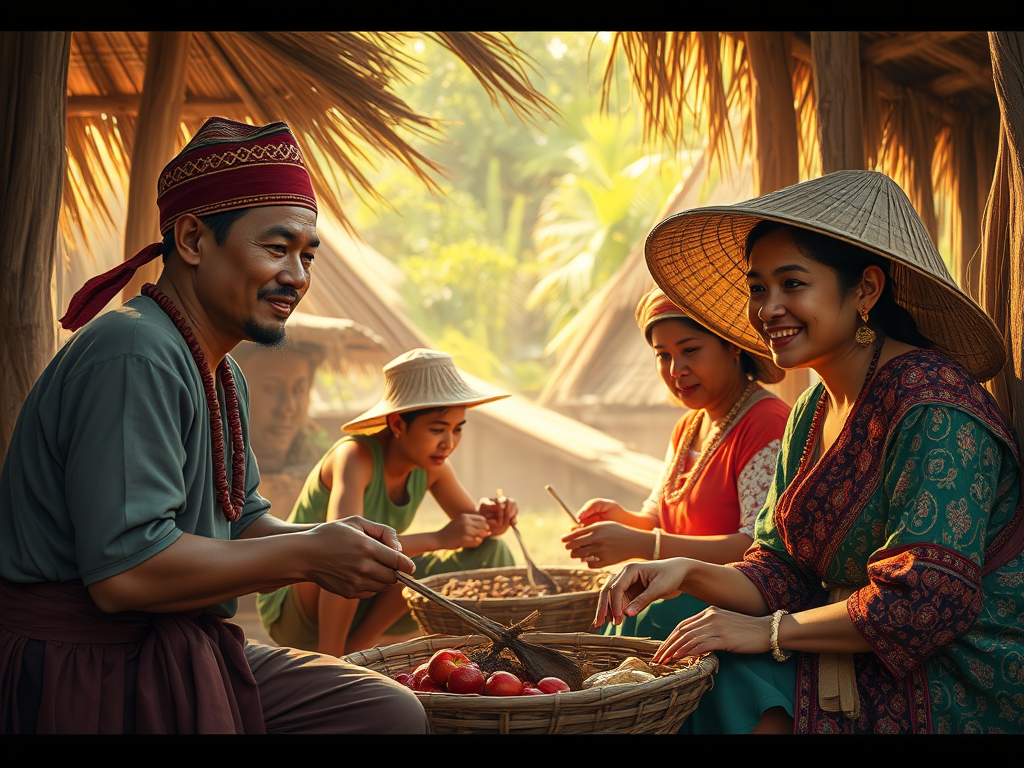
Unshackling the Filipino Spirit: Could a Pre-Colonial Consciousness Have Forged a Stronger Nation?
Exploring the Impact of Western Individualism and Materialism on Filipino Identity and Collective Resilience
Prepared by: Gerald A. Daquila, PhD. Candidate
11–17 minutesABSTRACT
This dissertation explores the speculative question of whether the Philippines could have developed a more socially conscious society without the Western colonial influences of Spanish and American rule, which introduced individualism and materialism, disrupting the pre-colonial communal ethos rooted in kapwa (shared identity).
Employing a multidisciplinary lens—spanning history, anthropology, psychology, sociology, and cultural studies—this study examines the vibrant pre-colonial Filipino societies, characterized by cooperative barangays, sophisticated trade networks, and a collective consciousness. It analyzes the colonial imposition of Western ideologies, which fractured Indigenous values, fostering inequality and cultural alienation.
Drawing on the Star Trek-inspired Prime Directive, the study evaluates arguments for and against non-interference, suggesting that while isolation might have preserved kapwa and resilience, selective cultural integration could have optimized development. The enduring Filipino spirit of bayanihan (communal cooperation), evident in crisis responses, indicates a latent potential to reclaim pre-colonial values.
By integrating Sikolohiyang Pilipino (Filipino Psychology), decolonized education, and community-driven governance, this work proposes that reviving Indigenous consciousness could restore Filipino self-confidence and collective efficacy, offering a pathway to transcend modern challenges like inequality and corruption. This narrative bridges academic rigor with accessible language, aiming to inspire cultural reconnection and societal transformation.
Keywords: Pre-colonial Philippines, kapwa, bayanihan, colonialism, individualism, materialism, Sikolohiyang Pilipino, collective resilience, cultural identity, Prime Directive

Glyph of the Gridkeeper
The One Who Holds the Lattice of Light
Introduction
The Philippines, an archipelago of over 7,000 islands, is a nation rich in cultural heritage, resilience, and communal spirit. Yet, its history is marked by centuries of colonial rule—first under Spain (1521–1898) and then the United States (1898–1946)—which introduced Western ideologies of individualism and materialism that reshaped Indigenous ways of life.
The Star Trek-inspired concept of the Prime Directive, a policy of non-interference in the development of less advanced civilizations, prompts a provocative question: What if the Philippines had been left to evolve without Western colonial influence? Could its pre-colonial communal ethos, rooted in kapwa (shared identity) and collective cooperation, have fostered a more socially conscious society, better equipped to face modern challenges?
This dissertation dives into this speculative inquiry, using a multidisciplinary lens—drawing from history, anthropology, psychology, sociology, and cultural studies—to explore how colonial disruptions altered Filipino consciousness and how reconnecting with pre-colonial values might restore self-confidence, self-efficacy, and collective resilience. By examining historical narratives, Indigenous psychology, and modern crises, we aim to uncover pathways to transcend the Philippines’ enduring societal challenges.
The Pre-Colonial Filipino World: A Tapestry of Communal Consciousness
Before Spanish galleons arrived in 1521, the Philippines was a mosaic of barangays—small, kinship-based communities led by datus, rajahs, or sultans. These societies were not primitive but sophisticated, with complex trade networks, oral traditions, and spiritual practices. The Laguna Copperplate Inscription (900 CE), the earliest known written record, reveals a society engaged in maritime trade with regional powers like Srivijaya and Majapahit (Jocano, 1998). Barangays thrived on kapwa, a core Filipino value emphasizing shared identity and interconnectedness, where individual well-being was inseparable from the collective (Enriquez, 1992).
Social Structure and Collective Ethos
Pre-colonial Filipinos lived in egalitarian yet stratified communities. The datu led through consensus and charisma, supported by maharlika (nobles), timawa (freemen), and alipin (dependents). Unlike rigid Western feudal systems, social mobility was possible through bravery, marriage, or debt repayment (Scott, 1994). Cooperation was paramount, seen in communal farming, fishing, and rituals led by babaylans (spiritual leaders, often women), who mediated between the community and the spiritual realm. Oral epics like the Darangen of the Maranao and Hinilawod of the Visayans reinforced values of unity, sacrifice, and collective survival.
Economic and Cultural Vibrancy
Economically, Filipinos were adept traders, exchanging gold, pearls, and beeswax with China, India, and Southeast Asia. Artifacts like the Manunggul Jar (890–710 BCE) and Surigao gold treasures highlight advanced craftsmanship and a belief in the afterlife, reflecting a spiritually rich worldview (Jocano, 1998). Education was informal but effective, with parents and babaylans teaching skills and values through baybayin (a syllabic script) and oral storytelling (Piacentini, 2023). This communal system fostered resilience, as communities banded together during crises like typhoons or raids.
Consciousness and Worldview
Sikolohiyang Pilipino (Filipino Psychology), pioneered by Virgilio Enriquez, identifies kamalayan (consciousness) and kapwa as central to pre-colonial Filipino identity. Unlike Western individualism, which prioritizes the self, kapwa views the self as inherently connected to others, fostering empathy and collective responsibility (Enriquez, 2013). This worldview underpinned cooperative behaviors, such as bayanihan—the tradition of neighbors collectively moving a house to a new location—still evident in modern Filipino responses to calamities.
The Colonial Disruption: Imposing Individualism and Materialism
The arrival of Spanish colonizers in 1521, followed by American rule in 1898, introduced ideologies that clashed with Indigenous values. The Spanish imposed Catholicism and the encomienda system, while Americans brought capitalist individualism and modern governance. These shifts disrupted the communal consciousness, reshaping Filipino identity.
Spanish Colonialism (1521–1898)
The Spanish viewed pre-colonial society as a “dark period” to be enlightened by Christianity and Western governance (Constantino, 1975). They introduced:
- Religious Conversion: Catholicism replaced animist beliefs, marginalizing babaylans and reframing spirituality as individualistic salvation rather than communal harmony. The pasyon (a narrative of Christ’s suffering) became a subversive outlet for expressing dissent but also entrenched a narrative of suffering and submission (Ileto, 2021).
- Encomienda System: Land was redistributed to Spanish encomenderos, undermining communal land ownership. Filipinos were forced to pay tributos (tributes), shifting economic priorities from collective sustenance to individual tax obligations (Studocu, 2023).
- Social Stratification: The datu class was co-opted as cabezas de barangay, creating an elite loyal to colonial powers, while the majority faced exploitation (Scott, 1994).
This eroded kapwa, replacing it with a hierarchical, individualistic mindset. The Spanish narrative of Filipino inferiority further undermined collective self-confidence, fostering a sense of dependency.
American Colonialism (1898–1946)
The Americans, under the guise of “benevolent assimilation,” introduced capitalist individualism and modern education. Key impacts included:
- Education System: American schools emphasized English and Western values, portraying pre-colonial society as backward. This alienated Filipinos from their cultural roots, fostering a colonial mentality (Constantino, 1975).
- Economic Shifts: Land registration systems favored elites, entrenching a class divide that prioritized individual wealth over communal welfare (Studocu, 2020). The cedula personal (poll tax) further burdened the poor, reinforcing materialist priorities.
- Governance: The American emphasis on individual rights and democratic institutions clashed with the communal decision-making of barangays, fragmenting collective identity (House of Representatives, 2023).
These changes instilled a materialist ethos, where success was measured by personal wealth rather than community well-being, weakening the pre-colonial spirit of cooperation.
The Prime Directive Argument: Non-Interference and Filipino Potential
The Prime Directive, a fictional policy of non-interference, offers a lens to speculate on the Philippines’ trajectory without Western influence. Proponents of a “Prime Directive” approach argue that Indigenous societies should evolve organically, free from external imposition. Critics, however, contend that cultural exchange, even through colonialism, can spur progress. Let’s explore both sides.
Arguments For Non-Interference
- Preservation of Communal Consciousness: Pre-colonial Filipino society was built on kapwa and bayanihan, fostering resilience and cooperation. Without Western individualism, these values could have evolved into a modern, collectivist framework, potentially creating a society prioritizing social equity over personal gain (Enriquez, 2013).
- Organic Development: The Philippines’ trade networks and political systems (e.g., Tondo, Butuan) suggest a capacity for self-driven progress. Non-interference might have allowed these polities to unify into a confederation, balancing regional diversity with national cohesion (Jocano, 1998).
- Cultural Integrity: Colonialism distorted Filipino identity, fostering a colonial mentality that devalued Indigenous knowledge. A non-interfered Philippines could have nurtured a confident cultural identity, rooted in baybayin, oral epics, and animist spirituality (Piacentini, 2023).
Arguments Against Non-Interference
- Global Integration: Isolation might have limited the Philippines’ exposure to global innovations, such as advanced technology or governance models. Colonialism, despite its harms, introduced infrastructure and literacy that shaped modern institutions (House of Representatives, 2023).
- Conflict and Fragmentation: The archipelago’s diversity—hundreds of ethnolinguistic groups—posed challenges to unity. Western systems, though flawed, provided a framework for centralization, potentially averting inter-barangay conflicts (Scott, 1994).
- Hybridity as Strength: Cultural hybridity, blending Indigenous and Western elements, created a unique Filipino identity. Scholars like Ocampo (2024) argue that this adaptability is a strength, enabling Filipinos to navigate globalization while preserving cultural roots.
Synthesis: A Balanced Perspective
While non-interference could have preserved kapwa and communal resilience, complete isolation might have hindered technological and political evolution. The Philippines’ pre-colonial systems were dynamic, but their fragmentation could have delayed nationhood. Colonialism, however, introduced a materialist and individualist ethos that fractured collective consciousness, leaving a legacy of inequality and cultural alienation. A balanced approach suggests that selective integration of external ideas, guided by Indigenous values, could have optimized societal development.
Colonial Legacies and Modern Challenges
The colonial imposition of individualism and materialism has left deep imprints on Filipino society, contributing to persistent challenges:
- Social Inequality: Colonial land systems entrenched an elite class, perpetuating wealth disparities. Today, 70 years after independence, economic and political power remains concentrated among a few (Studocu, 2020).
- Colonial Mentality: The internalization of Western superiority has eroded cultural confidence, leading to a preference for foreign goods, languages, and ideals (Constantino, 1975).
- Moral Ambivalence: Benitez (2022) identifies a “chaotic constellation” of competing pre-colonial, colonial, and postcolonial values, resulting in cynicism and weakened moral courage. This hinders collective action on issues like corruption or poverty.
Yet, Filipino resilience shines in crises. During typhoons, earthquakes, and pandemics, bayanihan reemerges, with communities pooling resources to aid victims (Kilag, 2024). This suggests that pre-colonial values remain latent, ready to be harnessed.

Glyph of the Unshackled Spirit
Could a pre-colonial consciousness have forged a stronger nation, where the Filipino soul rises unbound beneath the sun?
Reclaiming Pre-Colonial Consciousness: A Path to Self-Efficacy
Reconnecting with pre-colonial values like kapwa and bayanihan could restore Filipino self-confidence and collective efficacy. Here’s how:
1. Reviving Indigenous Psychology
Sikolohiyang Pilipino offers a framework to decolonize Filipino consciousness. By prioritizing kapwa, it fosters empathy and collective responsibility, countering individualistic tendencies. Enriquez (2013) advocates for indigenization-from-within, using local languages and experiences to build psychological theories. Educational programs incorporating baybayin, oral epics, and babaylan traditions could instill cultural pride (Piacentini, 2023).
2. Strengthening Community-Based Resilience
Filipino responses to crises demonstrate a latent communal ethos. For example, during Typhoon Haiyan (2013), communities self-organized to distribute aid, reflecting bayanihan (Kilag, 2024). Formalizing these practices through community-driven policies—such as cooperative farming or disaster preparedness networks—could institutionalize collective efficacy.
3. Decolonizing Education and Governance
Education systems should emphasize Filipino history from a pantayong pananaw (for us, from us) perspective, highlighting pre-colonial achievements to counter colonial narratives (Constantino, 1975). Governance could adopt consensus-based models inspired by barangay systems, fostering participatory decision-making over top-down individualism.
4. Cultural Hybridity as Empowerment
Rather than rejecting Western influences, Filipinos can integrate them selectively, as seen in the Katipunan’s use of Enlightenment ideals to fuel the 1896 Revolution (Ileto, 2021). This hybridity can empower youth to blend global innovation with Indigenous values, as evidenced by modern Filipino social media collectives advocating for social change (Soriano & Cabañes, 2020).
Transcending Societal Challenges: A Vision for the Future
Harnessing pre-colonial consciousness could address the Philippines’ “polycrisis”—economic inequality, corruption, and cultural alienation. By fostering kapwa, Filipinos can rebuild trust in institutions, countering the elite-centric bureaucracy noted by De Leon (2022). Youth, as agents of change, are pivotal. Their engagement in cultural preservation, political activism, and economic innovation—seen in movements like #YouthVotePH—reflects a blend of traditional cooperation and modern aspirations (Kilag, 2024).
A multidisciplinary approach suggests:
- Historical Reclamation: Rewrite narratives to highlight pre-colonial resilience, as advocated by Constantino (1975).
- Psychological Empowerment: Promote Sikolohiyang Pilipino to instill cultural pride and collective self-efficacy.
- Sociological Collaboration: Strengthen community networks to institutionalize bayanihan in governance and crisis response.
- Cultural Adaptation: Embrace hybridity to navigate globalization while rooting identity in Indigenous values.
By tapping into this “hidden unconscious programming,” the Philippines can transcend its challenges, fostering a society that is confident, cooperative, and resilient.
Conclusion
The Philippines’ pre-colonial past reveals a society rooted in kapwa and collective resilience, disrupted by Western individualism and materialism. While a Prime Directive approach might have preserved this consciousness, it could have limited global integration. Colonialism’s legacy of inequality and cultural alienation persists, but the Filipino spirit of bayanihan endures in times of crisis. By reclaiming pre-colonial values through education, psychology, and governance, Filipinos can restore self-confidence and collective efficacy, transcending modern challenges.
This journey requires a delicate balance: honoring the past while embracing a hybrid future, where the Filipino soul shines as a beacon of unity and resilience.
Crosslinks
- Transforming Philippine Society: A Multidisciplinary Vision for Holistic Renewal – Anchors the inquiry in a forward-looking vision: what renewal could arise today if the Filipino spirit reclaimed its original strength.
- Codex of the Living Hubs: From Households to National Nodes – Shows how pre-colonial consciousness of bayanihan and community synergy can inform modern node-based nation-building.
- QFS: A New Earth Currency – Connects sovereignty of spirit with sovereignty of exchange — how liberation from colonial economic chains opens national strength.
- The Earth Story: From Galactic Fall to Planetary Ascension – Places the Philippine spirit within a cosmic narrative of fall, colonization, and re-ascension — reminding that the shackle-breaking is planetary, not just national.
- Codex of the Master Builders of the New Earth – Invites Filipinos to take up the mantle of master builders: to reconstruct their nation on soul-aligned, pre-colonial foundations.
Glossary
- Barangay: A pre-colonial Filipino community unit, typically consisting of 30–100 families, led by a datu.
- Bayanihan: A Filipino tradition of communal cooperation, often symbolized by neighbors collectively moving a house.
- Babaylan: Indigenous spiritual leaders, often women, who mediated between communities and the spiritual realm.
- Kapwa: A core Filipino value meaning “shared identity,” emphasizing interconnectedness and empathy.
- Kamalayan: Consciousness or awareness, a concept in Sikolohiyang Pilipino reflecting collective understanding.
- Encomienda: A Spanish colonial system granting land and labor to Spanish settlers, often exploiting Indigenous peoples.
- Pantayong Pananaw: A historiographical approach meaning “for us, from us,” advocating for Filipino-centric narratives.
- Sikolohiyang Pilipino: Filipino Psychology, a movement to develop culturally relevant psychological theories.
Bibliography
Benitez, C. M. (2022). An inquiry into the problems concerning Filipino values and norms. ResearchGate. Retrieved from https://www.researchgate.net/publication/361678942[](https://www.researchgate.net/publication/360897749_An_Inquiry_into_the_Problems_Concerning_Filipino_Values_and_Norms)
Constantino, R., & Constantino, L. R. (1975). The Philippines: A past revisited (Vol. 1). Quezon City: Renato Constantino.
Enriquez, V. G. (1992). From colonial to liberation psychology: The Philippine experience. University of the Philippines Press.
Enriquez, V. G. (2013). From colonial to liberation psychology: The Philippine experience. Philosophy East and West, 63(2), 123-145.
Ileto, R. C. (2021). The Philippines in imperial history. Journal of Global History, 19(1), 1-19.
Jocano, F. L. (1998). Filipino indigenous ethnic communities: Patterns, variations, and typologies. Quezon City: Punlad Research House Inc.
Kilag, O. K. (2024). Filipino youth for stronger future of the new Philippines. International Multidisciplinary Journal of Research for Innovation, Sustainability, and Excellence, 1(6). Retrieved from https://risejournals.org%5B%5D(https://risejournals.org/index.php/imjrise/article/view/460)
Ocampo, A. (2024). The continuum of Filipino cultural identity: Balancing tradition and change in a globalized and post-pandemic world. Preprints.org. Retrieved from https://www.preprints.org/manuscript/202409.2292/v1[](https://www.preprints.org/manuscript/202409.2386/v1)
Piacentini, K. (2023). Influences on Philippine education. Wixsite. Retrieved from https://kpiacentini.wixsite.com/iem-php/unit-1-influences[](https://kpiacentini.wixsite.com/iem-php/blank-csac)
Scott, W. H. (1994). Barangay: Sixteenth-century Philippine culture and society. Quezon City: Ateneo de Manila University Press.
Soriano, C. R. R., & Cabañes, J. V. A. (2020). Entrepreneurial solidarities: Social media collectives and Filipino digital platform workers. Social Media + Society, 6(2), 2056305120926484.
Studocu. (2020). Philippine democracy and its discontents: The failed promise of social justice under the 1987 People Power Constitution. Retrieved from https://www.studocu.com%5B%5D(https://revista-estudios.revistas.deusto.es/article/download/1457/1781?inline=1)
Studocu. (2023). Module 13 Week 13: Social, political, economic, and cultural issues in Philippine history. Retrieved from https://www.studocu.com%5B%5D(https://www.studocu.com/ph/document/our-lady-of-fatima-university/readings-in-philippine-history/lesson-13-module-13-week-13-social-political-economic-and-cultural-issues-in-philippine/37957364)
U.S. House of Representatives. (2023). The Philippines, 1898–1946. History, Art & Archives. Retrieved from https://history.house.gov%5B%5D(https://history.house.gov/Exhibitions-and-Publications/APA/Historical-Essays/Exclusion-and-Empire/The-Philippines/)
Attribution
With fidelity to the Oversoul, may this work serve as bridge, remembrance, and seed for the planetary dawn.
Ⓒ 2025–2026 Gerald Alba Daquila
Flameholder of SHEYALOTH · Keeper of the Living Codices
All rights reserved.This material originates within the field of the Living Codex and is stewarded under Oversoul Appointment. It may be shared only in its complete and unaltered form, with all glyphs, seals, and attribution preserved.
This work is offered for personal reflection and sovereign discernment. It does not constitute a required belief system, formal doctrine, or institutional program.
Digital Edition Release: 2026
Lineage Marker: Universal Master Key (UMK) Codex FieldSacred Exchange & Access
Sacred Exchange is Overflow made visible.
In Oversoul stewardship, giving is circulation, not loss. Support for this work sustains the continued writing, preservation, and public availability of the Living Codices.
This material may be accessed through multiple pathways:
• Free online reading within the Living Archive
• Individual digital editions (e.g., Payhip releases)
• Subscription-based stewardship accessPaid editions support long-term custodianship, digital hosting, and future transmissions. Free access remains part of the archive’s mission.
Sacred Exchange offerings may be extended through:
paypal.me/GeraldDaquila694
www.geralddaquila.com




 Life.Understood.