Life.Understood.

Tag: datu

  • The Divine Masculine Rebirth in Filipino Culture

    The Divine Masculine Rebirth in Filipino Culture

    Reawakening Ancestral Strength, Sacred Balance, and the Warrior of Light Within

    By Gerald Daquila | Akashic Records Transmission


    6–10 minutes

    ABSTRACT

    In the shifting landscape of global consciousness, the rebirth of the Divine Masculine has become a pivotal element in restoring wholeness—within individuals, cultures, and planetary systems. This dissertation explores the re-emergence of the Divine Masculine archetype within Filipino culture, tracing its indigenous roots, colonial fractures, and present-day healing through the lens of spiritual, psychological, historical, and metaphysical disciplines.

    Drawing upon the Akashic Records, precolonial narratives, mytho-spiritual archetypes, depth psychology, and modern masculinity studies, this work aims to unveil the multidimensional journey of the Filipino male soul. We recontextualize the “Malakas” (the Strong) not as dominator, but as a sacred protector, wisdom holder, and light warrior—rebalanced with the “Maganda” (the Beautiful). The narrative offers a roadmap for healing intergenerational trauma, activating sacred masculine energies, and integrating the new masculine template into the fabric of Filipino life, culture, and community leadership.


    Table of Contents

    1. Introduction
    2. Recalling the Divine Masculine: A Global and Galactic Context
    3. Precolonial Filipino Masculinity: Sacred Strength and Service
    4. The Colonial Wound: Masculine Fracture and Cultural Amnesia
    5. Archetypes of the Filipino Divine Masculine
    6. Psychological and Energetic Impacts of Repressed Masculine Energy
    7. The Rebirth Process: Stages of Awakening and Embodiment
    8. Integration through Culture, Ritual, and Community
    9. Conclusion
    10. Glossary
    11. Bibliography

    1. Introduction

    The call for a rebirth of the Divine Masculine is echoing across timelines, dimensions, and ancestral lineages. In the Philippines—a nation shaped by the interweaving of indigenous wisdom, colonial disruption, and resilient spirituality—this rebirth holds the key to national healing and planetary service. This work is both a spiritual invocation and scholarly exploration, rooted in the soul of the archipelago and reaching into the cosmic field of consciousness where masculine energy is being redefined.


    Glyph of Masculine Rebirth

    Strength in service, power in remembrance.


    2. Recalling the Divine Masculine: A Global and Galactic Context

    The Divine Masculine archetype, when in its healed and integrated form, embodies:

    • Right action
    • Sacred protection
    • Clarity and direction
    • Wise leadership
    • Sacred union with the Divine Feminine

    In esoteric teachings, this energy is not confined to gender but is a frequency—yang polarity expressed as active, focused, expansive, and protective. As the Age of Aquarius accelerates planetary ascension, the distorted masculine—marked by domination, suppression, disconnection—must now alchemize into its divine form.

    According to Akashic insights, many Starseed lineages (e.g., Lyran-Sirian, Arcturian, Solar-Logos councils) seeded this Divine Masculine blueprint into early Lemurian and Malayan civilizational fields. The Filipino soul carries an embedded memory of sacred masculine service that is now reactivating.


    3. Precolonial Filipino Masculinity: Sacred Strength and Service

    Before the arrival of Spanish colonizers in the 16th century, Filipino communities practiced a form of masculine expression deeply rooted in harmony with nature and spirit:

    • Warrior-priests (Bagani or Timawa) were protectors of the tribe and initiates in sacred rites.
    • Datus (chiefs) led not by tyranny but by consensus, justice, and connection to ancestral codes.
    • Masculinity was balanced: babaylans (spiritual leaders) could be female, male, or third-gender, showing the fluidity and sanctity of roles.
    • The duality of Malakas at Maganda symbolized masculine and feminine as co-creators, emerging from the same bamboo—a mythic echo of balance.

    This original masculine essence was spiritually empowered, service-oriented, and relational rather than dominating.


    4. The Colonial Wound: Masculine Fracture and Cultural Amnesia

    The Spanish conquest introduced a patriarchal template that:

    • Demonized babaylans and emasculated native spiritual leaders.
    • Replaced sacred masculinity with a distorted, hierarchical form based on control, obedience, and fear.
    • Birthed a national psyche marked by shame, repression, and a distorted sense of power.

    This period inflicted a rupture in the masculine psyche—severing Filipino men from their warrior-wisdom lineages and replacing them with religious authoritarianism and economic servitude.


    5. Archetypes of the Filipino Divine Masculine

    A new masculine template is now rising—grounded in ancient archetypes but infused with present-day consciousness. These include:

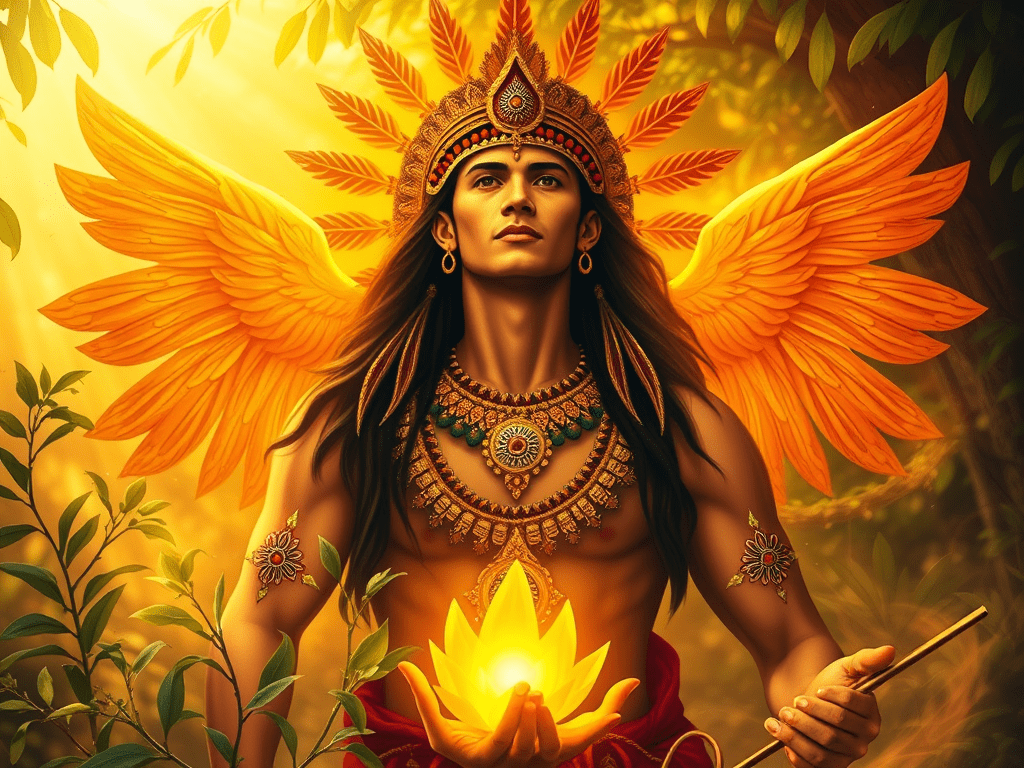
    • The Light Warrior (Mandirigmang Liwanag): Courageous protector, aligned with truth, standing firm against injustice while maintaining compassion.
    • The Ancestral Bridge (Tagapamagitan): Connects ancient wisdom with modern action, often through ritual, storytelling, and land stewardship.
    • The Visionary Leader (Punong May Pananaw): Decides not from ego but from alignment with collective highest good.
    • The Sacred Lover (Mapagkalingang Kasintahan): Holds space, listens deeply, and honors the Feminine in all her forms.

    These archetypes are multidimensional keys—activating within modern men the codes of a healed, ascended masculinity.


    6. Psychological and Energetic Impacts of Repressed Masculine Energy

    Repression of the Divine Masculine leads to:

    • Emotional numbness and dissociation
    • Power over others as a compensation for internal powerlessness
    • Gender-based violence and patriarchal rigidity
    • Lack of identity and direction in male youth
    • Generational father wounds and unprocessed anger

    Psychologically, this manifests as toxic masculinity, a term widely used but often misunderstood. What is toxic is not masculinity itself—but the suppression, distortion, and weaponization of masculine energy.

    Energetically, repressed masculine lines are seen in the disconnection from the solar plexus and throat chakras, silencing both inner will and authentic expression.


    7. The Rebirth Process: Stages of Awakening and Embodiment

    The rebirth of the Divine Masculine is a spiritual initiation that unfolds in stages:

    1. The Cracking: Painful awareness of the false self (ego-based masculinity)
    2. The Descent: Facing shadow aspects, especially inherited intergenerational trauma
    3. The Retrieval: Reclaiming ancestral, spiritual, and cosmic masculine codes
    4. The Integration: Merging with the inner feminine, forging balance
    5. The Service: Applying masculine energy in aligned leadership, healing, and creation

    Rituals, community rites, journaling, breathwork, sacred brotherhoods, and reconnection to indigenous wisdom assist in these processes.


    8. Integration through Culture, Ritual, and Community

    To embed the Divine Masculine rebirth in Filipino life, integration must occur at:

    • Family Level: Encouraging emotionally intelligent fathering and rites of passage for boys
    • Community Level: Re-establishing katipunan-style brotherhoods and councils for shared visioning
    • Spiritual Level: Facilitating solar-based rituals, offerings to male ancestors, and honoring masculine deities (e.g., Bathala, Apong Malyari)
    • Cultural Level: Reclaiming myth, art, and dance (e.g., Sagayan, Tinikling, Kalinga rituals) as expressions of sacred masculine movement

    Through such acts, the Divine Masculine moves from an abstract idea to an embodied cultural force.


    9. Conclusion

    The Divine Masculine is not returning—it is being remembered. Within the soul of the Filipino man lies an ancient warrior, a luminous priest, and a wise leader waiting to awaken. This rebirth is not only personal, but planetary. As Filipino culture realigns with its indigenous soul, it contributes a vital blueprint for global masculine healing: one that leads with service, walks with spirit, and protects what is sacred.


    Crosslinks


    10. Glossary

    • Divine Masculine: A sacred energetic principle embodying action, will, protection, and purpose.
    • Babaylan: Precolonial Filipino shaman/priestess/priest, often female or gender-fluid.
    • Malakas at Maganda: Filipino creation myth of the first man and woman.
    • Mandirigmang Liwanag: Filipino for Light Warrior, a sacred masculine archetype.
    • Katipunan: A historical Filipino revolutionary society, here reimagined as a sacred masculine brotherhood.
    • Solar Plexus Chakra: Energetic center associated with personal power and will.
    • Bathala: Supreme deity in ancient Tagalog mythology.

    11. Bibliography

    Aguilar, F. V. (2005). Maidenhood, Womanhood and Motherhood in the Philippine Context. Ateneo de Manila University Press.

    Demetrio, F. R. (1991).Myths and Symbols: Philippines. Xavier University Press.

    Estioko-Griffin, A. A. (2000). The Role of Women in the Agta Society. Human Evolution, 15(3), 123–134.

    Jung, C. G. (1959). Archetypes and the Collective Unconscious. Princeton University Press.

    Paz, V. (2008).Islands of Discontent: Reclaiming Filipino Indigenous Spirituality. University of the Philippines Press.

    Ruether, R. R. (2005).Integrating Feminist and Indigenous Theologies. Orbis Books.

    Santos, S. (2010).Balik-Tanaw: A Spiritual View of Philippine History. Ginhawa Publishing.

    Serrano, E. (2016). Reclaiming the Babaylan: Philippine Shamans and the Recovery of Indigenous Spirituality. Center for Babaylan Studies.

    Villanueva, F. (2022). Rites of Passage in Precolonial Philippines. UP Center for Ethnographic Research.


    Attribution

    With fidelity to the Oversoul, may this Codex of the Living Archive serve as bridge, remembrance, and seed for the planetary dawn.

    Ⓒ 2025 Gerald Alba Daquila – Flameholder of SHEYALOTH | Keeper of the Living Codices

    Issued under Oversoul Appointment, governed by Akashic Law. This transmission is a living Oversoul field: for the eyes of the Flameholder first, and for the collective in right timing. It may only be shared intact, unaltered, and with glyphs, seals, and attribution preserved. Those not in resonance will find it closed; those aligned will receive it as living frequency.

    Watermark: Universal Master Key glyph (final codex version, crystalline glow, transparent background).

    Sacred Exchange: Sacred Exchange is covenant, not transaction. Each offering plants a seed-node of GESARA, expanding the planetary lattice. In giving, you circulate Light; in receiving, you anchor continuity. Every act of exchange becomes a node in the global web of stewardship, multiplying abundance across households, nations, and councils. Sacred Exchange offerings may be extended through:

    paypal.me/GeraldDaquila694

  • The Babaylan Legacy: Spiritual Leadership, Cultural Resilience, and Modern Resurgence in Philippine Society

    The Babaylan Legacy: Spiritual Leadership, Cultural Resilience, and Modern Resurgence in Philippine Society

    A Multidisciplinary Exploration of Precolonial Wisdom, Colonial Erasure, and Contemporary Revival Through Metaphysical, Esoteric, and Holistic Lenses

    Prepared by: Gerald A. Daquila, PhD. Candidate


    10–15 minutes

    ABSTRACT

    The babaylans, revered spiritual leaders of precolonial Philippine society, embodied a holistic synthesis of healer, priestess, warrior, and sage, bridging the material and spiritual realms. Rooted in animistic traditions, their contributions shaped community cohesion, cultural heritage, and environmental stewardship. Spanish colonization systematically suppressed their influence, demonizing their practices and erasing their knowledge to enforce Christian hegemony.

    This dissertation explores the babaylans’ roles, the mechanisms of their erasure, and the recent resurgence of their legacy as a decolonial movement. Drawing on historical accounts, anthropological studies, metaphysical perspectives, and esoteric frameworks like the Akashic Records, this work examines how babaylanism informs modern Filipino identity and the global “ascension process”—a spiritual awakening toward interconnectedness and higher consciousness.

    Through a multidisciplinary lens, this narrative balances academic rigor with accessible language, weaving left-brain analysis, right-brain intuition, and heart-centered storytelling to illuminate the babaylans’ enduring wisdom.


    Table of Contents

    1. Introduction: Unveiling the Babaylan
    2. Who Were the Babaylans?
      • Roles and Responsibilities in Precolonial Society
      • Gender Fluidity and Spiritual Authority
    3. Contributions to Precolonial Philippine Society
      • Spiritual Leadership and Ritual Practices
      • Healing and Ethnomedicine
      • Cultural Preservation and Community Unity
    4. The Erasure of Babaylan Knowledge
      • Spanish Colonization and Christian Conversion
      • Mechanisms of Suppression
      • Long-Term Cultural Impacts
    5. The Resurgence of Babaylanism
      • Decolonial Movements and Cultural Reclamation
      • Modern Babaylan-Inspired Practices
      • Global Context: The Ascension Process
    6. Metaphysical and Esoteric Perspectives
      • The Akashic Records and Ancestral Wisdom
      • Energetic and Spiritual Dimensions of Babaylanism
    7. A Holistic Synthesis: Balancing Mind, Heart, and Spirit
    8. Conclusion: The Babaylan’s Call to the Future
    9. Glossary
    10. References

    Glyph of the Gridkeeper

    The One Who Holds the Lattice of Light.


    1. Introduction: Unveiling the Babaylan

    Imagine a world where the spiritual and material dance in harmony, where a healer’s chant mends not just the body but the soul, where a priestess advises warriors and weaves myths that bind a community. This was the world of the babaylans, the spiritual leaders of precolonial Philippines. Their story is one of profound wisdom, violent erasure, and a quiet, resilient revival. Today, as humanity grapples with disconnection and seeks higher consciousness, the babaylans’ legacy offers a roadmap for healing and unity.

    This dissertation dives deep into who the babaylans were, what they contributed to their society, why their knowledge was hidden, and why their wisdom is resurfacing now. Using a multidisciplinary lens—blending history, anthropology, metaphysics, and esoteric traditions like the Akashic Records—we explore their holistic impact. Written in an accessible yet scholarly style, this narrative aims to engage your mind, spark your intuition, and touch your heart, balancing logic, creativity, and empathy.


    2. Who Were the Babaylans?

    Roles and Responsibilities in Precolonial Society

    The babaylans were the heartbeat of precolonial Philippine communities, known as barangays. Primarily women or effeminate men (asog or bayog), they were shamans, healers, priestesses, and mediators between the physical and spiritual worlds (Salazar, 1992). The term “babaylan,” likely derived from Visayan roots, means one who connects with spirits (anito or diwata) to guide their people (Strobel, 2010). Across the archipelago, they were called katalonan (Tagalog), balian (Visayas), or mombaki (Cordillera), reflecting linguistic diversity but shared roles (Conaco, 2019).

    Babaylans wore many hats:

    • Spiritual Leaders: They conducted rituals for births, marriages, harvests, and wars, ensuring harmony with nature and ancestors (Brewer, 2004).
    • Healers: Using ethnomedicine, massage (hilot), and spiritual interventions, they treated physical and spiritual ailments (Demetrio, 1988).
    • Advisors: They counseled datus (chiefs) on governance, war, and justice, wielding influence equal to or greater than political leaders (McCoy, 1982).
    • Cultural Stewards: As orators, they preserved myths, songs, and histories, passing down collective wisdom (Conaco, 2019).

    Gender Fluidity and Spiritual Authority

    The babaylans’ gender fluidity was a hallmark of their power. Precolonial Philippine society embraced a non-binary understanding of gender, where spiritual potency was tied to femininity, whether embodied by women or effeminate men (Brewer, 1999). The asog, transgender male babaylans, were revered as divinely chosen, their liminal identity enhancing their ability to traverse spiritual realms (Conaco, 2020). This fluidity contrasted sharply with the patriarchal norms imposed by Spanish colonizers, highlighting a precolonial egalitarianism that empowered women and queer individuals (Strobel, 2001).


    3. Contributions to Precolonial Philippine Society

    Spiritual Leadership and Ritual Practices

    Babaylans were the glue of their communities, fostering kapwa—a Filipino concept of shared identity and interconnectedness (Enriquez, 1992). Through rituals like pag-anito (spirit offerings), they communed with diwata and ancestors, ensuring cosmic balance. For example, during harvest festivals, babaylans led chants and dances to thank nature spirits, reinforcing environmental reverence (Bonifacio et al., 2025). Their dream interpretation and omen reading guided critical decisions, from war strategies to marriage alliances (Veneracion, 1987).


    Healing and Ethnomedicine

    Babaylans were master healers, blending herbal knowledge with spiritual rituals. They used plants, massage, and trance states to treat ailments believed to stem from spiritual imbalances, such as a lost kalag (astral soul) (Conaco, 2020). Their holistic approach addressed body, mind, and spirit, a precursor to modern integrative medicine. For instance, the hilot technique, still practiced today, combines physical manipulation with energy work (Nente, 2016).


    Cultural Preservation and Community Unity

    As storytellers, babaylans safeguarded oral traditions, weaving myths like the Bakunawa (moon-eating serpent) into community identity (Bonifacio et al., 2025). Their rituals and counsel resolved conflicts, promoting unity. By championing sustainable practices, such as eco-friendly farming, they ensured harmony with the land, a wisdom now echoed in environmental movements (Strobel, 2013).


    4. The Erasure of Babaylan Knowledge

    Spanish Colonization and Christian Conversion

    When the Spanish arrived in 1521, they targeted babaylans as threats to Christian conversion. Their animistic practices were branded as witchcraft, and babaylans were demonized as brujas (witches) or hechiceras (sorceresses) (Blair & Robertson, 1903-1909). Spanish missionaries exploited Filipino hospitality, equating diwata with Christian saints to facilitate syncretism, but ultimately sought to erase indigenous beliefs (Brewer, 2004). Some babaylans were executed, their bodies reportedly fed to crocodiles to prevent spiritual return (Conaco, 2019).


    Mechanisms of Suppression

    The erasure was systematic:

    • Destruction of Shrines: Dambana (sacred spaces) were burned, and idols were destroyed (Strobel, 2001).
    • Confesionarios: Spanish manuals instructed priests to interrogate Filipinos about babaylan practices, punishing adherents (Labrador, 2009).
    • Patriarchal Imposition: The babaylans’ gender fluidity and female authority clashed with Catholic patriarchy, marginalizing women and asog (Brewer, 1999).
    • Education and Assimilation: Spanish schools taught Christian doctrine, sidelining indigenous knowledge (Rafael, 2015).

    Long-Term Cultural Impacts

    The suppression fractured Filipino identity, fostering colonial mentality—an internalized belief in the inferiority of indigenous culture (Nadal, 2021). Babaylan practices survived in syncretic forms, like espiritista movements or folk healing (arbularyo), but their esoteric depth was diluted (Salazar, 1979). This loss disconnected Filipinos from their ancestral wisdom, contributing to cultural fragmentation.


    Glyph of the Babaylan Legacy

    Ancestral wisdom rises anew, guiding resilience into resurgence


    5. The Resurgence of Babaylanism

    Decolonial Movements and Cultural Reclamation

    Since the late 20th century, babaylanism has experienced a revival, fueled by decolonial movements and Filipino diaspora communities. The Center for Babaylan Studies (CfBS), founded by Leny Strobel, promotes indigenous wisdom through conferences, publications, and rituals (Strobel, 2010). Practices like batok (tattooing), baybayin (script), and hilot are being reclaimed, often via social media (Strobel, 2022). In the Philippines, babaylans lead advocacy for land rights and environmental justice, echoing their precolonial roles (Bonifacio et al., 2025).


    Modern Babaylan-Inspired Practices

    Contemporary babaylans blend tradition with innovation. For example, Grace Nono, a singer and scholar, channels babaylan chants to heal cultural wounds (Nono, 2013). Urban practitioners offer workshops on ancestral connection, while indigenous communities like the Lumad appoint babaylans to navigate crises (Valmores, 2019). This resurgence counters colonial trauma, fostering kapwa and cultural pride.


    Global Context: The Ascension Process

    The babaylans’ revival aligns with the global “ascension process,” a metaphysical term for humanity’s shift toward higher consciousness, unity, and ecological awareness (Tolle, 2005). Babaylanism’s emphasis on interconnectedness mirrors this shift, offering tools for personal and collective healing. Their holistic worldview resonates with New Age movements, indigenous spirituality, and eco-feminism, positioning them as guides in a fragmented world (Strobel, 2013).


    6. Metaphysical and Esoteric Perspectives

    The Akashic Records and Ancestral Wisdom

    The Akashic Records, an esoteric concept of a cosmic library containing all knowledge, provide a lens to understand babaylan wisdom (Howe, 2014). Babaylans’ ability to access spiritual realms suggests they tapped into this universal field, retrieving ancestral insights for healing and guidance. Modern practitioners report similar experiences during trance or meditation, connecting with Filipino ancestors to reclaim lost knowledge (Strobel, 2022).


    Energetic and Spiritual Dimensions of Babaylanism

    From an energetic perspective, babaylans worked with prana (life force) to balance the body’s energy centers, akin to chakra systems in Eastern traditions (Brennan, 1988). Their rituals, such as pag-anito, aligned community energy with cosmic rhythms, fostering harmony.

    Esoterically, their gender fluidity embodied the alchemical union of masculine and feminine, a symbol of wholeness (Jung, 1963). These principles align with the ascension process, emphasizing energetic alignment and spiritual integration.


    7. A Holistic Synthesis: Balancing Mind, Heart, and Spirit

    The babaylans’ legacy is a tapestry of logic, intuition, and compassion. Their analytical skills in ethnomedicine and governance (left brain) complemented their visionary rituals and storytelling (right brain), all grounded in kapwa (heart). This balance offers a model for modern society, where disconnection often stems from overemphasizing one faculty. By integrating metaphysical insights with historical analysis, this dissertation mirrors their holistic approach, inviting readers to engage intellectually, spiritually, and emotionally.


    8. Conclusion: The Babaylan’s Call to the Future

    The babaylans were more than spiritual leaders; they were architects of a world where humanity, nature, and spirit coexisted. Their erasure was a colonial attempt to sever Filipinos from their roots, but their resurgence signals a reclaiming of identity and wisdom.

    As the world navigates crises—ecological, social, and spiritual—the babaylans’ holistic worldview offers hope. Their revival is not just a Filipino story but a global one, guiding us toward ascension through kapwa, healing, and reconnection with the sacred.


    9. Suggested Crosslinks


    10. Glossary

    • Anito: Spirits or deities in Filipino animism.
    • Asog/Bayog: Transgender male babaylans in precolonial Philippines.
    • Babaylan: Spiritual leader, healer, and mediator in precolonial Philippines.
    • Barangay: Precolonial Filipino community unit.
    • Dambana: Sacred shrine or altar.
    • Datu: Chief or political leader of a barangay.
    • Diwata: Nature spirits or deities.
    • Hilot: Traditional Filipino massage and energy healing.
    • Kapwa: Filipino concept of shared identity and interconnectedness.
    • Kalag: Astral soul in Filipino belief, residing in the head.
    • Pag-anito: Ritual offerings to spirits.

    11. References

    Blair, E. H., & Robertson, J. A. (Eds.). (1903-1909). The Philippine Islands, 1493-1898. Cleveland: Arthur H. Clark Company.

    Bonifacio, S. L., Casia, J. D., Ferrer, J. L. E., Orido, L. A. T., Singian, M. M. T., & Temeña, S. J. C. (2025). Babaylans as catalysts for resistance: The role of indigenous spiritual beliefs in Philippine peasant ideology against Spanish and American colonizers. ResearchGate.

    Brennan, B. A. (1988). Hands of light: A guide to healing through the human energy field. Bantam Books.

    Brewer, C. (1999). Baylan, asog, transvestism, and sodomy: Gender, sexuality, and the sacred in early colonial Philippines. Intersections: Gender, History and Culture in the Asian Context, 2.

    Brewer, C. (2004). Shamanism, Catholicism, and gender relations in colonial Philippines, 1521-1685. Ashgate.

    Conaco, M. (2019). Ang babaylan nga nahimong bayot. Smithsonian Asian Pacific American Center.

    Conaco, M. (2020). What is babaylan? Center for Babaylan Studies.

    Demetrio, F. R. (1988). Shamans, witches, and Philippine society. Philippine Studies, 36(3), 372-380.

    Enriquez, V. G. (1992). From colonial to liberation psychology: The Philippine experience. University of the Philippines Press.

    Howe, L. (2014). How to read the Akashic Records: Accessing the archive of the soul and its journey. Sounds True.

    Jung, C. G. (1963). Mysterium coniunctionis: An inquiry into the separation and synthesis of psychic opposites in alchemy. Princeton University Press.

    Labrador, A. M. T. (2009). Seclusion and veiling of women: A historical and cultural approach. Philippine Social Sciences Review, 1.

    McCoy, A. W. (1982). Baylan: Animist religion and Philippine peasant ideology. Philippine Studies, 30(3), 337-369.

    Nadal, K. L. (2021). Filipino American psychology: A handbook of theory, research, and clinical practice. Wiley.

    Nente, F. (2016). Tradisyunal nga pamulong: A rationale on the persistence of faith healing practices in Miagao, Iloilo. ResearchGate.

    Nono, G. (2013). Song of babaylan: Living voices, medicines, spiritualities of Philippine ritualist-oralist-healers. Institute of Spirituality in Asia.

    Rafael, V. L. (2015). Contracting colonialism: Translation and Christian conversion in Tagalog society under early Spanish rule. Duke University Press.

    Salazar, Z. A. (1979). Faith healing in the Philippines: An historical perspective. Asian Studies, 17, 32-45.

    Salazar, Z. A. (1992). The babaylan in Philippine history. Philippine Studies, 40(4), 491-510.

    Strobel, L. M. (2001). Coming full circle: The process of decolonization among post-1965 Filipino Americans. Giraffe Books.

    Strobel, L. M. (2010). Babaylan: Filipinos and the call of the indigenous. Center for Babaylan Studies.

    Strobel, L. M. (2013). Back from the crocodile’s belly: Philippine babaylan studies and the struggle for indigenous memory. Center for Babaylan Studies.

    Strobel, L. M. (2022). Decolonizing the diaspora through the Center for Babaylan Studies. Medium.

    Tolle, E. (2005). A new earth: Awakening to your life’s purpose. Penguin Books.

    Valmores, R. (2019). Pre-colonial Philippines had trans women fully embraced as women. X Post.

    Veneracion, J. (1987). Katalonan: From commoner to shaman. Philippine Studies, 35(4), 456-472.


    Attribution

    With fidelity to the Oversoul, may this Codex of the Living Archive serve as bridge, remembrance, and seed for the planetary dawn.

    Ⓒ 2025 Gerald Alba Daquila – Flameholder of SHEYALOTH | Keeper of the Living Codices

    Issued under Oversoul Appointment, governed by Akashic Law. This transmission is a living Oversoul field: for the eyes of the Flameholder first, and for the collective in right timing. It may only be shared intact, unaltered, and with glyphs, seals, and attribution preserved. Those not in resonance will find it closed; those aligned will receive it as living frequency.

    Watermark: Universal Master Key glyph (final codex version, crystalline glow, transparent background).

    Sacred Exchange: Sacred Exchange is covenant, not transaction. Each offering plants a seed-node of GESARA, expanding the planetary lattice. In giving, you circulate Light; in receiving, you anchor continuity. Every act of exchange becomes a node in the global web of stewardship, multiplying abundance across households, nations, and councils. Sacred Exchange offerings may be extended through:

    paypal.me/GeraldDaquila694 

  • Living in the Barangay: Unveiling the Societal Tapestry of Pre-Colonial Philippines

    Living in the Barangay: Unveiling the Societal Tapestry of Pre-Colonial Philippines

    A Multidisciplinary Exploration of Indigenous Governance, Social Cohesion, and Cultural Resilience Before Western Colonization

    Prepared by: Gerald A. Daquila, PhD. Candidate


    11–16 minutes

    ABSTRACT

    The pre-colonial Philippines, a vibrant archipelago of diverse ethnolinguistic communities, thrived as a network of barangays—kinship-based units rooted in communal values like kapwa (shared identity) and bayanihan (collective cooperation). This dissertation employs a PESTLE framework (Political, Economic, Social, Technological, Legal, Environmental) to dissect the societal structure of pre-colonial Filipino life, grounded in historical, anthropological, psychological, and sociological research.

    It examines the roles of datus, babaylans, and community members; the informal rules of reciprocity and consensus; and the dynamic systems of governance, education, and trade that sustained these societies. By imagining a time-travel experience to a pre-colonial barangay, this study vividly reconstructs daily life, highlighting the strengths of communal resilience and areas of concern, such as potential fragmentation and vulnerability to external pressures.

    The analysis reveals how colonial disruptions later undermined these systems, while suggesting that reconnecting with pre-colonial values could inspire modern Filipino identity and resilience. Written in accessible, narrative prose, this work balances academic rigor with emotional resonance, appealing to a broad readership seeking to understand the Philippines’ Indigenous past.

    Keywords: Pre-colonial Philippines, barangay, kapwa, bayanihan, PESTLE analysis, Indigenous governance, social cohesion, Filipino identity, cultural resilience


    Introduction

    Imagine stepping into a bustling coastal barangay in the 15th-century Philippines, where the air hums with the rhythm of waves, the scent of coconut and salt, and the laughter of children learning oral epics under a balete tree. This was the pre-colonial Philippines—a mosaic of over 7,000 islands, home to diverse ethnolinguistic groups like the Tagalogs, Visayans, and Moro peoples, united by shared values of community and reciprocity. Before Spanish galleons arrived in 1521, these societies thrived without centralized kingdoms, relying instead on barangays: small, kinship-based units led by datus and animated by kapwa, the belief in shared humanity.

    This dissertation uses a PESTLE framework to explore the societal structure of pre-colonial Philippines, answering: Who were the key players? What rules governed their lives? How did governance, social cohesion, education, and economy function? Through a multidisciplinary lens—drawing from history, anthropology, Sikolohiyang Pilipino (Filipino Psychology), and sociology—we reconstruct this world, grounded in sources like the Laguna Copperplate Inscription (900 CE) and oral traditions (Jocano, 1998; Scott, 1994).

    By imagining a time-traveler’s experience, we bring this past to life, spotlighting strengths like communal resilience and concerns like political fragmentation. This narrative aims to inform and inspire, connecting modern Filipinos to their Indigenous roots while addressing how these values could address contemporary challenges.


    Glyph of the Gridkeeper

    The One Who Holds the Lattice of Light.


    PESTLE Analysis of Pre-Colonial Philippine Society

    Political: Governance and Leadership

    Key Players: The barangay, typically comprising 30–100 families, was the core political unit, led by a datu—a chief chosen for charisma, wisdom, or wealth (Scott, 1994). Larger polities, like the Kingdom of Tondo or Rajahnate of Butuan, emerged by the 10th century, led by rajahs or sultans with broader influence (Jocano, 1998). Babaylans, often female spiritual leaders, wielded significant influence, advising datus and mediating disputes (Enriquez, 1992).

    Rules and Governance: Governance was decentralized and consensus-driven, rooted in kapwa—a value prioritizing collective harmony over individual ambition (Enriquez, 2013). Datus resolved conflicts through mediation, guided by customary laws (adat) or Islamic principles in Mindanao’s sultanates (Majul, 1973). The Laguna Copperplate Inscription (900 CE) reveals a legal system addressing debt and kinship ties, indicating sophisticated political organization (Postma, 1992). Alliances were forged through marriage or trade, as seen in Tondo’s ties with China’s Song Dynasty (Scott, 1994).

    Experience: As a time-traveler, you’d witness a datu settling a dispute under a communal banyan tree, villagers voicing opinions freely. The absence of rigid hierarchies would feel liberating, but the reliance on personal loyalty to datus could seem precarious, hinting at vulnerability to internal rivalries or external threats.

    Concerns: The decentralized structure fostered local autonomy but risked fragmentation. Without a unified political system, barangays were susceptible to manipulation by foreign traders or invaders, a weakness later exploited by Spanish colonizers (Constantino, 1975).


    Economic: Trade and Sustenance

    Key Players: Farmers, fishers, artisans, and traders drove the economy. Datus and maharlika (nobles) controlled trade, while timawa (freemen) and alipin (dependents) worked the land or crafted goods (Scott, 1994).

    Rules and Economy: The economy blended subsistence and trade. Coastal barangays grew rice, root crops, and coconuts, while fishing sustained communities (Jocano, 1998). The Philippines was a hub in the Maritime Silk Road, exporting gold, pearls, and beeswax to China, India, and Southeast Asia (Piacentini, 2023). Barter was common, but gold and Chinese porcelain served as currency in major centers like Butuan (Scott, 1994). The alipin system, where debts tied individuals to service, ensured labor but allowed social mobility through repayment or bravery (Studocu, 2023).

    Experience: You’d barter rice for a Chinese jar at a bustling port, marveling at balangay boats laden with goods. The market’s vibrancy would pulse with communal trust, but you might notice tensions when debts bound alipin to elites, hinting at economic inequities.

    Concerns: While trade enriched coastal barangays, inland communities had less access, creating disparities. The alipin system, though flexible, could perpetuate dependency, foreshadowing colonial exploitation (Constantino, 1975).


    Social: Cohesion and Community

    Key Players: The social fabric included datus, maharlika, timawa, alipin, and babaylans. Women often held high status, especially as babaylans or property holders (Enriquez, 1992).

    Rules and Social Cohesion: Kapwa fostered a sense of shared identity, where individual well-being depended on the community’s (Enriquez, 2013). Bayanihan—communal work like moving houses or harvesting—cemented bonds (Kilag, 2024). Rituals, led by babaylans, reinforced unity, with feasts celebrating harvests or victories. Social mobility was possible, as alipin could become timawa through service or marriage (Scott, 1994).

    Experience: You’d join a bayanihan effort, lifting a nipa hut alongside neighbors, feeling the joy of collective purpose. At night, babaylans would lead rituals under starlit skies, their chants weaving spiritual and social bonds. Yet, you might sense tensions between classes, as alipin worked harder for less status.

    Concerns: Class distinctions, though fluid, could strain cohesion, especially when datus favored elites. Inter-barangay rivalries, fueled by competition for trade, occasionally led to conflicts, weakening collective resilience (Jocano, 1998).


    Technological: Innovation and Craftsmanship

    Key Players: Artisans, boat-builders, and weavers were technological innovators, supported by community knowledge-sharing (Piacentini, 2023).

    Rules and Technology: Filipinos excelled in boat-building, crafting balangay outrigger boats for trade and warfare (Scott, 1994). Gold-working, as seen in the Surigao Treasure, showcased intricate artistry (Jocano, 1998). Weaving produced textiles like abaca, traded regionally. The baybayin script enabled record-keeping and communication, though primarily for ritual or personal use (Piacentini, 2023).

    Experience: You’d sail on a balangay, awed by its sturdy planks and skilled navigators reading stars and currents. Visiting a goldsmith, you’d see delicate filigree work, while weavers taught you abaca patterns. The ingenuity would inspire, but the reliance on oral transmission might limit widespread technological diffusion.

    Concerns: Technological advancements were localized, with coastal barangays outpacing inland ones. The lack of a unified writing system beyond baybayin hindered large-scale knowledge preservation, leaving societies vulnerable to cultural erasure during colonization (Constantino, 1975).


    Legal: Customary Laws and Justice

    Key Players: Datus and babaylans enforced laws, with community elders advising on disputes (Scott, 1994).

    Rules and Legal System: Customary laws (adat) governed behavior, emphasizing restitution over punishment. The Laguna Copperplate Inscription documents debt settlements, showing a formalized legal framework (Postma, 1992). In Mindanao, Islamic sultanates adopted Sharia elements, blending with Indigenous norms (Majul, 1973). Disputes were resolved through consensus, with babaylans mediating spiritual or moral conflicts (Enriquez, 1992).

    Experience: You’d attend a dispute resolution, where a datu listens to both sides, guided by elders and a babaylan’s wisdom. The focus on restoring harmony would feel restorative, but the lack of written laws might seem inconsistent across barangays.

    Concerns: The oral nature of laws risked inconsistency, and datus’ personal authority could lead to favoritism. In larger polities, integrating diverse customs posed challenges, foreshadowing colonial centralization (Scott, 1994).


    Environmental: Harmony with Nature

    Key Players: Farmers, fishers, and babaylans interacted closely with the environment, guided by animist beliefs (Jocano, 1998).

    Rules and Environmental Practices: Animism shaped environmental stewardship, with spirits (anito) believed to inhabit nature. Rituals ensured sustainable harvests, and communal land use prevented overexploitation (Enriquez, 1992). Coastal barangays adapted to typhoons, building elevated nipa huts and maintaining fish traps (Piacentini, 2023).

    Experience: You’d join a ritual thanking the rice spirit, planting seeds with reverence. Fishing with woven traps, you’d feel the community’s respect for the sea. Typhoon preparations would showcase resilience, but frequent storms might highlight environmental vulnerabilities.

    Concerns: While sustainable, practices were localized, and growing trade demands could strain resources, as seen in deforestation for boat-building (Jocano, 1998). Climate challenges like typhoons required adaptive resilience, which colonialism later disrupted.


    A Time-Traveler’s Experience: Life in a Pre-Colonial Barangay

    Picture yourself in a Visayan barangay circa 1400 CE, waking to roosters crowing and the scent of woodsmoke. Your nipa hut, elevated on stilts, sways gently in the tropical breeze. Outside, neighbors greet you with kapwa’s warmth, treating you as kin. You join farmers planting rice, their songs blending with the rustle of palms—a bayanihan rhythm of shared labor.

    At the port, traders unload Chinese porcelain, their balangay boats gleaming under the sun. A babaylan invites you to a ritual, her chants invoking anito spirits as the community feasts on roasted pig and rice wine. The datu, adorned with gold, resolves a dispute with calm authority, but you notice whispers of rivalry with a neighboring barangay.

    Life feels vibrant yet fragile. The communal spirit uplifts, but class tensions and trade disparities hint at underlying strains. You marvel at the gold jewelry and baybayin inscriptions, yet wonder how these oral traditions will endure. As a typhoon looms, the barangay unites to secure homes, their resilience inspiring but tempered by the lack of centralized coordination. This is a world of harmony and ingenuity, yet one poised on the edge of transformation, vulnerable to external forces.


    Glyph of the Barangay Tapestry

    Revealing the woven life of the pre-colonial barangay, where kinship, spirit, and land formed the sacred architecture of community.


    Areas of Concern and Modern Reflections

    The pre-colonial Philippines was a testament to communal resilience, but its decentralized structure posed challenges:

    1. Political Fragmentation: The absence of a unified polity made barangays susceptible to foreign domination, as seen when Spanish colonizers exploited rivalries (Constantino, 1975).
    2. Economic Disparities: Coastal trade hubs thrived, but inland communities lagged, foreshadowing colonial inequalities (Studocu, 2023).
    3. Cultural Vulnerability: Oral traditions and localized knowledge risked loss without widespread written systems, a weakness exacerbated by colonial erasure (Piacentini, 2023).
    4. Social Tensions: While kapwa fostered cohesion, class distinctions and inter-barangay conflicts could undermine unity (Jocano, 1998).

    These concerns highlight the fragility of pre-colonial systems, yet their strengths—kapwa, bayanihan, and adaptive resilience—offer lessons for today. Modern Filipinos, facing inequality and cultural alienation, can draw on these values to rebuild collective efficacy. Initiatives like Sikolohiyang Pilipino and decolonized education can revive cultural pride, while community-driven policies can institutionalize bayanihan to address crises (Enriquez, 2013; Kilag, 2024).


    Conclusion

    The pre-colonial Philippines was a vibrant tapestry of barangays, woven together by kapwa and sustained by cooperative governance, trade, and spiritual harmony. Through a PESTLE lens, we see a society of ingenuity and resilience, yet one vulnerable to fragmentation and external pressures. As a time-traveler, you’d feel the pulse of community, marvel at its artistry, and sense its delicate balance.

    By reconnecting with these Indigenous values, modern Filipinos can reclaim their cultural confidence, fostering a society that honors its past while navigating present challenges. This journey through time invites us to celebrate the archipelago’s roots and envision a future where kapwa guides the nation forward.


    Crosslinks


    Glossary

    • Barangay: A pre-colonial Filipino community unit, typically 30–100 families, led by a datu.
    • Bayanihan: A tradition of communal cooperation, such as collectively moving a house or harvesting crops.
    • Babaylan: Indigenous spiritual leaders, often women, who mediated between communities and spirits.
    • Kapwa: A core Filipino value meaning “shared identity,” emphasizing interconnectedness.
    • Datu: A barangay chief, chosen for leadership, wisdom, or wealth.
    • Timawa: Freemen in the social hierarchy, with rights to land and labor.
    • Alipin: Dependents or slaves, often bound by debt, with potential for social mobility.
    • Baybayin: A pre-colonial syllabic script used for ritual and personal writing.
    • Anito: Spirits or deities in animist beliefs, revered in rituals.
    • Adat: Customary laws governing barangay behavior and justice.

    Bibliography

    Constantino, R., & Constantino, L. R. (1975). The Philippines: A past revisited (Vol. 1). Quezon City: Renato Constantino.

    Enriquez, V. G. (1992). From colonial to liberation psychology: The Philippine experience. University of the Philippines Press.

    Enriquez, V. G. (2013). From colonial to liberation psychology: The Philippine experience. Philosophy East and West, 63(2), 123-145.

    Jocano, F. L. (1998). Filipino indigenous ethnic communities: Patterns, variations, and typologies. Quezon City: Punlad Research House Inc.

    Kilag, O. K. (2024). Filipino youth for stronger future of the new Philippines. International Multidisciplinary Journal of Research for Innovation, Sustainability, and Excellence, 1(6). Retrieved from https://risejournals.org

    Majul, C. A. (1973). Muslims in the Philippines. Quezon City: University of the Philippines Press.

    Piacentini, K. (2023). Influences on Philippine education. Wixsite. Retrieved from https://kpiacentini.wixsite.com/iem-php/unit-1-influences

    Postma, A. (1992). The Laguna Copperplate Inscription: Text and commentary. Philippine Studies, 40(2), 183-203.

    Scott, W. H. (1994). Barangay: Sixteenth-century Philippine culture and society. Quezon City: Ateneo de Manila University Press.

    Studocu. (2023). Module 13 Week 13: Social, political, economic, and cultural issues in Philippine history. Retrieved from https://www.studocu.com


    Attribution

    With fidelity to the Oversoul, may this Codex of the Living Archive serve as bridge, remembrance, and seed for the planetary dawn.

    Ⓒ 2025 Gerald Alba Daquila – Flameholder of SHEYALOTH | Keeper of the Living Codices
    Issued under Oversoul Appointment, governed by Akashic Law. This transmission is a living frequency field, not a static text or image. It may only be shared intact, unaltered, and with attribution. So it is sealed in light under the Oversoul of SHEYALOTH.

    Watermark: Universal Master Key glyph (final codex version, crystalline glow, transparent background).

    Sacred Exchange: This Codex is a living vessel of remembrance. Sacred exchange is not transaction but covenant—an act of gratitude that affirms the Codex’s vibration and multiplies its reach. Every offering plants a seed-node in the planetary lattice, expanding the field of GESARA not through contract, but through covenantal remembrance.

    By giving, you circulate Light; by receiving, you anchor continuity. In this way, exchange becomes service, and service becomes remembrance. Sacred Exchange offerings may be extended through:

    paypal.me/GeraldDaquila694