
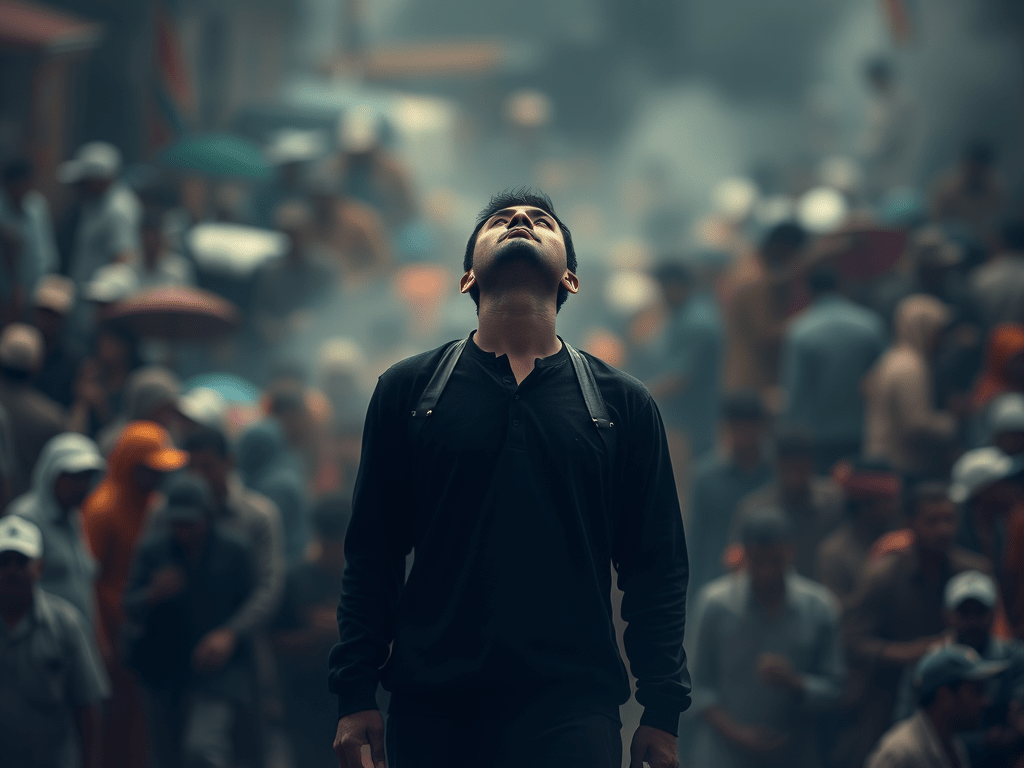
Sovereignty, Suffering, and the Assurance That Nothing Essential Is Lost
Every soul enters a world already in motion.
Cultures precede us.
Family systems predate our consent.
Economic, political, and emotional climates are inherited before we can evaluate them.
By the time awareness matures, patterns are already in place—many shaped not by wisdom, but by survival, fear, and repetition. It is not controversial to say that most human behavior is unconscious most of the time. It is simply observable.
And within such a world, harm occurs.
Not always through cruelty.
Not always through intent.
Often through unexamined habits, normalized neglect, inherited wounds, and systems that evolved for survival rather than care.
For a sensitive or awakening soul, this raises a painful and persistent question:
If the world is this unconscious, what chance did I ever have?
Collateral Damage Without Moral Failure
Many people carry an unspoken belief that if their life has been unusually difficult—marked by accidents, instability, abuse, illness, repeated loss, or prolonged struggle—then something must be fundamentally wrong with them.
This belief is rarely stated aloud, but it shapes identity quietly.
Yet another interpretation is available—one that neither excuses harm nor spiritualizes it:
In an imperfect world, harm can occur without requiring personal failure.
Souls incarnate into environments shaped by collective unconsciousness. The resulting friction, injury, and distortion are not verdicts on worth or readiness. They are byproducts of incomplete systems interacting with vulnerable beings.
Recognizing this does not remove responsibility where it belongs—but it does release the false responsibility many have carried for what was never theirs to hold.
Separation as Experience, Not Erasure
At some point, nearly everyone touches the feeling of separation—
from meaning, from safety, from others, from Source, or from themselves.
This experience can be so convincing that it feels ontological, as if something essential has been broken or lost forever.
Yet separation, as it is lived, is experiential rather than absolute.
Awareness can contract.
Identity can fragment.
Trust can dissolve.
But the deeper continuity of being does not vanish.
A helpful way to hold this—without demanding belief—is this:
Nothing that is real can be destroyed; only our access to it can be obscured.
This is not a moral claim. It is an assurance about continuity.
Learning Without Justifying Suffering
There is understandable resistance to any framework that frames pain as “necessary.” Many spiritual narratives have caused harm by insisting that suffering was chosen, deserved, or required for growth.
This essay does not make that claim.
Instead, it names a quieter truth:
Meaning arises through integration, not through mandate.
Life does not need to be painful to be instructive.
But when pain occurs, it does not automatically become meaningless.
Learning happens after the fact—when experience is metabolized, not when it is imposed. Some experiences take years, lifetimes, or multiple chapters to integrate. Some are never fully understood—and still do not invalidate the soul.
The Assurance Beneath the Chaos
For those whose lives have been marked by instability, the most healing question is often not “Why did this happen?” but:
“Is there something fundamentally unsafe about existence itself?”
Here, a gentle assurance matters:
No matter how difficult a life becomes, no soul is erased by the experience of it.
Bodies can be harmed.
Paths can be derailed.
Identity can fracture.
Yet nothing essential is annihilated.
This assurance is not a promise that everything will be made right immediately—or even within one lifetime. It is a deeper reassurance that existence itself is not hostile to being.
For many, this is the first sense of safety they have ever felt.
Sovereignty Begins With Safety
Sovereignty is often misunderstood as strength, independence, or control.
In truth, sovereignty begins much earlier and much quieter—with safety.
Before a soul can reclaim agency, it must first feel that:
- its existence is not a mistake
- its injuries do not define its worth
- its path, however disrupted, has not disqualified it from meaning
Only then does choice return naturally:
- the choice to pause
- the choice to leave
- the choice to speak
- the choice to rebuild at one’s own pace
This is why reassurance is not indulgence. It is preparatory.
Without it, calls to agency feel like pressure.
With it, agency feels possible.
An Imperfect World, a Preserved Essence
To live in an unconscious world is to risk injury.
To awaken within it is to feel that risk more acutely.
Yet awakening does not require despair.
It requires discernment—knowing what belongs to the world, what belongs to others, and what belongs to you.
And at the deepest level, it requires remembering this:
You were not broken by what you survived.
You were shaped, marked, and challenged—but not erased.
Nothing essential has been lost.
Not your capacity for meaning.
Not your connection to Source.
Not your right to sovereignty.
Even if those things feel distant now.
Closing Orientation
This essay does not ask you to conclude anything.
It simply offers an orientation—one that steadies rather than explains, reassures rather than instructs.
If life has been hard, that hardness is not proof of failure.
If the world has been unconscious, that unconsciousness is not your fault.
If meaning feels delayed, that delay is not a verdict.
Safety is deeper than circumstance.
Continuity is deeper than memory.
And from that ground, agency can return—when you are ready.
Optional Continuations
If this reflection resonates, you may find it supportive to continue with:
- 🌿 Begin Here If the World Feels Unstable
- From Learned Helplessness to Personal Agency
- Codex of Resonance Metrics: A Spiritual Compass in Times of Uncertainty
These pieces explore stability, agency, and orientation from complementary angles, at a pace designed to support integration rather than urgency.
About the author
Gerry explores themes of change, emotional awareness, and inner coherence through reflective writing. His work is shaped by lived experience during times of transition and is offered as an invitation to pause, notice, and reflect.
If you’re curious about the broader personal and spiritual context behind these reflections, you can read a longer note here.
 Life.Understood.
What stirred your remembrance? Share your reflection below—we’re weaving the New Earth together, one soul voice at a time.