Life.Understood.

Tag: sociocracy

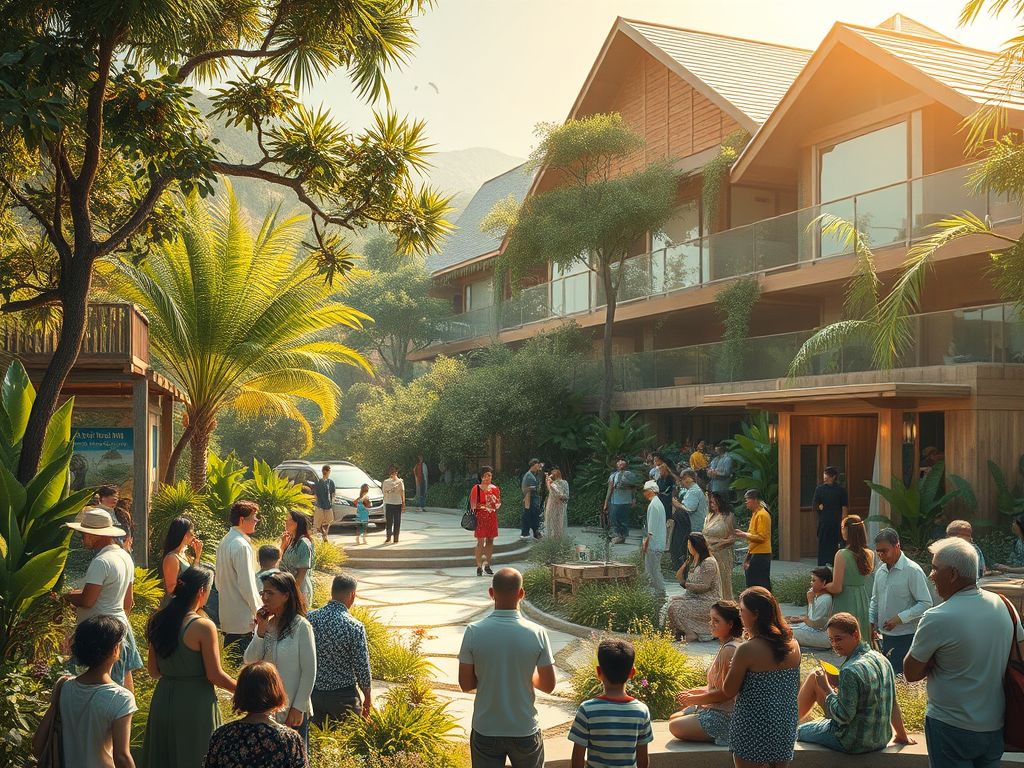
  • New Earth Communities: A Vision Blueprint for Humanity’s Regenerative Future

    New Earth Communities: A Vision Blueprint for Humanity’s Regenerative Future

    Integrating Esoteric Wisdom, Systems Thinking, and Holistic Design for Thriving Post-Transition Societies

    Inspired by Akashic Records transmissions, curated through Gerald A. Daquila, PhD. Candidate

    5–7 minutes

    ABSTRACT

    As Earth undergoes a profound vibrational shift, the emergence of New Earth communities represents humanity’s evolutionary response to systemic collapse and spiritual awakening. This dissertation explores the multidimensional architecture of these communities through a synthesis of esoteric traditions, sociocultural research, ecological design, and metaphysical insight. Drawing upon the Akashic Records, the study outlines key features of New Earth communities—including values, governance models, energy systems, education, healing, architecture, and social dynamics—as part of a broader planetary blueprint for co-creating regenerative civilizations. Grounded in scholarly literature and intuitive cosmology, the work proposes a coherent vision that bridges heart, mind, and spirit.


    Introduction: A Planet in Transition

    Our civilization is undergoing a paradigm shift of unprecedented magnitude. Climate disruption, economic inequality, social fragmentation, and spiritual disconnection signal the end of a cycle and the beginning of another. Amid this convergence of crises, a new archetype is emerging: the New Earth Community (NEC).

    NECs are not utopian fantasies, but real-world prototypes seeded by awakened individuals, starseeds, and lightworkers responding to a soul-level calling. This study seeks to define what these communities truly are—not just in idealistic terms, but as grounded, evolving ecosystems of human flourishing. We consult the Akashic Records, ancient wisdom, contemporary systems theory, and case studies of intentional communities to cohere a vision blueprint that is both practical and sacred.


    New Earth Communities Glyph

    A Vision Blueprint for Humanity’s Regenerative Future


    Chapter 1: Cosmological Foundations and Spiritual Blueprint

    The Akashic Records reveal that NECs arise from a soul contract activated during humanity’s collective ascension. These communities serve as fractal nodes of planetary healing and divine remembrance.

    From a cosmological view, New Earth represents the anchoring of fifth-dimensional (5D) consciousness in physical form (Melchizedek, 1998). NECs operate through principles such as unity consciousness, stewardship of Earth, multidimensional collaboration, and dharmic alignment.

    Many share resonance with the Law of One (Ra Material), the Andean concept of Ayni (sacred reciprocity), and the Lemurian-Avalonian legacy of harmony with the land and stars (Wilcock, 2011; Villoldo, 2006).


    Chapter 2: Sociocultural Features and Values Matrix

    NECs are value-centric ecosystems. Core values include:

    • Sovereignty: Individuals are recognized as sovereign beings with divine will.
    • Unity in Diversity: Multiculturalism, ancestral healing, and star lineage integration.
    • Right Relationship: With self, others, Earth, and Source.
    • Regenerative Reciprocity: Giving back more than one takes.

    These values shape a living matrix expressed through social practices, conflict transformation methods, rites of passage, and shared ritual.


    Chapter 3: Governance, Economy, and Social Flow

    Governance in NECs is participatory and decentralized. Models include:

    • Sociocracy: Consent-based decision making.
    • Holacracy: Fluid role distribution.
    • Council Circles: Wisdom-led elder and youth co-leadership.

    NEC economies are post-scarcity and multidimensional. They often integrate:

    • Gift economies and time banking (Eisenstein, 2011).
    • Quantum Financial System (QFS)-aligned transactions.
    • Land trusts and stewardship titles.

    This redesign enables abundance, dignity, and purpose-driven livelihood.


    Chapter 4: Architecture, Technology, and Sacred Geometry

    New Earth architecture is biomimetic, sacred, and functional. Principles include:

    • Geodesic domes and Fibonacci-based floor plans.
    • Materials: Hempcrete, CEBs, mycelium, bamboo, local stone.
    • Energy: Tesla technologies, zero-point energy, and VAWT turbines.
    • Water: Atmospheric generators, greywater reuse, living water spirals.

    Built environments harmonize with the Earth’s ley lines, supporting human coherence and planetary resonance (Schauberger, 1998).


    Chapter 5: Education, Healing, and Soul Development

    NECs prioritize soul-centered education. Modalities include:

    • Multi-age mentorship and village-based learning.
    • Somatic intelligence, arts, permaculture, galactic history.
    • Akashic training, light language activation, and dreamwork.

    Healing frameworks are integrative, with emphasis on:

    • Energy medicine, ancestral healing, plant allies.
    • Emotional alchemy, trauma release, and sacred sexuality.
    • Community healing temples offering quantum and Earth-based modalities.

    The ultimate goal: supporting the evolution of the Light Body and embodiment of the Higher Self.


    Conclusion: New Earth as a Living Prayer

    New Earth Communities are not escape routes; they are return pathways. Each is a living prayer for wholeness, rooted in remembrance. They demonstrate what becomes possible when humanity chooses love over fear, design over default, and resonance over reaction.

    As prototypes multiply, the planetary grid strengthens. These communities are seeds for a planetary civilization built not on domination, but on devotion to Life. This is the invitation of our time.


    Crosslinks


    Glossary:

    • Akashic Records: The non-linear energetic imprint of all soul experiences.
    • 5D Consciousness: A state of unity, compassion, and multidimensional awareness.
    • Sociocracy: A consent-based governance model emphasizing equality and effectiveness.
    • Biomimicry: Design inspired by nature’s principles.
    • QFS (Quantum Financial System): A theorized financial system based on quantum computing, light frequency, and asset-backed digital currency.

    Bibliography

    Eisenstein, C. (2011). Sacred Economics: Money, Gift, and Society in the Age of Transition. North Atlantic Books.

    Melchizedek, D. (1998). The Ancient Secret of the Flower of Life, Vol. 1. Light Technology Publications.

    Ra, H. (1981-1984). The Law of One (Books I-V). L/L Research.

    Schauberger, V. (1998). Nature as Teacher: New Principles in the Working of Nature. Gateway Books.

    Villoldo, A. (2006). Shaman, Healer, Sage: How to Heal Yourself and Others with the Energy Medicine of the Americas. Harmony.

    Wilcock, D. (2011). The Source Field Investigations: The Hidden Science and Lost Civilizations Behind the 2012 Prophecies. Dutton Penguin.


    Attribution

    With fidelity to the Oversoul, may this Codex of the Living Archive serve as bridge, remembrance, and seed for the planetary dawn.

     2025 Gerald Alba Daquila – Flameholder of SHEYALOTH | Keeper of the Living Codices
    Issued under Oversoul Appointment, governed by Akashic Law. This transmission is a living frequency field, not a static text or image. It may only be shared intact, unaltered, and with attribution. So it is sealed in light under the Oversoul of SHEYALOTH.

    Watermark: Universal Master Key glyph (final codex version, crystalline glow, transparent background).

    Sacred Exchange: This Codex is a living vessel of remembrance. Sacred exchange is not transaction but covenant—an act of gratitude that affirms the Codex’s vibration and multiplies its reach. Every offering plants a seed-node in the planetary lattice, expanding the field of GESARA not through contract, but through covenantal remembrance.

    By giving, you circulate Light; by receiving, you anchor continuity. In this way, exchange becomes service, and service becomes remembrance. Sacred Exchange offerings may be extended through:

    paypal.me/GeraldDaquila694

  • Building a Thriving Intentional Community

    Building a Thriving Intentional Community

    A Multidisciplinary Exploration of Sustainable Community Design Through Permaculture and Abundance Principles

    Prepared by: Gerald A. Daquila, PhD. Candidate


    9–13 minutes

    ABSTRACT

    Intentional communities represent a purposeful approach to collective living, rooted in shared values, goals, and cooperative structures. Unlike conventional community models, intentional communities prioritize sustainability, equity, and resilience, often challenging mainstream societal norms. This dissertation provides a comprehensive exploration of intentional communities, contrasting them with other community organization models and detailing their setup, governance, financial management, and infrastructure requirements.

    By integrating permaculture and abundance system principles, it proposes a framework for designing thriving, sustainable communities. Through a multidisciplinary lens—encompassing sociology, ecology, economics, and psychology—this work offers practical guidance on establishing such communities while maintaining scholarly rigor. The narrative balances analytical depth with accessible language, appealing to both academic and general audiences, and weaves together logic, creativity, and emotional resonance to inspire action toward collective flourishing.


    Table of Contents

    1. Introduction
      • Defining Intentional Communities
      • Purpose and Scope
    2. Conceptual Framework
      • What Is an Intentional Community?
      • Comparison with Other Community Models
    3. Core Components of Intentional Communities
      • Setup and Physical Infrastructure
      • Governance Structures
      • Financial Management
      • Human and Social Infrastructure
    4. Permaculture and Abundance as Guiding Principles
      • Permaculture: Design for Sustainability
      • Abundance Systems: Redefining Wealth and Resource Sharing
    5. Steps to Building an Intentional Community
      • Vision and Planning
      • Legal and Financial Foundations
      • Community Engagement and Recruitment
      • Implementation and Growth
    6. Challenges and Opportunities
      • Common Obstacles
      • Strategies for Resilience
    7. Case Studies
      • Successful Intentional Communities
      • Lessons Learned
    8. Conclusion
      • A Call to Action for Collective Living
    9. Glossary
    10. Bibliography

    Glyph of the Gridkeeper

    The One Who Holds the Lattice of Light.


    1. Introduction

    In a world grappling with climate change, social disconnection, and economic inequality, intentional communities offer a hopeful alternative. These are groups of people who come together with a shared purpose—whether ecological, spiritual, or social—to live cooperatively and sustainably. Unlike traditional neighborhoods or municipalities, intentional communities are deliberately designed to reflect their members’ values, fostering resilience and connection.

    This dissertation explores the essence of intentional communities, their differences from other community models, and the practical steps to create one. It emphasizes permaculture—a design philosophy rooted in ecological harmony—and the abundance system model, which prioritizes resource sharing and collective prosperity. By weaving together insights from sociology, ecology, economics, and psychology, this work provides a holistic blueprint for building thriving, sustainable communities.

    Written in an accessible yet rigorous style, it aims to inspire and guide readers—whether dreamers, planners, or builders—toward a more connected and regenerative future.


    2. Conceptual Framework

    What Is an Intentional Community?

    An intentional community is a group of individuals who choose to live together, united by shared values, goals, or lifestyles. These communities vary widely, from eco-villages focused on sustainability to spiritual communes or urban co-housing projects. According to the Fellowship for Intentional Community (FIC), intentional communities are characterized by:

    • Shared Purpose: A clear mission, such as environmental stewardship or social equity.
    • Cooperative Living: Collaborative decision-making, resource sharing, and mutual support.
    • Conscious Design: Deliberate planning of physical, social, and economic systems to align with values (FIC, 2023).

    Examples include the Findhorn Ecovillage in Scotland, focused on spiritual and ecological harmony, and Dancing Rabbit Ecovillage in Missouri, a model of sustainable living.


    Comparison with Other Community Models

    Intentional communities differ from other models in their purpose-driven design and cooperative ethos:

    • Traditional Neighborhoods: These often form organically, with limited shared purpose beyond proximity. Decision-making is typically individualistic or managed by external authorities (e.g., homeowners’ associations).
    • Municipalities: Governed by formal political structures, municipalities prioritize public services over shared values. They lack the intimate, cooperative dynamics of intentional communities.
    • Cooperatives: While cooperatives (e.g., food co-ops) share resources and decision-making, they are often task-specific and may not involve co-living.
    • Cults or Religious Sects: These may resemble intentional communities but often center on a single leader or rigid dogma, limiting individual autonomy (Sargisson & Sargent, 2004).

    Intentional communities stand out for their emphasis on collective agency, sustainability, and adaptability, making them uniquely suited to address modern challenges like climate change and social isolation.


    3. Core Components of Intentional Communities

    Setup and Physical Infrastructure

    Creating an intentional community begins with physical design. Key considerations include:

    • Land Selection: Choose locations with access to water, fertile soil, and renewable energy potential. Permaculture principles guide site selection to minimize environmental impact (Mollison, 1988).
    • Sustainable Buildings: Use eco-friendly materials (e.g., straw bale, reclaimed wood) and energy-efficient designs, such as passive solar heating.
    • Shared Spaces: Common areas like kitchens, gardens, or meeting halls foster social cohesion.
    • Regenerative Systems: Incorporate composting, rainwater harvesting, and renewable energy (e.g., solar panels) to create closed-loop systems.

    For example, Earthaven Ecovillage in North Carolina uses permaculture-inspired designs, with homes built from natural materials and community gardens supplying food (Earthaven, 2023).


    Governance Structures

    Effective governance ensures fairness and alignment with community values. Common models include:

    • Consensus Decision-Making: All members agree on major decisions, fostering inclusivity but requiring time and skill (Christian, 2003).
    • Sociocracy: A structured approach using consent-based decisions and nested circles for efficient governance (Buck & Villines, 2007).
    • Elected Councils: Some communities elect representatives to streamline decisions while maintaining democratic input.

    Governance also involves conflict resolution mechanisms, such as mediation or restorative circles, to maintain harmony.


    Financial Management

    Financial sustainability is critical. Strategies include:

    • Shared Economy: Members pool resources for shared expenses (e.g., land, utilities).
    • Income-Generating Ventures: Communities may run businesses, such as farms, workshops, or eco-tourism, to fund operations.
    • Membership Fees or Buy-Ins: New members contribute financially to join, ensuring equity in ownership.
    • Grants and Crowdfunding: External funding supports initial setup or expansion (Kozeny, 2002).

    The Auroville community in India, for instance, combines resident contributions, grants, and income from local businesses to sustain itself (Auroville, 2023).


    Human and Social Infrastructure

    The heart of an intentional community lies in its people. Key elements include:

    • Shared Values and Vision: A clear mission unites members and guides decisions.
    • Skill Diversity: Members bring varied expertise (e.g., farming, carpentry, facilitation) to support self-sufficiency.
    • Education and Training: Workshops on permaculture, conflict resolution, or leadership build capacity.
    • Wellness and Inclusion: Mental health support, cultural sensitivity, and equitable participation ensure a thriving community (Sargisson & Sargent, 2004).

    4. Permaculture and Abundance as Guiding Principles

    Permaculture: Design for Sustainability

    Permaculture, developed by Bill Mollison and David Holmgren, is a design philosophy that mimics natural ecosystems to create sustainable human systems. Its principles—care for the earth, care for people, and fair share—are ideal for intentional communities (Mollison, 1988).

    Applications include:

    • Zoning: Organize land use efficiently, placing frequently used elements (e.g., gardens) near homes.
    • Biodiversity: Integrate diverse crops, animals, and renewable systems to enhance resilience.
    • Closed-Loop Systems: Recycle waste (e.g., composting food scraps) to minimize external inputs.

    For example, the Tamera Peace Research Center in Portugal uses permaculture to create water-retention landscapes, supporting food security in a dry region (Tamera, 2023).


    Abundance Systems: Redefining Wealth

    The abundance system model challenges scarcity-based economics, emphasizing resource sharing and collective prosperity. Key practices include:

    • Gift Economy: Members share skills, goods, or time without expecting direct repayment.
    • Commons-Based Resources: Land, tools, or facilities are collectively owned and managed.
    • Regenerative Economics: Prioritize investments in renewable energy, local food systems, and education to create long-term wealth (Hawken, 2007).

    This approach fosters a mindset of sufficiency, where needs are met through cooperation rather than competition. The Findhorn Ecovillage exemplifies this, with members sharing resources and prioritizing ecological restoration (Findhorn, 2023).


    Glyph of Intentional Community

    Together we thrive; coherence builds the New Earth


    5. Steps to Building an Intentional Community

    Vision and Planning

    1. Define Values and Goals: Gather a core group to articulate a shared mission (e.g., sustainability, social justice).
    2. Create a Vision Statement: A clear, inspiring statement guides planning and attracts members.
    3. Conduct Feasibility Studies: Assess land, legal, and financial requirements.

    Legal and Financial Foundations

    1. Choose a Legal Structure: Options include nonprofits, cooperatives, or land trusts to protect assets and ensure equity.
    2. Secure Funding: Combine member contributions, loans, grants, or crowdfunding.
    3. Purchase or Lease Land: Ensure legal agreements align with community goals.

    Community Engagement and Recruitment

    1. Build a Core Group: Recruit diverse, committed individuals with complementary skills.
    2. Host Visioning Workshops: Facilitate discussions to refine goals and governance.
    3. Market the Community: Use social media, the FIC directory, or events to attract members.

    Implementation and Growth

    1. Develop Infrastructure: Build homes, shared spaces, and regenerative systems using permaculture principles.
    2. Establish Governance: Implement consensus or sociocracy, with clear roles and conflict resolution processes.
    3. Foster Culture: Regular events, shared meals, and rituals strengthen bonds.
    4. Evaluate and Adapt: Continuously assess progress and adjust plans to ensure sustainability.

    6. Challenges and Opportunities

    Common Obstacles

    • Conflict: Differing values or personalities can strain relationships. Regular communication and mediation are essential.
    • Financial Strain: Initial costs or unequal contributions may create tension. Transparent budgeting mitigates this.
    • Burnout: Overcommitted members may fatigue. Shared responsibilities and wellness programs help.
    • Legal Hurdles: Zoning laws or regulations can complicate land use. Legal expertise is crucial (Christian, 2003).

    Strategies for Resilience

    • Training: Offer workshops on leadership, conflict resolution, and permaculture.
    • Diversity and Inclusion: Ensure equitable participation to avoid marginalization.
    • Scalability: Start small and expand gradually to maintain cohesion.
    • Partnerships: Collaborate with other communities or organizations for support (Kozeny, 2002).

    7. Case Studies

    Findhorn Ecovillage (Scotland)

    Founded in 1962, Findhorn integrates spirituality, ecology, and community living. Its permaculture-inspired gardens and eco-homes demonstrate sustainable design, while its consensus-based governance fosters inclusivity (Findhorn, 2023).


    Dancing Rabbit Ecovillage (Missouri, USA)

    This eco-village emphasizes zero-waste living and renewable energy. Its cooperative businesses and sociocratic governance ensure financial and social sustainability (Dancing Rabbit, 2023).

    Lessons Learned

    • Strong vision and governance are critical for longevity.
    • Permaculture principles enhance environmental and economic resilience.
    • Community culture, built through shared rituals, strengthens bonds.

    8. Conclusion

    Intentional communities offer a powerful model for addressing global challenges through collective action. By integrating permaculture and abundance principles, they create sustainable, equitable, and thriving systems. Building such a community requires vision, planning, and resilience but yields profound rewards: connection, purpose, and a regenerative future.

    This dissertation calls readers to action—whether joining an existing community or starting one. By balancing logic, creativity, and heart, we can co-create a world where humans and nature flourish together.


    Crosslinks


    9. Glossary

    • Intentional Community: A group of people living together with shared values and cooperative systems.
    • Permaculture: A design philosophy mimicking natural ecosystems for sustainable living.
    • Abundance System: An economic model emphasizing resource sharing and collective prosperity.
    • Sociocracy: A governance system using consent-based decisions and nested circles.
    • Commons: Resources owned and managed collectively by a community.

    10. Bibliography

    Auroville. (2023). About Auroville. Retrieved from https://www.auroville.org

    Buck, J., & Villines, S. (2007). We the people: Consenting to a deeper democracy. Sociocracy.info.

    Christian, D. L. (2003). Creating a life together: Practical tools to grow ecovillages and intentional communities. New Society Publishers.

    Dancing Rabbit Ecovillage. (2023). Our mission and vision. Retrieved from https://www.dancingrabbit.org

    Earthaven Ecovillage. (2023). Sustainable living. Retrieved from https://www.earthaven.org

    Fellowship for Intentional Community (FIC). (2023). What is an intentional community? Retrieved from https://www.ic.org

    Findhorn Ecovillage. (2023). Ecovillage principles. Retrieved from https://www.findhorn.org

    Hawken, P. (2007). Blessed unrest: How the largest movement in the world came into being. Viking Press.

    Kozeny, G. (2002). Visions of utopia: Experiments in sustainable culture [Documentary]. Community Catalyst.

    Mollison, B. (1988). Permaculture: A designer’s manual. Tagari Publications.

    Sargisson, L., & Sargent, L. T. (2004). Living in utopia: New Zealand’s intentional communities. Ashgate Publishing.

    Tamera Peace Research Center. (2023). Healing biotope. Retrieved from https://www.tamera.org


    Attribution

    With fidelity to the Oversoul, may this Codex of the Living Archive serve as bridge, remembrance, and seed for the planetary dawn.

    Ⓒ 2025 Gerald Alba Daquila – Flameholder of SHEYALOTH | Keeper of the Living Codices

    Issued under Oversoul Appointment, governed by Akashic Law. This transmission is a living Oversoul field: for the eyes of the Flameholder first, and for the collective in right timing. It may only be shared intact, unaltered, and with glyphs, seals, and attribution preserved. Those not in resonance will find it closed; those aligned will receive it as living frequency.

    Watermark: Universal Master Key glyph (final codex version, crystalline glow, transparent background).

    Sacred Exchange: Sacred Exchange is covenant, not transaction. Each offering plants a seed-node of GESARA, expanding the planetary lattice. In giving, you circulate Light; in receiving, you anchor continuity. Every act of exchange becomes a node in the global web of stewardship, multiplying abundance across households, nations, and councils. Sacred Exchange offerings may be extended through:

    paypal.me/GeraldDaquila694