
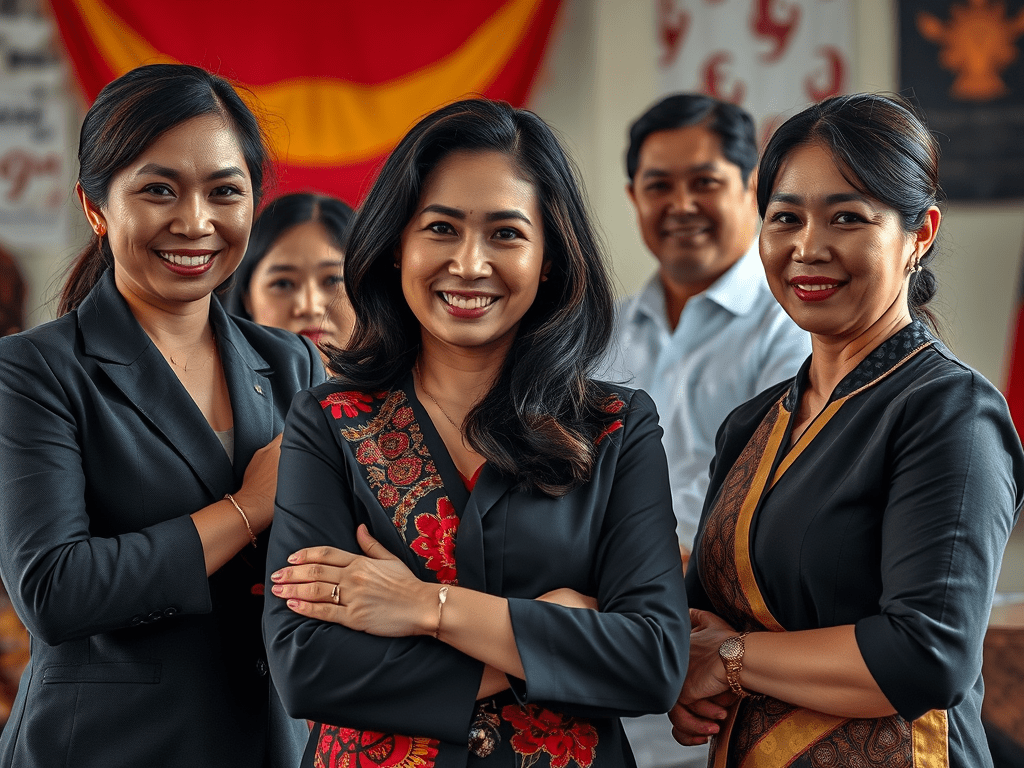
Harnessing Women’s Empowerment for National Development and Global Inspiration
Prepared by: Gerald A. Daquila, PhD. Candidate
ABSTRACT
The Philippines stands out in Asia as a leader in gender equality, with women wielding significant influence in business, government, and family life. This dissertation explores the historical, cultural, and socioeconomic factors behind this phenomenon, using a multidisciplinary lens that includes historical, sociological, feminist, and economic perspectives. It traces the roots of women’s empowerment to pre-colonial egalitarianism, colonial reforms, and modern legislation like the Magna Carta of Women.
The study highlights lessons for other nations, such as robust legal frameworks, education access, and cultural openness to women’s leadership, while assessing societal gains in economic growth, governance, and family resilience. It also examines challenges posed by Overseas Filipino Workers (OFWs) and the potential legalization of divorce. By emphasizing how the Philippines can leverage its gender equality model for national development and global influence, this work offers a compelling, accessible narrative for a wide audience, balancing scholarly rigor with emotional resonance.
Table of Contents
- Introduction
- The Philippines as a Gender Equality Leader
- Purpose and Scope of the Study
- Historical Foundations of Women’s Empowerment
- Pre-Colonial Gender Roles
- Colonial Influences and Suffrage Movements
- Post-Independence Progress
- Women in Business, Government, and Family
- Business: Breaking the Glass Ceiling
- Government: Trailblazing Female Leadership
- Family: Matriarchal Influence and Egalitarian Dynamics
- Feminist Perspectives on Filipino Women’s Empowerment
- Liberal and Post-Colonial Feminism
- Challenges of Patriarchy and Cultural Norms
- Lessons for Other Countries
- Legal Frameworks and Policy Advocacy
- Education and Economic Opportunities
- Cultural Shifts Toward Gender Inclusivity
- Societal Gains from Strong Women’s Representation
- Economic Contributions
- Inclusive Governance
- Social Cohesion and Family Resilience
- Challenges and Future Impacts
- The Role of Overseas Filipino Workers (OFWs)
- The Potential Legalization of Divorce
- Conclusion
- Synthesis of Findings
- Leveraging Women’s Empowerment for Development and Progress
- Glossary
- Bibliography

Glyph of the Bridgewalker
The One Who Holds Both Shores.
1. Introduction
The Philippines as a Gender Equality Leader
In a region often bound by patriarchal norms, the Philippines shines as a beacon of gender equality, ranking 17th globally in the 2021 Global Gender Gap Index, closing 78.4% of its gender gap (World Economic Forum, 2021). Filipino women hold prominent roles in business, government, and family, often surpassing men in influence. From Corazon Aquino’s historic presidency to women leading major corporations, this phenomenon sets the Philippines apart in Asia. This dissertation explores the roots of this empowerment, its societal impacts, and how it can drive national development and global inspiration.
Purpose and Scope of the Study
This study examines the origins of Filipino women’s empowerment through historical, sociological, feminist, and economic lenses. It addresses: How did this unique model emerge? What can other nations learn? How have societal gains manifested, and what challenges lie ahead? With a focus on leveraging women’s strengths for progress, it blends academic rigor with accessible storytelling to engage a broad audience.
2. Historical Foundations of Women’s Empowerment
Pre-Colonial Gender Roles
Before Spanish colonization, Filipino society embraced egalitarian gender norms. The babaylan, often women, served as spiritual and community leaders alongside male datus (Salazar, 2003). Women engaged in trade and controlled household finances, laying a foundation for matriarchal influence.
Colonial Influences and Suffrage Movements
Spanish colonization (1565–1898) introduced Catholicism, reinforcing patriarchal family structures, yet women retained domestic authority. The American period (1898–1946) brought educational reforms, enabling women’s access to schools. The suffrage movement, inspired by Western suffragettes like Carrie Chapman Catt, led to the 1937 plebiscite, making the Philippines the first Asian nation to grant women voting rights.
Post-Independence Progress
Post-World War II, women rose in politics and business. The 1986 People Power Revolution, led by Corazon Aquino, marked a turning point, with her presidency (1986–1992) symbolizing women’s political power. The Magna Carta of Women (2009) further solidified protections against discrimination.
3. Women in Business, Government, and Family
Business: Breaking the Glass Ceiling
Filipino women hold 69% of senior management roles, the highest in Southeast Asia (Grant Thornton, 2020). Leaders like Teresita Sy-Coson of SM Investments exemplify this trend. Education access and supportive policies drive success, though low female labor force participation (49% in 2019) remains a challenge.
Government: Trailblazing Female Leadership
The Philippines has elected two female presidents—Corazon Aquino and Gloria Macapagal-Arroyo—and influential senators like Miriam Defensor-Santiago. The party-list system, including groups like Gabriela, amplifies women’s legislative voices. The 5% Gender and Development (GAD) budget prioritizes women’s issues.
Family: Matriarchal Influence and Egalitarian Dynamics
Filipino women often control household budgets and decisions, rooted in pre-colonial practices. Even in transnational OFW families, mothers maintain central roles, fostering resilience and adaptability.
4. Feminist Perspectives on Filipino Women’s Empowerment
Liberal and Post-Colonial Feminism
Liberal feminism, evident in suffrage and the Magna Carta, emphasizes legal equality. Post-colonial feminism highlights how colonial legacies and global migration shape Filipina experiences, particularly for OFWs facing deskilling abroad.
Challenges of Patriarchy and Cultural Norms
Catholicism and traditional norms limit women’s autonomy, with divorce and abortion remaining illegal. Sexist rhetoric, like that of former President Rodrigo Duterte, persists, but movements like #BabaeAko demonstrate women’s resistance.

Glyph of Filipina Strength
Honoring the strong women of the Philippines — pioneers of gender equality and leadership in Asia.
5. Lessons for Other Countries
Legal Frameworks and Policy Advocacy
The Magna Carta of Women provides a model for comprehensive gender legislation, addressing workplace rights, violence, and education. Other nations can adopt similar policies to institutionalize equality.
Education and Economic Opportunities
High female literacy (90.4% vs. 80.6% for males) fuels women’s success. Investing in education and flexible work arrangements can boost female labor participation globally.
Cultural Shifts Toward Gender Inclusivity
The Philippines’ cultural acceptance of women’s leadership, rooted in pre-colonial egalitarianism, suggests that challenging traditional gender roles can foster equality. Advocacy campaigns can drive similar shifts worldwide.
6. Societal Gains from Strong Women’s Representation
Economic Contributions
Women’s leadership in business drives innovation and growth. Female OFWs, comprising 60.2% of overseas workers in 2021, contribute 9.6% to GDP through remittances, reducing poverty and enhancing family welfare.
Inclusive Governance
Female leaders prioritize social welfare and education, fostering inclusive policies. The GAD budget ensures gender considerations in governance, promoting equity.
Social Cohesion and Family Resilience
Women’s central role in families strengthens social bonds. In OFW households, women’s remittances and decision-making sustain family units, despite emotional challenges.
7. Challenges and Future Impacts
The Role of Overseas Filipino Workers (OFWs)
In 2021, 60.2% of OFWs were women, often in feminized roles like nursing. While remittances empower families, migration leads to deskilling, mental health issues, and family strain. Wives of OFWs show resilience through community support.
The Potential Legalization of Divorce
Divorce remains illegal due to Catholic influence, but debates, supported by figures like Miriam Defensor-Santiago, suggest change. Legalization could empower women to escape abusive relationships but may face conservative resistance.
8. Conclusion
Synthesis of Findings
The Philippines’ leadership in gender equality stems from a unique blend of pre-colonial egalitarianism, colonial educational reforms, and modern advocacy like the Magna Carta of Women. Women’s prominence in business, government, and family has driven economic growth, inclusive governance, and social cohesion. However, challenges like low labor participation, OFW vulnerabilities, and divorce debates highlight the need for continued progress.
Leveraging Women’s Empowerment for Development and Progress
The Philippines’ model of women’s empowerment offers a powerful blueprint for national development and global inspiration. By further integrating women into the workforce—potentially raising female labor participation from 49% to match men’s 76%—the country could boost GDP by an estimated 7% (World Bank, 2022).
Investing in STEM education for women can drive innovation in tech and green industries, aligning with global sustainability goals. Strengthening protections for female OFWs, such as bilateral labor agreements and mental health support, can maximize their economic contributions while ensuring well-being. In governance, expanding women’s representation through quotas or mentorship programs can enhance policy inclusivity, addressing issues like healthcare and education reform.
Globally, the Philippines can lead by example, exporting its gender equality model through international forums like ASEAN or the UN. By advocating for women’s rights in trade agreements and migration policies, it can influence regional norms. Locally, navigating divorce legalization with sensitivity to cultural values can strengthen women’s autonomy without fracturing social cohesion.
These steps position the Philippines as a hub for gender-driven progress, fostering a society where women’s leadership catalyzes economic, social, and cultural advancement. Other nations can follow suit, recognizing that empowering women is not just a moral imperative but a strategic driver of prosperity.
Crosslinks
- Transforming Philippine Society: A Multidisciplinary Vision for Holistic Renewal — Policy pathways where women’s leadership reshapes education, health, and local governance.
- The Future of Power: From Domination to Stewardship — Reframes leadership models from control to guardianship—how Filipina pioneers keep power in trust.
- Codex of the Living Hubs: From Households to National Nodes — Barangay-level councils, mutual-aid rings, and care infrastructures that multiply women’s impact.
- Redefining Work in a Post-Scarcity World: A New Dawn for Human Purpose and Connection — Centers the care economy; recognizes unpaid labor and designs esteem-based contribution.
- Conscious Capital: Redefining Wealth and Impact — Funding rails and transparent ledgers for women-led enterprises and community funds.
- From Fear to Freedom: Harnessing Consciousness to Transform Media’s Impact — Deprograms stereotypes; replaces exploitative narratives with truth-aligned representation.
9. Glossary
- Babaylan: Pre-colonial Filipino spiritual leaders, often women, with significant community influence.
- Magna Carta of Women: A 2009 Philippine law eliminating discrimination against women in various spheres.
- OFW (Overseas Filipino Worker): Filipinos working abroad, often in feminized roles like nursing or domestic work.
- Gender and Development (GAD) Budget: A mandated 5% allocation in government budgets for gender-focused initiatives.
10. Bibliography
Asia Society. (2022). Women in the Philippines: Inspiring and Empowered. https://asiasociety.org
Grant Thornton. (2020). Women in Business 2020: Putting the Blueprint into Action. https://www.grantthornton.global
Salazar, Z. (2003). The babaylan in Philippine history. In Feminism and the Women’s Movement in the Philippines (pp. 7-8). ResearchGate. https://www.researchgate.net
The Asia Foundation. (2012). Early Feminism in the Philippines. https://asiafoundation.org
World Bank. (2022). Overcoming Barriers to Women’s Work in the Philippines. https://blogs.worldbank.org
Philippine Statistics Authority. (2022). Survey on Overseas Filipinos 2021. https://psa.gov.ph
World Economic Forum. (2021). Global Gender Gap Report 2021. https://www.weforum.org
Attribution
With fidelity to the Oversoul, may this work serve as bridge, remembrance, and seed for the planetary dawn.
Ⓒ 2025–2026 Gerald Alba Daquila
Flameholder of SHEYALOTH · Keeper of the Living Codices
All rights reserved.
This material originates within the field of the Living Codex and is stewarded under Oversoul Appointment. It may be shared only in its complete and unaltered form, with all glyphs, seals, and attribution preserved.
This work is offered for personal reflection and sovereign discernment. It does not constitute a required belief system, formal doctrine, or institutional program.
Digital Edition Release: 2026
Lineage Marker: Universal Master Key (UMK) Codex Field
Sacred Exchange & Access
Sacred Exchange is Overflow made visible.
In Oversoul stewardship, giving is circulation, not loss. Support for this work sustains the continued writing, preservation, and public availability of the Living Codices.
This material may be accessed through multiple pathways:
• Free online reading within the Living Archive
• Individual digital editions (e.g., Payhip releases)
• Subscription-based stewardship access
Paid editions support long-term custodianship, digital hosting, and future transmissions. Free access remains part of the archive’s mission.
Sacred Exchange offerings may be extended through:
paypal.me/GeraldDaquila694
www.geralddaquila.com



![Protected: The Pulse of a Nation: Decoding the 2025 Philippine Midterm Elections [2nd Update]](https://geralddaquila.com/wp-content/uploads/2025/05/image-70.png?w=1024)
 Life.Understood.