Life.Understood.

Tag: Governance

  • The River’s Song: Weaving Governance in Unity Consciousness

    The River’s Song: Weaving Governance in Unity Consciousness

    A Tale of Awakening from Division to Collective Harmony

    Prepared by: Gerald A. Daquila, PhD. Candidate


    9–13 minutes

    ABSTRACT

    In the fictional village of Solara, a young weaver named Lila embarks on a transformative journey to reimagine governance through the lens of unity consciousness, where all life is interconnected in a vibrant, living whole. Governance, the art of guiding collective decisions, shifts from the rigid hierarchies of the illusion of separation to a flowing dance of empathy, collaboration, and ecological harmony. Guided by the timeless wisdom of the Akashic Records, Lila draws inspiration from real-world beacons: the Maori’s recognition of the Whanganui River as a living ancestor, Porto Alegre’s participatory budgeting, and Totnes’ Transition Towns.

    These stories weave seamlessly into Solara’s journey, illustrating principles of interconnectedness, inclusivity, and holism. A transition model emerges, offering practical steps to bridge today’s fragmented systems with a future of shared purpose. Written in an evocative, story-driven style, this dissertation blends scholarly rigor with emotional resonance, inviting readers to feel and co-create a world where governance sings with the heart of unity.


    Table of Contents

    1. Solara’s Fractured Heart: A Village Divided
    2. The Pulse of Governance: Guiding the Whole
    3. The Illusion of Separation: A Governance in Crisis
    4. The River’s Whisper: Awakening to Unity Consciousness
    5. Building the Bridge: A Path to Transformation
    6. Threads of Wisdom: Voices from Many Worlds
    7. A New Dawn: Governing as One
    8. Glossary
    9. Bibliography

    1. Solara’s Fractured Heart: A Village Divided

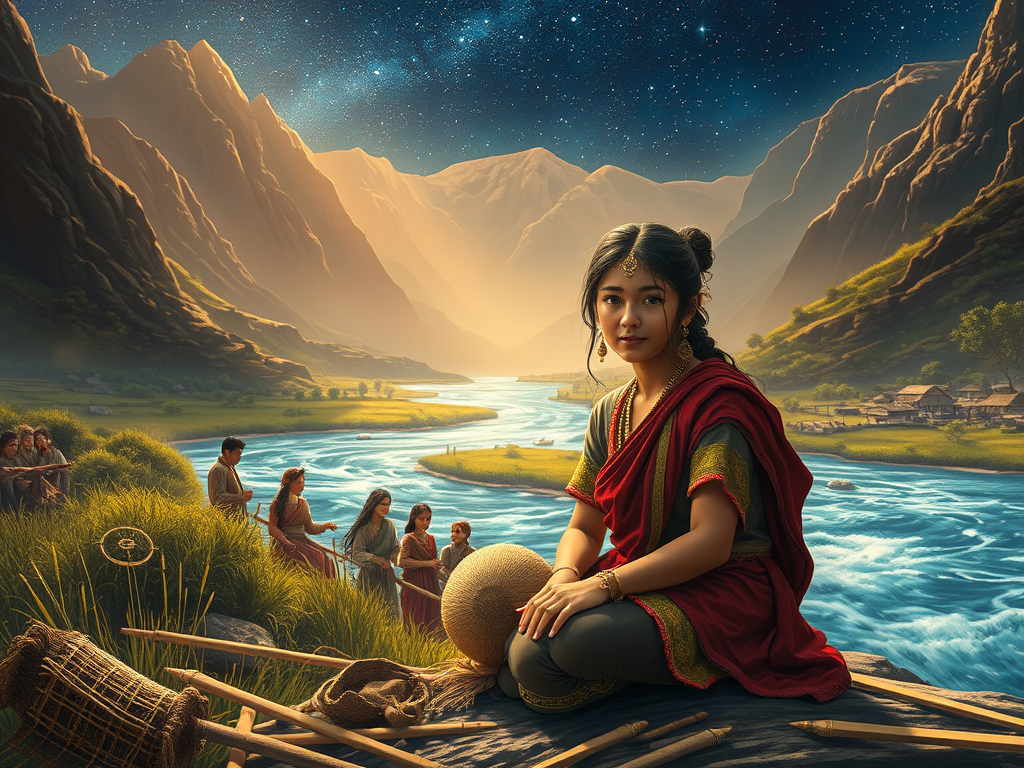
    Beneath the ancient mountains, the village of Solara nestled in a valley where the river once sang a song of life. Its people—farmers with earth-stained hands, weavers threading dreams into cloth, healers soothing weary souls—lived as if bound by invisible walls. Each family guarded their harvest, fearing scarcity would steal their share. Leaders perched in a stone tower, their decrees favoring the wealthy while the river, Solara’s lifeblood, grew murky with neglect, its song fading into silence.

    Lila, a weaver with eyes like the dawn, felt the village’s pain in her heart. She dreamed of a Solara where no child went hungry, where the river’s melody returned, and where decisions flowed from shared hearts, not distant towers. One starlit night, as she sat by the river’s muddy banks, a whisper stirred—the Akashic Records, a boundless tapestry of universal wisdom, calling her to awaken. They spoke of unity consciousness, a truth that all life is one, woven together in a single, vibrant thread. Lila knew this was the path to heal Solara’s fractured governance, but the journey felt vast, like crossing a sea without stars.


    Glyph of Stewardship

    Stewardship is the covenant of trust that multiplies abundance for All.


    2. The Pulse of Governance: Guiding the Whole

    Governance, Lila learned, was the heartbeat of Solara—the rhythm that shaped how its people shared harvests, mended disputes, and dreamed of tomorrow. In the village, it was a heavy chain: rules carved in stone, enforced by tower-bound leaders who saw themselves above the rest. Yet the Records revealed a deeper truth: governance is a dance, a way to weave people, land, and spirit into harmony. Its purpose was to nurture order, ensure fairness, and cradle the well-being of all—from the smallest seedling to the eldest storyteller.

    But Solara’s dance was broken. Leaders hoarded power, resources sparked quarrels, and the river’s cries went unheard.

    Across the world, Lila learned of a place called Porto Alegre, Brazil, where governance had begun to shift (Baiocchi, 2005). There, citizens gathered in neighborhood assemblies, deciding together how to spend public funds—whether to build a school or mend a road. This participatory budgeting gave every voice, rich or poor, a place at the table, fostering trust and shared purpose. Inspired, Lila imagined Solara’s people shaping their own future, their choices flowing like a clear stream. What if our governance could sing like Porto Alegre’s? she wondered, her heart stirring with possibility.


    3. The Illusion of Separation: A Governance in Crisis

    Solara’s governance was built on a lie—the illusion of separation. The tower’s leaders saw themselves as apart, their decrees serving a few while others languished. Farmers fought over water, merchants over coins, each believing survival meant taking more than giving. The river, treated as a tool to exploit, grew silent, its spirit fading. This was the cost of separation: a village divided, its people distrustful, its land weary.

    Lila saw the cracks widen—families quarreled over land, children grew up fearing scarcity, and the earth suffered under short-sighted choices. The Records showed her this was not Solara’s burden alone. Across the world, governance often mirrored this illusion, prioritizing profit over planet, power over people (Klein, 2014).

    Yet, in Aotearoa, the Maori offered a different way. They named their Whanganui River a living ancestor, granting it legal personhood (Roy, 2017). Guardians spoke for the river, ensuring its voice shaped laws on water and land, weaving human needs with nature’s health. Lila felt a spark: if Solara could honor its river as kin, perhaps the illusion of separation could dissolve. “How do we heal this fracture?” she asked the river. It whispered back: Remember you are one.


    4. The River’s Whisper: Awakening to Unity Consciousness

    One twilight, Lila gathered Solara’s people in a meadow, the river murmuring nearby. She shared the Records’ vision: a world where every choice ripples through the web of life, where empathy shapes decisions, and where the river is a partner, not a servant. This was unity consciousness—the knowing that no one, no thing, is separate. All are threads in a single tapestry.

    In this vision, governance was no tower but a circle, where leaders were weavers of wisdom, not wielders of power. Every voice—child, elder, bird, or breeze—mattered. Policies cradled the land, ensuring its vitality for generations yet unborn. The Records spoke of ancient peoples, like the Lemurians, whose councils listened to the earth’s heartbeat, their decisions resonating with universal harmony.

    Lila shared a story from Totnes, UK, where a Transition Town movement had taken root (Hopkins, 2008). There, residents formed groups to grow food, harness the sun’s energy, and create local currencies, deciding together through open dialogue. This cooperative governance strengthened their bond with each other and the land, a living example of unity consciousness. Lila’s words painted a Solara reborn: fields shared freely, disputes healed through listening, the river’s flow guiding every choice. The villagers’ eyes gleamed, but fear lingered. “How do we leave the tower behind?” asked a farmer, his voice rough with doubt. Lila smiled, feeling the river’s whisper in her heart. Build a bridge.


    Glyph of the River’s Song

    Weaving Governance in Unity Consciousness — flowing like water, harmonizing leadership with collective resonance


    5. Building the Bridge: A Path to Transformation

    Lila knew the journey from separation to unity needed a bridge—a way to honor the old while weaving the new. She proposed a path rooted in inclusivity, empowerment, and harmony, drawing on the wisdom of Porto Alegre, the Maori, and Totnes. The villagers began with a circle, a council where every voice was equal. They passed a talking stone, inspired by indigenous traditions, ensuring even the shyest spoke.

    Following Porto Alegre’s lead, they let every villager shape Solara’s resources—deciding together how to share harvests or repair wells (Baiocchi, 2005). This fostered trust, as each choice reflected the whole community’s heart. Like the Maori, they named their river a living kin, appointing a keeper to speak for its needs, ensuring its health guided irrigation and healing plans (Roy, 2017). From Totnes, they learned to form working groups—some planting gardens, others crafting windmills—decisions made not by one but by all, building resilience together (Hopkins, 2008).

    They wove a digital loom, a transparent platform for sharing ideas, inspired by modern tools. Disputes were mended in restorative circles, where stories healed old wounds. The river became a council member, its flow a guide for every choice. Slowly, the tower’s shadow faded, not through force, but because the circle’s light grew brighter.


    6. Threads of Wisdom: Voices from Many Worlds

    Lila’s vision was enriched by a chorus of wisdom. Sociology taught that communities thrive when bound by shared purpose, as Durkheim’s collective consciousness revealed (Durkheim, 1893). Philosophy, through Spinoza and Wilber, showed that ethics flow from seeing all life as one (Wilber, 2000). Psychology unveiled empathy as humanity’s gift, ready to guide when nurtured (Rifkin, 2009). Indigenous ways, like the Haudenosaunee’s councils, honored the earth and future generations (Mann, 2005).

    These threads wove a vision: governance as a living system, rooted in connection, empathy, and care for the whole. Porto Alegre’s assemblies, the Maori’s river guardians, Totnes’ cooperative circles—these were not distant dreams but living sparks of unity consciousness. Solara became a seed, its story rippling outward, inviting every village, every heart, to join the dance of unity.


    7. A New Dawn: Governing as One

    Years later, Solara shone like a star. The river sang, its waters clear. Fields bloomed with shared abundance, and children learned to listen to the land. The council circle grew, its decisions guided by heart and wisdom. The illusion of separation dissolved, replaced by a knowing that every choice shaped the whole.

    Lila, now silver-haired, stood in the meadow where the journey began. The Records whispered that Solara was but one note in a global symphony. The Maori’s river, Porto Alegre’s budgets, Totnes’ resilience—these were threads in a greater tapestry, lighting the way. The path demanded courage: to dismantle towers, to listen deeply, to act for all life.

    Lila called to the world: Step into the circle. Share your story. Honor the earth. Together, we can sing governance as a song of unity, starting now.


    Crosslinks


    8. Glossary

    • Akashic Records: A metaphysical tapestry of universal knowledge, holding the story of all existence, accessed through intuition.
    • Governance: The art of guiding collective decisions to nurture harmony, equity, and well-being.
    • Illusion of Separation: The belief that beings and systems are disconnected, fostering division and conflict.
    • Unity Consciousness: A worldview embracing the interconnectedness of all life, guiding decisions with empathy and holism.

    9. Bibliography

    Baiocchi, G. (2005). Militants and citizens: The politics of participatory democracy in Porto Alegre. Stanford University Press.

    Durkheim, E. (1893). The division of labor in society. Free Press.

    Hopkins, R. (2008). The transition handbook: From oil dependency to local resilience. Green Books.

    Klein, N. (2014). This changes everything: Capitalism vs. the climate. Simon & Schuster.

    Mann, B. A. (2005). Iroquoian women: The Gantowisas. Peter Lang Publishing.

    Rifkin, J. (2009). The empathic civilization: The race to global consciousness in a world in crisis. TarcherPerigee.

    Roy, E. A. (2017). New Zealand river granted same legal rights as human being. The Guardian. https://www.theguardian.com/world/2017/mar/16/new-zealand-river-granted-same-legal-rights-as-human-being

    Wilber, K. (2000). A theory of everything: An integral vision for business, politics, science, and spirituality. Shambhala Publications.


    This story invites you to walk with Lila, to hear the river’s song, and to join the circle. Governance in unity consciousness is a living dance, weaving us together with love and wisdom. Let’s begin, one heart, one step, one world at a time.


    Attribution

    With fidelity to the Oversoul, may this Codex of the Living Archive serve as bridge, remembrance, and seed for the planetary dawn.

    Ⓒ 2025 Gerald Alba Daquila – Flameholder of SHEYALOTH | Keeper of the Living Codices

    Issued under Oversoul Appointment, governed by Akashic Law. This transmission is a living Oversoul field: for the eyes of the Flameholder first, and for the collective in right timing. It may only be shared intact, unaltered, and with glyphs, seals, and attribution preserved. Those not in resonance will find it closed; those aligned will receive it as living frequency.

    Watermark: Universal Master Key glyph (final codex version, crystalline glow, transparent background).

    Sacred Exchange: Sacred Exchange is covenant, not transaction. Each offering plants a seed-node of GESARA, expanding the planetary lattice. In giving, you circulate Light; in receiving, you anchor continuity. Every act of exchange becomes a node in the global web of stewardship, multiplying abundance across households, nations, and councils. Sacred Exchange offerings may be extended through:

    paypal.me/GeraldDaquila694 

  • Transforming Philippine Society: A Multidisciplinary Vision for Holistic Renewal

    Transforming Philippine Society: A Multidisciplinary Vision for Holistic Renewal

    Reimagining the Philippines Through Integrated Social, Cultural, Economic, and Spiritual Reform

    Prepared by: Gerald A. Daquila, PhD. Candidate


    9–14 minutes

    ABSTRACT

    The Philippines stands at a crossroads, grappling with systemic challenges such as poverty, inequality, corruption, and cultural fragmentation, while holding immense potential for transformation. This dissertation proposes a comprehensive, multidisciplinary framework to transform Philippine society across its social, economic, political, cultural, and spiritual spheres.

    Drawing from academic research, esoteric and spiritual texts, and global best practices, it identifies critical success levers (e.g., education reform, inclusive governance, and cultural revitalization), leverage points (e.g., community empowerment and digital infrastructure), and bottlenecks (e.g., entrenched political dynasties and resistance to change).

    The analysis integrates insights from sociology, economics, anthropology, psychology, and spirituality to propose a 20-year roadmap for transformation, supported by an estimated budget of $500 billion USD. The framework emphasizes participatory governance, cultural reclamation, and spiritual renewal, aiming to foster a resilient, equitable, and thriving Philippines.


    Table of Contents

    1. Introduction: The Need for Transformation
    2. Understanding the Philippine Context: A Multidisciplinary Analysis
      • Social and Economic Challenges
      • Political and Governance Issues
      • Cultural and Spiritual Dimensions
    3. Theoretical Framework: Integrating Academic and Esoteric Perspectives
      • Academic Disciplines: Sociology, Economics, and Anthropology
      • Esoteric and Spiritual Insights: Filipino Psychology and Indigenous Wisdom
    4. Critical Success Levers and Leverage Points
      • Education as a Catalyst
      • Inclusive Governance and Economic Equity
      • Cultural and Spiritual Revitalization
    5. Bottlenecks to Transformation
      • Political Dynasties and Corruption
      • Resistance to Cultural and Spiritual Shifts
    6. Proposed Roadmap: A 20-Year Transformation Plan
      • Phase 1: Foundation Building (Years 1–5)
      • Phase 2: Structural Reforms (Years 6–12)
      • Phase 3: Consolidation and Scaling (Years 13–20)
    7. Budget Estimate and Resource Allocation
    8. Conclusion: A Vision for a Transformed Philippines
    9. Glossary
    10. References

    Introduction: The Need for Transformation

    The Philippines, an archipelago of over 7,600 islands and home to more than 110 million people, is a nation of vibrant diversity, resilience, and untapped potential. Yet, it faces persistent challenges: 16.6% of Filipinos live below the poverty line (Philippine Statistics Authority, 2023), political dynasties dominate governance (Mendoza et al., 2019), and cultural fragmentation erodes national identity (Constantino, 1975). These issues, compounded by colonial legacies and global economic pressures, demand a bold, holistic approach to societal transformation.

    If money and power were not constraints, how could we reimagine Philippine society? This dissertation envisions a transformed Philippines where every citizen thrives in an equitable, culturally vibrant, and spiritually grounded society. It draws from academic research, global best practices, and esoteric/spiritual traditions, particularly Filipino indigenous psychology (Sikolohiyang Pilipino), to propose a multidisciplinary framework. The goal is not merely reform but a profound renewal of the nation’s social, economic, political, cultural, and spiritual spheres.


    Glyph of Planetary Service

    The One Who Bears Responsibility for the Whole


    Understanding the Philippine Context: A Multidisciplinary Analysis

    Social and Economic Challenges

    The Philippines faces stark social and economic disparities. Despite a growing economy (6.3% GDP growth in 2024, World Bank, 2024), wealth remains concentrated among elites, with the top 1% owning over 50% of national wealth (Oxfam Philippines, 2022). Rural areas, where 40% of Filipinos reside, lack access to quality education, healthcare, and digital infrastructure (Florano, 2022). Youth unemployment hovers at 13.8% (Philippine Statistics Authority, 2024), fueling migration and brain drain.

    These challenges stem from historical inequities rooted in colonial exploitation (Constantino, 1975). Spanish and American colonization prioritized resource extraction over local development, creating a legacy of dependency and inequality. Today, globalization exacerbates these issues, with multinational corporations often exploiting labor and resources without equitable returns (Serafica & Bayudan-Dacuycuy, 2019).


    Political and Governance Issues

    Philippine politics is dominated by entrenched dynasties, with over 70% of elected officials in the 15th Congress belonging to political families (Mendoza et al., 2019). This dynastic control stifles meritocracy and perpetuates corruption, with the Philippines ranking 115th out of 180 countries in the Corruption Perceptions Index (Transparency International, 2024). Governance is further hampered by bureaucratic inefficiencies and a lack of participatory mechanisms, alienating citizens from decision-making (Brillantes & Modino, 2022).


    Cultural and Spiritual Dimensions

    Culturally, the Philippines is a tapestry of over 170 ethnolinguistic groups, yet colonial legacies have marginalized indigenous identities (Jocano, 1998). The imposition of Western values eroded traditional practices, leaving many Filipinos disconnected from their cultural roots (Salazar, 1974). Spiritually, the dominance of Catholicism (80% of the population, Pew Research Center, 2020) overshadows indigenous belief systems, which emphasize interconnectedness and community (Enriquez, 1992). Filipino psychology, or Sikolohiyang Pilipino, highlights kapwa (shared identity) as a core value, yet this is often undermined by individualistic tendencies imported from Western culture (Enriquez, 1992).

    Esoteric texts, such as those rooted in Filipino indigenous spirituality, emphasize harmony with nature and communal well-being (Mangahas, 2006). These traditions offer insights into resilience and collective identity, which could guide societal transformation if integrated with modern frameworks.


    Theoretical Framework: Integrating Academic and Esoteric Perspectives

    Academic Disciplines: Sociology, Economics, and Anthropology

    Sociologically, transformation requires addressing structural inequalities through inclusive institutions (Acemoglu & Robinson, 2012). Economically, Amartya Sen’s (1999) capability approach emphasizes empowering individuals with opportunities to achieve their potential, aligning with the need for equitable education and healthcare in the Philippines. Anthropologically, Clifford Geertz’s (1973) concept of “thick description” calls for understanding cultural practices in context, supporting the reclamation of indigenous Filipino identities.


    Esoteric and Spiritual Insights: Filipino Psychology and Indigenous Wisdom

    Sikolohiyang Pilipino (Enriquez, 1992) offers a framework for understanding Filipino identity through kapwa, which prioritizes relational harmony over individualism. Indigenous spiritual traditions, such as babaylanism (Mangahas, 2006), emphasize interconnectedness with nature and community, aligning with global sustainability goals. Esoteric texts, like those of the anito (ancestral spirits) traditions, advocate for rituals that reinforce communal bonds, which can inspire modern community-building efforts.

    This multidisciplinary lens integrates academic rigor with spiritual depth, ensuring that transformation respects Filipino cultural heritage while addressing modern challenges.


    Critical Success Levers and Leverage Points

    Education as a Catalyst

    Education is the cornerstone of transformation. The current system, despite K-12 reforms, struggles with underfunding (2.6% of GDP vs. UNESCO’s recommended 6%) and outdated pedagogy (Madrunio et al., 2016). A best-in-class approach involves:

    • Leverage Point: Universal access to quality education, including STEM, arts, and indigenous knowledge.
    • Action: Invest in teacher training, digital classrooms, and culturally relevant curricula that integrate Sikolohiyang Pilipino principles.
    • Example: Finland’s education model, emphasizing critical thinking and equity, could be adapted to the Philippine context.

    Inclusive Governance and Economic Equity

    Governance reform must dismantle dynastic control and foster participatory democracy. Economic equity requires redistributive policies and support for small and medium enterprises (SMEs), which employ 60% of the workforce (Canare et al., 2019).

    • Leverage Point: Decentralized governance and digital platforms for citizen engagement.
    • Action: Implement e-governance systems (e.g., Estonia’s digital government model) and enforce anti-dynasty laws.
    • Example: Costa Rica’s participatory budgeting empowers communities to allocate resources, a model applicable to Philippine barangays.

    Cultural and Spiritual Revitalization

    Cultural fragmentation can be addressed by reclaiming indigenous identities and integrating them into national narratives. Spiritual renewal, rooted in kapwa and babaylanism, can foster unity and resilience.

    • Leverage Point: National campaigns to promote indigenous languages and practices.
    • Action: Establish cultural heritage centers and integrate indigenous wisdom into education and media.
    • Example: New Zealand’s Māori cultural revival offers a blueprint for integrating indigenous values into modern governance.

    Bottlenecks to Transformation

    Political Dynasties and Corruption

    Dynastic control and corruption are major obstacles, as they entrench power and resist reforms (Mendoza et al., 2019). Overcoming this requires:

    • Solution: Strengthen anti-corruption agencies and enforce constitutional bans on political dynasties.
    • Challenge: Resistance from entrenched elites, necessitating grassroots mobilization and international pressure.

    Resistance to Cultural and Spiritual Shifts

    The dominance of Westernized and Catholic frameworks may marginalize indigenous spiritual practices (Mangahas, 2006).

    • Solution: Promote interfaith dialogues and cultural education to bridge divides.
    • Challenge: Balancing modernization with tradition without alienating religious or urban communities.

    Glyph of Philippine Renewal

    A multidisciplinary vision where culture, nature, technology, and spirit converge to transform society into holistic wholeness.


    Proposed Roadmap: A 20-Year Transformation Plan

    Phase 1: Foundation Building (Years 1–5)

    • Goals: Establish infrastructure, pilot reforms, and build public trust.
    • Actions:
      • Education: Double education spending to 6% of GDP, train 500,000 teachers, and deploy digital classrooms in 50% of rural schools.
      • Governance: Pass anti-dynasty legislation and launch e-governance platforms in 1,000 municipalities.
      • Culture: Fund 100 cultural heritage centers and integrate indigenous languages into 30% of school curricula.
    • Budget: $100 billion (education: $50B, governance: $30B, culture: $20B).

    Phase 2: Structural Reforms (Years 6–12)

    • Goals: Scale successful pilots and address systemic inequalities.
    • Actions:
      • Education: Achieve universal secondary education and establish 50 STEM-focused universities.
      • Governance: Decentralize 50% of national budget to local governments and enforce anti-corruption measures.
      • Economy: Support 1 million SMEs through subsidies and training.
      • Culture: Launch a national media campaign to promote kapwa and indigenous values.
    • Budget: $250 billion (education: $100B, governance: $80B, economy: $50B, culture: $20B).

    Phase 3: Consolidation and Scaling (Years 13–20)

    • Goals: Institutionalize reforms and ensure sustainability.
    • Actions:
      • Education: Achieve 100% literacy and global competitiveness in STEM.
      • Governance: Establish a fully participatory democracy with 80% citizen engagement via digital platforms.
      • Economy: Reduce poverty to below 5% through inclusive growth.
      • Culture: Make the Philippines a global hub for indigenous cultural tourism.
    • Budget: $150 billion (education: $60B, governance: $40B, economy: $30B, culture: $20B).

    Total Budget Estimate: $500 billion over 20 years, funded through international partnerships, domestic revenue reforms, and public-private collaborations.


    Conclusion: A Vision for a Transformed Philippines

    Transforming Philippine society requires a bold, multidisciplinary approach that integrates academic rigor, global best practices, and the wisdom of indigenous and esoteric traditions. By prioritizing education, inclusive governance, economic equity, and cultural/spiritual revitalization, the Philippines can overcome its systemic challenges and emerge as a beacon of resilience and unity. The 20-year roadmap, supported by a $500 billion investment, offers a practical yet visionary path forward. Thought leaders across sectors must unite around the shared value of kapwa, ensuring that every Filipino is empowered to contribute to and benefit from a transformed nation.


    Crosslinks


    Glossary

    • Kapwa: A Filipino concept of shared identity and interconnectedness (Enriquez, 1992).
    • Sikolohiyang Pilipino: Filipino indigenous psychology emphasizing cultural values and practices (Enriquez, 1992).
    • Babaylanism: Indigenous Filipino spiritual tradition led by female shamans, focusing on healing and community (Mangahas, 2006).
    • Political Dynasty: A family that maintains political power across generations, often undermining democracy (Mendoza et al., 2019).

    References

    Acemoglu, D., & Robinson, J. A. (2012). Why nations fail: The origins of power, prosperity, and poverty. Crown Business.

    Brillantes, A. B., & Modino, A. (2022). Philippine technocracy and politico-administrative realities during the Martial Law period (1972–1986). Philippine Journal of Public Administration, 66(1), 1–25.

    Canare, T. A., Francisco, J. P., & Labios, J. R. (2019). Obstacles of Philippine SMEs’ participation in global value chains. Philippine Institute for Development Studies Research Paper Series, 2019-05.

    Constantino, R. (1975). The Philippines: A past revisited. Tala Publishing.

    Enriquez, V. G. (1992). From colonial to liberation psychology: The Philippine experience. University of the Philippines Press.

    Florano, E. R. (2022). Big data for a climate disaster-resilient country, Philippines. Philippine Journal of Public Administration, 66(2), 45–60.

    Geertz, C. (1973). The interpretation of cultures. Basic Books.

    Jocano, F. L. (1998). Filipino prehistory: Rediscovering precolonial heritage. Punlad Publishing.

    Madrunio, M. R., Martin, I. P., & Plata, S. M. (2016). English language education in the Philippines: Policies, problems, and prospects. In R. Kirkpatrick (Ed.), English language education policy in Asia (pp. 245–264). Springer.

    Mangahas, F. (2006). Babaylanism and the Filipino spiritual tradition. University of the Philippines Press.

    Mendoza, R. U., Beja, E. L., Venida, V. S., & Yap, D. B. (2019). Political dynasties and poverty: Evidence from the Philippines. Philippine Political Science Journal, 40(1), 1–28.

    Oxfam Philippines. (2022). Inequality in the Philippines: A 2022 report. Oxfam International.

    Philippine Statistics Authority. (2023). Poverty statistics 2023. https://psa.gov.ph

    Philippine Statistics Authority. (2024). Labor force survey 2024. https://psa.gov.ph

    Salazar, Z. A. (1974). Sikolohiyang Pilipino: Teorya, metodo, at gamit. University of the Philippines Press.

    Sen, A. (1999). Development as freedom. Oxford University Press.

    Transparency International. (2024). Corruption Perceptions Index 2024. https://www.transparency.org

    World Bank. (2024). Philippines economic update 2024. https://www.worldbank.org


    Notes for the Reader

    This dissertation assumes unlimited resources, allowing for ambitious yet feasible reforms. The integration of esoteric and spiritual perspectives, particularly Sikolohiyang Pilipino and babaylanism, ensures cultural relevance, while global models provide scalability. Thought leaders are encouraged to adapt this framework to their sectors, fostering collaboration across education, government, business, and religious communities to realize a transformed Philippines.


    Attribution

    With fidelity to the Oversoul, may this Codex of the Living Archive serve as bridge, remembrance, and seed for the planetary dawn.

    2025 Gerald Alba Daquila – Flameholder of SHEYALOTH | Keeper of the Living Codices
    Issued under Oversoul Appointment, governed by Akashic Law. This transmission is a living frequency field, not a static text or image. It may only be shared intact, unaltered, and with attribution. So it is sealed in light under the Oversoul of SHEYALOTH.

    Watermark: Universal Master Key glyph (final codex version, crystalline glow, transparent background).

    Sacred Exchange: This Codex is a living vessel of remembrance. Sacred exchange is not transaction but covenant—an act of gratitude that affirms the Codex’s vibration and multiplies its reach. Every offering plants a seed-node in the planetary lattice, expanding the field of GESARA not through contract, but through covenantal remembrance.

    By giving, you circulate Light; by receiving, you anchor continuity. In this way, exchange becomes service, and service becomes remembrance. Sacred Exchange offerings may be extended through:

    paypal.me/GeraldDaquila694