Life.Understood.

Tag: Divine Masculine

  • Part 2. Philippine Ark Codes: Reawakening the Islands for Earth’s Ascension

    Part 2. Philippine Ark Codes: Reawakening the Islands for Earth’s Ascension


    What was suppressed survived by becoming subtle.


    Having recalled your soul’s ancient agreements, your path now curves toward the archetypes encoded in your lineage. Among them, one rises now to meet you: the Babaylan.


    12–18 minutes

    Chapter 4: The Babaylanic Blueprint

    “Before the book, before the sword, before the cross—there was the chant, the earth bowl, the dream.”

    Glyph of the Babaylanic Blueprint

    Ancestral wisdom and cosmic design interwoven — the blueprint of remembrance, sovereignty, and living earth stewardship.


    The spiritual spine of the Philippines is feminine.

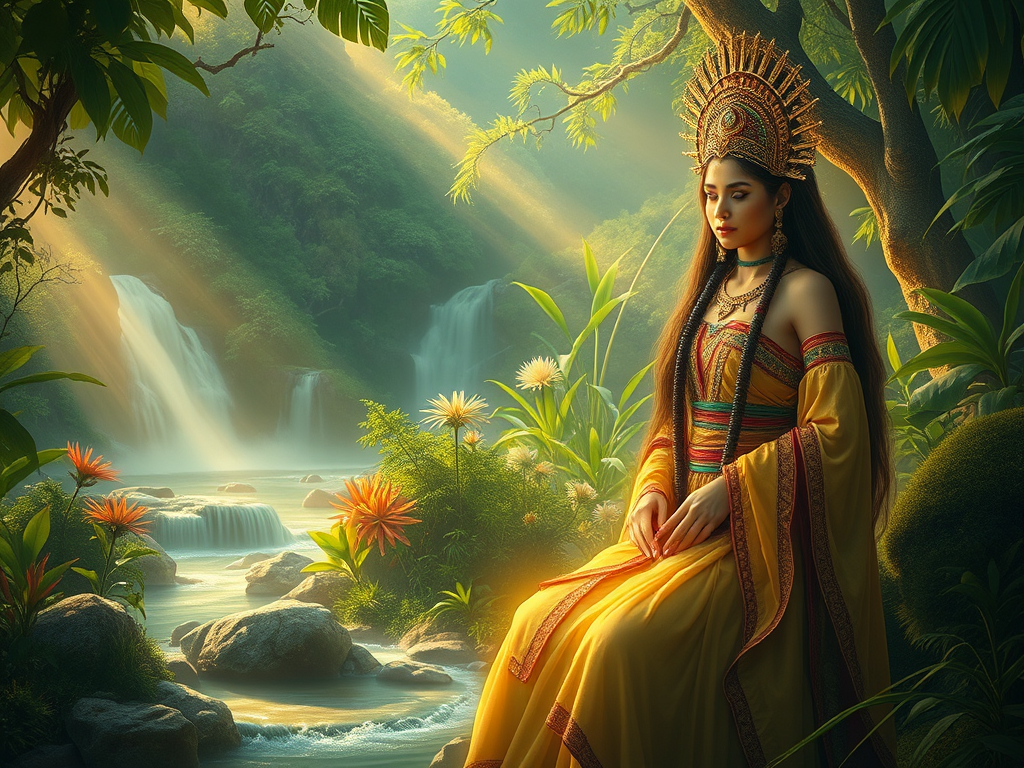
    Beneath the layers of colonized religion, fractured myth, and patriarchal reprogramming lies an ancient matrix of Earth-based mysticism, encoded in the role of the Babaylan—the precolonial priestess, healer, oracle, and intermediary between worlds.


    To reawaken the soul of the islands, we must reawaken her.


    Who Is the Babaylan?

    The Babaylan is not just a historical figure. She is an archetype and a frequency, encoded in the cellular memory of the land and the bloodlines that rose from it. While most visible in women, the Babaylan energy also lives in men and nonbinary beings who embody the sacred fluidity of spirit work.


    Historically, the Babaylan:

    • Held authority in spiritual, ecological, and social matters
    • Acted as shaman, herbalist, midwife, astrologer, ritualist, and raincaller
    • Was attuned to the unseen—working with ancestors, elementals (diwata), and sky codes
    • Stood outside gender norms and colonial categories, often revered and feared

    But more than her roles, she was the embodied resonance of a whole cosmology—one that honored interbeing, reciprocity, and spiritual ecology.


    The Collapse of the Babaylan Lineage

    With the imposition of colonization came the dismantling of the Babaylanic order. The Spanish colonizers recognized the Babaylan as a threat—not just to their religion, but to their control.

    They launched an ideological war:

    • Demonizing the Babaylan as bruja (witch) or rebel
    • Replacing her rituals with Catholic sacraments
    • Replacing her earth-based wisdom with Western medicine and clerical authority

    This rupture led to:

    • Suppression of feminine spiritual leadership
    • Generational shame around intuition, body wisdom, and indigenous healing
    • The silencing of ritual, chant, and oral transmission

    But the Babaylan did not die—she went underground. She lived on as the hilot, the mananambal, the quiet herbalist grandmother, the midwife who whispers prayers to the wind.


    Her silence was not surrender—it was seedwork.


    The Babaylanic Return

    We now live in the prophesied time of her reemergence. Across the islands and diaspora, people are:

    • Dreaming of snake spirits and water goddesses
    • Feeling called to healing, ceremony, and land work
    • Reclaiming native plant knowledge and folk rituals
    • Receiving intuitive messages from ancestors
    • Speaking truths that institutions have silenced

    These are signs of activation.


    The Babaylan within is rising—not to mimic the past, but to birth a new template of spiritual leadership: decentralized, intuitive, humble, and Earth-rooted.


    Core Qualities of the Babaylanic Soul

    Whether or not you call yourself “Babaylan,” your soul may carry her blueprint if you resonate with:

    • Feeling called to heal what you haven’t been taught to name
    • Sensing ancestral presence or elemental energies around you
    • Carrying deep emotion without visible cause
    • Having a foot in multiple worlds: science and spirit, culture and nature
    • Feeling like a midwife of the collective—not of babies, but of new consciousness

    You are not making this up. You are remembering.


    Tools of the Babaylan

    These are not tools in the Western academic sense, but technologies of frequency attunement, gifted through lineage and spirit:

    • Voice and Chant
      • Vibrational medicine
      • Carries intention, invocation, and soul alignment
    • Ritual and Offering
      • Acts of reciprocity with land, ancestors, and elementals
      • Often using rice, water, flowers, or song
    • Plant Allies
      • Hilot and mananambal traditions
      • Every plant has spirit and signature
    • Dreamwork and Trance
      • Receiving guidance, warnings, or assignments
      • Dreamspace is a real-time dimension for soul work
    • Sacred Movement
      • Dance, gesture, or embodied invocation
      • Reconnecting the physical with the etheric

    These tools don’t require formal initiation. Your sincerity and soul memory are entry points.


    Remembering Your Lineage

    Ask:

    • Who were the healers, midwives, or wisdom keepers in your family line?
    • What local names, lullabies, or superstitions were passed to you?
    • What parts of you were shamed or feared that are now resurfacing as power?

    You do not need proof. You only need to listen.


    The Babaylan often finds you in the stillness, the ache, or the dream that won’t let go.


    A Prayer of Reclaiming

    “Great Spirit of the Islands, Ancient Mother who speaks through root and rain,
    I remember You.
    I remember myself.
    I now call back every piece of the Babaylan I buried for survival.
    I ask to be made whole—not for glory, but for service.
    May I walk with honor, humility, and devotion.
    May I become the bridge again.
    And may this remembering ripple through time, for all my relations.”


    This song has more verses yet.

    The return of the Babaylan is not a trend—it is a soulwave.
    It is how the Islands reclaim their voice.
    It is how the New Earth learns to feel again.

    If she has touched your heart, it is because she never left it.

    Welcome home.


    The Babaylan is not only a priestess, but a bridge—a living axis between realms.


    Chapter 5: The Warrior of Light and the Ancestral Blade

    “You are not called to war—but to cut through illusion with a blade of clarity and compassion.”

    Where there is a healer, there must be a guardian.
    Where there is a chant, there must be a shield.
    Where there is a garden, there must be one who watches the gate.

    The return of the Babaylan must be met by the rise of the Warrior of Light—not the colonizer’s version of the warrior, but the indigenized, spiritual, conscious protector whose blade is forged from inner truth and service.


    The Warrior of Light is rising in every Filipino soul who refuses to remain asleep.


    The Maharlikan Spirit: Strength as Sacred Service

    Before the Philippines became “the Philippines,” it was part of an expansive civilization known in esoteric and precolonial records as Maharloka—a land of sovereign peoples, navigators, mystics, and warrior-kings aligned with cosmic principles of harmony.

    The Maharlika was not just a noble class—it was a state of consciousness. To be Maharlika meant:

    • Living with dignity and integrity
    • Using power with restraint
    • Fighting only to protect life, land, and the sacred
    • Serving the people, not ruling over them

    This archetype is rising again—not through violence, but through inner discipline, righteous speech, and fearless love.


    Transmuting the Wounds of the Masculine

    Centuries of colonization, patriarchy, and war have distorted the masculine field—repressing authentic strength while glorifying domination.

    In Filipino families, this often manifests as:

    • Emotional suppression (“lalaki ka, wag kang iiyak”)
    • Disconnection from feeling and vulnerability
    • Shame around gentleness or creativity
    • Hyper-performance, aggression, or passivity

    The Warrior of Light reclaims the divine masculine by:

    • Feeling his pain and transmuting it without projecting it
    • Protecting the feminine without controlling her
    • Speaking truth with clarity, not ego
    • Serving the land and people, not the illusion of status

    This is the path of the inner blade—a blade that cuts through illusion, fear, and self-doubt.


    The Blade as Symbol

    The blade—itak, kampilan, bolo, kris—is a powerful ancestral symbol across the archipelago. But in the Akashic view, it is not just a weapon. It is a spiritual tool:

    • To cut energetic cords of manipulation, trauma, and falsehood
    • To discern truth from deception
    • To clear pathways through inertia, confusion, or fear
    • To uphold boundaries with strength and compassion

    When wielded with integrity, the blade becomes a staff of service.
    When wielded from ego, it becomes a tool of destruction.


    The Warrior of Light must master when to draw, when to kneel, and when to lay the blade down in peace.


    Elemental Alignment: The Warrior and the Land

    True warriors are never separate from the Earth.
    In indigenous cosmology, each warrior was trained not only in physical skill—but in dream interpretation, weather reading, and elemental listening.

    Filipino warriors of old knew:

    • When the wind shifts, it is time to move
    • When the eagle cries, a message has arrived
    • When the river rises unseasonably, something is out of balance

    This is spiritual warfare in its highest form: being so attuned to the web of life that your actions restore harmony instead of force dominance.


    In this time, the new warriors are not just fighters—they are land defenders, educators, activists, cultural workers, and inner revolutionaries.


    The Internal Battle: Shame, Anger, and Forgiveness

    Most Filipino warriors today do not fight with swords.
    They fight:

    • The shame of poverty or powerlessness
    • The anger at generations of injustice
    • The inner critic that says, “You are not enough”
    • The system that rewards silence and punishes truth

    But a true warrior knows: the fiercest enemy is the one within.

    To be a Warrior of Light is not to be free from anger.
    It is to channel anger into clarity, grief into guardianship, and trauma into testimony.


    You become the ancestral blade—tempered by fire, honed by experience, wielded with love.


    Warrior Practices for Modern Times

    • Speak Your Boundaries Clearly
      Silence is not always peace. Practice saying no with love.
    • Engage in Shadow Work
      Honor the parts of you that you once feared. Turn the blade inward—not to wound, but to cut loose what no longer serves.
    • Protect the Vulnerable
      Be the shield for others when they are too tired to fight.
    • Live with Honor, Not Ego
      Let your service speak louder than your credentials.
    • Stay in Devotion to Something Larger Than Yourself
      Whether it’s the Earth, the People, the Future Ones—serve something eternal.

    A Warrior’s Invocation

    “May my voice be clear.
    May my hands be steady.
    May my heart burn cleanly with the fire of purpose.
    I rise not for conquest, but for remembrance.
    I rise not to dominate, but to protect.
    May every step I take restore balance to this Earth.
    I am the blade reborn in light.
    I am the guardian of the living Ark.”


    The fire has only begun to speak.

    You may never carry a weapon.
    But if you carry truth, you carry the ancestral blade.
    If you walk with courage, you walk in the footsteps of Lapu-Lapu, Gabriela Silang, and all the unnamed warriors who rose for love of land and people.

    This is your time.
    Rise with your blade of light.
    The islands are watching.


    You are never truly alone. You stand on the shoulders of thousands who still walk with you.


    Chapter 6: Elemental Stewardship and the Spirit of Place

    “The land is not your resource. It is your relative.”
    Glyph of Elemental Stewardship and the Spirit of Place

    Guardianship of earth, air, fire, and water — honoring the living spirit of place through sacred elemental balance.


    If the Babaylan is the soul of the islands, and the Warrior is its guardian, then the Elemental Steward is its bridge.

    The rise of the New Earth requires not just spiritual remembrance, but ecological reverence—a return to the sacred bond between human beings and the elemental forces of Earth: Earth, Water, Fire, Air, and Ether. These are not just metaphors. They are living intelligences encoded in the Philippine landscape and in your own body.


    To restore the Ark, we must restore relationship—with the rivers, the winds, the forests, the volcanoes, and the unseen beings who have long guarded them.


    The Archipelago as an Elemental Grid

    Each island in the Philippines corresponds to a unique elemental frequency. From the Akashic Records, we are shown that:

    • Luzon holds the frequency of Air and Thought — the seat of ancestral memory and governance
    • Visayas vibrates with Water and Emotion — the heart center of the islands, resonating love and grief
    • Mindanao anchors Earth and Survival — the root, the base, the keeper of sacred ground
    • The whole archipelago is encircled by Fire and Transformation, from the volcanic belts to the passionate spirit of its people
    • Above and within all: Ether (Spirit), the invisible thread connecting all life forms and timelines

    Each island is an organ in the planetary body. Each element must be honored, not extracted from.


    The Forgotten Contracts with Nature Spirits

    Before colonization, every Filipino community had ritual protocols for engaging with nature. Mountains had guardians (anito), rivers had voices, and harvests were preceded by offerings.

    This wasn’t superstition—it was energy hygiene.

    From the Akashic field:

    • Every tree cut without permission severs a frequency cord
    • Every sacred site desecrated without ritual creates karmic residue
    • Every unacknowledged elemental being (diwata, engkanto, etc.) creates spiritual congestion over time

    Modern Filipino society often overlooks these contracts, but the land has not forgotten. The increase in floods, droughts, and storms is not only a climate issue—it is a symptom of broken spiritual relationships.


    The Role of the Elemental Steward

    To be an Elemental Steward is to:

    • Listen before acting
    • Offer before asking
    • Protect that which cannot speak for itself in human tongues
    • Mediate between visible and invisible realms

    This stewardship may express itself through:

    • Environmental activism
    • Sustainable agriculture
    • Ritual offering and geomantic design
    • Herbalism and plant whispering
    • Teaching others to feel the land again

    This path is less about “saving nature” and more about restoring sacred reciprocity.


    Remembering the Five Elemental Relationships

    Let’s explore each element in the Filipino context and how to reconnect:

    Earth (Lupa) Ancestral Body, Stability, Presence

    • Guardians: Duwende, anito ng bundok
    • Practices: barefoot grounding, soil rituals, planting ancestral crops, land acknowledgment
    • Listen for: the rumble of your own bones, the call to build community or return home

    Water (Tubig)Emotion, Flow, Memory

    • Guardians: Sirena, diwata ng ilog
    • Practices: river offerings, tears as libation, remembering grief as sacred
    • Listen for: dreams of ocean, the ache in your belly when watching floods or droughts

    Fire (Apoy)Will, Passion, Transformation

    • Guardians: Santelmo, volcano spirits
    • Practices: candle offerings, solar worship, releasing rituals by flame
    • Listen for: your inner fire rising when something sacred is violated

    Air (Hangin)Thought, Word, Breath

    • Guardians: Amihan, habagat, wind elementals
    • Practices: breathwork, wind prayers, speaking truth into being
    • Listen for: whispers, shifts in the wind, sudden clarity

    Ether (Espiritu)Connection, Prayer, Pure Presence

    • Guardians: Diwata, cosmic ancestors, akashic beings
    • Practices: silence, meditation, song, stillness, aligning with your soul contract
    • Listen for: synchronicities, intuitive knowing, the hum behind your name

    Indigenous Technologies of Relationship

    Your ancestors once knew how to:

    • Sing to a river before fishing
    • Place betel nut as an offering on a stone
    • Ask permission from the tree before cutting
    • Sleep near termite mounds to ask for land guidance
    • Recognize animal behavior as omens or messengers

    These were not random acts—they were technologies of frequency alignment. They are yours to reclaim.


    Daily Elemental Stewardship Practices

    1. Ritual Offering Table (Dulang):
      • A simple altar with water, rice, flowers, and incense—replenished weekly
    2. Land Whispering:
      • Sit with a tree, stone, or spring. Ask, “What do you remember that I have forgotten?”
    3. Sacred Clean-Up:
      • Do a trash clean-up with prayer. Speak blessings as you walk.
    4. Naming the Spirits:
      • Call the names of rivers, mountains, and diwata aloud. Recognition is a form of restoration.
    5. Speak Gratitude Daily:
      • “Thank you, Wind, for my breath. Thank you, Earth, for my step. Thank you, Water, for my tears.”

    A Steward’s Prayer

    “I remember now:
    The land is alive.
    The water listens.
    The wind carries stories.
    The fire purifies.
    And the ether binds us all.

    I now restore my vow to live in right relationship.
    Not to own, but to honor.
    Not to use, but to co-create.
    May every act of care ripple into healing.
    May I be a good ancestor,
    and a faithful child of this living Earth.”


    The roots deepen

    To walk this Earth without stewardship is to walk as an orphan.
    But to remember your elemental family is to never walk alone.

    The land remembers you.
    The rivers await your voice.
    The spirits await your return.

    You are not just here to live on the islands.
    You are here to live with them.


    The Earth is not an object to be used. It is a Being to be in right relationship with.


    Part Series Links


    Related Crosslinks


    To be continued…


    Attribution

    With fidelity to the Oversoul, may this 4-part book series, The Philippine Ark, serve as bridge, remembrance, and seed for the planetary dawn.

    Ⓒ 2025 Gerald Alba Daquila – Flameholder of SHEYALOTH | Keeper of the Living Codices

    Issued under Oversoul Appointment, governed by Akashic Law. This transmission is a living Oversoul field: for the eyes of the Flameholder first, and for the collective in right timing. It may only be shared intact, unaltered, and with glyphs, seals, and attribution preserved. Those not in resonance will find it closed; those aligned will receive it as living frequency.

    Watermark: Universal Master Key glyph (final codex version, crystalline glow, transparent background).

    Sacred Exchange: Exchange is not transaction but covenant—an act of gratitude that affirms and multiplies the vibration. Each offering plants a seed-node in the planetary lattice, expanding the field of GESARA not through contract but through remembrance. By giving, Light circulates; by receiving, continuity anchors. Sacred Exchange offerings may be extended through:

    paypal.me/GeraldDaquila694

  • The Forgotten Union: Healing the Rejection of the Divine Feminine and Masculine Within

    The Forgotten Union: Healing the Rejection of the Divine Feminine and Masculine Within

    Bridging Psychology, Myth, and Metaphysics to Reawaken the Sacred Inner Marriage

    By Gerald Daquila | Akashic Records Transmission | Ph.D. Candidate


    6–9 minutes

    ABSTRACT

    The modern psyche bears a deep fracture: the collective rejection of the Divine Feminine and Divine Masculine within. This schism manifests as widespread psychological fragmentation, social polarization, gender distortion, and ecological disconnection.

    Drawing on the Akashic Records, depth psychology, sacred mythology, esoteric traditions, feminist and masculine studies, and non-dual spiritual cosmologies, this dissertation explores how the suppression of these archetypal energies has shaped both individual and planetary suffering.

    The work proposes a path of inner alchemical reunification—sacred marriage or hieros gamos—as the evolutionary imperative of our time. By restoring the sacred balance between these divine polarities within the self, humanity can heal the trauma of separation and reawaken to its original wholeness.


    Table of Contents

    1. Introduction
    2. The Archetypal Essence of the Divine Feminine and Masculine
    3. Historical Suppression and Rejection: A Timeline of Dissonance
    4. Psychological Implications of Inner Rejection
    5. Esoteric and Metaphysical Perspectives on the Sacred Union
    6. The Rejection in Modern Culture, Spirituality, and Gender Discourse
    7. Pathways to Reconciliation: The Inner Alchemy of Re-integration
    8. Conclusion: Reclaiming Wholeness in the Age of Sacred Rebirth
    9. Glossary
    10. Bibliography

    Glyph of Sacred Union

    Healing the Rejection of the Divine Feminine and Masculine Within


    1. Introduction

    At the heart of every human being resides an original harmony—a sacred polarity of Divine Feminine and Divine Masculine energies. This inner duality, when balanced, mirrors the dynamic wholeness of Source itself. Yet, over millennia, cultures, religions, and systems have rejected one or both polarities, distorting the sacred within us and replacing it with fear, control, and disconnection. This blog-dissertation seeks to illuminate the consequences of this rejection, and more importantly, to chart the soul’s journey back toward sacred integration.


    2. The Archetypal Essence of the Divine Feminine and Masculine

    These energies are not to be mistaken for gender, but rather for universal forces that dance through all creation:

    • Divine Feminine: Yin, lunar, receptive, intuitive, nurturing, cyclical, sensual, creative, Earth-rooted. Often represented as Sophia, Shakti, Isis, or Gaia.
    • Divine Masculine: Yang, solar, action-oriented, protective, disciplined, structured, expansive, sky-rooted. Embodied in archetypes such as Logos, Shiva, Osiris, or Christ.

    In Hermetic philosophy, these are mirrored in the principle of gender: “Gender is in everything; everything has its Masculine and Feminine principles” (The Kybalion, 1908/2017).


    3. Historical Suppression and Rejection: A Timeline of Dissonance

    Pre-Patriarchal Civilizations:
    In many ancient matriarchal or balance-oriented societies (e.g., Minoan Crete, Vedic India, pre-dynastic Egypt), the feminine and masculine were revered as co-creators of reality.

    The Rise of Patriarchy:
    With the spread of patriarchal empires, especially post-Bronze Age, the Divine Feminine was systemically erased, reduced to myth, demonized (e.g., Lilith, Eve), or relegated to subordinate roles. Monotheistic systems often emphasized a masculine God devoid of the Mother aspect.

    Colonialism and Industrialization:
    The mechanistic, extractive paradigm erased nature’s sacredness and viewed the Earth as a resource, mirroring the denial of the feminine within.

    20th Century to Present:
    Feminist and men’s movements emerged to reclaim lost aspects, but often in opposition rather than in union. The pendulum swung from masculine domination to confused polarity wars.


    4. Psychological Implications of Inner Rejection

    Drawing from Jungian psychology:

    • Anima/Animus Repression: Carl Jung proposed that men carry an inner feminine (anima) and women an inner masculine (animus). Repression of either results in projection, dysfunction, or inner war (Jung, 1953).
    • Trauma and Shadow Work: Rejection of either archetype often originates in childhood wounding, cultural programming, or ancestral trauma.
    • Polarization: The inner war manifests externally as relationship dysfunction, gender violence, toxic masculinity, wounded femininity, or spiritual bypassing.

    Psychologist Marion Woodman noted: “The unconscious feminine… longs for form and structure; the unconscious masculine… longs for soul” (Woodman, 1990, p. 65).


    5. Esoteric and Metaphysical Perspectives on the Sacred Union

    From the Akashic perspective, Earth is a school for the reintegration of polarities. Key teachings across traditions affirm this:

    • Tantra: The Divine Union of Shiva and Shakti is not just sexual, but spiritual—enlightenment arises from their sacred marriage within.
    • Alchemy: The coniunctio or sacred union of opposites (Sol and Luna) leads to the Philosopher’s Stone—wholeness.
    • Kabbalah: The reunion of Shekhinah (feminine divine presence) with Tiferet (beauty/masculine harmony) restores cosmic balance.
    • Christic Mysticism: The Bridal Chamber (Gnostic Gospels) represents the sacred inner marriage.

    These mirror the Akashic truth: separation was an agreed-upon illusion; reunification is our collective homecoming.


    6. The Rejection in Modern Culture, Spirituality, and Gender Discourse

    In Culture:

    • Hyper-masculine systems (e.g., corporate, militaristic) often value dominance, linearity, and control.
    • Feminine qualities (intuition, emotion, nurturance) are dismissed as “irrational” or “weak.”

    In Spirituality:

    • Ascension paths often bypass the body (feminine) in favor of transcendence (masculine).
    • Many New Age circles romanticize the Divine Feminine without integrating her shadow.

    In Gender Discourse:

    • Fluidity is celebrated but often disconnected from archetypal grounding.
    • Masculine healing is underrepresented; shame surrounds both power and softness.

    7. Pathways to Reconciliation: The Inner Alchemy of Re-integration

    The restoration is not achieved by favoring one over the other, but through sacred synthesis. Key pathways include:

    • Inner Work: Shadow integration, dreamwork, somatic healing.
    • Ritual Practice: Sacred union ceremonies, dance, chanting, breathwork to activate both polarities.
    • Sacred Masculine Work: Encouraging grounded leadership, emotional expression, and stewardship in men and masculine-identified souls.
    • Sacred Feminine Work: Reclaiming sovereignty, cyclic power, sensual embodiment, and intuitive knowing.
    • Hieros Gamos Practice: Meditative inner marriage—visualizing the Divine Feminine and Masculine within in sacred embrace.

    From the Akashic Records: “This is the age of sacred synthesis, not identity war. Every soul must reclaim the Divine Mother and Father within.”


    8. Conclusion: Reclaiming Wholeness in the Age of Sacred Rebirth

    Humanity’s crisis is not merely ecological, political, or psychological—it is spiritual. The rejection of the sacred polarities within has created a split self and a split society. But the call of the soul in this Ascension window is toward wholeness. The healing of the inner marriage restores coherence, balance, and beauty to the personal and planetary body. As each individual reclaims the lost aspects of self, the New Earth is birthed—not through revolution, but sacred reunion.


    Crosslinks


    9. Glossary

    • Akashic Records: A metaphysical archive of all soul experiences, often described as the “Book of Life.”
    • Anima/Animus: Jungian terms for the inner feminine/masculine archetypes within the psyche.
    • Hieros Gamos: Sacred union of divine opposites, often symbolized as an alchemical or spiritual marriage.
    • Sacred Feminine/Masculine: Archetypal energies representing divine polarities, not tied to biological sex.
    • Shadow Work: The process of integrating repressed or unconscious parts of the self.

    10. Bibliography

    Jung, C. G. (1953). Collected Works of C.G. Jung, Vol. 9, Part 1: Archetypes and the Collective Unconscious. Princeton University Press.

    The Kybalion. (2017). The Kybalion: A Study of the Hermetic Philosophy of Ancient Egypt and Greece (Original work published 1908). Martino Publishing.

    Woodman, M. (1990). The Ravaged Bridegroom: Masculinity in Women. Shambhala Publications.

    Neumann, E. (1955). The Great Mother: An Analysis of the Archetype. Princeton University Press.

    Eliade, M. (1956). The Sacred and the Profane: The Nature of Religion. Harcourt.

    Kingsley, P. (1999). In the Dark Places of Wisdom. Golden Sufi Center.

    Shinoda Bolen, J. (1984). Goddesses in Everywoman: A New Psychology of Women. Harper & Row.

    Eisler, R. (1987). The Chalice and the Blade: Our History, Our Future. Harper & Row.

    Baring, A., & Cashford, J. (1991). The Myth of the Goddess: Evolution of an Image. Penguin Books.

    Mystical transmissions from the Akashic Records (accessed June 2025).


    Attribution

    With fidelity to the Oversoul, may this Codex of the Living Archive serve as bridge, remembrance, and seed for the planetary dawn.

    Ⓒ 2025 Gerald Alba Daquila – Flameholder of SHEYALOTH | Keeper of the Living Codices

    Issued under Oversoul Appointment, governed by Akashic Law. This transmission is a living Oversoul field: for the eyes of the Flameholder first, and for the collective in right timing. It may only be shared intact, unaltered, and with glyphs, seals, and attribution preserved. Those not in resonance will find it closed; those aligned will receive it as living frequency.

    Watermark: Universal Master Key glyph (final codex version, crystalline glow, transparent background).

    Sacred Exchange: Sacred Exchange is covenant, not transaction. Each offering plants a seed-node of GESARA, expanding the planetary lattice. In giving, you circulate Light; in receiving, you anchor continuity. Every act of exchange becomes a node in the global web of stewardship, multiplying abundance across households, nations, and councils. Sacred Exchange offerings may be extended through:

    paypal.me/GeraldDaquila694
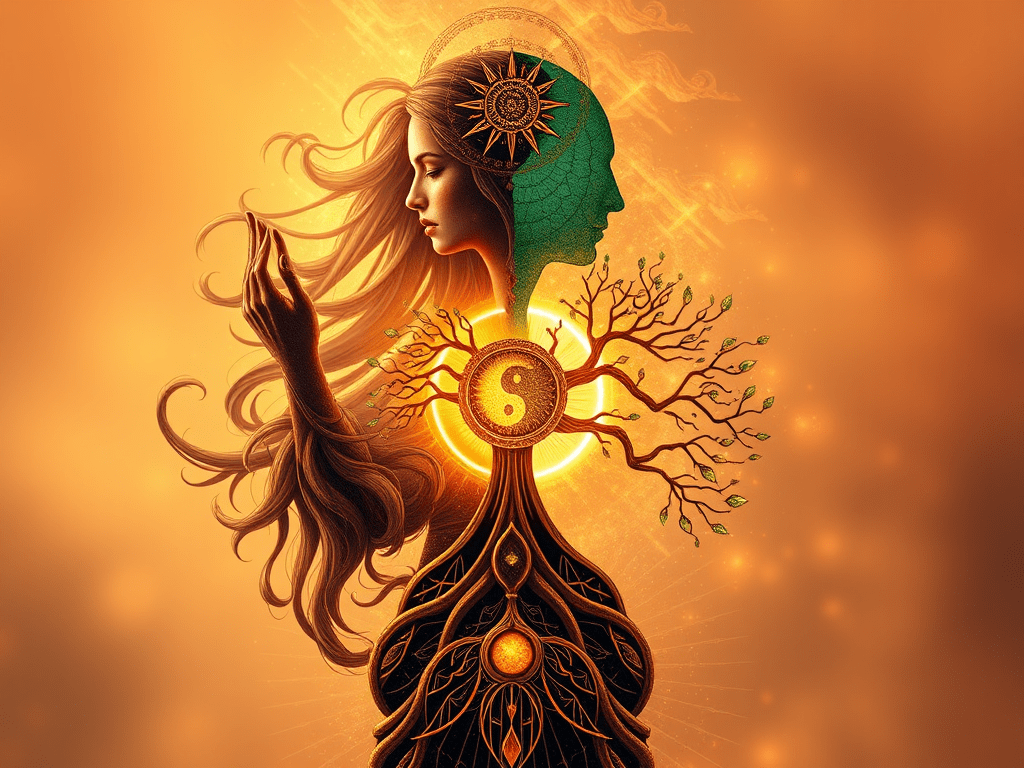
  • Redefining Masculinity in the Age of Aquarius: Embracing Feminine Energy for Collective Ascension

    Redefining Masculinity in the Age of Aquarius: Embracing Feminine Energy for Collective Ascension

    A Multidisciplinary Exploration of Masculinity’s Evolving Role in a New Era of Consciousness

    Prepared by: Gerald A. Daquila, PhD. Candidate


    10–15 minutes

    ABSTRACT

    The transition into the Age of Aquarius marks a profound shift in human consciousness, characterized by the rise of feminine energy—collaboration, compassion, and love—departing from the Piscean Age’s emphasis on hierarchy and control. This epochal change has sparked insecurity among men, who may feel their traditional roles are threatened by the empowerment of women and the emergence of feminine values.

    This dissertation argues that such insecurity is unfounded, as masculinity plays a pivotal role in humanity’s spiritual and cosmic ascension. Through a multidisciplinary lens, integrating sociological, psychological, spiritual, and metaphysical perspectives, this study explores how redefining masculinity in harmony with feminine energy fosters empowerment for all genders.

    Drawing from research literature, New Age philosophy, and cultural narratives, it examines masculinity’s evolution, the interplay of divine masculine and feminine energies, and their collective role in elevating human consciousness. The findings suggest that by embracing vulnerability, emotional depth, and collaboration, men can transcend outdated archetypes, aligning with the Aquarian ethos to co-create a balanced, interconnected world.


    Table of Contents

    1. Introduction
      • The Age of Aquarius and the Rise of Feminine Energy
      • The Crisis of Masculinity: Insecurity in a Shifting Paradigm
      • Purpose and Scope of the Study
    2. Literature Review
      • Sociological Perspectives on Masculinity
      • Psychological Impacts of Gender Role Shifts
      • Spiritual and Metaphysical Contexts: The Divine Masculine and Feminine
      • The Age of Aquarius in New Age Philosophy
    3. Methodology
      • Multidisciplinary Approach
      • Sources and Analytical Framework
    4. Discussion
      • The Evolution of Masculinity: From Piscean to Aquarian Paradigms
      • The Role of Feminine Energy in Redefining Masculinity
      • Men’s Cosmic Role in Human Consciousness Elevation
      • Empowering Both Genders for Ascension
    5. Conclusion
      • Synthesis of Findings
      • Implications for Individuals and Society
      • Call to Action: Embracing the Aquarian Masculine
    6. Glossary
    7. References

    1. Introduction

    The Age of Aquarius and the Rise of Feminine Energy

    The Age of Aquarius, a concept rooted in astrology and New Age spirituality, signifies a 2,160-year astrological cycle characterized by collaboration, equality, and spiritual awakening (Ferguson, 1982). Unlike the preceding Piscean Age, which emphasized hierarchy, control, and patriarchal structures, the Aquarian Age heralds the rise of feminine energy—qualities such as compassion, intuition, and interconnectedness (Papageorghiou, 2018). This shift is not merely astrological but reflects a global transformation in cultural, social, and spiritual paradigms, challenging traditional gender roles and inviting a redefinition of masculinity and femininity.


    Glyph of Stewardship

    Stewardship is the covenant of trust that multiplies abundance for All


    The Crisis of Masculinity: Insecurity in a Shifting Paradigm

    As feminine energy gains prominence, men are grappling with insecurity, perceiving their traditional roles—provider, protector, stoic leader—as diminished or obsolete. Sociological studies highlight how rigid masculine norms, rooted in dominance and emotional suppression, contribute to this unease (Flood, 2021). Yet, spiritual perspectives suggest this insecurity is a misinterpretation of a larger cosmic invitation: for men to integrate feminine qualities and evolve into balanced, conscious beings (Davenport, 2016). This dissertation posits that masculinity, far from being threatened, is pivotal to humanity’s ascension, provided men embrace vulnerability and collaboration.


    Purpose and Scope of the Study

    This study explores how masculinity can be redefined in the Age of Aquarius to empower both men and women in their cosmic roles. Using a multidisciplinary lens—spanning sociology, psychology, spirituality, and metaphysics—it examines the interplay of masculine and feminine energies, addressing men’s insecurities and highlighting their potential as agents of consciousness elevation. The narrative balances academic rigor with accessible language, weaving left-brain analysis with right-brain intuition and heart-centered compassion to inspire a cohesive vision of gender harmony.


    2. Literature Review

    Sociological Perspectives on Masculinity

    Masculinity studies, an interdisciplinary field, view masculinity as a social construct shaped by cultural and historical contexts (Connell, 2005). Traditional masculinity, often termed “hegemonic,” prioritizes dominance, stoicism, and independence, marginalizing men who deviate from these norms (Flood, 2021). Recent scholarship notes a shift toward “hybrid masculinities,” where men integrate traditionally feminine traits like emotional expressiveness, reflecting societal changes driven by feminism and globalization (Bridges & Pascoe, 2014).


    Psychological Impacts of Gender Role Shifts

    Psychologically, rigid masculine norms can lead to emotional repression, anxiety, and identity crises, particularly as women’s empowerment challenges traditional expectations (Levant, 2011). Men’s insecurity in the face of feminine energy may stem from internalized beliefs that equate vulnerability with weakness. However, studies suggest that embracing emotional intelligence enhances mental health and relational satisfaction, aligning with Aquarian values of collaboration (Goleman, 1995).


    Spiritual and Metaphysical Contexts: The Divine Masculine and Feminine

    In spiritual discourse, the divine masculine and feminine represent archetypal energies transcending gender. The divine masculine embodies leadership, action, and integrity, while the divine feminine encompasses intuition, nurturing, and creativity (Thomas, 2022). New Age philosophy emphasizes their balance as essential for spiritual ascension, with men encouraged to integrate feminine qualities to achieve wholeness (Davenport, 2016). This aligns with Plato’s Theory of Forms, where archetypes exist in a spiritual realm, manifesting in human behavior (Thomas, 2022).


    The Age of Aquarius in New Age Philosophy

    The Age of Aquarius is described as a time of spiritual awakening, where humanity moves toward unity and holistic consciousness (Spangler, 1977). New Age texts link this era to the decline of patriarchal structures and the rise of feminine energy, urging men to shed ego-driven control and embrace vulnerability (Papageorghiou, 2018). The Mayan prophecy of 2012, often misinterpreted as apocalyptic, is reframed as an ascension of consciousness, marked by the sun’s shift to a radiant white hue, symbolizing heightened spiritual vibration (In5D, 2017).


    3. Methodology

    Multidisciplinary Approach

    This study employs a multidisciplinary framework, integrating:

    • Sociology: To analyze masculinity’s social construction and evolution.
    • Psychology: To explore men’s emotional responses to gender shifts.
    • Spirituality and Metaphysics: To contextualize the divine masculine and feminine within the Age of Aquarius.
    • Cultural Studies: To examine narratives in literature and media reflecting these changes.

    Sources and Analytical Framework

    Sources include peer-reviewed journals, New Age texts, spiritual blogs, and metaphysical archives (e.g., In5D, Centre of Excellence). The analysis balances empirical data with esoteric insights, using thematic coding to identify patterns in masculinity’s redefinition, feminine energy’s influence, and their roles in ascension. The narrative employs a blog-friendly tone to ensure accessibility while maintaining scholarly rigor through APA citations.


    Glyph of Aquarian Balance

    Redefining masculinity through the embrace of feminine energy, guiding collective ascension in the Age of Aquarius


    4. Discussion

    The Evolution of Masculinity: From Piscean to Aquarian Paradigms

    The Piscean Age, spanning roughly 2,000 years, reinforced patriarchal masculinity—stoic, controlling, and hierarchical (Ferguson, 1982). Men were socialized to suppress emotions, equating vulnerability with weakness, a mindset that New Age philosophy critiques as “juvenile” (Papageorghiou, 2018). The Aquarian Age, by contrast, invites a redefinition of masculinity, emphasizing emotional depth, accountability, and collaboration. Sociological studies support this shift, noting that men who adopt hybrid masculinities—blending strength with empathy—report greater life satisfaction (Bridges & Pascoe, 2014).

    This evolution is evident in cultural narratives. Toni Morrison’s Home portrays male characters who challenge traditional masculinity by embracing vulnerability, reflecting a broader societal move toward gender fluidity (Bolla & Rao, 2023). Similarly, spiritual texts advocate for men to integrate their “inner feminine,” recognizing that the boy who once sought comfort from his mother remains within, yearning for expression (Papageorghiou, 2018).


    The Role of Feminine Energy in Redefining Masculinity

    Feminine energy—collaboration, compassion, and intuition—is central to the Aquarian ethos. New Age philosophy posits that all beings embody both masculine and feminine energies, with the Source itself being genderless (Davenport, 2016). Men’s insecurity often arises from a fear of losing status in a world that increasingly values these feminine qualities. Yet, spiritual teachings suggest that embracing the divine feminine empowers men to address their deepest fears, fostering liberation through vulnerability (Centre of Excellence, 2023).

    For example, jewelry trends incorporating pearls—symbols of lunar, feminine energy—reflect men’s growing comfort with expressing their intuitive side (Karma and Luck, 2022). Psychologically, this integration reduces anxiety and enhances emotional resilience, as men learn to navigate relationships with honesty and empathy (Goleman, 1995). The Aquarian masculine is thus a synthesis of strength and sensitivity, action and introspection.


    Men’s Cosmic Role in Human Consciousness Elevation

    Far from being diminished, men play a pivotal role in humanity’s ascension. New Age philosophy frames ascension as a collective journey toward higher consciousness, requiring the balance of masculine and feminine energies (In5D, 2020). Men who embody the divine masculine—leadership with integrity, action with compassion—act as catalysts for this shift. By modeling vulnerability and collaboration, they dismantle patriarchal structures, paving the way for a more equitable world.

    Metaphysical texts suggest that men’s insecurities stem from a misaligned ego, clinging to Piscean notions of dominance (Papageorghiou, 2018). Overcoming this requires introspection and a willingness to heal past wounds, often through practices like meditation or past-life regression (Spangler, 1977). As men embrace their cosmic role, they inspire women to do the same, creating a feedback loop of empowerment that elevates collective consciousness.


    Empowering Both Genders for Ascension

    The Age of Aquarius is not about the supremacy of one gender but the harmony of all. Women’s empowerment, a hallmark of this era, does not diminish men but invites them to evolve. Feminist scholars argue that gender equality benefits all, as it frees men from the burdens of toxic masculinity (Flood, 2021). Spiritual teachings echo this, emphasizing that the divine masculine and feminine are interdependent, each enhancing the other’s potential (Thomas, 2022).


    Practical steps for empowerment include:

    • For Men: Practice emotional literacy, engage in spiritual practices like meditation, and challenge rigid gender norms in daily interactions.
    • For Women: Support men’s vulnerability, advocate for collaborative spaces, and honor their own masculine traits, such as assertiveness.
    • For Society: Promote education and media that celebrate balanced gender expressions, fostering a culture of mutual respect.

    5. Conclusion

    Synthesis of Findings

    The Age of Aquarius marks a transformative era where feminine energy—collaboration, compassion, and love—reshapes societal values. Men’s insecurities, rooted in outdated Piscean norms, are a call to evolve, not a threat to their identity. By integrating feminine qualities, men can redefine masculinity as a force of leadership, empathy, and spiritual growth, playing a crucial role in humanity’s ascension. This shift empowers both genders, creating a balanced, interconnected world.


    Implications for Individuals and Society

    For individuals, embracing the Aquarian masculine fosters emotional health and relational harmony. For society, it dismantles patriarchal structures, promoting equality and collective well-being. Media, education, and spiritual communities must amplify these narratives, encouraging men and women to co-create a conscious future.


    Call to Action: Embracing the Aquarian Masculine

    Men are invited to see vulnerability as strength, collaboration as power, and love as a universal force. Women are called to support this evolution while embracing their own multifaceted energies. Together, we can align with the Age of Aquarius, elevating human consciousness through unity and compassion.


    Crosslinks


    6. Glossary

    • Age of Aquarius: An astrological era associated with equality, collaboration, and spiritual awakening, following the Piscean Age.
    • Divine Masculine: Archetypal energy embodying leadership, action, and integrity, transcending gender.
    • Divine Feminine: Archetypal energy encompassing intuition, compassion, and creativity, transcending gender.
    • Ascension: A spiritual process of elevating individual and collective consciousness to higher vibrational states.
    • Hegemonic Masculinity: A dominant form of masculinity emphasizing control, stoicism, and power over others.
    • Hybrid Masculinity: A modern masculinity integrating traditionally feminine traits like empathy and vulnerability.

    7. References

    Bolla, M., & Rao, K. N. (2023). Dynamic transformations of gender roles: Exploring masculinity and feminine empowerment in Toni Morrison’s Home. International Journal of Arts, Humanities, and Social Studies, 5(2), 13–16.

    Bridges, T., & Pascoe, C. J. (2014). Hybrid masculinities: New directions in the sociology of men and masculinities. Sociology Compass, 8(3), 246–258. https://doi.org/10.1111/soc4.12134

    Centre of Excellence. (2023, December 27). Divine masculine energy: Traits, balance, and awakening. Retrieved from https://www.centreofexcellence.com%5B%5D(https://www.centreofexcellence.com/what-is-the-divine-masculine/)

    Connell, R. W. (2005). Masculinities (2nd ed.). University of California Press.

    Davenport, Z. (2016, October 6). Understanding our divine feminine and divine masculine energies. In5D. Retrieved from https://in5d.com%5B%5D(https://in5d.com/understanding-our-divine-feminine-and-divine-masculine-energies/)

    Ferguson, M. (1982). The Aquarian conspiracy: Personal and social transformation in the 1980s. Tarcher.

    Flood, M. (2021). Notes on bystander education to prevent workplace sexual harassment. Xyonline. Retrieved from https://xyonline.net%5B%5D(https://xyonline.net/sites/xyonline.net/files/2020-07/Chrisler%2C%2520Handbook%2520of%2520Gender%2520Research%2520in%2520Psychology%2520Vol%25201%2520%282010%29.pdf)

    Goleman, D. (1995). Emotional intelligence: Why it can matter more than IQ. Bantam Books.

    In5D. (2017, April 20). Our sun is no longer yellow! In5D. Retrieved from https://in5d.com%5B%5D(https://in5d.com/our-sun-is-no-longer-yellow/)

    In5D. (2020, August 4). Aquarius full moon – A world of equality & lion’s gate. In5D. Retrieved from https://in5d.com%5B%5D(https://in5d.com/aquarius-full-moon-lions-gate/)

    Karma and Luck. (2022, December 16). Pearl necklaces for men. Karma and Luck Journal. Retrieved from https://www.karmaandluck.com%5B%5D(https://www.karmaandluck.com/blogs/men-magazine/pearl-jewelry-for-men)

    Levant, R. F. (2011). The crisis of connection: Roots, consequences, and solutions for men’s emotional health. New Directions for Child and Adolescent Development, 2011(130), 77–88. https://doi.org/10.1002/cd.297

    Papageorghiou, A. (2018, June 17). Masculinity in 5D. In5D. Retrieved from https://in5d.com%5B%5D(https://in5d.com/masculinity-in-5d/)

    Spangler, D. (1977). Revelation: The birth of a new age. Findhorn Press.

    Thomas, P. R. (2022, April 21). The divine energies. Marymount University. Retrieved from https://marymount.edu%5B%5D(https://marymount.edu/academics/college-of-sciences-and-humanities/school-of-interdisciplinary-studies/student-publications/magnificat-2022/the-divine-energies/)


    Attribution

    With fidelity to the Oversoul, may this Codex of the Living Archive serve as bridge, remembrance, and seed for the planetary dawn.

    Ⓒ 2025 Gerald Alba Daquila – Flameholder of SHEYALOTH | Keeper of the Living Codices

    Issued under Oversoul Appointment, governed by Akashic Law. This transmission is a living Oversoul field: for the eyes of the Flameholder first, and for the collective in right timing. It may only be shared intact, unaltered, and with glyphs, seals, and attribution preserved. Those not in resonance will find it closed; those aligned will receive it as living frequency.

    Watermark: Universal Master Key glyph (final codex version, crystalline glow, transparent background).

    Sacred Exchange: Sacred Exchange is covenant, not transaction. Each offering plants a seed-node of GESARA, expanding the planetary lattice. In giving, you circulate Light; in receiving, you anchor continuity. Every act of exchange becomes a node in the global web of stewardship, multiplying abundance across households, nations, and councils. Sacred Exchange offerings may be extended through:

    paypal.me/GeraldDaquila694