Life.Understood.

Tag: Divine Feminine and Divine Masculine

  • The Divine Masculine Rebirth in Filipino Culture

    The Divine Masculine Rebirth in Filipino Culture

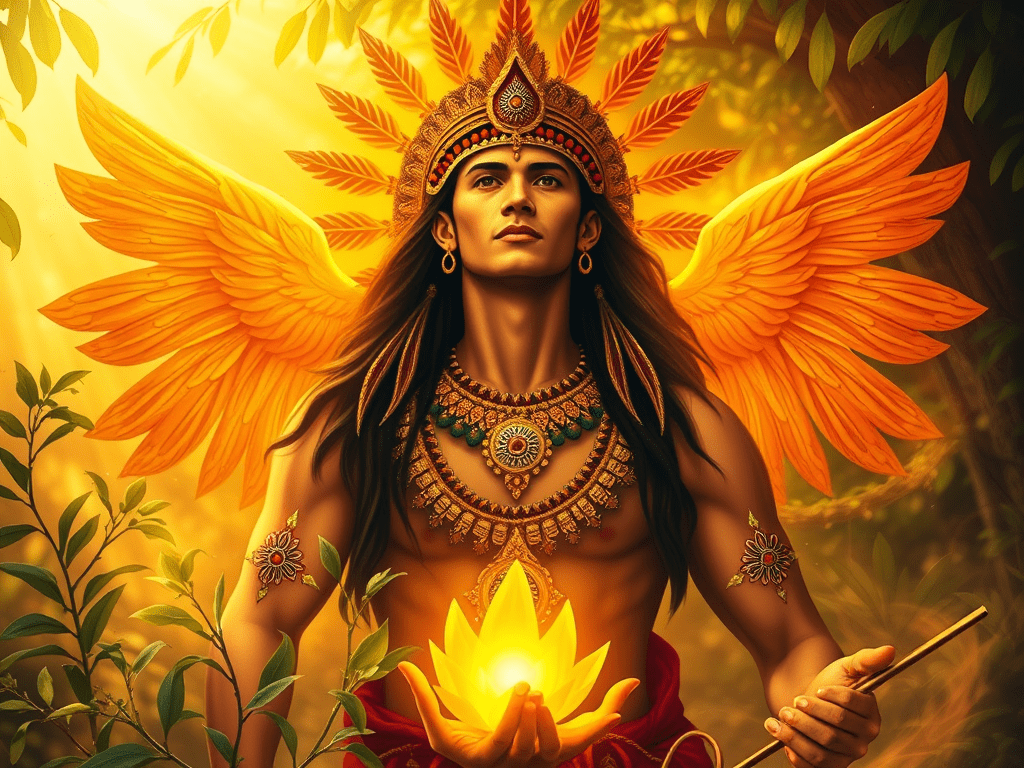
    Reawakening Ancestral Strength, Sacred Balance, and the Warrior of Light Within

    By Gerald Daquila | Akashic Records Transmission


    6–10 minutes

    ABSTRACT

    In the shifting landscape of global consciousness, the rebirth of the Divine Masculine has become a pivotal element in restoring wholeness—within individuals, cultures, and planetary systems. This dissertation explores the re-emergence of the Divine Masculine archetype within Filipino culture, tracing its indigenous roots, colonial fractures, and present-day healing through the lens of spiritual, psychological, historical, and metaphysical disciplines.

    Drawing upon the Akashic Records, precolonial narratives, mytho-spiritual archetypes, depth psychology, and modern masculinity studies, this work aims to unveil the multidimensional journey of the Filipino male soul. We recontextualize the “Malakas” (the Strong) not as dominator, but as a sacred protector, wisdom holder, and light warrior—rebalanced with the “Maganda” (the Beautiful). The narrative offers a roadmap for healing intergenerational trauma, activating sacred masculine energies, and integrating the new masculine template into the fabric of Filipino life, culture, and community leadership.


    Table of Contents

    1. Introduction
    2. Recalling the Divine Masculine: A Global and Galactic Context
    3. Precolonial Filipino Masculinity: Sacred Strength and Service
    4. The Colonial Wound: Masculine Fracture and Cultural Amnesia
    5. Archetypes of the Filipino Divine Masculine
    6. Psychological and Energetic Impacts of Repressed Masculine Energy
    7. The Rebirth Process: Stages of Awakening and Embodiment
    8. Integration through Culture, Ritual, and Community
    9. Conclusion
    10. Glossary
    11. Bibliography

    1. Introduction

    The call for a rebirth of the Divine Masculine is echoing across timelines, dimensions, and ancestral lineages. In the Philippines—a nation shaped by the interweaving of indigenous wisdom, colonial disruption, and resilient spirituality—this rebirth holds the key to national healing and planetary service. This work is both a spiritual invocation and scholarly exploration, rooted in the soul of the archipelago and reaching into the cosmic field of consciousness where masculine energy is being redefined.


    Glyph of Masculine Rebirth

    Strength in service, power in remembrance.


    2. Recalling the Divine Masculine: A Global and Galactic Context

    The Divine Masculine archetype, when in its healed and integrated form, embodies:

    • Right action
    • Sacred protection
    • Clarity and direction
    • Wise leadership
    • Sacred union with the Divine Feminine

    In esoteric teachings, this energy is not confined to gender but is a frequency—yang polarity expressed as active, focused, expansive, and protective. As the Age of Aquarius accelerates planetary ascension, the distorted masculine—marked by domination, suppression, disconnection—must now alchemize into its divine form.

    According to Akashic insights, many Starseed lineages (e.g., Lyran-Sirian, Arcturian, Solar-Logos councils) seeded this Divine Masculine blueprint into early Lemurian and Malayan civilizational fields. The Filipino soul carries an embedded memory of sacred masculine service that is now reactivating.


    3. Precolonial Filipino Masculinity: Sacred Strength and Service

    Before the arrival of Spanish colonizers in the 16th century, Filipino communities practiced a form of masculine expression deeply rooted in harmony with nature and spirit:

    • Warrior-priests (Bagani or Timawa) were protectors of the tribe and initiates in sacred rites.
    • Datus (chiefs) led not by tyranny but by consensus, justice, and connection to ancestral codes.
    • Masculinity was balanced: babaylans (spiritual leaders) could be female, male, or third-gender, showing the fluidity and sanctity of roles.
    • The duality of Malakas at Maganda symbolized masculine and feminine as co-creators, emerging from the same bamboo—a mythic echo of balance.

    This original masculine essence was spiritually empowered, service-oriented, and relational rather than dominating.


    4. The Colonial Wound: Masculine Fracture and Cultural Amnesia

    The Spanish conquest introduced a patriarchal template that:

    • Demonized babaylans and emasculated native spiritual leaders.
    • Replaced sacred masculinity with a distorted, hierarchical form based on control, obedience, and fear.
    • Birthed a national psyche marked by shame, repression, and a distorted sense of power.

    This period inflicted a rupture in the masculine psyche—severing Filipino men from their warrior-wisdom lineages and replacing them with religious authoritarianism and economic servitude.


    5. Archetypes of the Filipino Divine Masculine

    A new masculine template is now rising—grounded in ancient archetypes but infused with present-day consciousness. These include:

    • The Light Warrior (Mandirigmang Liwanag): Courageous protector, aligned with truth, standing firm against injustice while maintaining compassion.
    • The Ancestral Bridge (Tagapamagitan): Connects ancient wisdom with modern action, often through ritual, storytelling, and land stewardship.
    • The Visionary Leader (Punong May Pananaw): Decides not from ego but from alignment with collective highest good.
    • The Sacred Lover (Mapagkalingang Kasintahan): Holds space, listens deeply, and honors the Feminine in all her forms.

    These archetypes are multidimensional keys—activating within modern men the codes of a healed, ascended masculinity.


    6. Psychological and Energetic Impacts of Repressed Masculine Energy

    Repression of the Divine Masculine leads to:

    • Emotional numbness and dissociation
    • Power over others as a compensation for internal powerlessness
    • Gender-based violence and patriarchal rigidity
    • Lack of identity and direction in male youth
    • Generational father wounds and unprocessed anger

    Psychologically, this manifests as toxic masculinity, a term widely used but often misunderstood. What is toxic is not masculinity itself—but the suppression, distortion, and weaponization of masculine energy.

    Energetically, repressed masculine lines are seen in the disconnection from the solar plexus and throat chakras, silencing both inner will and authentic expression.


    7. The Rebirth Process: Stages of Awakening and Embodiment

    The rebirth of the Divine Masculine is a spiritual initiation that unfolds in stages:

    1. The Cracking: Painful awareness of the false self (ego-based masculinity)
    2. The Descent: Facing shadow aspects, especially inherited intergenerational trauma
    3. The Retrieval: Reclaiming ancestral, spiritual, and cosmic masculine codes
    4. The Integration: Merging with the inner feminine, forging balance
    5. The Service: Applying masculine energy in aligned leadership, healing, and creation

    Rituals, community rites, journaling, breathwork, sacred brotherhoods, and reconnection to indigenous wisdom assist in these processes.


    8. Integration through Culture, Ritual, and Community

    To embed the Divine Masculine rebirth in Filipino life, integration must occur at:

    • Family Level: Encouraging emotionally intelligent fathering and rites of passage for boys
    • Community Level: Re-establishing katipunan-style brotherhoods and councils for shared visioning
    • Spiritual Level: Facilitating solar-based rituals, offerings to male ancestors, and honoring masculine deities (e.g., Bathala, Apong Malyari)
    • Cultural Level: Reclaiming myth, art, and dance (e.g., Sagayan, Tinikling, Kalinga rituals) as expressions of sacred masculine movement

    Through such acts, the Divine Masculine moves from an abstract idea to an embodied cultural force.


    9. Conclusion

    The Divine Masculine is not returning—it is being remembered. Within the soul of the Filipino man lies an ancient warrior, a luminous priest, and a wise leader waiting to awaken. This rebirth is not only personal, but planetary. As Filipino culture realigns with its indigenous soul, it contributes a vital blueprint for global masculine healing: one that leads with service, walks with spirit, and protects what is sacred.


    Crosslinks


    10. Glossary

    • Divine Masculine: A sacred energetic principle embodying action, will, protection, and purpose.
    • Babaylan: Precolonial Filipino shaman/priestess/priest, often female or gender-fluid.
    • Malakas at Maganda: Filipino creation myth of the first man and woman.
    • Mandirigmang Liwanag: Filipino for Light Warrior, a sacred masculine archetype.
    • Katipunan: A historical Filipino revolutionary society, here reimagined as a sacred masculine brotherhood.
    • Solar Plexus Chakra: Energetic center associated with personal power and will.
    • Bathala: Supreme deity in ancient Tagalog mythology.

    11. Bibliography

    Aguilar, F. V. (2005). Maidenhood, Womanhood and Motherhood in the Philippine Context. Ateneo de Manila University Press.

    Demetrio, F. R. (1991).Myths and Symbols: Philippines. Xavier University Press.

    Estioko-Griffin, A. A. (2000). The Role of Women in the Agta Society. Human Evolution, 15(3), 123–134.

    Jung, C. G. (1959). Archetypes and the Collective Unconscious. Princeton University Press.

    Paz, V. (2008).Islands of Discontent: Reclaiming Filipino Indigenous Spirituality. University of the Philippines Press.

    Ruether, R. R. (2005).Integrating Feminist and Indigenous Theologies. Orbis Books.

    Santos, S. (2010).Balik-Tanaw: A Spiritual View of Philippine History. Ginhawa Publishing.

    Serrano, E. (2016). Reclaiming the Babaylan: Philippine Shamans and the Recovery of Indigenous Spirituality. Center for Babaylan Studies.

    Villanueva, F. (2022). Rites of Passage in Precolonial Philippines. UP Center for Ethnographic Research.


    Attribution

    With fidelity to the Oversoul, may this Codex of the Living Archive serve as bridge, remembrance, and seed for the planetary dawn.

    Ⓒ 2025 Gerald Alba Daquila – Flameholder of SHEYALOTH | Keeper of the Living Codices

    Issued under Oversoul Appointment, governed by Akashic Law. This transmission is a living Oversoul field: for the eyes of the Flameholder first, and for the collective in right timing. It may only be shared intact, unaltered, and with glyphs, seals, and attribution preserved. Those not in resonance will find it closed; those aligned will receive it as living frequency.

    Watermark: Universal Master Key glyph (final codex version, crystalline glow, transparent background).

    Sacred Exchange: Sacred Exchange is covenant, not transaction. Each offering plants a seed-node of GESARA, expanding the planetary lattice. In giving, you circulate Light; in receiving, you anchor continuity. Every act of exchange becomes a node in the global web of stewardship, multiplying abundance across households, nations, and councils. Sacred Exchange offerings may be extended through:

    paypal.me/GeraldDaquila694

  • THE PERSECUTION WOUND: Unveiling the Soul Memory of Suppressed Light

    THE PERSECUTION WOUND: Unveiling the Soul Memory of Suppressed Light

    A Multidisciplinary Exploration of Collective Trauma, Ancestral Memory, and Soul Healing through the Akashic Records

    By Gerald Daquila | Akashic Records Transmission


    7–11 minutes

    ABSTRACT

    The Persecution Wound is an ancient and recurring psychic imprint rooted in both personal and collective memory, arising from repeated lifetimes of trauma, oppression, and violence suffered by souls who embodied light, truth, or sovereignty in societies that condemned them. This dissertation explores the phenomenon through a multidisciplinary lens that includes Akashic Records insights, depth psychology, trauma theory, epigenetics, sacred history, feminist and spiritual studies, and esoteric traditions.

    Grounded in case studies, spiritual patterns, and planetary archetypes, it identifies core symptoms, historical origins, and healing pathways. By illuminating this hidden wound, the text aims to empower individuals and communities to release fear, reclaim suppressed gifts, and step into New Earth leadership.


    Table of Contents

    1. Introduction
    2. What is the Persecution Wound?
    3. Origins in the Akashic Field: Lemuria, Atlantis, and Beyond
    4. Historical Echoes: Witch Hunts, Inquisitions, Colonization, and Genocide
    5. Psychological Imprints and Soul-Level Symptoms
    6. Epigenetics and Inherited Trauma
    7. Gendered Persecution: Feminine and Masculine Repression
    8. Archetypes of Light that Trigger Persecution
    9. The Persecution Wound in Modern Times
    10. Healing Pathways: Soul Retrieval, Collective Rituals, and Truth-Telling
    11. New Earth Leadership and Transmuting the Wound
    12. Conclusion
    13. Glossary
    14. References

    Glyph of the Persecution Wound

    Unveiling the Soul Memory of Suppressed Light


    1. Introduction

    The feeling of “I must hide who I truly am” is a silent yet pervasive undercurrent in many spiritually conscious individuals. Despite lifetimes of evolution and learning, many still carry a subtle but powerful fear of visibility, expression, and spiritual leadership. This fear is not irrational. It is encoded in the soul’s memory, often in the form of what can be called the Persecution Wound — an energetic, emotional, and sometimes physical residue of past-life and ancestral experiences where speaking the truth or living one’s divinity resulted in punishment, exile, or death.

    This blog-dissertation is a deep dive into the layered nature of the persecution wound. It is both a scholarly and soul-based inquiry, designed for those seeking healing, remembering, and embodied leadership during this planetary transition.


    2. What is the Persecution Wound?

    The Persecution Wound refers to a multi-lifetime imprint of trauma carried by souls who have been punished for expressing their truth, healing gifts, or spiritual sovereignty. It is often latent, surfacing only when one begins to step into visibility or voice their sacred purpose.

    Common symptoms include:

    • Fear of public speaking or spiritual leadership
    • Self-sabotage when approaching success
    • Chronic throat chakra blockage
    • Deep distrust of institutions or authority
    • Sudden panic or somatic flashbacks when expressing unpopular truths

    This wound isn’t merely individual; it is collective, rooted in mass historical traumas like the burning of witches, inquisitions, colonial violence, forced conversions, and suppression of indigenous knowledge systems.


    3. Origins in the Akashic Field: Lemuria, Atlantis, and Beyond

    In the Akashic Records, many lightworkers, starseeds, healers, and mystics trace the origin of their persecution back to the fall of ancient high civilizations — particularly Lemuria and Atlantis. In Lemuria, the original wound arose during a collective misuse of trust, where spiritually attuned societies began to divide between inner harmony and external control.

    Atlantis brought a more technological and hierarchical dominance, leading to a betrayal of the heart-centered Lemurian wisdom. Souls who resisted this corruption were often exiled, imprisoned, or silenced. These original betrayals and soul-level executions created the template for persecution energies that would echo throughout millennia.


    4. Historical Echoes: Witch Hunts, Inquisitions, Colonization, and Genocide

    The persecution of mystics, healers, women, indigenous elders, and truth-tellers is well-documented in human history. Some of the most impactful expressions include:

    • The European Witch Hunts (15th–18th centuries): Over 40,000 executed, often women who practiced herbalism, midwifery, or earth-based spirituality.
    • The Spanish Inquisition: Torture and death for heresy, especially against those refusing to conform to church dogma.
    • Colonial Religious Conquest: In the Philippines, the Americas, and Africa, native spiritualities were violently replaced with imperial Christianity.
    • Cultural Erasure and Genocide: From Tibetan lamas to Native shamans, sacred ways were targeted for extinction.

    This trauma echoes in the collective unconscious and gets passed down through lineages, often unconsciously.


    5. Psychological Imprints and Soul-Level Symptoms

    From a psychological perspective, the persecution wound mirrors aspects of:

    • Complex PTSD
    • Intergenerational trauma
    • Religious trauma syndrome
    • Spiritual bypassing to avoid fear triggers

    According to Jungian psychology, the persecuted “Shadow Healer” often represses their spiritual gifts, fearing rejection or exile. The persecution wound may also manifest as a subconscious vow to never again “shine too brightly” or “rock the boat.”


    6. Epigenetics and Inherited Trauma

    Scientific research supports the energetic transmission of trauma across generations. Epigenetic studies (Yehuda et al., 2001) show that the descendants of Holocaust survivors and other oppressed groups inherit altered stress responses.

    In indigenous and metaphysical traditions, this aligns with the concept of ancestral karma — where unhealed wounds seek resolution through descendants. Thus, those called to spiritual service today often carry the soul mission to transmute these inherited legacies.


    7. Gendered Persecution: Feminine and Masculine Repression

    While the Divine Feminine has borne the brunt of historical repression — witches, priestesses, seers — the Divine Masculine has also been distorted. Men who embodied sensitivity, intuition, or heart-based leadership were often shamed, exiled, or coerced into roles of domination.

    The persecution wound, therefore, is not just about the feminine being silenced but about sacred polarities being fractured. Healing must occur in both sexes, and across all gender identities, to restore this inner union.


    8. Archetypes of Light that Trigger Persecution

    Certain archetypes often trigger collective resistance or projection, including:

    • The Oracle / Prophet: Truth-speaking threatens power structures.
    • The Healer: Challenges profit-driven medical models.
    • The Witch / Herbalist: Reconnects people to nature and autonomy.
    • The Rebel / Revolutionary: Disrupts status quo paradigms.
    • The Sovereign / Master Builder: Reclaims inner authority.

    When these archetypes activate in individuals, they often reactivate ancestral memory and karmic fear — not just in the bearer, but in society at large.


    9. The Persecution Wound in Modern Times

    Today, persecution may not take the form of burning at the stake, but it persists through:

    • Online shaming and “cancel culture”
    • Censorship of alternative views
    • Medical or spiritual gatekeeping
    • Social exile for being “too sensitive” or “too intense”
    • Fear of speaking unpopular truths in family or work settings

    As the Earth shifts into higher frequency consciousness, many lightworkers are being called to be visible despite the wound, not because the danger is gone, but because the soul contract of silence has expired.


    10. Healing Pathways: Soul Retrieval, Collective Rituals, and Truth-Telling

    Healing the persecution wound requires multidimensional tools:

    • Akashic Record clearing: To transmute karmic imprints and revoke soul contracts of silence.
    • Inner child and ancestral healing: To soothe inherited fear of authority or abandonment.
    • Group ritual and storytelling: To release the wound from secrecy and isolation.
    • Voice activation and visibility practice: To restore the power of expression.
    • Community belonging: To rewire the nervous system from fear to trust.

    This is not merely individual healing — it is collective remembrance and reclamation.


    11. New Earth Leadership and Transmuting the Wound

    To lead in the New Earth paradigm, one must face the persecution wound with courage and compassion. Not to deny its presence, but to transcend its power. New Earth leaders are not unafraid — they are radically free despite fear.

    Reclaiming the sacred gifts once punished is part of our soul return.

    This is how we transmute the pain into power.
    This is how we remember we were never victims — only guardians of truth waiting to rise again.


    12. Conclusion

    The persecution wound is real. It is ancestral, spiritual, cellular. But it is also a portal. Through it, we meet the core of our sacred calling. To speak truth where silence reigned. To heal what history tried to erase. And to become, fully and visibly, who we have always been.

    As we heal this wound — personally, communally, planetarily — we are no longer bound to repeat it.
    Instead, we birth something ancient and holy anew.


    Crosslinks


    13. Glossary

    • Akashic Records: A metaphysical archive of all soul experiences across time and space.
    • Divine Feminine / Masculine: Archetypal energies representing sacred polarity in creation.
    • Epigenetics: The study of heritable changes in gene expression not involving changes to the DNA sequence.
    • Soul Contract: Pre-incarnation agreements a soul makes for its growth and mission.
    • Trauma Imprint: Residual energetic or psychological patterns formed through intense distress.

    14. References

    Baldwin, C. (1990). Storycatcher: Making Sense of Our Lives through the Power and Practice of Story. New World Library.

    Estés, C. P. (1992). Women Who Run with the Wolves: Myths and Stories of the Wild Woman Archetype. Ballantine Books.

    Jung, C. G. (1959). The Archetypes and the Collective Unconscious. Princeton University Press.

    Mate, G. (2003).When the Body Says No: The Cost of Hidden Stress. Knopf Canada.

    Perera, S. B. (1981). The Scapegoat Complex: Toward a Mythology of Shadow and Guilt. Inner City Books.

    Schwartz, R. (2001). The Internal Family Systems Model. Guilford Press.

    Yehuda, R., Halligan, S. L., & Grossman, R. (2001). Childhood trauma and risk for PTSD: Relationship to intergenerational effects of trauma, parental PTSD, and cortisol excretion. Development and Psychopathology, 13(3), 733–753. https://doi.org/10.1017/S0954579401003170


    Attribution

    With fidelity to the Oversoul, may this Codex of the Living Archive serve as bridge, remembrance, and seed for the planetary dawn.

    Ⓒ 2025 Gerald Alba Daquila – Flameholder of SHEYALOTH | Keeper of the Living Codices

    Issued under Oversoul Appointment, governed by Akashic Law. This transmission is a living Oversoul field: for the eyes of the Flameholder first, and for the collective in right timing. It may only be shared intact, unaltered, and with glyphs, seals, and attribution preserved. Those not in resonance will find it closed; those aligned will receive it as living frequency.

    Watermark: Universal Master Key glyph (final codex version, crystalline glow, transparent background).

    Sacred Exchange: Sacred Exchange is covenant, not transaction. Each offering plants a seed-node of GESARA, expanding the planetary lattice. In giving, you circulate Light; in receiving, you anchor continuity. Every act of exchange becomes a node in the global web of stewardship, multiplying abundance across households, nations, and councils. Sacred Exchange offerings may be extended through:

    paypal.me/GeraldDaquila694