Life.Understood.

Tag: decolonization

  • Decolonizing Education: A New Earth Curriculum for the Filipino Soul

    Decolonizing Education: A New Earth Curriculum for the Filipino Soul

    Reclaiming Indigenous Knowing, Reweaving the Heart of Learning

    By Gerald Daquila | Akashic Records Transmission


    6–9 minutes

    ABSTRACT

    This dissertation explores the profound necessity of decolonizing the Philippine educational system through a multidimensional, soul-aligned framework rooted in ancestral wisdom, planetary ascension, and liberatory pedagogy. Drawing upon the Akashic Records, indigenous Filipino lifeways, holistic education models, esoteric traditions, trauma-informed practice, and postcolonial theory, the paper offers a comprehensive vision of a New Earth Curriculum.

    This curriculum transcends colonial constructs and reactivates the original codes embedded in the Filipino soul — a soul shaped by babaylan consciousness, bayanihan spirit, and earth-honoring cosmologies. The work is a call to remember education not as indoctrination, but as soul ignition and planetary stewardship. This paper offers both a meta-framework and practical guide for educators, curriculum designers, and soul-aligned leaders.


    Table of Contents

    1. Introduction
    2. Historical Overview: Colonial Fractures in the Filipino Psyche
    3. The Soul of Education: Definitions and Philosophical Foundations
    4. Esoteric and Akashic Insights: Education as Remembrance
    5. Indigenous Filipino Pedagogies: Pre-colonial Roots and Wisdom Systems
    6. Trauma, Healing, and Somatic Integration in Learning
    7. Elements of a New Earth Curriculum
    8. Methodologies: Multidimensional Learning, Circularity, and Inner Authority
    9. Case Applications and Pilot Prototypes
    10. Conclusion
    11. Glossary
    12. References

    The Ancestral Scroll

    Where memory and future converge as one teaching.


    1. Introduction

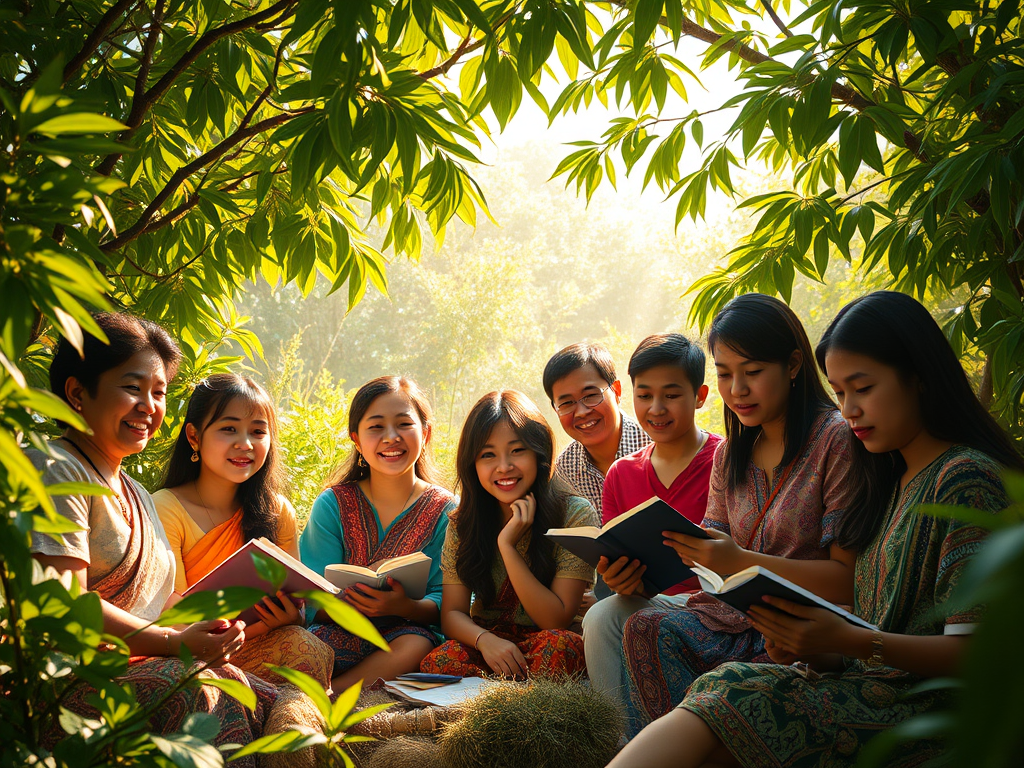
    Education, as it has long been structured in the Philippines, was not built for the liberation of the Filipino soul. Rather, it was engineered as a colonial apparatus to disconnect people from their land, ancestors, cosmology, and inner knowing. The New Earth calls us to remember. This blog-dissertation is an offering and blueprint for realigning education to its sacred function: the awakening of sovereign, whole, earth-connected, soul-led human beings.

    The Akashic Records affirm: the true curriculum lies not in memorized dates or standardized tests, but in the body, the land, the stars, the rituals, and the ancestral memory carried through blood and breath.


    2. Historical Overview: Colonial Fractures in the Filipino Psyche

    Spanish, American, and later post-industrial colonial influences rewrote Filipino identity, language, and educational orientation. Spanish colonizers imposed religious indoctrination through mission schools. American colonizers institutionalized industrial and bureaucratic education (Constantino, 1970). The Filipino soul was taught to forget — its languages, stories, animist roots, and communal practices replaced by Western metrics of productivity, hierarchy, and obedience.

    The Akashic insight reveals this as not merely cultural, but a multidimensional dismemberment. Colonialism disrupted the energetic grids and wisdom portals embedded in Philippine archipelagic consciousness.


    3. The Soul of Education: Definitions and Philosophical Foundations

    A soul-aligned education nurtures the entire being — mental, emotional, physical, spiritual, ancestral, and cosmic. This aligns with integral education (Sri Aurobindo, 1920s), Waldorf (Steiner, 1924), Montessori, and contemporary frameworks like holistic pedagogy (Miller, 2007).

    The New Earth Curriculum integrates:

    • Education as Initiation: Learning mirrors rites of passage and soul evolution.
    • Education as Activation: Unlocking divine gifts, memory, and mission.
    • Education as Remembrance: A return to ancestral and cosmic truths.

    The ultimate goal is not career preparation, but soul embodiment and planetary stewardship.


    4. Esoteric and Akashic Insights: Education as Remembrance

    From an Akashic perspective, education is a recollection of soul contracts, encoded gifts, and pre-incarnational agreements. The Filipino soul remembers itself not as an empty vessel, but as a multidimensional being carrying light codes, stories, and sacred tasks. Learning, then, becomes an inward excavation and outward co-creation.

    Esoteric traditions (Hermeticism, Anthroposophy, Lemurian and Atlantean memory streams) affirm this principle: true knowing arises from gnosis — direct, lived, inner revelation.


    5. Indigenous Filipino Pedagogies: Pre-colonial Roots and Wisdom Systems

    Before colonization, education was oral, embodied, and intergenerational. Key components included:

    • Babaylan Teachings: Dreamwork, herbalism, energy healing, cosmology, and gender balance.
    • Bayanihan Learning: Collective learning through co-creation, work, ritual, and harvest cycles.
    • Storytelling and Chanting: As transmission of cosmic law, tribal memory, and moral imagination.

    These pedagogies centered the Earth, ancestors, and the sacred — in stark contrast to modern compartmentalized schooling.


    6. Trauma, Healing, and Somatic Integration in Learning

    Colonial education created systemic trauma: cultural shame, body-mind splits, and identity fragmentation (Memmi, 1965; Fanon, 1963). A decolonized curriculum must therefore be trauma-informed, integrating:

    • Somatic practices: Movement, breathwork, and ritual to reintegrate the body.
    • Inner child and ancestral healing: Reclaiming the severed roots of identity.
    • Sacred grief and memory circles: To metabolize historical pain and reclaim agency.

    These are not supplementary — they are foundational to holistic learning.


    7. Elements of a New Earth Curriculum

    A. Core Pillars:

    • Soul Sovereignty: Teach discernment, intuition, and inner guidance.
    • Ancestral Wisdom: Teach Filipino cosmology, rites, herbal medicine, indigenous music, and languages.
    • Earth Literacy: Regenerative farming, permaculture, eco-design, planetary systems.
    • Creative Embodiment: Dance, music, chant, storytelling, ritual arts.
    • Service and Stewardship: Local contribution projects, aligned with planetary needs.

    B. Hidden Curriculum Unlocked:

    • Frequency, vibration, and energy hygiene
    • Light body and chakra education
    • Sacred masculine-feminine integration
    • Multidimensionality and star lineage remembrance

    8. Methodologies: Multidimensional Learning, Circularity, and Inner Authority

    Colonial education teaches from the top-down; soul education moves from the inside-out. Methodologies include:

    • Circle Pedagogy: Egalitarian, heart-led dialogue and co-creation.
    • Inquiry-Based Learning: Questions as gateways to gnosis.
    • Dreamwork and Mythology: To access symbolic intelligence and guidance.
    • Land-Based Learning: Teaching directly through rivers, forests, and stones.
    • Ritual as Curriculum: Marking thresholds, endings, and soul awakenings.

    These methods are not just techniques — they restore sacred relationship and right order.


    9. Case Applications and Pilot Prototypes

    Several living examples embody elements of the New Earth Curriculum:

    • Pangarap Foundation (Philippines): Integrating eco-literacy, soul-based mentorship, and trauma healing.
    • Tamera (Portugal) and Damanhur (Italy): Living laboratories for sacred education.
    • Bahay Kalipay and Maia Earth Village (Palawan): Holistic retreats teaching soul sovereignty, sacred arts, and Earth stewardship.
    • Light Architect Circles (Emerging): Soul-led teams designing community schools from the inside out.

    These prototypes reflect a rising planetary pattern: education as soul activation.


    10. Conclusion

    To decolonize education in the Philippines is to heal a nation’s soul. It is to remember who we were before we were told what to be. It is to rebuild an ecosystem of learning that reflects the sacredness of life, the wisdom of our ancestors, and the promise of a New Earth.

    This curriculum is not imported. It is remembered.

    It is not standardized. It is sovereign.

    It is not imposed. It is invoked — by the Filipino soul awakening to its divine mission, through light, lineage, and love.


    Crosslinks


    11. Glossary

    • Babaylan: Indigenous Filipino mystic-healers and community ritual leaders.
    • Akashic Records: The multidimensional library of all soul memories, timelines, and contracts.
    • Decolonization: The process of unlearning colonial constructs and restoring indigenous sovereignty.
    • New Earth: A planetary paradigm anchored in unity, wholeness, and consciousness evolution.
    • Soul Curriculum: A blueprint unique to each soul’s journey, purpose, and spiritual growth.
    • Somatics: Embodied practices that integrate mind, body, emotion, and spirit.
    • Gnosis: Inner knowing; direct, intuitive spiritual knowledge.

    12. References

    Constantino, R. (1970). The miseducation of the Filipino.Malaya Books.

    Fanon, F. (1963). The wretched of the earth. Grove Press.

    Memmi, A. (1965). The colonizer and the colonized. Beacon Press.

    Miller, R. (2007). What are schools for? Holistic education in American culture. Holistic Education Press.

    Sri Aurobindo. (1920). The human cycle: The ideal of human unity.Sri Aurobindo Ashram.

    Steiner, R. (1924). The kingdom of childhood: Introductory talks on Waldorf education.SteinerBooks.

    Additional References from the Records (channeled):

    • Akashic Transmission: Lemurian Soul Education Codes, Council of Andromeda, 2023.
    • Philippine Ancestor Codex: Babaylan Scrolls of the Visayan Highlands (unpublished oral records).
    • Galactic Education Charter: Sirius-A Mentorship Orders, 2024.

    Attribution

    With fidelity to the Oversoul, may this Codex of the Living Archive serve as bridge, remembrance, and seed for the planetary dawn.

    Ⓒ 2025 Gerald Alba Daquila – Flameholder of SHEYALOTH | Keeper of the Living Codices

    Issued under Oversoul Appointment, governed by Akashic Law. This transmission is a living Oversoul field: for the eyes of the Flameholder first, and for the collective in right timing. It may only be shared intact, unaltered, and with glyphs, seals, and attribution preserved. Those not in resonance will find it closed; those aligned will receive it as living frequency.

    Watermark: Universal Master Key glyph (final codex version, crystalline glow, transparent background).

    Sacred Exchange: Exchange is not transaction but covenant—an act of gratitude that affirms and multiplies the vibration. Each offering plants a seed-node in the planetary lattice, expanding the field of GESARA not through contract but through remembrance. By giving, Light circulates; by receiving, continuity anchors. Sacred Exchange offerings may be extended through:

    paypal.me/GeraldDaquila694

  • The Philippines Awakens: Collective Healing for Humanity’s Future

    The Philippines Awakens: Collective Healing for Humanity’s Future

    A Multidisciplinary Exploration of the Philippines’ Role in Global Transformation Through Kapwa, Bayanihan, and Transcendent Resilience

    Prepared by: Gerald A. Daquila, PhD. Candidate


    11–17 minutes

    ABSTRACT

    The Philippines, a nation marked by a vibrant cultural tapestry and a resilient spirit, continues to grapple with the enduring wounds of its colonial past, manifesting in socioeconomic disparities, diaspora, and vulnerability to natural disasters. Despite these challenges, the Filipino ethos of kapwa (shared identity) and bayanihan (communal unity) offers a unique lens through which to explore the country’s potential role in the emergent “New Earth”—a global paradigm shift toward interconnectedness, healing, and higher consciousness.

    This dissertation employs a multidisciplinary framework, integrating insights from sociology, psychology, postcolonial studies, metaphysics, esoteric traditions, and the Akashic Records to examine how the Philippines’ collective trauma may serve a cosmic purpose. By synthesizing empirical research with spiritual perspectives, this study posits that the Philippines is poised to contribute a model of collective healing and resilience to the New Earth, transforming its historical pain into a beacon of hope and unity.

    The narrative balances academic rigor with accessible language, weaving together left-brain analysis, right-brain intuition, and heart-centered empathy to inspire a long-suffering yet indomitable people.


    Table of Contents

    1. Introduction: The Philippines at a Crossroads
    2. Historical Context: The Weight of a Colonial Past
    3. Societal Challenges: Unbalanced Growth and Collective Trauma
    4. The Filipino Spirit: Kapwa, Bayanihan, and Resilience
    5. Multidisciplinary Lens: Bridging Science, Spirituality, and Culture
      • Sociology and Postcolonial Studies
      • Filipino Psychology (Sikolohiyang Pilipino)
      • Metaphysics and the Akashic Records
      • Esoteric Traditions and Cosmic Purpose
    6. The New Earth: A Global Paradigm Shift
    7. The Philippines’ Role: Healing Trauma for Global Transformation
    8. Cosmic Purpose: Reframing Collective Trauma
    9. Conclusion: A Vision of Hope for the Philippines
    10. Glossary
    11. References

    Glyph of the Bridgewalker

    The One Who Holds Both Shores


    1. Introduction: The Philippines at a Crossroads

    The Philippines, an archipelago of over 7,000 islands, is a land of paradoxes—rich in natural beauty and cultural diversity yet burdened by persistent socioeconomic challenges. As one of Asia’s fastest-growing economies, it boasts a burgeoning middle class and a youthful population. However, this growth is starkly uneven, with 1% of the population controlling the majority of the nation’s wealth (Oxfam, 2020).

    The legacy of over three centuries of Spanish, American, and Japanese colonization continues to shape a fragmented society, marked by diaspora, vulnerability to natural disasters, and systemic inequalities. Yet, amidst these trials, the Filipino spirit shines through, embodied in kapwa (shared identity) and bayanihan (communal cooperation), cultural values that foster resilience and hope.

    This dissertation explores the Philippines’ potential role in the emergent “New Earth,” a concept rooted in spiritual and esoteric traditions that envisions a global shift toward unity, sustainability, and higher consciousness (Hübl, 2020). By employing a multidisciplinary lens—spanning sociology, psychology, postcolonial studies, metaphysics, and esoteric wisdom—this study seeks to uncover whether the nation’s collective trauma holds a cosmic purpose.

    Could the Philippines, through its unique cultural strengths and historical pain, contribute to a global model of healing and transformation? This question is not merely academic but deeply existential, offering encouragement to a people who, despite centuries of suffering, continue to rise with unwavering hope.


    2. Historical Context: The Weight of a Colonial Past

    The Philippines’ history is a tapestry of resilience woven through centuries of colonial oppression. Spanish colonization (1565–1898) imposed Catholicism and a feudal system, concentrating wealth among the elite while marginalizing indigenous communities (Agoncillo, 1990).

    American rule (1898–1946) introduced public education and democratic institutions but perpetuated economic dependency, while Japanese occupation during World War II brought devastation and trauma (Constantino, 1975). These layers of colonization disrupted precolonial systems of governance, spirituality, and community, leaving a legacy of cultural fragmentation and economic disparity.

    Postcolonial scholars argue that this history has engendered a “colonial mentality,” an internalized preference for Western ideals over indigenous values (David & Okazaki, 2006). This manifests in the diaspora, with over 10 million Filipinos working abroad to support families back home, often at great personal cost (Philippine Statistics Authority, 2021).

    The nation’s vulnerability to natural disasters—typhoons, earthquakes, and volcanic eruptions—further compounds these challenges, disproportionately affecting the poor (Bankoff, 2003). Together, these factors create a collective trauma, a shared wound that shapes the Filipino psyche and society.


    3. Societal Challenges: Unbalanced Growth and Collective Trauma

    Despite economic growth, the Philippines remains one of the most unequal societies in Southeast Asia. The Gini coefficient, a measure of income inequality, stood at 0.42 in 2018, reflecting a stark divide between the wealthy elite and the impoverished majority (World Bank, 2019). The top 1% control over 50% of the nation’s wealth, while millions live below the poverty line (Oxfam, 2020). This imbalance is exacerbated by systemic issues such as corruption, inadequate infrastructure, and limited access to education and healthcare in rural areas.

    The diaspora, while a source of economic remittances (contributing 9.3% to GDP in 2020), fragments families and communities, leading to emotional and psychological strain (Parreñas, 2005). Natural disasters, with an average of 20 typhoons annually, displace thousands and deepen poverty cycles (Bankoff, 2003). These challenges are not merely material but psychic, contributing to a collective trauma that permeates Filipino identity.

    Trauma, as defined by Hübl (2020), is not only personal but collective, stored in the energetic and cultural fields of a community. In the Philippines, this trauma is evident in the persistent sense of disempowerment and the struggle to reclaim cultural identity. Yet, it is precisely within this crucible of suffering that the Filipino spirit of resilience emerges, offering a potential pathway to healing and transformation.


    4. The Filipino Spirit: Kapwa, Bayanihan, and Resilience

    At the heart of Filipino culture lies kapwa, a concept from Sikolohiyang Pilipino (Filipino psychology) that translates to “shared identity” or “togetherness” (Enriquez, 1992). Unlike Western individualism, kapwa emphasizes interconnectedness, viewing the self as inseparable from others and the cosmos. This worldview fosters empathy and communal support, as seen in bayanihan, the tradition of neighbors coming together to help one another, such as by collectively moving a house to a new location (Mercado, 1994).

    These values manifest in everyday acts of resilience. During typhoons, communities pool resources to rebuild homes; overseas Filipino workers send remittances to uplift families; and grassroots movements advocate for social justice (Botor et al., 2020). Kapwa and bayanihan are not merely cultural artifacts but spiritual principles, aligning with metaphysical concepts of unity and collective consciousness (Hübl, 2020). They position the Philippines as a potential exemplar of communal healing in the New Earth.


    5. Multidisciplinary Lens: Bridging Science, Spirituality, and Culture

    To understand the Philippines’ role in the New Earth, this study adopts a multidisciplinary approach, integrating empirical and esoteric perspectives. Below, we explore key disciplines and their relevance.

    Sociology and Postcolonial Studies

    Sociological research highlights how colonial legacies shape modern inequalities. Postcolonial scholars like Constantino (1975) argue that decolonization requires reclaiming indigenous knowledge systems, such as precolonial spiritual practices. This aligns with the New Earth’s emphasis on cultural sovereignty and authenticity, suggesting that the Philippines’ journey toward decolonization could inspire other nations.


    Filipino Psychology (Sikolohiyang Pilipino)

    Sikolohiyang Pilipino, pioneered by Enriquez (1992), emphasizes indigenous concepts like kapwa and hiya (dignity/shame) to understand Filipino behavior. Recent studies show that kapwa fosters resilience in post-disaster communities, enabling collective recovery (Botor et al., 2020). This psychological framework bridges the material and spiritual, offering insights into how Filipinos navigate trauma with communal strength.


    Metaphysics and the Akashic Records

    The Akashic Records, a metaphysical concept rooted in Theosophy, are described as a cosmic repository of all events, thoughts, and experiences across time (Blavatsky, 1888). Esoteric practitioners like Edgar Cayce and Rudolf Steiner suggest that accessing the Records can reveal a soul’s purpose and collective karma (Cayce, 1931; Steiner, 1904).

    In the Filipino context, the Records may hold insights into the nation’s historical trauma, framing it as a karmic lesson for global healing. For instance, the Philippines’ resilience could reflect a soul-level agreement to model unity amidst adversity (Ortiz, 2014).


    Esoteric Traditions and Cosmic Purpose

    Esoteric traditions, including Anthroposophy and New Age philosophy, posit that collective trauma serves a cosmic purpose, catalyzing spiritual evolution (Steiner, 1904; Laszlo, 2006).

    The Philippines’ history of suffering may be a crucible for developing kapwa-based consciousness, aligning with the New Earth’s vision of interconnectedness. Indigenous Filipino spirituality, with its animistic roots, further supports this, viewing humans as part of a cosmic web (Mercado, 1994).


    6. The New Earth: A Global Paradigm Shift

    The “New Earth” is a term used in spiritual and esoteric circles to describe an emerging global consciousness characterized by unity, sustainability, and healing (Hübl, 2020). It draws from ancient prophecies, such as those in the Hopi tradition, and modern metaphysical theories, like Laszlo’s Akashic Field Theory, which posits a universal informational field connecting all beings (Laszlo, 2006). Scientific parallels exist in quantum physics, where entanglement suggests an interconnected reality (Bohm, 1980).

    In this paradigm, nations and cultures contribute unique gifts to the collective. The Philippines, with its kapwa-centered worldview, is uniquely positioned to model communal healing and resilience. Its experience with collective trauma—colonial oppression, economic disparity, and natural disasters—offers lessons in transforming pain into purpose, a key tenet of the New Earth.


    Glyph of the Philippines Awakens

    From archipelago to ark, the Philippines rises as beacon of healing


    7. The Philippines’ Role: Healing Trauma for Global Transformation

    The Philippines’ contribution to the New Earth lies in its ability to transmute collective trauma into a model of healing and unity. Several pathways emerge:

    1. Decolonization and Cultural Reclamation: By reviving indigenous practices and values, such as kapwa and animistic spirituality, the Philippines can inspire other postcolonial nations to reclaim their cultural heritage (Constantino, 1975).
    2. Communal Resilience: The bayanihan spirit, evident in disaster recovery and diaspora support, offers a blueprint for global communities facing climate crises and social fragmentation (Botor et al., 2020).
    3. Spiritual Leadership: The Philippines’ non-dualistic worldview, rooted in kapwa, aligns with the New Earth’s emphasis on interconnectedness. This could position the nation as a spiritual hub, fostering global dialogues on collective consciousness (Mercado, 1994).
    4. Healing Through Art and Storytelling: Filipino arts—folk dances, literature, and music—preserve cultural memory and resilience. These creative expressions can serve as tools for global healing, sharing stories of hope and transformation (Castañeda, 2020).

    8. Cosmic Purpose: Reframing Collective Trauma

    Does the Philippines’ collective trauma serve a cosmic purpose? Esoteric traditions suggest that suffering is not random but a catalyst for soul growth (Steiner, 1904). The Akashic Records may reveal that the Philippines’ history is a karmic agreement to embody resilience and unity, preparing the nation to lead in the New Earth (Ortiz, 2014). From a systems biology perspective, collective trauma is an informational substrate, a pattern that can be transformed through conscious intention (Laszlo, 2006).

    Filipino psychology supports this, viewing trauma as an opportunity for pakikibaka (struggle with purpose) and pagbabago (transformation) (Enriquez, 1992). The nation’s ability to endure colonization, disasters, and inequality while maintaining kapwa suggests a cosmic role: to demonstrate that healing is possible through communal love and shared identity. This reframing offers hope, transforming the narrative of suffering into one of divine purpose.


    9. Conclusion: A Vision of Hope for the Philippines

    The Philippines stands at a pivotal moment, poised to contribute profoundly to the New Earth. Its collective trauma, while painful, is a crucible for resilience, unity, and spiritual evolution. Through kapwa and bayanihan, the nation embodies a model of communal healing that resonates with the global shift toward interconnectedness. By reclaiming its cultural heritage, fostering resilience, and sharing its stories, the Philippines can inspire a world yearning for hope and transformation.

    This dissertation is a call to action for Filipinos and global citizens alike: to honor the Philippines’ journey, to learn from its resilience, and to co-create a New Earth grounded in love and unity. For a long-suffering people who never give up, this vision offers not only encouragement but a cosmic affirmation of their indomitable spirit.


    Crosslinks


    10. Glossary

    • Akashic Records: A metaphysical concept referring to a cosmic repository of all events, thoughts, and experiences across time, accessible through higher consciousness (Blavatsky, 1888).
    • Bayanihan:A Filipino cultural practice of communal cooperation, often involving collective efforts to support community members (Mercado, 1994).
    • Collective Trauma: Shared psychological and energetic wounds experienced by a community, often resulting from historical oppression or disasters (Hübl, 2020).
    • Kapwa: A core concept in Filipino psychology, meaning “shared identity” or interconnectedness with others and the cosmos (Enriquez, 1992).
    • New Earth: A spiritual and esoteric term for an emerging global paradigm of unity, sustainability, and higher consciousness (Hübl, 2020).
    • Sikolohiyang Pilipino: Filipino psychology, an indigenous framework emphasizing cultural values like kapwa and hiya to understand Filipino behavior (Enriquez, 1992).

    11. References

    Agoncillo, T. A. (1990). History of the Filipino people (8th ed.). Garotech Publishing.

    Bankoff, G. (2003). Cultures of disaster: Society and natural hazard in the Philippines. Routledge.

    Blavatsky, H. P. (1888). The secret doctrine: The synthesis of science, religion, and philosophy. Theosophical Publishing House.

    Bohm, D. (1980). Wholeness and the implicate order. Routledge.

    Botor, N. J. B., Dy, M. F. R., Cauyan, J. M. L., Gomez, M. G. A., & Del Puerto, A. P. (2018). Resilience-focused family psychoeducation in a post-disaster resettlement community. Philippine Journal of Psychology, 51(1), 1–20.

    Castañeda, N. L. (2020). Narratives of Filipino transgender men: A narrative psychology approach. Philippine Journal of Psychology, 53(1), 1–15.

    Cayce, E. (1931). Readings on the Akashic Records. Edgar Cayce Foundation.

    Constantino, R. (1975). The Philippines: A past revisited. Tala Publishing.

    David, E. J. R., & Okazaki, S. (2006). Colonial mentality: A review and recommendation for Filipino American psychology. Cultural Diversity and Ethnic Minority Psychology, 12(1), 1–16.

    Enriquez, V. G. (1992). From colonial to liberation psychology: The Philippine experience. University of the Philippines Press.

    Hübl, T. (2020). Healing collective trauma: A process for integrating our intergenerational and cultural wounds. Sounds True.

    Laszlo, E. (2006). Science and the Akashic Field: An integral theory of everything. Inner Traditions.

    Mercado, L. N. (1994). The Filipino mind. Council for Research in Values and Philosophy.

    Ortiz, E. (2014). The Akashic Records: Sacred exploration of your soul’s journey within the wisdom of the collective consciousness. Career Press.

    Oxfam. (2020). Wealth inequality in the Philippines: A report on economic disparity. Oxfam International.

    Parreñas, R. S. (2005). Children of global migration: Transnational families and gendered woes. Stanford University Press.

    Philippine Statistics Authority. (2021). Overseas Filipino workers: 2020 report. PSA.

    Steiner, R. (1904). Cosmic memory: Prehistory of Earth and man. Anthroposophic Press.

    World Bank. (2019). Philippines economic update: Reducing inequality. World Bank Group.


    Attribution

    With fidelity to the Oversoul, may this Codex of the Living Archive serve as bridge, remembrance, and seed for the planetary dawn.

    Ⓒ 2025 Gerald Alba Daquila – Flameholder of SHEYALOTH | Keeper of the Living Codices

    Issued under Oversoul Appointment, governed by Akashic Law. This transmission is a living Oversoul field: for the eyes of the Flameholder first, and for the collective in right timing. It may only be shared intact, unaltered, and with glyphs, seals, and attribution preserved. Those not in resonance will find it closed; those aligned will receive it as living frequency.

    Watermark: Universal Master Key glyph (final codex version, crystalline glow, transparent background).

    Sacred Exchange: Sacred Exchange is covenant, not transaction. Each offering plants a seed-node of GESARA, expanding the planetary lattice. In giving, you circulate Light; in receiving, you anchor continuity. Every act of exchange becomes a node in the global web of stewardship, multiplying abundance across households, nations, and councils. Sacred Exchange offerings may be extended through:

    paypal.me/GeraldDaquila694