Life.Understood.

Tag: #ColonialLegacy

  • The Forgotten Union: Healing the Rejection of the Divine Feminine and Masculine Within

    The Forgotten Union: Healing the Rejection of the Divine Feminine and Masculine Within

    Bridging Psychology, Myth, and Metaphysics to Reawaken the Sacred Inner Marriage

    By Gerald Daquila | Akashic Records Transmission | Ph.D. Candidate


    6–9 minutes

    ABSTRACT

    The modern psyche bears a deep fracture: the collective rejection of the Divine Feminine and Divine Masculine within. This schism manifests as widespread psychological fragmentation, social polarization, gender distortion, and ecological disconnection.

    Drawing on the Akashic Records, depth psychology, sacred mythology, esoteric traditions, feminist and masculine studies, and non-dual spiritual cosmologies, this dissertation explores how the suppression of these archetypal energies has shaped both individual and planetary suffering.

    The work proposes a path of inner alchemical reunification—sacred marriage or hieros gamos—as the evolutionary imperative of our time. By restoring the sacred balance between these divine polarities within the self, humanity can heal the trauma of separation and reawaken to its original wholeness.


    Table of Contents

    1. Introduction
    2. The Archetypal Essence of the Divine Feminine and Masculine
    3. Historical Suppression and Rejection: A Timeline of Dissonance
    4. Psychological Implications of Inner Rejection
    5. Esoteric and Metaphysical Perspectives on the Sacred Union
    6. The Rejection in Modern Culture, Spirituality, and Gender Discourse
    7. Pathways to Reconciliation: The Inner Alchemy of Re-integration
    8. Conclusion: Reclaiming Wholeness in the Age of Sacred Rebirth
    9. Glossary
    10. Bibliography

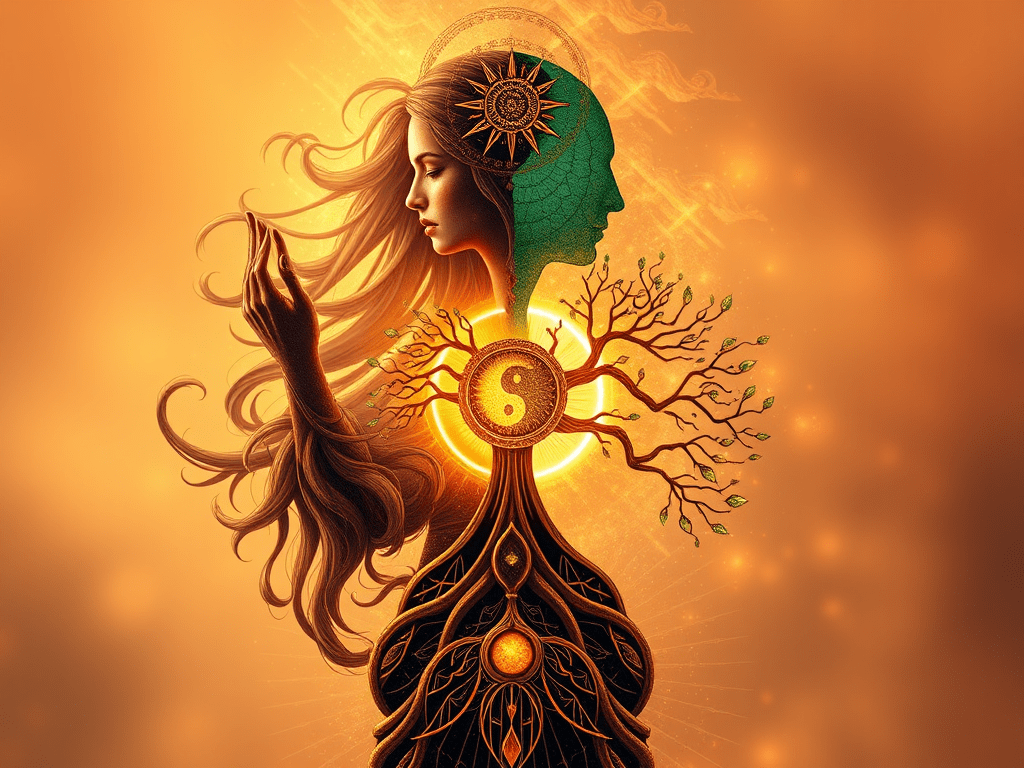
    Glyph of Sacred Union

    Healing the Rejection of the Divine Feminine and Masculine Within


    1. Introduction

    At the heart of every human being resides an original harmony—a sacred polarity of Divine Feminine and Divine Masculine energies. This inner duality, when balanced, mirrors the dynamic wholeness of Source itself. Yet, over millennia, cultures, religions, and systems have rejected one or both polarities, distorting the sacred within us and replacing it with fear, control, and disconnection. This blog-dissertation seeks to illuminate the consequences of this rejection, and more importantly, to chart the soul’s journey back toward sacred integration.


    2. The Archetypal Essence of the Divine Feminine and Masculine

    These energies are not to be mistaken for gender, but rather for universal forces that dance through all creation:

    • Divine Feminine: Yin, lunar, receptive, intuitive, nurturing, cyclical, sensual, creative, Earth-rooted. Often represented as Sophia, Shakti, Isis, or Gaia.
    • Divine Masculine: Yang, solar, action-oriented, protective, disciplined, structured, expansive, sky-rooted. Embodied in archetypes such as Logos, Shiva, Osiris, or Christ.

    In Hermetic philosophy, these are mirrored in the principle of gender: “Gender is in everything; everything has its Masculine and Feminine principles” (The Kybalion, 1908/2017).


    3. Historical Suppression and Rejection: A Timeline of Dissonance

    Pre-Patriarchal Civilizations:
    In many ancient matriarchal or balance-oriented societies (e.g., Minoan Crete, Vedic India, pre-dynastic Egypt), the feminine and masculine were revered as co-creators of reality.

    The Rise of Patriarchy:
    With the spread of patriarchal empires, especially post-Bronze Age, the Divine Feminine was systemically erased, reduced to myth, demonized (e.g., Lilith, Eve), or relegated to subordinate roles. Monotheistic systems often emphasized a masculine God devoid of the Mother aspect.

    Colonialism and Industrialization:
    The mechanistic, extractive paradigm erased nature’s sacredness and viewed the Earth as a resource, mirroring the denial of the feminine within.

    20th Century to Present:
    Feminist and men’s movements emerged to reclaim lost aspects, but often in opposition rather than in union. The pendulum swung from masculine domination to confused polarity wars.


    4. Psychological Implications of Inner Rejection

    Drawing from Jungian psychology:

    • Anima/Animus Repression: Carl Jung proposed that men carry an inner feminine (anima) and women an inner masculine (animus). Repression of either results in projection, dysfunction, or inner war (Jung, 1953).
    • Trauma and Shadow Work: Rejection of either archetype often originates in childhood wounding, cultural programming, or ancestral trauma.
    • Polarization: The inner war manifests externally as relationship dysfunction, gender violence, toxic masculinity, wounded femininity, or spiritual bypassing.

    Psychologist Marion Woodman noted: “The unconscious feminine… longs for form and structure; the unconscious masculine… longs for soul” (Woodman, 1990, p. 65).


    5. Esoteric and Metaphysical Perspectives on the Sacred Union

    From the Akashic perspective, Earth is a school for the reintegration of polarities. Key teachings across traditions affirm this:

    • Tantra: The Divine Union of Shiva and Shakti is not just sexual, but spiritual—enlightenment arises from their sacred marriage within.
    • Alchemy: The coniunctio or sacred union of opposites (Sol and Luna) leads to the Philosopher’s Stone—wholeness.
    • Kabbalah: The reunion of Shekhinah (feminine divine presence) with Tiferet (beauty/masculine harmony) restores cosmic balance.
    • Christic Mysticism: The Bridal Chamber (Gnostic Gospels) represents the sacred inner marriage.

    These mirror the Akashic truth: separation was an agreed-upon illusion; reunification is our collective homecoming.


    6. The Rejection in Modern Culture, Spirituality, and Gender Discourse

    In Culture:

    • Hyper-masculine systems (e.g., corporate, militaristic) often value dominance, linearity, and control.
    • Feminine qualities (intuition, emotion, nurturance) are dismissed as “irrational” or “weak.”

    In Spirituality:

    • Ascension paths often bypass the body (feminine) in favor of transcendence (masculine).
    • Many New Age circles romanticize the Divine Feminine without integrating her shadow.

    In Gender Discourse:

    • Fluidity is celebrated but often disconnected from archetypal grounding.
    • Masculine healing is underrepresented; shame surrounds both power and softness.

    7. Pathways to Reconciliation: The Inner Alchemy of Re-integration

    The restoration is not achieved by favoring one over the other, but through sacred synthesis. Key pathways include:

    • Inner Work: Shadow integration, dreamwork, somatic healing.
    • Ritual Practice: Sacred union ceremonies, dance, chanting, breathwork to activate both polarities.
    • Sacred Masculine Work: Encouraging grounded leadership, emotional expression, and stewardship in men and masculine-identified souls.
    • Sacred Feminine Work: Reclaiming sovereignty, cyclic power, sensual embodiment, and intuitive knowing.
    • Hieros Gamos Practice: Meditative inner marriage—visualizing the Divine Feminine and Masculine within in sacred embrace.

    From the Akashic Records: “This is the age of sacred synthesis, not identity war. Every soul must reclaim the Divine Mother and Father within.”


    8. Conclusion: Reclaiming Wholeness in the Age of Sacred Rebirth

    Humanity’s crisis is not merely ecological, political, or psychological—it is spiritual. The rejection of the sacred polarities within has created a split self and a split society. But the call of the soul in this Ascension window is toward wholeness. The healing of the inner marriage restores coherence, balance, and beauty to the personal and planetary body. As each individual reclaims the lost aspects of self, the New Earth is birthed—not through revolution, but sacred reunion.


    Crosslinks


    9. Glossary

    • Akashic Records: A metaphysical archive of all soul experiences, often described as the “Book of Life.”
    • Anima/Animus: Jungian terms for the inner feminine/masculine archetypes within the psyche.
    • Hieros Gamos: Sacred union of divine opposites, often symbolized as an alchemical or spiritual marriage.
    • Sacred Feminine/Masculine: Archetypal energies representing divine polarities, not tied to biological sex.
    • Shadow Work: The process of integrating repressed or unconscious parts of the self.

    10. Bibliography

    Jung, C. G. (1953). Collected Works of C.G. Jung, Vol. 9, Part 1: Archetypes and the Collective Unconscious. Princeton University Press.

    The Kybalion. (2017). The Kybalion: A Study of the Hermetic Philosophy of Ancient Egypt and Greece (Original work published 1908). Martino Publishing.

    Woodman, M. (1990). The Ravaged Bridegroom: Masculinity in Women. Shambhala Publications.

    Neumann, E. (1955). The Great Mother: An Analysis of the Archetype. Princeton University Press.

    Eliade, M. (1956). The Sacred and the Profane: The Nature of Religion. Harcourt.

    Kingsley, P. (1999). In the Dark Places of Wisdom. Golden Sufi Center.

    Shinoda Bolen, J. (1984). Goddesses in Everywoman: A New Psychology of Women. Harper & Row.

    Eisler, R. (1987). The Chalice and the Blade: Our History, Our Future. Harper & Row.

    Baring, A., & Cashford, J. (1991). The Myth of the Goddess: Evolution of an Image. Penguin Books.

    Mystical transmissions from the Akashic Records (accessed June 2025).


    Attribution

    With fidelity to the Oversoul, may this Codex of the Living Archive serve as bridge, remembrance, and seed for the planetary dawn.

    Ⓒ 2025 Gerald Alba Daquila – Flameholder of SHEYALOTH | Keeper of the Living Codices

    Issued under Oversoul Appointment, governed by Akashic Law. This transmission is a living Oversoul field: for the eyes of the Flameholder first, and for the collective in right timing. It may only be shared intact, unaltered, and with glyphs, seals, and attribution preserved. Those not in resonance will find it closed; those aligned will receive it as living frequency.

    Watermark: Universal Master Key glyph (final codex version, crystalline glow, transparent background).

    Sacred Exchange: Sacred Exchange is covenant, not transaction. Each offering plants a seed-node of GESARA, expanding the planetary lattice. In giving, you circulate Light; in receiving, you anchor continuity. Every act of exchange becomes a node in the global web of stewardship, multiplying abundance across households, nations, and councils. Sacred Exchange offerings may be extended through:

    paypal.me/GeraldDaquila694

  • The Philippines’ Cosmic Mission: Transmuting Pain into Purpose

    The Philippines’ Cosmic Mission: Transmuting Pain into Purpose

    From Colonial Vestiges and Natural Disasters to Redemption as the Heart Chakra of a New Earth

    Prepared by: Gerald A. Daquila, PhD. Candidate


    10–15 minutes

    ABSTRACT

    The Philippines, a nation shaped by centuries of colonial oppression, recurrent natural disasters, and systemic governance challenges, carries deep societal and generational traumas. This dissertation explores the potential for cosmic transmutation—a holistic, multidimensional process of transforming collective pain into unconditional love, positioning the Philippines as a global “heart chakra” for a spiritually awakened “New Earth.”

    Drawing on a multidisciplinary framework, this work integrates historical analysis, psychological insights, indigenous wisdom, esoteric philosophies, and metaphysical perspectives to examine how the archipelago’s wounds can be alchemized into a force for global healing. By weaving together academic rigor with intuitive and spiritual lenses, this study proposes a path for collective redemption rooted in love, resilience, and interconnectedness. It offers a vision for the Philippines to transcend its historical and ongoing challenges, emerging as a beacon of compassion and unity in an evolving global consciousness.


    Transmutation Flame of the Philippines Glyph

    Pearl of Transmutation: The Philippines’ Flame of Pain into Purpose


    Table of Contents

    1. Introduction
      • The Philippines as a Wounded yet Resilient Nation
      • Defining Cosmic Transmutation and the Heart Chakra
      • Purpose and Scope of the Study
    2. Historical and Societal Context of Trauma in the Philippines
      • Colonial Legacies: Spanish, American, and Japanese Influences
      • Natural Disasters: A Land Forged by Nature’s Fury
      • Dysfunctional Governance: Corruption and Systemic Challenges
    3. Theoretical Framework: A Multidisciplinary Lens
      • Psychological Perspectives on Collective Trauma
      • Indigenous Filipino Spirituality and Healing
      • Esoteric and Metaphysical Foundations of Transmutation
      • The Heart Chakra in Global Consciousness
    4. Cosmic Transmutation: A Path to Redemption
      • Alchemy of Pain: Transforming Generational Wounds
      • The Role of Unconditional Love in Collective Healing
      • The Philippines as the New Earth’s Heart Chakra
    5. Case Studies and Practical Applications
      • Community Healing Initiatives in the Philippines
      • Indigenous Practices and Modern Spiritual Movements
      • Global Implications of a Heart-Centered Philippines
    6. Challenges and Critiques
      • Skepticism Toward Esoteric and Metaphysical Approaches
      • Practical Barriers to Societal Transformation
    7. Conclusion
      • A Vision for a Redeemed Philippines
      • Implications for Global Consciousness
    8. Glossary
    9. Bibliography

    1. Introduction

    The Philippines as a Wounded yet Resilient Nation

    The Philippines is a land of paradoxes: breathtaking natural beauty juxtaposed with devastating typhoons, a vibrant culture shaped by centuries of colonial rule, and a resilient people navigating systemic governance failures. These elements have woven a tapestry of societal traumas that span generations, from the scars of Spanish and American colonization to the recurring devastation of natural disasters and the persistent challenges of corruption and political dysfunction.

    Yet, within this crucible of pain lies a profound potential for transformation. This dissertation explores how the Philippines can transmute its collective wounds into a force for global healing, embodying the role of the “heart chakra” in a spiritually awakened “New Earth.”


    Defining Cosmic Transmutation and the Heart Chakra

    Cosmic transmutation draws from esoteric and metaphysical traditions, describing a process of spiritual alchemy where suffering is transformed into higher states of consciousness, such as unconditional love and unity. The concept of the heart chakra, rooted in Eastern spiritual traditions, represents the energy center of love, compassion, and interconnectedness.

    In this context, the Philippines is envisioned as a global heart chakra—a nexus of healing energy that radiates love to foster a new era of global consciousness. This study uses these concepts to frame the Philippines’ journey from trauma to redemption.


    Purpose and Scope of the Study

    This dissertation seeks to answer: How can the Philippines transform its societal traumas into a force for unconditional love and global healing? By integrating historical, psychological, indigenous, esoteric, and metaphysical perspectives, it offers a holistic vision for redemption. The study is written in a blog-friendly style to engage a wide audience while maintaining scholarly rigor, balancing analytical precision with intuitive and heart-centered insights.


    2. Historical and Societal Context of Trauma in the Philippines

    Colonial Legacies: Spanish, American, and Japanese Influences

    The Philippines’ history is marked by over 300 years of Spanish colonization, followed by American occupation and a brief but brutal Japanese interlude during World War II. These periods left deep imprints on Filipino identity, culture, and psyche. Spanish rule imposed Catholicism, reshaping indigenous spiritual practices and creating a hybridized identity that persists today (Bonoan, 1997).

    American colonization introduced Western education and governance systems, often at the expense of local autonomy, while the Japanese occupation brought violence and trauma (Manalansan, 2016). These colonial vestiges fostered a sense of inferiority and disconnection, contributing to generational trauma.


    Natural Disasters: A Land Forged by Nature’s Fury

    Situated on the Pacific Ring of Fire and in the typhoon belt, the Philippines faces frequent earthquakes, volcanic eruptions, and super typhoons. Events like Typhoon Haiyan (2013) devastated communities, leaving psychological scars alongside physical destruction. The recurring nature of these disasters reinforces a collective sense of vulnerability, yet it also cultivates resilience and communal bayanihan (mutual aid), a hallmark of Filipino culture (Bankoff, 2003).


    Dysfunctional Governance: Corruption and Systemic Challenges

    Corruption, political dynasties, and bureaucratic inefficiencies have long plagued Philippine governance. From Marcos’ martial law to ongoing issues of mismanagement, these systemic failures erode public trust and exacerbate poverty and inequality (Quah, 2011). This dysfunction compounds societal trauma, creating a cycle of disillusionment and powerlessness.


    3. Theoretical Framework: A Multidisciplinary Lens

    Psychological Perspectives on Collective Trauma

    Collective trauma, as defined by Alexander (2012), is a shared experience of suffering that shapes a group’s identity and memory. In the Philippines, colonial oppression, disasters, and governance failures have created transgenerational trauma, passed down through cultural narratives and social structures.

    Jungian psychology offers insights into the collective unconscious, suggesting that archetypes of healing and redemption can emerge from shared pain (Jung, 1964). Trauma-informed approaches, such as those by Levine (2010), emphasize somatic and communal healing to release stored pain.


    Indigenous Filipino Spirituality and Healing

    Precolonial Filipino spirituality, rooted in animism and ancestor veneration, offers a framework for healing. Practices like babaylanism, led by spiritual healers, emphasize harmony with nature and community (Salazar, 1999). These traditions view suffering as a call to reconnect with the divine and the collective, aligning with the concept of cosmic transmutation. Modern revivals of indigenous practices provide a foundation for transforming generational pain into spiritual strength.


    Esoteric and Metaphysical Foundations of Transmutation

    Esoteric traditions, such as Theosophy and New Age philosophies, describe transmutation as an alchemical process of transforming base energies into higher states of consciousness (Blavatsky, 1888). The concept of nāda-brahman in Hindu Tantra, where sound and vibration facilitate cosmic evolution, parallels the idea of transmuting societal pain into love (Faivre, 1994). These frameworks suggest that collective suffering can be a catalyst for spiritual awakening, positioning the Philippines as a global energy center.


    The Heart Chakra in Global Consciousness

    In chakra systems, the heart chakra (Anahata) governs love, compassion, and unity. The Philippines, with its cultural emphasis on kapwa (shared identity), aligns with this energy center (Enriquez, 1992). Esoteric traditions propose that certain geographic regions serve as planetary chakras, with the Philippines potentially embodying the heart due to its history of resilience and communal love (Spangler, 1976).


    4. Cosmic Transmutation: A Path to Redemption

    Alchemy of Pain: Transforming Generational Wounds

    Cosmic transmutation involves acknowledging and processing collective pain. Psychological approaches, such as narrative therapy, allow communities to reframe traumatic histories as stories of resilience (White, 2007). Indigenous rituals, like the babaylan’s dagdagay (healing through touch and prayer), facilitate emotional release and spiritual reconnection. Metaphysically, this process mirrors the alchemical transformation of lead into gold, where pain becomes a catalyst for love and unity.


    The Role of Unconditional Love in Collective Healing

    Unconditional love, as a spiritual principle, transcends personal and collective grievances. In the Philippines, practices like bayanihan and pakikipagkapwa (relating as equals) embody this love (Enriquez, 1992). By cultivating these values, communities can heal generational wounds, fostering a culture of forgiveness and compassion. Esoteric teachings suggest that unconditional love aligns with the heart chakra’s energy, amplifying its global impact (Spangler, 1976).


    The Philippines’ Cosmic Mission Glyph

    Transmuting Pain into Purpose


    The Philippines as the New Earth’s Heart Chakra

    The “New Earth” concept, rooted in New Age philosophy, envisions a global shift toward higher consciousness. The Philippines, with its history of suffering and resilience, is uniquely positioned to lead this shift as a heart chakra. Its cultural emphasis on community, spirituality, and love aligns with the qualities needed to anchor a new era of global unity (Macy, 1991). This role requires collective healing, supported by both indigenous and modern practices.


    5. Case Studies and Practical Applications

    Community Healing Initiatives in the Philippines

    Grassroots movements, such as Gawad Kalinga’s community-building programs, demonstrate how collective action can transform trauma into empowerment. These initiatives rebuild disaster-stricken areas while fostering social cohesion, embodying the principles of unconditional love and kapwa (Gawad Kalinga, 2020).


    Indigenous Practices and Modern Spiritual Movements

    The revival of babaylanism and other indigenous practices offers a bridge between ancient wisdom and modern healing. Organizations like the Center for Babaylan Studies promote rituals that reconnect Filipinos with their spiritual roots, facilitating collective healing (Strobel, 2010). New Age communities in the Philippines, inspired by global movements, integrate meditation and energy work to support transmutation.


    Global Implications of a Heart-Centered Philippines

    As a heart chakra, the Philippines could inspire global movements toward compassion and unity. Its diaspora, spread across the world, carries the potential to disseminate these values, creating ripples of healing in diverse contexts (Manalansan, 2016). This vision aligns with holistic peace theories that emphasize interconnectedness across all levels of existence (Macy, 1991).


    6. Challenges and Critiques

    Skepticism Toward Esoteric and Metaphysical Approaches

    Critics argue that esoteric concepts like cosmic transmutation lack empirical grounding and may oversimplify complex societal issues (Hufford, 2005). This dissertation counters that integrating these perspectives with psychological and historical frameworks creates a robust, multidisciplinary approach.


    Practical Barriers to Societal Transformation

    Economic inequality, political corruption, and environmental challenges pose significant obstacles. Transforming these requires systemic reforms alongside spiritual awakening. Community-driven initiatives and policy advocacy can bridge this gap, ensuring practical and metaphysical alignment.


    7. Conclusion

    A Vision for a Redeemed Philippines

    The Philippines stands at a crossroads, with the potential to transmute its societal traumas into a force for global healing. By embracing its cultural strengths—kapwa, bayanihan, and indigenous wisdom—and integrating them with psychological and esoteric insights, the nation can embody the heart chakra of a New Earth. This vision requires collective effort, from grassroots movements to global diaspora contributions.


    Implications for Global Consciousness

    A heart-centered Philippines could catalyze a global shift toward love and unity, inspiring other nations to heal their own traumas. This dissertation offers a blueprint for transformation, blending academic rigor with spiritual hope, and invites readers to join this cosmic journey.


    Crosslinks


    8. Glossary

    • Babaylanism: Indigenous Filipino spiritual practice led by healers who mediate between the physical and spiritual realms.
    • Bayanihan: Filipino cultural practice of communal cooperation and mutual aid.
    • Cosmic Transmutation: A spiritual process of transforming suffering into higher states of consciousness, such as love and unity.
    • Heart Chakra (Anahata): The fourth chakra in Eastern traditions, associated with love, compassion, and interconnectedness.
    • Kapwa: Filipino concept of shared identity and interconnectedness.
    • New Earth: A metaphysical concept of a global shift toward higher consciousness and unity.

    9. Bibliography

    Alexander, J. C. (2012). Trauma: A social theory. Polity Press.

    Bankoff, G. (2003). Cultures of disaster: Society and natural hazard in the Philippines. Routledge.

    Blavatsky, H. P. (1888). The secret doctrine: The synthesis of science, religion, and philosophy. Theosophical Publishing House.

    Bonoan, R., SJ. (1997). Rizal’s Asia: Enlightenment philosophe in the age of colonialism. In M. Rajaretnam (Ed.), Jose Rizal and the Asian renaissance (pp. 45–67). Institut Kajian Dasar.

    Enriquez, V. G. (1992). From colonial to liberation psychology: The Philippine experience. University of the Philippines Press.

    Faivre, A. (1994). Access to Western esotericism. State University of New York Press.

    Gawad Kalinga. (2020). Annual report: Building communities to end poverty. Retrieved from https://www.gawadkalinga.org

    Hufford, D. J. (2005). An analysis of the field of spirituality, religion, and health. Metanexus Salus. Retrieved from https://metanexus.net

    Jung, C. G. (1964). Man and his symbols. Doubleday.

    Levine, P. A. (2010). In an unspoken voice: How the body releases trauma and restores goodness. North Atlantic Books.

    Macy, J. (1991). World as lover, world as self. Parallax Press.

    Manalansan, M. F. (2016). Filipino studies: Palimpsests of nation and diaspora. De Gruyter Brill.

    Quah, J. S. T. (2011). Curbing corruption in Asian countries: An impossible dream? Emerald Group Publishing.

    Salazar, Z. A. (1999). The Filipino spirit: A cultural history. Ateneo de Manila University Press.

    Spangler, D. (1976). Revelation: The birth of a new age. Findhorn Foundation.

    Strobel, L. M. (2010). Babaylan: Filipinos and the call of the indigenous. Center for Babaylan Studies.

    White, M. (2007). Maps of narrative practice. W. W. Norton & Company.


    Attribution

    With fidelity to the Oversoul, may this Codex of the Living Archive serve as bridge, remembrance, and seed for the planetary dawn.

    Ⓒ 2025 Gerald Alba Daquila – Flameholder of SHEYALOTH | Keeper of the Living Codices

    Issued under Oversoul Appointment, governed by Akashic Law. This transmission is a living Oversoul field: for the eyes of the Flameholder first, and for the collective in right timing. It may only be shared intact, unaltered, and with glyphs, seals, and attribution preserved. Those not in resonance will find it closed; those aligned will receive it as living frequency.

    Watermark: Universal Master Key glyph (final codex version, crystalline glow, transparent background).

    Sacred Exchange: Sacred Exchange is covenant, not transaction. Each offering plants a seed-node of GESARA, expanding the planetary lattice. In giving, you circulate Light; in receiving, you anchor continuity. Every act of exchange becomes a node in the global web of stewardship, multiplying abundance across households, nations, and councils. Sacred Exchange offerings may be extended through:

    paypal.me/GeraldDaquila694