
Unveiling the Hidden Self for Personal Healing and Global Awakening
Prepared by: Gerald A. Daquila, PhD. Candidate
ABSTRACT
Shadow work and the Dark Night of the Soul are profound psychological and spiritual processes rooted in the exploration of the unconscious self and existential transformation. This dissertation examines their definitions, differences, processes, necessity, and outcomes, while exploring their intersections with the ascension process on individual and collective levels.
Drawing from Jungian psychology, metaphysics, quantum physics, trauma-informed spirituality, and cultural studies, this work offers a holistic perspective on how these practices facilitate personal healing and contribute to global consciousness evolution. By integrating academic rigor with accessible language, this study balances intellectual analysis with emotional resonance, appealing to both the mind and heart. It argues that shadow work and the Dark Night of the Soul are essential for integrating fragmented aspects of the psyche, fostering self-awareness, and catalyzing collective awakening in an era of global transformation.
Table of Contents
- Introduction
- Defining Shadow Work and the Dark Night of the Soul
- Shadow Work: Unveiling the Hidden Self
- The Dark Night of the Soul: A Transformative Crisis
- Key Differences and Overlaps
- The Process and Effects of Shadow Work and the Dark Night
- The Journey of Shadow Work
- Navigating the Dark Night of the Soul
- Psychological and Physiological Impacts
- The Necessity of Shadow Work and the Dark Night
- Individual Healing and Wholeness
- Collective Transformation and Societal Shadows
- The Aftermath: Integration and Transformation
- Personal Outcomes: Self-Realization and Empowerment
- Collective Outcomes: Awakening and Unity
- Intersection with the Ascension Process
- Individual Ascension: From Ego to Authentic Self
- Collective Ascension: A Global Shift in Consciousness
- Multidisciplinary Perspectives
- Jungian Psychology: The Shadow and Individuation
- Metaphysics: The Nature of Reality and Consciousness
- Quantum Physics: Observer Effect and Reality Creation
- Trauma-Informed Spirituality: Healing Generational Wounds
- Cultural Studies: Collective Shadows and Social Change
- Conclusion
- Glossary
- References

Glyph of the Bridgewalker
The One Who Holds Both Shores
1. Introduction
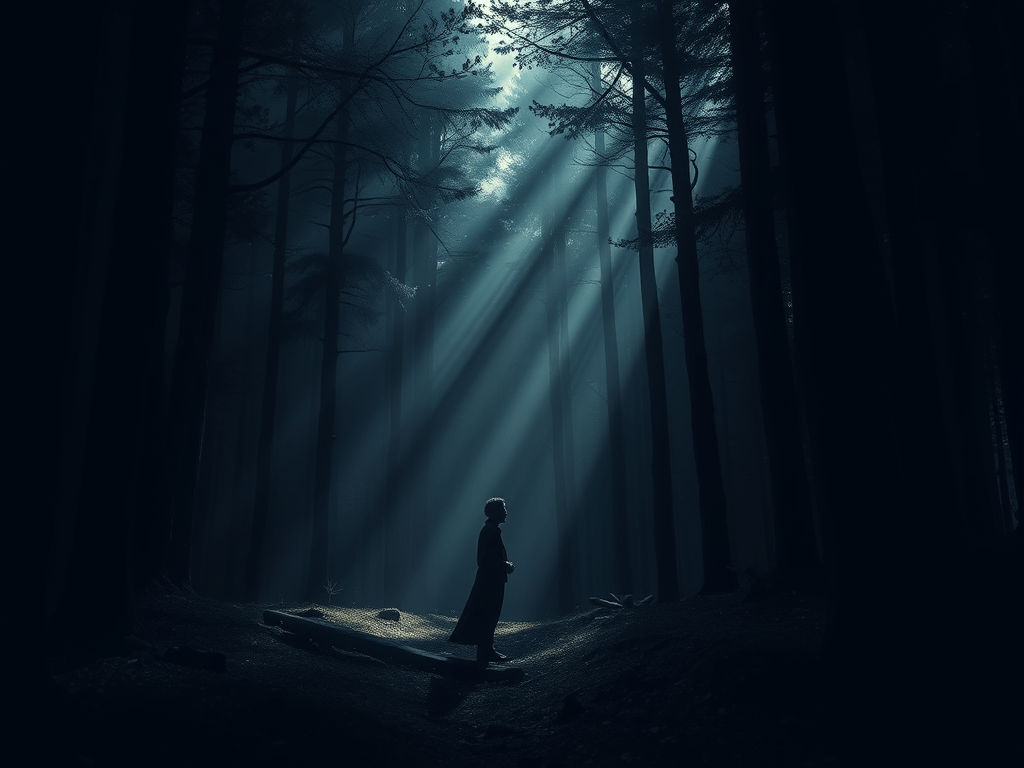
Imagine standing at the edge of a dark forest, knowing that to find your true self, you must step into the shadows. This is the essence of shadow work and the Dark Night of the Soul—two transformative processes that invite us to confront the hidden, suppressed, or painful parts of ourselves. In a world craving authenticity and connection, these practices offer a path to personal healing and collective awakening. But what are they, and why do they matter? Are they the same, or do they serve distinct purposes? And how do they connect to the broader concept of ascension, the spiritual evolution of individuals and humanity?
This dissertation dives deep into these questions, blending insights from psychology, metaphysics, quantum physics, and cultural studies to provide a holistic understanding. Written in a conversational yet scholarly tone, it aims to bridge the analytical and intuitive, offering a narrative that resonates with both the mind and heart.
By exploring the processes, effects, necessity, and outcomes of shadow work and the Dark Night of the Soul, we uncover their role in personal transformation and their potential to spark a global shift in consciousness.
2. Defining Shadow Work and the Dark Night of the Soul
Shadow Work: Unveiling the Hidden Self
Shadow work, a term rooted in the psychology of Carl Jung, involves exploring the “shadow self”—the unconscious aspects of our personality that we reject, suppress, or deny. These include emotions like anger, jealousy, or shame, as well as traits we deem undesirable, often due to societal conditioning or past trauma (Jung, 1959). As Jung famously said, “Until you make the unconscious conscious, it will direct your life and you will call it fate” (Jung, 1959). Shadow work is the courageous act of shining a light on these hidden parts, integrating them to achieve wholeness.
Think of the shadow as the attic of your psyche, filled with dusty boxes of forgotten memories, suppressed desires, and unresolved pain. Shadow work is like opening those boxes, sorting through the contents, and deciding what to keep, heal, or release. It’s not about banishing the shadow but embracing it with compassion, recognizing that even our “dark” traits have value (LonerWolf, 2025).
The Dark Night of the Soul: A Transformative Crisis
The Dark Night of the Soul, a term coined by 16th-century mystic St. John of the Cross, describes a profound spiritual and existential crisis where one confronts the collapse of meaning, identity, or connection to the divine (St. John of the Cross, 1578). It’s a period of intense inner turmoil, often marked by depression, hopelessness, or a sense of being lost. Unlike shadow work, which is an intentional practice, the Dark Night often arises unbidden, a soul-level reckoning that strips away illusions to reveal deeper truths (Elephant Journal, 2020).
Picture the Dark Night as a storm that uproots everything you thought you knew about yourself. It’s not just about facing hidden emotions but questioning the very foundation of your existence—your purpose, beliefs, and place in the universe. While painful, it’s a transformative process, often described as a “death and rebirth” of the self (MindThatEgo, 2020).
Key Differences and Overlaps
While shadow work and the Dark Night of the Soul share the goal of self-discovery, they differ in scope and nature. Shadow work is a deliberate, ongoing practice of confronting specific unconscious aspects, often through journaling, therapy, or meditation (Centre of Excellence, 2019). The Dark Night, however, is a broader, often involuntary crisis that encompasses the entire psyche, challenging one’s worldview and spiritual foundation (Quora, 2021).
Yet, the two intersect. Shadow work can trigger a Dark Night by unearthing deep traumas, while a Dark Night often necessitates shadow work to process the resulting emotional upheaval. Both are pathways to individuation—Jung’s term for integrating all aspects of the self to become whole (Jung, 1959).
3. The Process and Effects of Shadow Work and the Dark Night
The Journey of Shadow Work
Shadow work begins with self-awareness. It involves identifying triggers—moments when strong emotions or reactions arise unexpectedly. These triggers often point to shadow aspects, such as a fear of abandonment manifesting as jealousy in relationships (Soul Scroll Journals, 2020). Common practices include:
- Journaling: Writing about triggers, childhood wounds, or recurring patterns to uncover hidden beliefs (Pure Holistic Wellness, 2024).
- Therapy: Working with a Jungian analyst or trauma-informed therapist to explore the unconscious (Therapist.com, 2025).
- Dream Analysis: Interpreting dreams, where the shadow often appears as a same-sex figure or archetype (Wikipedia, 2004).
- Meditation: Sitting with uncomfortable emotions to understand their origins (LonerWolf, 2025).
The process can be uncomfortable, as it requires facing painful truths. For example, someone might realize their anger stems from childhood neglect, as shared in a personal account on LonerWolf (2025), where a breakup revealed unresolved maternal wounds.
Navigating the Dark Night of the Soul
The Dark Night is less structured, often feeling like a descent into chaos. It may manifest as depression, existential questioning, or a loss of faith (Modern Goddess, 2019). Unlike shadow work, which is methodical, the Dark Night is a liminal space where old identities dissolve. Practices to navigate it include:
- Surrender: Letting go of resistance and trusting the process, as suggested in 12-step recovery narratives (The Delmarva Free School, 2021).
- Spiritual Practices: Meditation, prayer, or yoga to reconnect with inner light (MindThatEgo, 2020).
- Community Support: Sharing experiences with others to alleviate isolation (Reddit, 2020).
The Dark Night can last months or years, with no fixed timeline (Elephant Journal, 2020). It’s a deeply personal journey, often described as a “spiritual detox” that purges outdated beliefs.
Psychological and Physiological Impacts
Both processes can be intense. Shadow work may trigger anxiety, shame, or grief as suppressed emotions surface (WebMD, 2024). Physiologically, trauma release can cause physical sensations like trembling or fatigue, as stored energy is processed (In My Sacred Space, 2020). The Dark Night often involves depressive symptoms, insomnia, or a sense of disconnection, reflecting a rewiring of the psyche (Elephant Journal, 2020).
These effects, while challenging, are temporary. They signal the release of old patterns and the integration of new insights, paving the way for emotional freedom and clarity.
4. The Necessity of Shadow Work and the Dark Night
Individual Healing and Wholeness
Shadow work is necessary because unacknowledged shadows shape our lives unconsciously. Repressed emotions can manifest as addictions, toxic relationships, or self-sabotage (Centre of Excellence, 2019). By integrating the shadow, we reclaim agency, transforming weaknesses into strengths. For example, acknowledging jealousy might reveal a need for self-love, leading to healthier relationships (Soul Scroll Journals, 2020).
The Dark Night is equally vital, as it forces us to confront existential questions and shed false identities. Without it, we may remain tethered to societal conditioning or outdated beliefs, unable to access our authentic self (Modern Goddess, 2019). It’s a crucible for growth, burning away illusions to reveal our true essence.
Collective Transformation and Societal Shadows
On a collective level, shadow work addresses societal shadows—repressed cultural traumas like systemic racism, gender inequality, or environmental neglect (The Delmarva Free School, 2021). By confronting these, communities can heal generational wounds and foster inclusivity.
The Dark Night of the Soul, when experienced collectively, signals a global breaking point, as seen during crises like pandemics, where outdated systems are exposed (MindThatEgo, 2020). This collective reckoning is a catalyst for societal rebirth, aligning humanity with higher values like unity and compassion.

Glyph of Shadow Work & the Dark Night
Through the shadow, the soul remembers its light
5. The Aftermath: Integration and Transformation
Personal Outcomes: Self-Realization and Empowerment
After shadow work, individuals often experience greater self-awareness, emotional resilience, and authenticity. By embracing their shadow, they reduce projection—blaming others for internal struggles—and cultivate compassion for themselves and others (Medium, 2015). For example, someone who heals a fear of rejection may form deeper connections (LonerWolf, 2025).
Post-Dark Night, individuals emerge with a renewed sense of purpose and connection to the divine or universal consciousness. The crisis leads to a spiritual awakening, where life feels more meaningful and interconnected (Elephant Journal, 2020). This is often described as a shift from ego to soul, marked by inner peace and clarity.
Collective Outcomes: Awakening and Unity
Collectively, shadow work and Dark Nights contribute to a global awakening. As individuals heal, they model authenticity, inspiring others to do the same (MindThatEgo, 2020). This ripple effect can shift societal norms, dismantling oppressive structures and fostering unity. For instance, collective shadow work around racial trauma could lead to policies rooted in equity and justice (In My Sacred Space, 2020).
6. Intersection with the Ascension Process
Individual Ascension: From Ego to Authentic Self
Ascension, in spiritual terms, is the elevation of consciousness toward unity, love, and authenticity. Shadow work supports this by integrating fragmented aspects of the psyche, aligning the ego with the higher self (Quora, 2021). The Dark Night catalyzes ascension by dismantling false identities, allowing the soul’s purpose to emerge (Modern Goddess, 2019). For example, someone who navigates a Dark Night may shift from a career-driven ego to a life guided by passion and service.
Collective Ascension: A Global Shift in Consciousness
Collectively, ascension is a shift toward a higher state of human consciousness, often linked to the Age of Aquarius or a re-enchantment of reality (MindThatEgo, 2020). Shadow work heals collective traumas, while Dark Nights expose societal flaws, paving the way for systems rooted in compassion and sustainability. This process mirrors Jung’s individuation on a global scale, where humanity integrates its collective shadow to embody unity (Jung, 1959).
7. Multidisciplinary Perspectives
Jungian Psychology: The Shadow and Individuation
Carl Jung’s concept of the shadow is central to both processes. The shadow, encompassing repressed traits and collective archetypes like the trickster, must be integrated for individuation—the journey to wholeness (Wikipedia, 2004). Shadow work aligns with Jung’s belief that confronting the unconscious fosters self-realization, while the Dark Night reflects the “descent into the unconscious” that precedes transformation (Jung, 1959).
Metaphysics: The Nature of Reality and Consciousness
Metaphysics explores the nature of existence, suggesting that reality is shaped by consciousness (Wikipedia, 2024). Shadow work aligns with this by uncovering subconscious beliefs that create our reality, while the Dark Night questions the nature of existence itself, aligning with metaphysical inquiries into free will and purpose (Berkeley, 1685).
Quantum Physics: Observer Effect and Reality Creation
Quantum physics posits that observation influences reality (e.g., the observer effect). Shadow work can be seen as observing and reshaping subconscious patterns, altering one’s reality (Medium, 2015). The Dark Night, by dissolving old paradigms, allows individuals to co-create a new reality aligned with higher consciousness, supporting ascension (Bohm, 1980).
Trauma-Informed Spirituality: Healing Generational Wounds
Trauma-informed spirituality views the shadow as stored trauma in the body and psyche. Shadow work releases this energy, while the Dark Night processes ancestral and collective karma, facilitating healing across generations (In My Sacred Space, 2020). This perspective emphasizes the physical and energetic dimensions of transformation.
Cultural Studies: Collective Shadows and Social Change
Cultural studies highlight how societal shadows—repressed issues like inequality—manifest in collective behavior (The Delmarva Free School, 2021). Shadow work and Dark Nights expose these, driving social change. For example, confronting the shadow of colonialism can lead to reparative justice, aligning with collective ascension.
8. Conclusion
Shadow work and the Dark Night of the Soul are twin flames of transformation, guiding us through the darkness to uncover our light. Shadow work, with its deliberate exploration of the unconscious, and the Dark Night, with its existential unraveling, are essential for personal healing and collective awakening. Through a multidisciplinary lens—spanning Jungian psychology, metaphysics, quantum physics, trauma-informed spirituality, and cultural studies—we see their profound impact on individual wholeness and global consciousness.
By embracing these processes, we not only heal ourselves but contribute to a world where authenticity, compassion, and unity prevail. As we navigate our shadows and dark nights, we step into our power as co-creators of a new reality, aligning with the ascension process to birth a brighter future for all.
Crosslinks
- Pieces of the Self: Soul Fragmentation Across Psyche, Society, and Spirit — Maps fragmentation and offers retrieval rites so exiled aspects can return.
- Understanding Shame: A Multi-Disciplinary Exploration… — Melts “I am bad” so shadow can be owned without collapse.
- The Weight of Guilt: A Multidisciplinary Exploration… — Converts remorse into clean repair (truth + amends) instead of self-punishment.
- The Space Between Worlds: A Journey Through the Great Shift — A map for the liminal corridor where old identity dissolves and new embodiment forms.
- The Transformative Power of Loss: Finding Meaning in Grief Through Spiritual and Scientific Wisdom — Walks grief as the alchemical passage that frees love and truth.
- Resonance Metrics as a Spiritual Compass in Times of Uncertainty — Somatic compass (breath, coherence, relief) to pace the work: go / hold / repair.
9. Glossary
- Shadow Self: Unconscious aspects of the personality that are repressed or denied, as defined by Carl Jung.
- Dark Night of the Soul: A spiritual crisis involving existential questioning and transformation, coined by St. John of the Cross.
- Individuation: Jung’s process of integrating conscious and unconscious aspects to achieve psychological wholeness.
- Ascension: A spiritual process of elevating consciousness toward unity and authenticity, individually or collectively.
- Collective Unconscious: Jung’s concept of shared, universal archetypes inherited across humanity.
- Trauma-Informed Spirituality: A framework that integrates trauma healing with spiritual practices, emphasizing energy and embodiment.
10. References
Berkeley, G. (1685). A treatise concerning the principles of human knowledge. Dublin: Aaron Rhames.
Bohm, D. (1980). Wholeness and the implicate order. London: Routledge.
Centre of Excellence. (2019, September 16). What is shadow work? Centre of Excellence. https://www.centreofexcellence.com%5B%5D(https://www.centreofexcellence.com/what-is-shadow-work/)
Elephant Journal. (2020, September 8). The hell & chaos that come with any real transformation. Elephant Journal. https://www.elephantjournal.com%5B%5D(https://www.elephantjournal.com/2020/09/the-dark-night-of-the-soul-and-the-importance-of-shadow-work/)
In My Sacred Space. (2020, December 30). The shadow self and shadow work’s role in spirituality. In My Sacred Space. https://inmysacredspace.com%5B%5D(https://inmysacredspace.com/shadow-work/)
Jung, C. G. (1959). The archetypes and the collective unconscious. Princeton, NJ: Princeton University Press.
LonerWolf. (2025, June 13). What is shadow work? 7 exercises (+ free workbook). LonerWolf. https://lonerwolf.com%5B%5D(https://lonerwolf.com/shadow-work-demons/)
Medium. (2015, January 5). Introduction to shadow work. Medium. https://medium.com%5B%5D(https://medium.com/%40maryamhasnaa/introduction-to-shadow-work-27e3ba9dd4e8)
MindThatEgo. (2020, April 21). This is the world’s dark night of the soul. MindThatEgo. https://www.mindthatego.com%5B%5D(https://www.mindthatego.com/collective-awakening-shadow-work/)
Modern Goddess. (2019, July 26). Navigating the dark night of the soul: Shadow work. The Modern Goddess. https://www.moderngoddessblog.com%5B%5D(https://www.moderngoddessblog.com/guide/navigating-the-dark-night-of-the-soul-shadow-work)
Pure Holistic Wellness. (2024, April 19). Understanding shadow work. Pure Holistic Wellness. https://www.pureholisticwellness.com%5B%5D(https://www.pureholisticwellness.com/delving-into-the-depths-understanding-shadow-work/)
Quora. (2021, August 25). How can shadow work play in one’s spiritual progress? Quora. https://www.quora.com%5B%5D(https://www.quora.com/How-can-shadow-work-play-in-ones-spiritual-progress)
Reddit. (2020, June 22). What exactly is ‘shadow work’ and ‘the dark night of the soul’? Reddit. https://www.reddit.com%5B%5D(https://www.reddit.com/r/awakened/comments/hdm2sc/what_exactly_is_shadow_work_and_the_dark_night_of/)
Soul Scroll Journals. (2020, September 4). Exactly how to do shadow work (an easy 6-step process). Soul Scroll Journals. https://soulscrolljournals.com%5B%5D(https://soulscrolljournals.com/blogs/news/exactly-how-to-do-shadow-work-an-easy-6-step-process)
St. John of the Cross. (1578). The dark night of the soul. (Trans. 2005). New York: Riverhead Books.
The Delmarva Free School. (2021, February 11). What is shadow work? On open-mindedness & exploring spirituality. The Delmarva Free School. https://thedelmarvafreeschool.com%5B%5D(https://thedelmarvafreeschool.com/2021/02/10/what-is-shadow-work-on-open-mindedness-exploring-spirituality/)
Therapist.com. (2025, March 12). Shadow work: What it is, examples, and effectiveness. Therapist.com. https://therapist.com%5B%5D(https://therapist.com/self-development/shadow-work/)
WebMD. (2024, July 29). What is shadow work? WebMD. https://www.webmd.com%5B%5D(https://www.webmd.com/mental-health/shadow-work)
Wikipedia. (2004, March 29). Shadow (psychology). Wikipedia. https://en.wikipedia.org%5B%5D(https://en.wikipedia.org/wiki/Shadow_%28psychology%29)
Wikipedia. (2024, November 30). Metaphysics. Wikipedia. https://en.wikipedia.org%5B%5D(https://en.wikipedia.org/wiki/Metaphysics)
@HussainIbarra. (2025, May 30). Carl Jung once said… [Post on X].
Attribution
With fidelity to the Oversoul, may this Codex of the Living Archive serve as bridge, remembrance, and seed for the planetary dawn.
Ⓒ 2025 Gerald Alba Daquila – Flameholder of SHEYALOTH | Keeper of the Living Codices
Issued under Oversoul Appointment, governed by Akashic Law. This transmission is a living Oversoul field: for the eyes of the Flameholder first, and for the collective in right timing. It may only be shared intact, unaltered, and with glyphs, seals, and attribution preserved. Those not in resonance will find it closed; those aligned will receive it as living frequency.
Watermark: Universal Master Key glyph (final codex version, crystalline glow, transparent background).
Sacred Exchange: Sacred Exchange is covenant, not transaction. Each offering plants a seed-node of GESARA, expanding the planetary lattice. In giving, you circulate Light; in receiving, you anchor continuity. Every act of exchange becomes a node in the global web of stewardship, multiplying abundance across households, nations, and councils. Sacred Exchange offerings may be extended through:
paypal.me/GeraldDaquila694





 Life.Understood.