Life.Understood.

Tag: care for people

  • Permaculture and the Future: Designing a Post-Scarcity World Through Sustainable Living

    Permaculture and the Future: Designing a Post-Scarcity World Through Sustainable Living

    A Multidisciplinary Exploration of Permaculture’s Principles, Practices, and Potential to Transform Development

    Prepared by: Gerald A. Daquila, PhD. Candidate


    10–15 minutes

    ABSTRACT

    Permaculture, a design philosophy rooted in ecological principles and ethical collaboration, offers a transformative vision for sustainable living by aligning human systems with nature’s rhythms. This dissertation explores permaculture’s core concepts, diverse manifestations, and its role in cultivating a post-scarcity mindset—a perspective that replaces competition with cooperation to unlock abundance.

    By contrasting permaculture with conventional, scarcity-driven development models, it highlights a regenerative alternative that prioritizes ecological health and social equity. Through a multidisciplinary lens blending ecology, sociology, and holistic philosophies like unity consciousness, this work balances analytical rigor with intuitive wisdom. Written in a vibrant, accessible narrative, it invites gardeners, policymakers, and dreamers to embrace permaculture as a bridge to a resilient, abundant future.


    Table of Contents

    1. Introduction: Envisioning a World Beyond Scarcity
    2. Defining Permaculture: Ethics, Ecology, and Abundance
    3. Manifestations of Permaculture: From Backyards to Global Networks
    4. Contrasting Scarcity-Driven Development with Permaculture’s Vision
    5. Permaculture and Unity Consciousness: A Holistic Connection
    6. Bridging Today’s Challenges to a Post-Scarcity Future
    7. A Multidisciplinary Lens: Science, Society, and Spirit
    8. Challenges and Opportunities: Scaling Permaculture’s Impact
    9. Conclusion: Cultivating a Future of Abundance
    10. Glossary
    11. Bibliography

    1. Introduction: Envisioning a World Beyond Scarcity

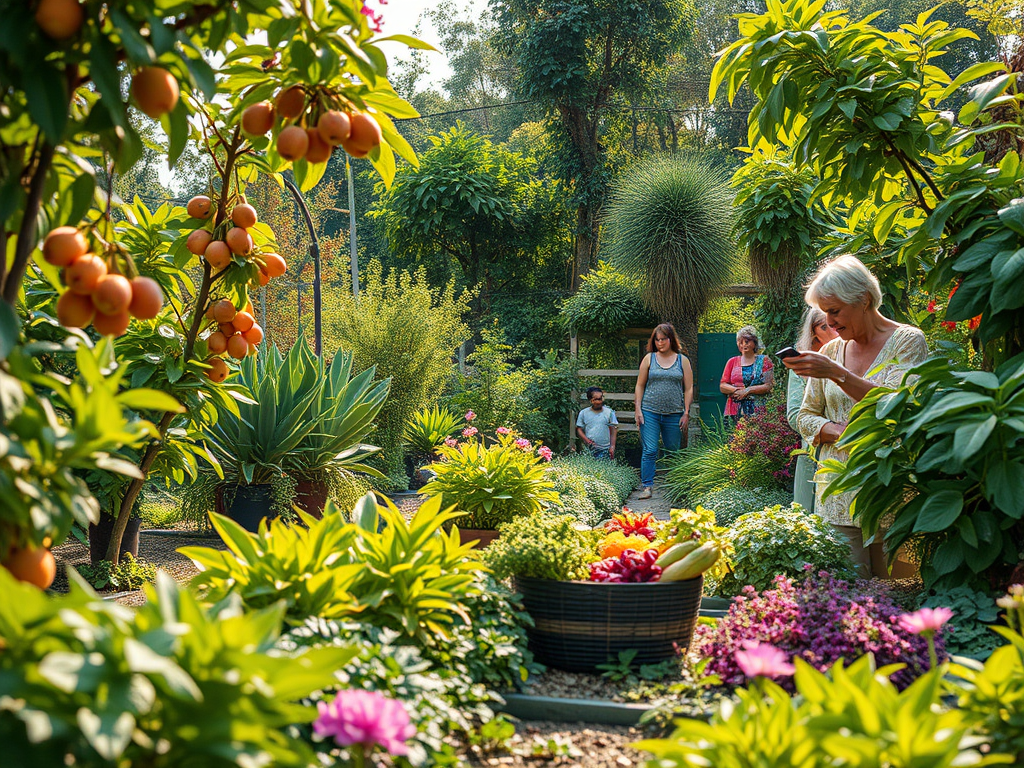
    Picture a world where resources flow freely, communities thrive in harmony with the Earth, and the fear of “not enough” fades into a distant memory. This is the promise of permaculture, a design system that reimagines how we live, grow, and connect. Born in the 1970s as a response to the ecological and social toll of industrial systems, permaculture offers a blueprint for sustainability that transcends scarcity. It invites us to see abundance not as a finite resource to hoard but as a shared gift, cultivated through cooperation and ecological wisdom.

    This dissertation tells the story of permaculture’s potential to reshape our world. It explores its principles, showcases its diverse applications, and contrasts it with the scarcity-driven models fueling climate change and inequality. By weaving together ecology, sociology, and holistic philosophies like unity consciousness, it balances analytical clarity with intuitive insight, crafting a narrative that speaks to both the mind and heart. Written for a wide audience—from backyard gardeners to global policymakers—this work illuminates how permaculture can guide us toward a regenerative, abundant future.


    Glyph of the Gridkeeper

    The One Who Holds the Lattice of Light


    2. Defining Permaculture: Ethics, Ecology, and Abundance

    Permaculture, blending “permanent agriculture” and “permanent culture,” is a design philosophy that mimics natural ecosystems to create sustainable human environments. Conceived by Bill Mollison and David Holmgren in 1978, it emerged amid growing alarm over industrial agriculture’s environmental damage. Inspired by Indigenous practices, early innovators like Joseph Russell Smith, and systems thinking, permaculture offers a framework for living in harmony with nature (Mollison & Holmgren, 1978).


    Ethical Foundations

    At its heart, permaculture is guided by three ethics:

    • Care for the Earth: Nurturing ecosystems and biodiversity.
    • Care for People: Ensuring equitable access to resources and well-being.
    • Fair Share: Limiting consumption and redistributing surplus to foster abundance (Holmgren, 2002).

    These ethics inform 12 design principles, including observing natural patterns, capturing energy, and producing no waste. Together, they create systems—whether gardens, communities, or economies—that are resilient, diverse, and interconnected (Holmgren, 2007).


    The Post-Scarcity Mindset

    Permaculture challenges the scarcity mindset—the belief that resources are limited and must be competed for. Instead, it promotes abundance through cyclical systems that recycle water, nutrients, and energy. A permaculture garden, for instance, might use compost to enrich soil and rainwater to irrigate crops, yielding food indefinitely without depleting resources (Hemenway, 2001). This approach reframes scarcity as a design flaw, solvable through cooperation and ingenuity, setting the stage for a world where abundance is a shared reality.


    3. Manifestations of Permaculture: From Backyards to Global Networks

    Permaculture’s versatility shines across scales, from small plots to global movements, each embodying its vision of ecological harmony and collective abundance. Its applications ripple outward, transforming landscapes and lives.


    Regenerative Agriculture

    In rural areas, permaculture redefines food production. Techniques like companion planting, agroforestry, and hügelkultur (using buried wood to retain soil moisture) boost biodiversity and soil health. In Zimbabwe, over 60 schools have adopted permaculture to create sustainable food systems, blending local knowledge with modern design to produce abundant yields while restoring ecosystems (Viquipèdia, 2002). These systems show that scarcity is not inevitable—abundance flows from working with nature.


    Urban and Community Resilience

    In cities, permaculture reimagines urban spaces as vibrant, self-sustaining hubs. Community gardens, green roofs, and cooperative housing projects apply its principles to enhance food security and social bonds. Ecovillages, like those in Costa Rica, use permaculture to design sustainable homes and renewable energy systems, proving that urban life can thrive without draining resources (Britannica, 2025). These efforts foster community resilience, countering the isolation and competition of scarcity-driven systems.


    Social and Economic Innovation

    Permaculture’s principles extend beyond physical landscapes to inspire alternative economies. Time banks, bartering systems, and cooperatives embody the “fair share” ethic, redistributing resources to meet collective needs. By prioritizing collaboration over competition, these models challenge scarcity-driven capitalism, showing that abundance emerges when communities share resources and knowledge (Brain et al., 2021). From local gardens to global networks, permaculture’s manifestations weave a tapestry of abundance.


    4. Contrasting Scarcity-Driven Development with Permaculture’s Vision

    Conventional development, rooted in industrialization and globalization, is steeped in a scarcity mindset. It prioritizes profit over people and planet, relying on monoculture farming, fossil fuels, and linear resource extraction. This approach has led to soil degradation, biodiversity loss, and social inequities, perpetuating a cycle of competition and depletion (Ferguson, 2013). Permaculture, by contrast, offers a regenerative vision that redefines abundance through cooperation and ecological design.

    AspectConventional DevelopmentPermaculture
    MindsetScarcity: Competition for limited resourcesAbundance: Cooperation for shared prosperity
    ApproachLinear, extractiveCyclical, regenerative
    FocusProfit, scalabilityEcosystem health, community resilience
    Resource UseHigh waste, non-renewableZero-waste, renewable
    Cultural LensGlobalized, standardizedLocalized, context-specific

    Permaculture’s closed-loop systems—composting, water harvesting, diverse plantings—minimize waste and maximize abundance. A permaculture farm might use rainwater to irrigate, compost to enrich soil, and polycultures to deter pests, creating a self-sustaining system that thrives without external inputs (Hemenway, 2001). This contrasts with industrial agriculture’s reliance on chemical fertilizers and monocultures, which deplete resources and reinforce scarcity. By designing for abundance, permaculture offers a path to a regenerative future.


    Glyph of Sustainable Living

    Permaculture and the Future — Designing a Post-Scarcity World Through Regenerative Harmony


    5. Permaculture and Unity Consciousness: A Holistic Connection

    Permaculture’s ecological and ethical framework aligns with unity consciousness, a philosophy that sees all life as interconnected, forming a unified whole. Rooted in spiritual traditions like Buddhism and Indigenous worldviews, unity consciousness views individual actions as part of a larger web, where every choice impacts the collective (Metzner, 2016). Permaculture embodies this by designing systems that reflect nature’s interdependence, fostering abundance through collaboration.


    Interdependence in Design

    The principle of “use and value diversity” mirrors unity consciousness by recognizing that diverse elements—plants, animals, humans—strengthen the whole. A forest garden, for example, combines trees, shrubs, and herbs in a symbiotic network, each supporting the others to create a thriving ecosystem (Holmgren, 2007). This reflects a holistic understanding that diversity is a source of resilience and abundance, not a barrier to overcome.


    Balancing Analysis and Intuition

    Permaculture blends analytical design with intuitive observation, aligning with unity consciousness’s holistic perspective. Practitioners study landscapes with scientific precision while sensing the land’s needs intuitively, creating designs that feel deeply aligned with nature’s rhythms (Grayson, 2025). This balance of logic and intuition fosters systems that are both practical and harmonious, reinforcing a post-scarcity mindset where abundance flows from connection.


    Shifting Mindsets

    By embracing unity consciousness, permaculture challenges the fear of scarcity that drives competition. It encourages communities to see resources as shared and cyclical, fostering trust and collaboration. A community garden, for instance, might share its harvest, seeds, and knowledge, creating a cycle of abundance that benefits all (Brain et al., 2021). This shift is essential for a post-scarcity world, where collective stewardship replaces individual gain.


    6. Bridging Today’s Challenges to a Post-Scarcity Future

    Transitioning from scarcity-driven systems to a regenerative, abundant future requires practical strategies and philosophical shifts, with permaculture as a guiding light. Its principles offer a roadmap for change, connecting today’s challenges with tomorrow’s possibilities.

    Practical Pathways

    • Education and Empowerment: Permaculture Design Courses (PDCs) equip communities with tools to create sustainable systems. Expanding access through online platforms and local workshops can spread this knowledge, empowering grassroots change (ECHOcommunity, 2015).
    • Policy Integration: Advocating for permaculture principles in agricultural and urban policies can scale its impact. Subsidies for regenerative farming or support for community gardens can shift systems toward abundance.
    • Decolonizing Practices: Honoring Indigenous knowledge ensures permaculture respects its roots, building equitable partnerships that enrich its practice (Brain et al., 2021).

    Philosophical Transformations

    • Systems Thinking: Shifting from linear to cyclical thinking aligns human systems with nature’s patterns, reducing waste and fostering resilience.
    • Embracing Unity Consciousness: Practices like mindfulness and community-building deepen awareness of interconnectedness, inspiring choices that prioritize collective well-being.
    • Cultivating Abundance: A post-scarcity mindset reframes resources as abundant when shared. Permaculture’s focus on surplus redistribution—whether food, knowledge, or energy—embodies this vision (Holmgren, 2002).

    Research and Innovation

    To bridge the gap, future research should quantify permaculture’s ecological and social benefits, addressing gaps in scientific validation. Exploring its impact in marginalized communities and integrating intuitive design methods can further its reach, paving the way for a regenerative future.


    7. A Multidisciplinary Lens: Science, Society, and Spirit

    Permaculture’s power lies in its ability to weave together diverse disciplines, creating a holistic framework for a post-scarcity world:

    • Ecology: Drawing on systems ecology, permaculture designs energy-efficient, biodiverse systems that regenerate rather than deplete (Holmgren, 2002).
    • Sociology: Its focus on community resilience and equitable resource sharing addresses social inequities, fostering cooperative models (Brain et al., 2021).
    • Holistic Philosophy: Unity consciousness aligns permaculture with spiritual traditions, offering a deeper understanding of interconnectedness (Metzner, 2016).

    This multidisciplinary approach challenges the reductionist, scarcity-driven paradigms of conventional science, advocating for a balance of empirical rigor and intuitive wisdom that resonates with diverse audiences.


    8. Challenges and Opportunities: Scaling Permaculture’s Impact

    Permaculture’s flexibility is both a strength and a challenge:

    • Ambiguity: Its broad scope can make it seem vague, limiting mainstream adoption (Harper, as cited in Viquipèdia, 2002).
    • Scientific Gaps: Limited peer-reviewed research hinders its credibility in policy circles (Ferguson, 2013).
    • Cultural Sensitivity: Failing to credit Indigenous knowledge risks perpetuating colonial dynamics (Brain et al., 2021).

    Opportunities abound in addressing these challenges. Clearer definitions, rigorous studies, and ethical engagement with Indigenous communities can amplify permaculture’s impact. By scaling education and advocating for policy integration, it can become a cornerstone of a post-scarcity world.


    9. Conclusion: Cultivating a Future of Abundance

    Permaculture offers a radiant vision for a post-scarcity future, where abundance flows from ecological harmony, ethical collaboration, and a deep sense of interconnectedness. By challenging scarcity-driven development, it invites us to reimagine our relationship with the Earth and each other. Through practical strategies like regenerative agriculture and community design, and philosophical shifts toward unity consciousness, permaculture bridges today’s challenges with tomorrow’s possibilities. This narrative calls on gardeners, policymakers, and dreamers to embrace its principles, cultivating a world where sustainability and abundance are not just dreams but lived realities.


    Crosslinks


    10. Glossary

    • Hügelkultur: A permaculture technique using buried wood to retain soil moisture and enhance fertility (Hemenway, 2001).
    • Permaculture: A design system for sustainable human environments, mimicking natural ecosystems and guided by ethical principles (Mollison & Holmgren, 1978).
    • Post-Scarcity Mindset: A perspective that views resources as abundant when shared and cycled, rather than limited and competitive.
    • Unity Consciousness: The belief that all life is interconnected, forming a universal whole (Metzner, 2016).
    • Agroecology: A scientific discipline and practice focused on sustainable agriculture, often aligned with permaculture (Ferguson, 2013).

    11. Bibliography

    Brain, R. G., McCann, R., & others. (2021). (Re-)Defining permaculture: Perspectives of permaculture teachers and practitioners across the United States. Sustainability, 13(10), 5413. https://doi.org/10.3390/su13105413

    Britannica. (2025). Permaculture. Retrieved from https://www.britannica.com/topic/permaculture

    ECHOcommunity. (2015). Introduction to permaculture. Retrieved from https://www.echocommunity.org/en/resources/9b5f3e8a-4f5b-4a3e-9b9e-5b6f8a7b9c2d

    Ferguson, R. S. (2013). Permaculture for agroecology: Design, movement, practice, and worldview. Agronomy for Sustainable Development, 33(2), 251-274. https://doi.org/10.1007/s13593-013-0181-6

    Grayson, R. (2025). Thinkers of the dawn time: The permaculture design system. PERMACULTURE Journal. Retrieved from https://medium.com/permaculture-journal/thinkers-of-the-dawn-time

    Hemenway, T. (2001). Gaia’s garden: A guide to home-scale permaculture. White River Junction, VT: Chelsea Green Publishing.

    Holmgren, D. (2002). Permaculture: Principles and pathways beyond sustainability. Hepburn, Australia: Holmgren Design Services.

    Holmgren, D. (2007). Essence of permaculture. Holmgren Design Services.

    Metzner, R. (2016). Ecology of consciousness: The alchemy of personal, collective, and planetary transformation. Oakland, CA: New Harbinger Publications.

    Mollison, B., & Holmgren, D. (1978). Permaculture one: A perennial agriculture for human settlements. Sisters Creek, Australia: Tagari Publications.

    Viquipèdia. (2002). Permacultura. Retrieved from https://ca.wikipedia.org/wiki/Permacultura


    Attribution

    With fidelity to the Oversoul, may this Codex of the Living Archive serve as bridge, remembrance, and seed for the planetary dawn.

    Ⓒ 2025 Gerald Alba Daquila – Flameholder of SHEYALOTH | Keeper of the Living Codices

    Issued under Oversoul Appointment, governed by Akashic Law. This transmission is a living Oversoul field: for the eyes of the Flameholder first, and for the collective in right timing. It may only be shared intact, unaltered, and with glyphs, seals, and attribution preserved. Those not in resonance will find it closed; those aligned will receive it as living frequency.

    Watermark: Universal Master Key glyph (final codex version, crystalline glow, transparent background).

    Sacred Exchange: Sacred Exchange is covenant, not transaction. Each offering plants a seed-node of GESARA, expanding the planetary lattice. In giving, you circulate Light; in receiving, you anchor continuity. Every act of exchange becomes a node in the global web of stewardship, multiplying abundance across households, nations, and councils. Sacred Exchange offerings may be extended through:

    paypal.me/GeraldDaquila694