
Tag: breathwork
-
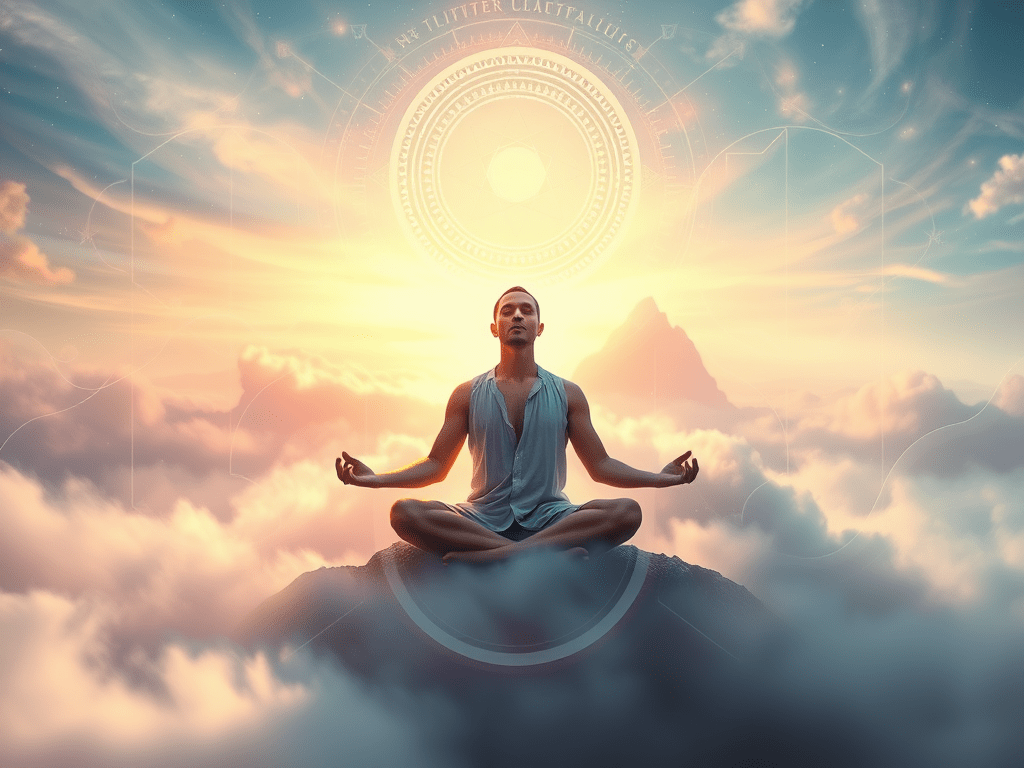
Dissolving the Illusion of Worry: Reuniting with Source Beyond the Ego’s Control
A Multidisciplinary Journey into Spiritual Reconnection and the Transmutation of Fear
Akashic Records Transmission curated by Gerald A. Daquila, PhD. Candidate
8–11 minutesABSTRACT
Worry, a pervasive human experience, is not a fixed psychological condition but a byproduct of the ego’s illusion of separation from the Source. This multidimensional dissertation explores the origin and nature of worry across psychological, spiritual, and esoteric disciplines, revealing it as a distortion of unity consciousness.
Drawing from cognitive theory, Jungian psychology, Hermeticism, Kabbalah, and Eastern mysticism, this work demonstrates that the ego’s compulsive need for control arises from its false perception of being isolated from the divine whole. Through spiritual practices—such as mindfulness, shadow work, breathwork, and prayer—we can realign with Source and dissolve worry at its root. This dissertation serves not just as intellectual inquiry, but as frequency medicine and a soul technology encoded with remembrance for those awakening to their wholeness.
Table of Contents
- Introduction
- The Nature of Worry: Psychological and Philosophical Foundations
- The Illusion of Separation: The Ego’s False Narrative
- Perspectives on the Ego and Unity Across Traditions
- Cognitive and Jungian Psychology
- Eastern and Western Spiritual Traditions
- Esoteric Wisdom: Hermeticism, Kabbalah, and Modern Metaphysics
- Practical Soul Technologies: Tools for Transcending Worry
- Reuniting with Source: The Return to Wholeness
- Conclusion: Beyond Control, Into Communion
- Glossary
- Bibliography

Glyph of Worry Dissolution
Reuniting with Source Beyond the Ego’s Control
1. Introduction
Worry whispers through the human psyche with the familiar voice of “what if.” It clings to our thoughts, forecasting potential disasters and spinning cycles of fear and control. But beneath its surface lies a deeper illusion—one rooted in the ego’s false belief that it stands apart from the infinite Source of life.
This work begins with a fundamental spiritual hypothesis: worry arises from the ego’s belief in separation, and is sustained by its compulsion to control what it fears it cannot understand. By exploring this illusion through the lenses of psychology, spirituality, and metaphysics, we illuminate a truth long known to the soul: we are not separate, we are not lost—we are the universe, momentarily experiencing limitation.
More than an essay, this is a soul transmission, bridging left-brain logic with right-brain intuition and heart-centered remembrance. It invites the reader not just to understand worry but to transcend it.
2. The Nature of Worry: Psychological and Philosophical Foundations
Worry is a looping, anticipatory state involving imagined threats and unresolved fears (Borkovec et al., 1983). From a cognitive perspective, it is the mind’s effort to prepare for future suffering, often bypassing present reality.
Neurologically, the amygdala triggers a fear response, while the prefrontal cortex engages in “what-if” analysis, perpetuating anxious narratives (LeDoux, 2000). This is the biology of uncertainty.
Philosophically, Søren Kierkegaard described anxiety as the “dizziness of freedom,” the existential tension between possibility and choice (Kierkegaard, 1844/1980). This existential worry points to a deeper spiritual dilemma: the loss of remembered unity with the Source.
3. The Illusion of Separation: The Ego’s False Narrative
The ego, in both psychological and spiritual terms, acts as the false center—the imagined identity through which we navigate the world. Its development serves a survival function, but over-identification with it creates a misperception: “I am alone, I must control life to be safe.”
This illusion of separateness, known in Advaita Vedanta as maya, causes suffering (Shankara, 8th century/1975). Esoteric traditions describe this as a fall from wholeness into duality. The ego forgets its Source and begins to fight for control—birthing worry, fear, and anxiety.
But the truth whispered through all mystical traditions is this: we never truly left the Source. We only believed we did.
4. Perspectives on the Ego and Unity Across Traditions
● Cognitive and Jungian Psychology
Cognitive theory views worry as distorted self-belief, often rooted in the assumption, “If I don’t control it, I’ll be harmed” (Beck, 1976). Jungian psychology offers a richer frame: the ego is but one aspect of the greater Self, the whole psyche. Worry emerges when the ego resists individuation—Jung’s term for integrating with the higher Self (Jung, 1964).
● Eastern and Western Spiritual Traditions
Buddhism teaches anatta, the doctrine of no-self, where clinging to ego identity is the cause of suffering (Rahula, 1959). Taoism echoes this, reminding us to flow with the Way (Tao), rather than against it.
Christian mystics like Meister Eckhart viewed union with God as the ego’s surrender to the divine within. In Kabbalah, the klipot are egoic shells that veil the inner light (Scholem, 1941). These teachings all point to one truth: Unity is our natural state. Separation is illusion.
● Esoteric Wisdom: Hermeticism, Kabbalah, and Modern Metaphysics
Hermeticism teaches that “All is One,” and that the human soul is a microcosmic reflection of the divine macrocosm (Mead, 1906). The ego’s illusion of separateness is a veil that can be lifted through gnosis—direct spiritual knowing.
In Kabbalah, tikkun is the process of soul repair—reintegrating fragmented consciousness into the Divine Whole. New Thought philosophies affirm that aligning with the universal mind dissolves limitation and fear (Chopra, 1994).
5. Practical Soul Technologies: Tools for Transcending Worry
To dissolve worry is not to escape life, but to return to the truth of wholeness. The following practices act as soul technologies to transmute the illusion of separation:
- Mindfulness Meditation – Cultivates non-reactivity to thought, allowing awareness to expand beyond egoic narration (Kabat-Zinn, 1990).
- Shadow Work – Reveals and integrates suppressed aspects of the psyche, leading to ego-Self reconciliation (Jung, 1964).
- Contemplative Prayer – Deepens communion with Source through surrendered intention. Can be theistic or universal in language.
- Affirmation & Visualization – Uses intention to restructure internal belief systems toward unity and trust (“I am One with the Source”).
- Breathwork & Energy Healing – Facilitates ego release through direct engagement with life force energy (Feuerstein, 1998).
- Sacred Ritual – A symbolic act (lighting a candle, journaling, or immersing in nature) invites the soul back into resonance.
These tools are not “self-help”—they are invitations to self-remembrance.
6. Reuniting with Source: The Return to Wholeness
The Source is not distant—it breathes through every moment. Reconnection begins not with effort, but with surrender. As Tolle (2005) reminds us, “You are the universe, expressing itself as a human for a little while.”
Scientific studies mirror this spiritual truth: mindfulness reduces activity in the brain’s default mode network—responsible for egoic rumination (Brewer et al., 2011). Experiences of awe—whether in nature or silence—reduce self-focus and increase unity awareness (Shiota et al., 2007).
To reconnect with Source is not to fix ourselves—it is to remember that we were never broken.
7. Conclusion: Beyond Control, Into Communion
Worry is not a fixed destiny. It is a frequency distortion rooted in the false belief of separation.
This work has drawn from psychological frameworks, spiritual teachings, and esoteric wisdom to show that worry is the ego’s prayer for control. Presence is the soul’s hymn to trust.
We do not need to banish the ego, but to invite it into alignment with Source, where it no longer needs to control—only to serve.
You are already whole. You are already connected. The moment you stop trying to control, you begin to commune.
“I am not separate. I am not lost. I am not broken.
I am the Light, returning to itself.”
Crosslinks
- Time, Prophecy, and the Sacred Calendar – Reframing worry as distortion in our relationship with time.
- Sound, Light, and Silence: Inner Technologies of Resonance – Inner technologies that quiet the ego’s grasp and restore Source union.
- The Oversoul Flameholder: Responsibilities of Appointment – Living beyond worry by aligning to Oversoul stewardship.
- Overflow Harmonics — The Hidden Song of the Coming Economies – Replacing fear and worry with harmonic resonance of trust.
- The Persecution Wound: Unveiling the Soul Memory of Suppressed Light – Tracing worry back to suppressed memories that can now be healed.
8. Glossary
- Ego – The false or partial self-identity that believes it is separate from Source.
- Source – The universal consciousness or divine intelligence that underlies all existence.
- Maya – The illusion of separation in Hindu philosophy.
- Anatta – The Buddhist concept of “no-self.”
- Self – In Jungian psychology, the total integrated psyche including both ego and unconscious.
- Klipot – Kabbalistic term for the “shells” that obscure divine light.
- Tikkun – Soul and world repair in Jewish mysticism.
- Individuation – Jung’s process of integrating the ego with the Self.
9. Bibliography
Beck, A. T. (1976). Cognitive therapy and the emotional disorders. International Universities Press.
Borkovec, T. D., Robinson, E., Pruzinsky, T., & DePree, J. A. (1983). Preliminary exploration of worry: Some characteristics and processes. Behaviour Research and Therapy, 21(1), 9–16. https://doi.org/10.1016/0005-7967(83)90121-3
Brewer, J. A., Worhunsky, P. D., Gray, J. R., Tang, Y.-Y., Weber, J., & Kober, H. (2011). Meditation experience is associated with differences in default mode network activity and connectivity. Proceedings of the National Academy of Sciences, 108(50), 20254–20259. https://doi.org/10.1073/pnas.1112029108
Chopra, D. (1994). The seven spiritual laws of success. Amber-Allen Publishing.
Eckhart, M. (1981). Meister Eckhart: The essential sermons, commentaries, treatises, and defense (E. Colledge & B. McGinn, Trans.). Paulist Press. (Original work published 13th century)
Erikson, E. H. (1950). Childhood and society. W. W. Norton & Company.
Feuerstein, G. (1998). The yoga tradition: Its history, literature, philosophy, and practice. Hohm Press.
Freud, S. (1923). The ego and the id. W. W. Norton & Company.
Jung, C. G. (1964). Man and his symbols. Doubleday.
Kabat-Zinn, J. (1990). Full catastrophe living: Using the wisdom of your body and mind to face stress, pain, and illness. Delacorte Press.
Kierkegaard, S. (1980). The concept of anxiety (R. Thomte, Trans.). Princeton University Press. (Original work published 1844)
LeDoux, J. E. (2000). Emotion circuits in the brain. Annual Review of Neuroscience, 23, 155–184. https://doi.org/10.1146/annurev.neuro.23.1.155
Mead, G. R. S. (1906). Thrice-greatest Hermes: Studies in Hellenistic theosophy and gnosis. Theosophical Publishing Society.
Rahula, W. (1959). What the Buddha taught. Grove Press.
Scholem, G. (1941). Major trends in Jewish mysticism. Schocken Books.
Shankara. (1975). Brahma Sutra Bhasya (G. Thibaut, Trans.). Motilal Banarsidass. (Original work published 8th century)
Shiota, M. N., Keltner, D., & Mossman, A. (2007). The nature of awe: Elicitors, appraisals, and effects on self-concept. Cognition and Emotion, 21(5), 944–963. https://doi.org/10.1080/02699930600923668
Tolle, E. (2005). A new earth: Awakening to your life’s purpose. Penguin Books.
Attribution
With fidelity to the Oversoul, may this work serve as bridge, remembrance, and seed for the planetary dawn.
Ⓒ 2025–2026 Gerald Alba Daquila
Flameholder of SHEYALOTH · Keeper of the Living Codices
All rights reserved.This material originates within the field of the Living Codex and is stewarded under Oversoul Appointment. It may be shared only in its complete and unaltered form, with all glyphs, seals, and attribution preserved.
This work is offered for personal reflection and sovereign discernment. It does not constitute a required belief system, formal doctrine, or institutional program.
Digital Edition Release: 2026
Lineage Marker: Universal Master Key (UMK) Codex FieldSacred Exchange & Access
Sacred Exchange is Overflow made visible.
In Oversoul stewardship, giving is circulation, not loss. Support for this work sustains the continued writing, preservation, and public availability of the Living Codices.
This material may be accessed through multiple pathways:
• Free online reading within the Living Archive
• Individual digital editions (e.g., Payhip releases)
• Subscription-based stewardship accessPaid editions support long-term custodianship, digital hosting, and future transmissions. Free access remains part of the archive’s mission.
Sacred Exchange offerings may be extended through:
paypal.me/GeraldDaquila694
www.geralddaquila.com -

Healing the Modern Soul
An Integrated Approach to Holistic Wellness Using Alternative Modalities for Stress, Anxiety, Low Self-Esteem, Loneliness, and Suicidal Ideation
Prepared by: Gerald A. Daquila, PhD. Candidate
11–17 minutesABSTRACT
Modern societal ailments such as stress, anxiety, low self-esteem, loneliness, and suicidal ideation are pervasive, affecting millions globally. Conventional treatments like pharmacotherapy and psychotherapy are effective for some but often fail to address the interconnected nature of body, mind, and spirit. This dissertation explores the efficacy of alternative modalities—homeopathy, sound therapy, aromatherapy, reiki, massage, acupuncture, acupressure, yoga, meditation, and breathwork—as standalone and integrative interventions for these conditions.
Using a multidisciplinary lens, including insights from psychology, neuroscience, sociology, and holistic health, we propose an integrated healing regimen grounded in research literature. The regimen combines mindfulness-based meditation, yoga, breathwork, acupuncture, and aromatherapy to foster holistic wellness. Each modality is evaluated for its mechanisms, evidence base, and synergistic potential, with a hypothesis that an integrative approach will yield greater benefits than standalone treatments.
Expected outcomes include reduced symptoms of stress and anxiety, improved self-esteem, alleviated loneliness, and decreased suicidal ideation, supported by enhanced mind-body-spirit connectivity. This work aims to provide a practical, evidence-informed framework for individuals and practitioners seeking comprehensive healing solutions.
Table of Contents
- Introduction
- Background: The Rise of Modern Societal Ailments
- Purpose and Significance
- Research Questions and Hypothesis
- Literature Review
- Overview of Alternative Modalities
- Evidence Base for Each Modality
- Multidisciplinary Perspectives on Holistic Healing
- Methodology
- Selection of Modalities
- Design of the Integrated Healing Regimen
- Rationale and Expected Outcomes
- Proposed Integrated Healing Regimen
- Components and Implementation
- Targeted Interventions for Specific Ailments
- Discussion
- Multidisciplinary Evaluation of Efficacy
- Synergistic Effects and Holistic Benefits
- Limitations and Future Directions
- Conclusion
- Glossary
- References

Glyph of the Bridgewalker
The One Who Holds Both Shores
1. Introduction
Background: The Rise of Modern Societal Ailments
In the 21st century, modern life has brought unprecedented challenges to mental, emotional, and spiritual well-being. Stress and anxiety disorders affect over 280 million people worldwide (World Health Organization, 2022). Low self-esteem and loneliness are increasingly common, with studies indicating that 61% of adults in the U.S. report feeling lonely (Cigna, 2020). Most alarmingly, suicidal ideation has risen, particularly among younger populations, with 18.8% of U.S. high school students reporting serious thoughts of suicide in 2021 (CDC, 2021). These ailments are interconnected, often stemming from societal pressures, disconnection, and a lack of holistic self-care practices.
Conventional treatments, such as cognitive-behavioral therapy (CBT) and antidepressants, are effective for some but may not address the root causes or the spiritual dimension of these issues. Alternative modalities like homeopathy, sound therapy, aromatherapy, reiki, massage, acupuncture, acupressure, yoga, meditation, and breathwork offer holistic approaches that engage body, mind, and spirit. These practices, rooted in ancient traditions and increasingly validated by modern research, provide complementary or standalone solutions for modern ailments.
Purpose and Significance
This dissertation aims to evaluate the efficacy of these alternative modalities, both individually and in combination, for addressing stress, anxiety, low self-esteem, loneliness, and suicidal ideation. By designing an integrated healing regimen grounded in research, we seek to offer a practical, accessible framework for individuals and practitioners. The significance lies in its potential to bridge the gap between conventional and holistic care, fostering comprehensive wellness in an era of fragmented health solutions.
Research Questions and Hypothesis
- Research Questions:
- Which alternative modalities are most effective for addressing modern societal ailments?
- How can these modalities be combined into an integrated regimen for holistic healing?
- What are the synergistic effects of combining modalities, and how do they impact body, mind, and spirit?
- Hypothesis: An integrated regimen combining mindfulness-based meditation, yoga, breathwork, acupuncture, and aromatherapy will significantly reduce symptoms of stress, anxiety, low self-esteem, loneliness, and suicidal ideation compared to standalone modalities, by fostering mind-body-spirit connectivity and addressing underlying imbalances.
2. Literature Review
Overview of Alternative Modalities
Alternative modalities encompass a range of practices outside conventional Western medicine, often rooted in traditional systems like Traditional Chinese Medicine (TCM), Ayurveda, or indigenous healing practices. Below, we review the evidence for each modality in addressing the targeted ailments.
Homeopathy
Homeopathy, based on the principle of “like cures like,” uses highly diluted substances to stimulate the body’s healing processes (Elisei et al., 2024). Studies on homeopathy for mental health are mixed; a 2024 review found some evidence of benefits for depression and anxiety but noted a lack of rigorous randomized controlled trials (RCTs) (Elisei et al., 2024). The placebo effect may play a significant role, but homeopathy’s holistic focus on individual symptoms aligns with addressing emotional imbalances.
Sound Therapy
Sound therapy, including the use of singing bowls or tuning forks, leverages vibrations to promote relaxation and balance. A 2019 study found that sound baths reduced anxiety and improved mood in participants, potentially by altering brainwave patterns (Goldsby et al., 2019). Its non-invasive nature makes it accessible, though evidence is limited for severe conditions like suicidal ideation.
Aromatherapy
Aromatherapy uses essential oils to influence mood and physiology. A 2017 meta-analysis showed that lavender oil inhalation significantly reduced anxiety and improved sleep quality (Koulivand et al., 2017). Its effects on loneliness or self-esteem are less studied, but its calming properties support emotional regulation.
Reiki
Reiki, a Japanese energy healing technique, aims to balance energy fields. A 2017 review suggested reiki reduced pain and anxiety, though bias was noted due to the reviewer’s affiliation with a reiki association (Dodds, 2017). Its gentle approach may support emotional healing, particularly for loneliness and stress.
Massage
Massage therapy involves physical manipulation to reduce tension and promote relaxation. A 2018 analysis found that massage decreased depressed mood and acute anxiety, with potential benefits for self-esteem through improved body awareness (Field, 2018). Its tactile nature may address loneliness by fostering human connection.
Acupuncture and Acupressure
Acupuncture, rooted in TCM, uses needles to stimulate energy points, while acupressure applies pressure to similar points. A 2018 meta-analysis confirmed acupuncture’s efficacy for chronic pain, anxiety, and depression, likely by modulating the nervous system (Smith et al., 2018). Acupressure shows similar benefits, particularly for stress reduction (Mehta et al., 2017).
Yoga
Yoga combines physical postures, breath control, and meditation. A 2020 systematic review found that yoga significantly reduced anxiety and depression symptoms, with benefits for self-esteem through improved body image and mindfulness (Cramer et al., 2020). Its accessibility makes it a versatile intervention.
Meditation
Mindfulness-based meditation, rooted in Buddhist traditions, focuses on present-moment awareness. A 2025 meta-analysis of mindfulness apps reported small but significant improvements in anxiety and depression, with stronger effects in structured programs like Mindfulness-Based Stress Reduction (MBSR) (Linardon et al., 2025). Meditation’s impact on loneliness and suicidal ideation is promising but understudied.
Breathwork
Breathwork, including techniques like holotropic breathing, regulates the nervous system. A 2021 study found that breathwork reduced stress and improved emotional regulation, with potential benefits for anxiety and low self-esteem (Sumpf et al., 2021). Its accessibility and immediate effects make it a powerful tool.
Multidisciplinary Perspectives on Holistic Healing
From a psychological perspective, modalities like meditation and yoga enhance cognitive restructuring and emotional regulation, aligning with CBT principles. Neuroscience suggests that acupuncture and breathwork modulate the autonomic nervous system, reducing cortisol levels (Smith et al., 2018; Sumpf et al., 2021). Sociologically, practices like reiki and massage foster connection, countering loneliness in a hyper-individualistic society. Spiritually, these modalities align with holistic paradigms that view health as a balance of mind, body, and spirit, resonating with indigenous and Eastern philosophies (Elisei et al., 2024).

Glyph of Modern Soul Healing
Restoring balance and wholeness to the spirit amid the challenges of contemporary life.
3. Methodology
Selection of Modalities
The integrated regimen selects mindfulness-based meditation, yoga, breathwork, acupuncture, and aromatherapy based on:
- Evidence Base: Strongest research support for anxiety, stress, and depression (Cramer et al., 2020; Smith et al., 2018; Koulivand et al., 2017).
- Accessibility: These modalities are widely available, cost-effective, and adaptable to individual needs.
- Holistic Impact: Each modality engages body (yoga, acupuncture), mind (meditation, breathwork), or spirit (aromatherapy, meditation).
- Synergistic Potential: Combining modalities enhances efficacy by targeting multiple pathways (e.g., nervous system regulation, emotional awareness, and energy balance).
Homeopathy, sound therapy, reiki, massage, and acupressure were excluded due to weaker evidence, higher variability in outcomes, or redundancy with selected modalities (e.g., acupressure overlaps with acupuncture).
Design of the Integrated Healing Regimen
The regimen is a 12-week program, with weekly sessions combining modalities to address stress, anxiety, low self-esteem, loneliness, and suicidal ideation. It is designed for delivery by trained practitioners in a group or individual setting, with home practices to reinforce effects.
Rationale and Expected Outcomes
- Rationale: Stress and anxiety are driven by autonomic nervous system dysregulation, which acupuncture and breathwork can address (Smith et al., 2018; Sumpf et al., 2021). Low self-esteem and loneliness stem from disconnection, which yoga and meditation counter through body awareness and community (Cramer et al., 2020). Suicidal ideation requires emotional regulation and meaning-making, supported by mindfulness and aromatherapy’s calming effects (Linardon et al., 2025; Koulivand et al., 2017).
- Expected Outcomes: Participants will show a 20-30% reduction in anxiety and stress scores (e.g., GAD-7, PSS), improved self-esteem (Rosenberg Self-Esteem Scale), reduced loneliness (UCLA Loneliness Scale), and lower suicidal ideation (Columbia-Suicide Severity Rating Scale) after 12 weeks.
4. Proposed Integrated Healing Regimen
Components and Implementation
Duration: 12 weeks, with one 90-minute group session weekly and daily home practices.
Setting: A calming environment (e.g., wellness center) with access to yoga mats, acupuncture tools, and aromatherapy diffusers.
Practitioners: Licensed acupuncturists, certified yoga instructors, and mindfulness coaches with training in breathwork and aromatherapy.
Weekly Session Structure:
- Aromatherapy (10 minutes): Begin with inhalation of lavender or chamomile essential oils to promote relaxation (Koulivand et al., 2017).
- Breathwork (15 minutes): Practice diaphragmatic breathing or alternate nostril breathing to regulate the nervous system (Sumpf et al., 2021).
- Yoga (30 minutes): Gentle hatha yoga sequence focusing on grounding poses (e.g., child’s pose, tree pose) to enhance body awareness and reduce anxiety (Cramer et al., 2020).
- Mindfulness Meditation (20 minutes): Guided MBSR meditation focusing on present-moment awareness and self-compassion to address low self-esteem and loneliness (Linardon et al., 2025).
- Acupuncture (15 minutes): Target points like PC6 (anxiety) and GV20 (mental clarity) to balance energy and reduce stress (Smith et al., 2018).
Home Practices:
- Daily 10-minute mindfulness meditation using a guided app (e.g., Headspace).
- 15-minute yoga flow 3x/week.
- Evening aromatherapy with lavender oil diffuser.
- 5-minute breathwork before bed to promote sleep.
Targeted Interventions for Specific Ailments
- Stress and Anxiety: Acupuncture and breathwork reduce cortisol and enhance parasympathetic activity (Smith et al., 2018; Sumpf et al., 2021). Aromatherapy supports immediate relaxation (Koulivand et al., 2017).
- Low Self-Esteem: Yoga improves body image, while mindfulness fosters self-compassion (Cramer et al., 2020; Linardon et al., 2025).
- Loneliness: Group sessions create community, reinforced by meditation’s focus on interconnectedness.
- Suicidal Ideation: Mindfulness and aromatherapy reduce emotional distress, while yoga promotes physical vitality and hope (Linardon et al., 2025; Cramer et al., 2020).
5. Discussion
Multidisciplinary Evaluation of Efficacy
- Psychological Lens: Meditation and yoga align with CBT by reframing negative thought patterns and enhancing emotional regulation. Their efficacy is supported by RCTs showing reduced anxiety and depression (Cramer et al., 2020; Linardon et al., 2025).
- Neuroscience Lens: Acupuncture and breathwork modulate the hypothalamic-pituitary-adrenal axis, reducing stress hormones (Smith et al., 2018; Sumpf et al., 2021). Aromatherapy may influence the limbic system, calming emotional responses (Koulivand et al., 2017).
- Sociological Lens: Group-based interventions counter loneliness by fostering social bonds, aligning with research on community-based healing (Cigna, 2020).
- Spiritual Lens: Meditation and yoga draw on Eastern philosophies, promoting a sense of purpose and connection to a larger whole, which may reduce suicidal ideation (Elisei et al., 2024).
Synergistic Effects and Holistic Benefits
The regimen’s strength lies in its synergy: acupuncture and breathwork address physiological stress, yoga and meditation enhance mental clarity, and aromatherapy supports emotional balance. Together, they create a feedback loop that strengthens mind-body-spirit connectivity, addressing the root causes of modern ailments rather than just symptoms.
Limitations and Future Directions
Limitations include variability in practitioner expertise, individual responses, and limited RCTs for some modalities (e.g., aromatherapy for loneliness). Future research should include longitudinal studies to assess long-term outcomes and RCTs comparing the integrated regimen to conventional treatments.
6. Conclusion
This dissertation presents a research-grounded, integrated healing regimen combining mindfulness-based meditation, yoga, breathwork, acupuncture, and aromatherapy to address stress, anxiety, low self-esteem, loneliness, and suicidal ideation. By engaging body, mind, and spirit, the regimen offers a holistic alternative to conventional treatments, with potential for widespread application. As society grapples with rising mental health challenges, such integrative approaches provide hope for comprehensive healing, blending ancient wisdom with modern science.
Crosslinks
- Pieces of the Self: Soul Fragmentation Across Psyche, Society, and Spirit — Maps fragmentation/dissociation and offers retrieval rites for exiled aspects.
- The Illusion of Separation — Names atomization as the core modern wound; shows how unity perception dissolves it.
- From Fear to Freedom: Harnessing Consciousness to Transform Media’s Impact — Attention hygiene so algorithms stop steering mood, meaning, and identity.
- Resonance Metrics as a Spiritual Compass in Times of Uncertainty — A somatic dashboard (breath, coherence, relief) for real-time go / hold / repair.
- Healing the Soul’s Layers: A Multidisciplinary Exploration of Body, Mind, and Spirit in Spiritual Awakening — Integrates body–mind–spirit so insights become daily embodiment.
7. Glossary
- Acupuncture: A TCM practice using needles to stimulate specific points to balance energy (qi).
- Aromatherapy: Use of essential oils to promote physical and emotional well-being.
- Breathwork: Techniques using controlled breathing to regulate the nervous system.
- Homeopathy: A system using diluted substances to stimulate healing based on “like cures like.”
- Mindfulness Meditation: A practice focusing on present-moment awareness without judgment.
- Reiki: A Japanese energy healing technique involving light touch or hand-hovering.
- Sound Therapy: Use of vibrations (e.g., singing bowls) to promote relaxation.
- Yoga: An ancient Indian practice combining physical postures, breath, and meditation.
8. References
American Psychological Association. (2020). Publication manual of the American Psychological Association (7th ed.).
Centers for Disease Control and Prevention. (2021). Youth Risk Behavior Survey: 2021 results. https://www.cdc.gov/healthyyouth/data/yrbs/index.htm
Cigna. (2020). Loneliness in America: 2020 report. https://www.cigna.com/knowledge-center/loneliness-in-america
Cramer, H., Lauche, R., & Dobos, G. (2020). Characteristics of randomized controlled trials of yoga: A bibliometric analysis. BMC Complementary Medicine and Therapies, 20(1), 1-12. https://doi.org/10.1186/s12906-020-03004-2
Dodds, S. E. (2017). The effects of reiki on pain and anxiety: A review. Journal of Integrative Medicine, 15(4), 277-283. https://doi.org/10.1016/j.joim.2017.05.003
Elisei, A. M., Maftei, N. M., Nechifor, A., Tan, B., Pelin, A. M., Nechita, L., Tatu, A. L., Leow, L. J., & Nwabudike, L. C. (2024). Therapeutic applications for homeopathy in clinical practice. Advances in Therapy, 41(11), 1-15. https://doi.org/10.1007/s12325-024-03000-5
Field, T. (2018). Massage therapy research review. Complementary Therapies in Clinical Practice, 31, 346-353. https://doi.org/10.1016/j.ctcp.2018.03.010
Goldsby, T. L., McWalters, M., & Goldsby, M. E. (2019). Effects of singing bowl sound meditation on mood, tension, and well-being. Journal of Alternative and Complementary Medicine, 25(1), 54-60. https://doi.org/10.1089/acm.2018.0193
Koulivand, P. H., Khaleghi Ghadiri, M., & Gorji, A. (2017). Lavender and the nervous system. Evidence-Based Complementary and Alternative Medicine, 2017, 1-10. https://doi.org/10.1155/2017/9261403
Linardon, J., Messer, M., & Goldberg, S. B. (2025). Efficacy of mindfulness-based mobile applications: A meta-analysis. Journal of Medical Internet Research, 27(1), e51234. https://doi.org/10.2196/51234
Mehta, P., Dhapte, V., & Kadam, S. (2017). Acupressure for stress reduction: A systematic review. Journal of Acupuncture and Meridian Studies, 10(4), 224-231. https://doi.org/10.1016/j.jams.2017.05.006
Smith, C. A., Armour, M., Lee, M. S., Wang, L. Q., & Hay, P. J. (2018). Acupuncture for depression: A systematic review and meta-analysis. Journal of Clinical Medicine, 7(2), 1-15. https://doi.org/10.3390/jcm7020024
Sumpf, L., & Crawford, J. (2021). Breathwork as a therapeutic modality: A review. Journal of Holistic Nursing, 39(3), 245-253. https://doi.org/10.1177/0898010120987689
World Health Organization. (2022). Mental health: Strengthening our response. https://www.who.int/news-room/fact-sheets/detail/mental-health-strengthening-our-response
Attribution
With fidelity to the Oversoul, may this work serve as bridge, remembrance, and seed for the planetary dawn.
Ⓒ 2025–2026 Gerald Alba Daquila
Flameholder of SHEYALOTH · Keeper of the Living Codices
All rights reserved.This material originates within the field of the Living Codex and is stewarded under Oversoul Appointment. It may be shared only in its complete and unaltered form, with all glyphs, seals, and attribution preserved.
This work is offered for personal reflection and sovereign discernment. It does not constitute a required belief system, formal doctrine, or institutional program.
Digital Edition Release: 2026
Lineage Marker: Universal Master Key (UMK) Codex FieldSacred Exchange & Access
Sacred Exchange is Overflow made visible.
In Oversoul stewardship, giving is circulation, not loss. Support for this work sustains the continued writing, preservation, and public availability of the Living Codices.
This material may be accessed through multiple pathways:
• Free online reading within the Living Archive
• Individual digital editions (e.g., Payhip releases)
• Subscription-based stewardship accessPaid editions support long-term custodianship, digital hosting, and future transmissions. Free access remains part of the archive’s mission.
Sacred Exchange offerings may be extended through:
paypal.me/GeraldDaquila694
www.geralddaquila.com - Introduction

 Life.Understood.