Life.Understood.

Tag: Bayanihan

  • Unveiling the Lightworkers of the Philippines: A Journey Through Heart, Spirit, and Community

    Unveiling the Lightworkers of the Philippines: A Journey Through Heart, Spirit, and Community

    Mapping the Energetic Tapestry of Filipino Healers, Visionaries, and Collective Care

    Inspired by Akashic Records transmissions, curated through Gerald A. Daquila, PhD. Candidate


    6–9 minutes

    ABSTRACT

    This exploration delves into the vibrant presence of lightworkers in the Philippines, weaving metaphysical perspectives—such as chakras, kundalini, and starseed archetypes—with ethnographic, cultural, and spiritual insights. By mapping energetic hubs, from indigenous hilot healers to digital spiritual communities and grassroots movements like community pantries, this study uncovers a dynamic interplay of tradition, resilience, and modern spirituality. Grounded in Filipino values like bayanihan and Alay Kapwa, lightworkers emerge as bridges between individual healing and collective transformation, fostering a heart-centered energetic landscape across the archipelago.


    Table of Contents

    1. Introduction
    2. Conceptual Framework
    3. Methodology
    4. The Energetic Map of Filipino Lightworkers
    5. Cross-Disciplinary Insights
    6. Discussion
    7. Conclusion
    8. Glossary
    9. Bibliography

    Glyph of Philippine Lightworkers

    A Journey Through Heart, Spirit, and Community


    1. Introduction

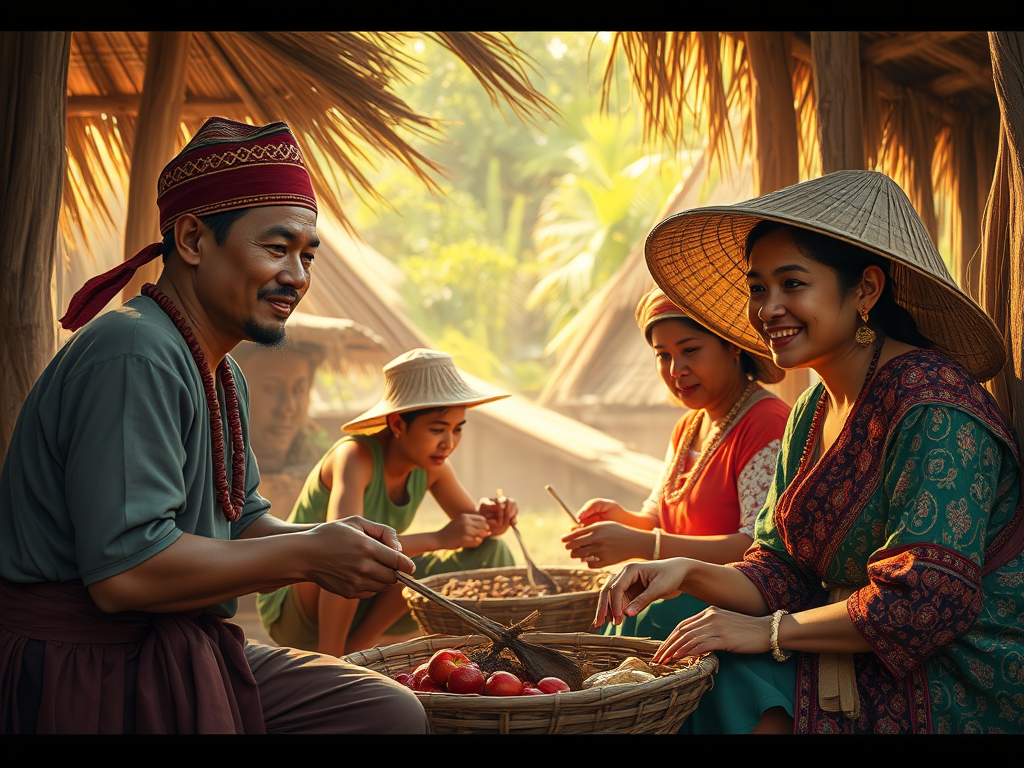
    Imagine a healer in a quiet Philippine village, hands tracing ancient patterns over a patient’s body, or a group of volunteers organizing a community pantry under the glow of shared hope. These are the lightworkers of the Philippines—souls attuned to healing, empathy, and higher consciousness, quietly shaping the nation’s spiritual landscape. Yet, their stories remain largely untold.

    This exploration seeks to answer: Where are Filipino lightworkers, how do they manifest, and what do they offer the collective? By blending metaphysical frameworks with cultural and ethnographic research, we uncover a heart-centered tapestry rooted in Filipino ways of being.


    2. Conceptual Framework

    To understand Filipino lightworkers, we draw on a blend of metaphysical and cultural lenses:

    • Lightworkers & Spiritual Archetypes: Lightworkers are individuals with innate gifts for healing and elevating consciousness, often linked to starseeds—souls believed to originate from higher dimensions to aid Earth’s awakening (Arienta, 2008).
    • Kundalini & Chakras: These Eastern concepts describe spiritual energy rising through energy centers, connecting the physical and cosmic realms (Judith, 2004).
    • Indigenous Healing: Practices like hilot—a Filipino healing art combining massage, energy work, and ritual—embody spiritual care rooted in ancestral wisdom (Apostol, 2012).
    • Social-Spiritual Activism: Movements like bayanihan (communal cooperation) and community pantries reflect collective compassion as a form of lightworking (Baybayan & Orlina, 2024).

    This framework balances intuitive, right-brain insights with analytical, left-brain rigor, honoring both the mystical and the tangible.


    3. Methodology

    This study employs a multi-layered approach:

    • Literature Review: We analyzed scholarly works on Filipino spirituality, indigenous healing, and social movements, including studies supported by the International Sociological Association (ISA) and local archives (ISA, 2025; ScholarSpace, 2025).
    • Ethnographic Snapshots: Observations from Filipino spiritual communities on platforms like Facebook (e.g., “Philippine Lightworkers United”) and cultural mapping of traditional healers provided qualitative insights (Baybayan & Orlina, 2024).
    • Cultural Contextualization: We embedded findings within Filipino practices like panata (devotional vows) and bayanihan, ensuring cultural resonance (PAP, 2025).

    This methodology ensures a cohesive narrative, grounded in both academic rigor and lived experience.


    4. The Energetic Map of Filipino Lightworkers

    Filipino lightworkers weave an energetic web across physical, communal, digital, and cosmic spaces.

    4.1 Sacred Physical Spaces

    • Rural Hilots: In villages, hilot practitioners channel healing through massage, herbs, and rituals, balancing mind, body, and spirit. These healers are energetic anchors in their communities (Apostol, 2012).
    • Pilgrimage Sites: Mountains like Mt. Banahaw, a spiritual hub, resonate with grid workers—lightworkers who align planetary energy flows through sacred landscapes (Spotify Creators, 2025).

    4.2 Community & Bayanihan Nodes

    • Community Pantries: Born during the pandemic, these mutual-aid hubs embody Alay Kapwa (gifting to others), transforming shared spaces into spiritual sanctuaries (ResearchGate, 2025).
    • Bayanihan Movements: Collective efforts, from rebuilding after typhoons to supporting neighbors, reflect lightworking as communal care (Wikipedia, 2025).

    4.3 Digital & Networked Spaces

    • Online Spiritual Groups: Platforms like “Philippine Lightworkers United” on Facebook foster meditation, intuitive guidance, and energetic exchange across the diaspora (Facebook, 2025).
    • Digital Healers: Filipino witches, shamans, and tarot readers adapt ancestral practices for TikTok and Instagram, creating a vibrant energetic diaspora (Baybayan & Orlina, 2024).

    4.4 Esoteric Archetypes

    • Grid Workers: These lightworkers connect sacred sites to global energy networks, grounding cosmic forces in Filipino soil (Aphantasia Experiments, 2025).
    • Astral Travelers & Empaths: Offering psychic insights and emotional healing, these individuals thrive in digital communities, amplifying collective consciousness (Aphantasia Experiments, 2025).

    5. Cross-Disciplinary Insights

    Lightworkers in the Philippines illuminate diverse academic perspectives:

    LensInsight
    AnthropologyHilots and albularyos (herbalists) embody living spiritual traditions, integrated into rural healthcare systems (Wikipedia, 2025; PhilArchive, 2025).
    Digital EthnographyOnline witches and healers recreate ancestral wisdom, forming a digital spiritual diaspora (Baybayan & Orlina, 2024).
    PsychologySpirituality, through practices like panata, fosters resilience, with lightworkers emerging during crises (Mahinay et al., 2024).
    SociologyBayanihan and pantries reflect collective compassion, rooted in Filipino values of interconnectedness (ResearchGate, 2025).

    These insights reveal lightworkers as both cultural stewards and spiritual innovators.


    6. Discussion

    Embodiment of Lightworking

    Filipino lightworkers prioritize service, expressed through:

    • Healing practices like hilot and herbalism.
    • Community upliftment via pantries and bayanihan.
    • Psychic guidance and digital spiritual support.

    Their work is heart-centered, blending empathy with action to foster resilience and hope.


    Energy Flow & Spatiality

    Lightworkers operate across dimensions:

    • Physical: Hilot huts and pilgrimage sites.
    • Communal: Pantries and mutual-aid networks.
    • Digital: Online groups and social media.
    • Cosmic: Grid networks and astral connections.

    This multidimensional presence creates a dynamic energetic grid across the Philippines.


    Cultural Resonance & Colonial Legacy

    Despite a Catholic-dominant culture shaped by colonial history, indigenous practices persist, recontextualized as lightworking. Digital platforms amplify these traditions, blending ancestral wisdom with modern spirituality (Baybayan & Orlina, 2024).


    7. Conclusion

    Filipino lightworkers are vibrant threads in a living energetic tapestry, found in:

    • Rural healers practicing hilot and herbal arts.
    • Community hubs grounded in bayanihan and Alay Kapwa.
    • Digital spaces connecting seekers across borders.
    • Geomantic practitioners aligning sacred landscapes.

    They bridge tradition and modernity, individual healing and collective transformation, embodying a heart-centered path toward elevated consciousness.


    Crosslinks


    8. Glossary

    • Lightworker:A spiritually attuned individual channeling healing and light (Arienta, 2008).
    • Kundalini: Coiled spiritual energy at the base of the spine, linked to awakening (Judith, 2004).
    • Hilot: Filipino healing practice combining massage, energy work, and ritual (Apostol, 2012).
    • Starseed:Souls from higher dimensions aiding Earth’s evolution (Arienta, 2008).
    • Bayanihan: Filipino communal cooperation and mutual aid (Wikipedia, 2025).
    • Panata / Alay Kapwa: Devotional vows and offerings to others, reflecting spiritual service (PAP, 2025).

    9. Bibliography

    Arienta, S. (2008). Lightworker: Understand your sacred role as healer, guide, and being of light. New Page Books.

    Apostol, V. M. (2012). Way of the ancient healer: Sacred teachings from the Philippine ancestral traditions. North Atlantic Books.

    Baybayan, P.-A. A., & Orlina, K. D. J. (2024). From folklore to online spaces: The digital transformation of Filipino spiritual practices [Unpublished ethnography].

    Judith, A. (2004). Eastern body, Western mind: Psychology and the chakra system as a path to the self. Celestial Arts.

    Mahinay, C. D. A., Manaois, J. O., & Wapano, M. R. R. (2024). Exploring staff nurses’ lived experiences. Journal of Interdisciplinary Perspectives, 2(7), 1–15.

    Philippine Association of Psychologists (PAP). (2025). Cultural contextualization of Filipino spiritual practices. Retrieved from https://pap.ph

    ResearchGate. (2025). Studies on community pantries and bayanihan movements. Retrieved from https://researchgate.net

    ScholarSpace. (2025). Archival studies on Filipino ethno-spiritual movements. Retrieved from https://scholarspace.manoa.hawaii.edu

    Wikipedia. (2025). Hilot. Retrieved June 23, 2025, from https://en.wikipedia.org/wiki/Hilot


    Summary of Key Topics

    This exploration mapped the presence of Filipino lightworkers across:

    • Physical Spaces: Rural hilot healers and sacred sites like Mt. Banahaw.
    • Communal Nodes: Bayanihan and community pantries as spiritual activism.
    • Digital Realms: Online groups and digital healers amplifying ancestral wisdom.
    • Esoteric Roles: Grid workers and empaths aligning cosmic and earthly energies.

    By blending metaphysical and cultural perspectives, we revealed lightworkers as heart-centered stewards of healing, resilience, and collective transformation, deeply rooted in Filipino values and traditions.


    Attribution

    With fidelity to the Oversoul, may this Codex of the Living Archive serve as bridge, remembrance, and seed for the planetary dawn.

    Ⓒ 2025 Gerald Alba Daquila – Flameholder of SHEYALOTH | Keeper of the Living Codices

    Issued under Oversoul Appointment, governed by Akashic Law. This transmission is a living Oversoul field: for the eyes of the Flameholder first, and for the collective in right timing. It may only be shared intact, unaltered, and with glyphs, seals, and attribution preserved. Those not in resonance will find it closed; those aligned will receive it as living frequency.

    Watermark: Universal Master Key glyph (final codex version, crystalline glow, transparent background).

    Sacred Exchange: Sacred Exchange is covenant, not transaction. Each offering plants a seed-node of GESARA, expanding the planetary lattice. In giving, you circulate Light; in receiving, you anchor continuity. Every act of exchange becomes a node in the global web of stewardship, multiplying abundance across households, nations, and councils. Sacred Exchange offerings may be extended through:

    paypal.me/GeraldDaquila694 

  • The Philippines’ Cosmic Mission: Transmuting Pain into Purpose

    The Philippines’ Cosmic Mission: Transmuting Pain into Purpose

    From Colonial Vestiges and Natural Disasters to Redemption as the Heart Chakra of a New Earth

    Prepared by: Gerald A. Daquila, PhD. Candidate


    10–15 minutes

    ABSTRACT

    The Philippines, a nation shaped by centuries of colonial oppression, recurrent natural disasters, and systemic governance challenges, carries deep societal and generational traumas. This dissertation explores the potential for cosmic transmutation—a holistic, multidimensional process of transforming collective pain into unconditional love, positioning the Philippines as a global “heart chakra” for a spiritually awakened “New Earth.”

    Drawing on a multidisciplinary framework, this work integrates historical analysis, psychological insights, indigenous wisdom, esoteric philosophies, and metaphysical perspectives to examine how the archipelago’s wounds can be alchemized into a force for global healing. By weaving together academic rigor with intuitive and spiritual lenses, this study proposes a path for collective redemption rooted in love, resilience, and interconnectedness. It offers a vision for the Philippines to transcend its historical and ongoing challenges, emerging as a beacon of compassion and unity in an evolving global consciousness.


    Transmutation Flame of the Philippines Glyph

    Pearl of Transmutation: The Philippines’ Flame of Pain into Purpose


    Table of Contents

    1. Introduction
      • The Philippines as a Wounded yet Resilient Nation
      • Defining Cosmic Transmutation and the Heart Chakra
      • Purpose and Scope of the Study
    2. Historical and Societal Context of Trauma in the Philippines
      • Colonial Legacies: Spanish, American, and Japanese Influences
      • Natural Disasters: A Land Forged by Nature’s Fury
      • Dysfunctional Governance: Corruption and Systemic Challenges
    3. Theoretical Framework: A Multidisciplinary Lens
      • Psychological Perspectives on Collective Trauma
      • Indigenous Filipino Spirituality and Healing
      • Esoteric and Metaphysical Foundations of Transmutation
      • The Heart Chakra in Global Consciousness
    4. Cosmic Transmutation: A Path to Redemption
      • Alchemy of Pain: Transforming Generational Wounds
      • The Role of Unconditional Love in Collective Healing
      • The Philippines as the New Earth’s Heart Chakra
    5. Case Studies and Practical Applications
      • Community Healing Initiatives in the Philippines
      • Indigenous Practices and Modern Spiritual Movements
      • Global Implications of a Heart-Centered Philippines
    6. Challenges and Critiques
      • Skepticism Toward Esoteric and Metaphysical Approaches
      • Practical Barriers to Societal Transformation
    7. Conclusion
      • A Vision for a Redeemed Philippines
      • Implications for Global Consciousness
    8. Glossary
    9. Bibliography

    1. Introduction

    The Philippines as a Wounded yet Resilient Nation

    The Philippines is a land of paradoxes: breathtaking natural beauty juxtaposed with devastating typhoons, a vibrant culture shaped by centuries of colonial rule, and a resilient people navigating systemic governance failures. These elements have woven a tapestry of societal traumas that span generations, from the scars of Spanish and American colonization to the recurring devastation of natural disasters and the persistent challenges of corruption and political dysfunction.

    Yet, within this crucible of pain lies a profound potential for transformation. This dissertation explores how the Philippines can transmute its collective wounds into a force for global healing, embodying the role of the “heart chakra” in a spiritually awakened “New Earth.”


    Defining Cosmic Transmutation and the Heart Chakra

    Cosmic transmutation draws from esoteric and metaphysical traditions, describing a process of spiritual alchemy where suffering is transformed into higher states of consciousness, such as unconditional love and unity. The concept of the heart chakra, rooted in Eastern spiritual traditions, represents the energy center of love, compassion, and interconnectedness.

    In this context, the Philippines is envisioned as a global heart chakra—a nexus of healing energy that radiates love to foster a new era of global consciousness. This study uses these concepts to frame the Philippines’ journey from trauma to redemption.


    Purpose and Scope of the Study

    This dissertation seeks to answer: How can the Philippines transform its societal traumas into a force for unconditional love and global healing? By integrating historical, psychological, indigenous, esoteric, and metaphysical perspectives, it offers a holistic vision for redemption. The study is written in a blog-friendly style to engage a wide audience while maintaining scholarly rigor, balancing analytical precision with intuitive and heart-centered insights.


    2. Historical and Societal Context of Trauma in the Philippines

    Colonial Legacies: Spanish, American, and Japanese Influences

    The Philippines’ history is marked by over 300 years of Spanish colonization, followed by American occupation and a brief but brutal Japanese interlude during World War II. These periods left deep imprints on Filipino identity, culture, and psyche. Spanish rule imposed Catholicism, reshaping indigenous spiritual practices and creating a hybridized identity that persists today (Bonoan, 1997).

    American colonization introduced Western education and governance systems, often at the expense of local autonomy, while the Japanese occupation brought violence and trauma (Manalansan, 2016). These colonial vestiges fostered a sense of inferiority and disconnection, contributing to generational trauma.


    Natural Disasters: A Land Forged by Nature’s Fury

    Situated on the Pacific Ring of Fire and in the typhoon belt, the Philippines faces frequent earthquakes, volcanic eruptions, and super typhoons. Events like Typhoon Haiyan (2013) devastated communities, leaving psychological scars alongside physical destruction. The recurring nature of these disasters reinforces a collective sense of vulnerability, yet it also cultivates resilience and communal bayanihan (mutual aid), a hallmark of Filipino culture (Bankoff, 2003).


    Dysfunctional Governance: Corruption and Systemic Challenges

    Corruption, political dynasties, and bureaucratic inefficiencies have long plagued Philippine governance. From Marcos’ martial law to ongoing issues of mismanagement, these systemic failures erode public trust and exacerbate poverty and inequality (Quah, 2011). This dysfunction compounds societal trauma, creating a cycle of disillusionment and powerlessness.


    3. Theoretical Framework: A Multidisciplinary Lens

    Psychological Perspectives on Collective Trauma

    Collective trauma, as defined by Alexander (2012), is a shared experience of suffering that shapes a group’s identity and memory. In the Philippines, colonial oppression, disasters, and governance failures have created transgenerational trauma, passed down through cultural narratives and social structures.

    Jungian psychology offers insights into the collective unconscious, suggesting that archetypes of healing and redemption can emerge from shared pain (Jung, 1964). Trauma-informed approaches, such as those by Levine (2010), emphasize somatic and communal healing to release stored pain.


    Indigenous Filipino Spirituality and Healing

    Precolonial Filipino spirituality, rooted in animism and ancestor veneration, offers a framework for healing. Practices like babaylanism, led by spiritual healers, emphasize harmony with nature and community (Salazar, 1999). These traditions view suffering as a call to reconnect with the divine and the collective, aligning with the concept of cosmic transmutation. Modern revivals of indigenous practices provide a foundation for transforming generational pain into spiritual strength.


    Esoteric and Metaphysical Foundations of Transmutation

    Esoteric traditions, such as Theosophy and New Age philosophies, describe transmutation as an alchemical process of transforming base energies into higher states of consciousness (Blavatsky, 1888). The concept of nāda-brahman in Hindu Tantra, where sound and vibration facilitate cosmic evolution, parallels the idea of transmuting societal pain into love (Faivre, 1994). These frameworks suggest that collective suffering can be a catalyst for spiritual awakening, positioning the Philippines as a global energy center.


    The Heart Chakra in Global Consciousness

    In chakra systems, the heart chakra (Anahata) governs love, compassion, and unity. The Philippines, with its cultural emphasis on kapwa (shared identity), aligns with this energy center (Enriquez, 1992). Esoteric traditions propose that certain geographic regions serve as planetary chakras, with the Philippines potentially embodying the heart due to its history of resilience and communal love (Spangler, 1976).


    4. Cosmic Transmutation: A Path to Redemption

    Alchemy of Pain: Transforming Generational Wounds

    Cosmic transmutation involves acknowledging and processing collective pain. Psychological approaches, such as narrative therapy, allow communities to reframe traumatic histories as stories of resilience (White, 2007). Indigenous rituals, like the babaylan’s dagdagay (healing through touch and prayer), facilitate emotional release and spiritual reconnection. Metaphysically, this process mirrors the alchemical transformation of lead into gold, where pain becomes a catalyst for love and unity.


    The Role of Unconditional Love in Collective Healing

    Unconditional love, as a spiritual principle, transcends personal and collective grievances. In the Philippines, practices like bayanihan and pakikipagkapwa (relating as equals) embody this love (Enriquez, 1992). By cultivating these values, communities can heal generational wounds, fostering a culture of forgiveness and compassion. Esoteric teachings suggest that unconditional love aligns with the heart chakra’s energy, amplifying its global impact (Spangler, 1976).


    The Philippines’ Cosmic Mission Glyph

    Transmuting Pain into Purpose


    The Philippines as the New Earth’s Heart Chakra

    The “New Earth” concept, rooted in New Age philosophy, envisions a global shift toward higher consciousness. The Philippines, with its history of suffering and resilience, is uniquely positioned to lead this shift as a heart chakra. Its cultural emphasis on community, spirituality, and love aligns with the qualities needed to anchor a new era of global unity (Macy, 1991). This role requires collective healing, supported by both indigenous and modern practices.


    5. Case Studies and Practical Applications

    Community Healing Initiatives in the Philippines

    Grassroots movements, such as Gawad Kalinga’s community-building programs, demonstrate how collective action can transform trauma into empowerment. These initiatives rebuild disaster-stricken areas while fostering social cohesion, embodying the principles of unconditional love and kapwa (Gawad Kalinga, 2020).


    Indigenous Practices and Modern Spiritual Movements

    The revival of babaylanism and other indigenous practices offers a bridge between ancient wisdom and modern healing. Organizations like the Center for Babaylan Studies promote rituals that reconnect Filipinos with their spiritual roots, facilitating collective healing (Strobel, 2010). New Age communities in the Philippines, inspired by global movements, integrate meditation and energy work to support transmutation.


    Global Implications of a Heart-Centered Philippines

    As a heart chakra, the Philippines could inspire global movements toward compassion and unity. Its diaspora, spread across the world, carries the potential to disseminate these values, creating ripples of healing in diverse contexts (Manalansan, 2016). This vision aligns with holistic peace theories that emphasize interconnectedness across all levels of existence (Macy, 1991).


    6. Challenges and Critiques

    Skepticism Toward Esoteric and Metaphysical Approaches

    Critics argue that esoteric concepts like cosmic transmutation lack empirical grounding and may oversimplify complex societal issues (Hufford, 2005). This dissertation counters that integrating these perspectives with psychological and historical frameworks creates a robust, multidisciplinary approach.


    Practical Barriers to Societal Transformation

    Economic inequality, political corruption, and environmental challenges pose significant obstacles. Transforming these requires systemic reforms alongside spiritual awakening. Community-driven initiatives and policy advocacy can bridge this gap, ensuring practical and metaphysical alignment.


    7. Conclusion

    A Vision for a Redeemed Philippines

    The Philippines stands at a crossroads, with the potential to transmute its societal traumas into a force for global healing. By embracing its cultural strengths—kapwa, bayanihan, and indigenous wisdom—and integrating them with psychological and esoteric insights, the nation can embody the heart chakra of a New Earth. This vision requires collective effort, from grassroots movements to global diaspora contributions.


    Implications for Global Consciousness

    A heart-centered Philippines could catalyze a global shift toward love and unity, inspiring other nations to heal their own traumas. This dissertation offers a blueprint for transformation, blending academic rigor with spiritual hope, and invites readers to join this cosmic journey.


    Crosslinks


    8. Glossary

    • Babaylanism: Indigenous Filipino spiritual practice led by healers who mediate between the physical and spiritual realms.
    • Bayanihan: Filipino cultural practice of communal cooperation and mutual aid.
    • Cosmic Transmutation: A spiritual process of transforming suffering into higher states of consciousness, such as love and unity.
    • Heart Chakra (Anahata): The fourth chakra in Eastern traditions, associated with love, compassion, and interconnectedness.
    • Kapwa: Filipino concept of shared identity and interconnectedness.
    • New Earth: A metaphysical concept of a global shift toward higher consciousness and unity.

    9. Bibliography

    Alexander, J. C. (2012). Trauma: A social theory. Polity Press.

    Bankoff, G. (2003). Cultures of disaster: Society and natural hazard in the Philippines. Routledge.

    Blavatsky, H. P. (1888). The secret doctrine: The synthesis of science, religion, and philosophy. Theosophical Publishing House.

    Bonoan, R., SJ. (1997). Rizal’s Asia: Enlightenment philosophe in the age of colonialism. In M. Rajaretnam (Ed.), Jose Rizal and the Asian renaissance (pp. 45–67). Institut Kajian Dasar.

    Enriquez, V. G. (1992). From colonial to liberation psychology: The Philippine experience. University of the Philippines Press.

    Faivre, A. (1994). Access to Western esotericism. State University of New York Press.

    Gawad Kalinga. (2020). Annual report: Building communities to end poverty. Retrieved from https://www.gawadkalinga.org

    Hufford, D. J. (2005). An analysis of the field of spirituality, religion, and health. Metanexus Salus. Retrieved from https://metanexus.net

    Jung, C. G. (1964). Man and his symbols. Doubleday.

    Levine, P. A. (2010). In an unspoken voice: How the body releases trauma and restores goodness. North Atlantic Books.

    Macy, J. (1991). World as lover, world as self. Parallax Press.

    Manalansan, M. F. (2016). Filipino studies: Palimpsests of nation and diaspora. De Gruyter Brill.

    Quah, J. S. T. (2011). Curbing corruption in Asian countries: An impossible dream? Emerald Group Publishing.

    Salazar, Z. A. (1999). The Filipino spirit: A cultural history. Ateneo de Manila University Press.

    Spangler, D. (1976). Revelation: The birth of a new age. Findhorn Foundation.

    Strobel, L. M. (2010). Babaylan: Filipinos and the call of the indigenous. Center for Babaylan Studies.

    White, M. (2007). Maps of narrative practice. W. W. Norton & Company.


    Attribution

    With fidelity to the Oversoul, may this Codex of the Living Archive serve as bridge, remembrance, and seed for the planetary dawn.

    Ⓒ 2025 Gerald Alba Daquila – Flameholder of SHEYALOTH | Keeper of the Living Codices

    Issued under Oversoul Appointment, governed by Akashic Law. This transmission is a living Oversoul field: for the eyes of the Flameholder first, and for the collective in right timing. It may only be shared intact, unaltered, and with glyphs, seals, and attribution preserved. Those not in resonance will find it closed; those aligned will receive it as living frequency.

    Watermark: Universal Master Key glyph (final codex version, crystalline glow, transparent background).

    Sacred Exchange: Sacred Exchange is covenant, not transaction. Each offering plants a seed-node of GESARA, expanding the planetary lattice. In giving, you circulate Light; in receiving, you anchor continuity. Every act of exchange becomes a node in the global web of stewardship, multiplying abundance across households, nations, and councils. Sacred Exchange offerings may be extended through:

    paypal.me/GeraldDaquila694 

  • The Philippines Awakens: Collective Healing for Humanity’s Future

    The Philippines Awakens: Collective Healing for Humanity’s Future

    A Multidisciplinary Exploration of the Philippines’ Role in Global Transformation Through Kapwa, Bayanihan, and Transcendent Resilience

    Prepared by: Gerald A. Daquila, PhD. Candidate


    11–17 minutes

    ABSTRACT

    The Philippines, a nation marked by a vibrant cultural tapestry and a resilient spirit, continues to grapple with the enduring wounds of its colonial past, manifesting in socioeconomic disparities, diaspora, and vulnerability to natural disasters. Despite these challenges, the Filipino ethos of kapwa (shared identity) and bayanihan (communal unity) offers a unique lens through which to explore the country’s potential role in the emergent “New Earth”—a global paradigm shift toward interconnectedness, healing, and higher consciousness.

    This dissertation employs a multidisciplinary framework, integrating insights from sociology, psychology, postcolonial studies, metaphysics, esoteric traditions, and the Akashic Records to examine how the Philippines’ collective trauma may serve a cosmic purpose. By synthesizing empirical research with spiritual perspectives, this study posits that the Philippines is poised to contribute a model of collective healing and resilience to the New Earth, transforming its historical pain into a beacon of hope and unity.

    The narrative balances academic rigor with accessible language, weaving together left-brain analysis, right-brain intuition, and heart-centered empathy to inspire a long-suffering yet indomitable people.


    Table of Contents

    1. Introduction: The Philippines at a Crossroads
    2. Historical Context: The Weight of a Colonial Past
    3. Societal Challenges: Unbalanced Growth and Collective Trauma
    4. The Filipino Spirit: Kapwa, Bayanihan, and Resilience
    5. Multidisciplinary Lens: Bridging Science, Spirituality, and Culture
      • Sociology and Postcolonial Studies
      • Filipino Psychology (Sikolohiyang Pilipino)
      • Metaphysics and the Akashic Records
      • Esoteric Traditions and Cosmic Purpose
    6. The New Earth: A Global Paradigm Shift
    7. The Philippines’ Role: Healing Trauma for Global Transformation
    8. Cosmic Purpose: Reframing Collective Trauma
    9. Conclusion: A Vision of Hope for the Philippines
    10. Glossary
    11. References

    Glyph of the Bridgewalker

    The One Who Holds Both Shores


    1. Introduction: The Philippines at a Crossroads

    The Philippines, an archipelago of over 7,000 islands, is a land of paradoxes—rich in natural beauty and cultural diversity yet burdened by persistent socioeconomic challenges. As one of Asia’s fastest-growing economies, it boasts a burgeoning middle class and a youthful population. However, this growth is starkly uneven, with 1% of the population controlling the majority of the nation’s wealth (Oxfam, 2020).

    The legacy of over three centuries of Spanish, American, and Japanese colonization continues to shape a fragmented society, marked by diaspora, vulnerability to natural disasters, and systemic inequalities. Yet, amidst these trials, the Filipino spirit shines through, embodied in kapwa (shared identity) and bayanihan (communal cooperation), cultural values that foster resilience and hope.

    This dissertation explores the Philippines’ potential role in the emergent “New Earth,” a concept rooted in spiritual and esoteric traditions that envisions a global shift toward unity, sustainability, and higher consciousness (Hübl, 2020). By employing a multidisciplinary lens—spanning sociology, psychology, postcolonial studies, metaphysics, and esoteric wisdom—this study seeks to uncover whether the nation’s collective trauma holds a cosmic purpose.

    Could the Philippines, through its unique cultural strengths and historical pain, contribute to a global model of healing and transformation? This question is not merely academic but deeply existential, offering encouragement to a people who, despite centuries of suffering, continue to rise with unwavering hope.


    2. Historical Context: The Weight of a Colonial Past

    The Philippines’ history is a tapestry of resilience woven through centuries of colonial oppression. Spanish colonization (1565–1898) imposed Catholicism and a feudal system, concentrating wealth among the elite while marginalizing indigenous communities (Agoncillo, 1990).

    American rule (1898–1946) introduced public education and democratic institutions but perpetuated economic dependency, while Japanese occupation during World War II brought devastation and trauma (Constantino, 1975). These layers of colonization disrupted precolonial systems of governance, spirituality, and community, leaving a legacy of cultural fragmentation and economic disparity.

    Postcolonial scholars argue that this history has engendered a “colonial mentality,” an internalized preference for Western ideals over indigenous values (David & Okazaki, 2006). This manifests in the diaspora, with over 10 million Filipinos working abroad to support families back home, often at great personal cost (Philippine Statistics Authority, 2021).

    The nation’s vulnerability to natural disasters—typhoons, earthquakes, and volcanic eruptions—further compounds these challenges, disproportionately affecting the poor (Bankoff, 2003). Together, these factors create a collective trauma, a shared wound that shapes the Filipino psyche and society.


    3. Societal Challenges: Unbalanced Growth and Collective Trauma

    Despite economic growth, the Philippines remains one of the most unequal societies in Southeast Asia. The Gini coefficient, a measure of income inequality, stood at 0.42 in 2018, reflecting a stark divide between the wealthy elite and the impoverished majority (World Bank, 2019). The top 1% control over 50% of the nation’s wealth, while millions live below the poverty line (Oxfam, 2020). This imbalance is exacerbated by systemic issues such as corruption, inadequate infrastructure, and limited access to education and healthcare in rural areas.

    The diaspora, while a source of economic remittances (contributing 9.3% to GDP in 2020), fragments families and communities, leading to emotional and psychological strain (Parreñas, 2005). Natural disasters, with an average of 20 typhoons annually, displace thousands and deepen poverty cycles (Bankoff, 2003). These challenges are not merely material but psychic, contributing to a collective trauma that permeates Filipino identity.

    Trauma, as defined by Hübl (2020), is not only personal but collective, stored in the energetic and cultural fields of a community. In the Philippines, this trauma is evident in the persistent sense of disempowerment and the struggle to reclaim cultural identity. Yet, it is precisely within this crucible of suffering that the Filipino spirit of resilience emerges, offering a potential pathway to healing and transformation.


    4. The Filipino Spirit: Kapwa, Bayanihan, and Resilience

    At the heart of Filipino culture lies kapwa, a concept from Sikolohiyang Pilipino (Filipino psychology) that translates to “shared identity” or “togetherness” (Enriquez, 1992). Unlike Western individualism, kapwa emphasizes interconnectedness, viewing the self as inseparable from others and the cosmos. This worldview fosters empathy and communal support, as seen in bayanihan, the tradition of neighbors coming together to help one another, such as by collectively moving a house to a new location (Mercado, 1994).

    These values manifest in everyday acts of resilience. During typhoons, communities pool resources to rebuild homes; overseas Filipino workers send remittances to uplift families; and grassroots movements advocate for social justice (Botor et al., 2020). Kapwa and bayanihan are not merely cultural artifacts but spiritual principles, aligning with metaphysical concepts of unity and collective consciousness (Hübl, 2020). They position the Philippines as a potential exemplar of communal healing in the New Earth.


    5. Multidisciplinary Lens: Bridging Science, Spirituality, and Culture

    To understand the Philippines’ role in the New Earth, this study adopts a multidisciplinary approach, integrating empirical and esoteric perspectives. Below, we explore key disciplines and their relevance.

    Sociology and Postcolonial Studies

    Sociological research highlights how colonial legacies shape modern inequalities. Postcolonial scholars like Constantino (1975) argue that decolonization requires reclaiming indigenous knowledge systems, such as precolonial spiritual practices. This aligns with the New Earth’s emphasis on cultural sovereignty and authenticity, suggesting that the Philippines’ journey toward decolonization could inspire other nations.


    Filipino Psychology (Sikolohiyang Pilipino)

    Sikolohiyang Pilipino, pioneered by Enriquez (1992), emphasizes indigenous concepts like kapwa and hiya (dignity/shame) to understand Filipino behavior. Recent studies show that kapwa fosters resilience in post-disaster communities, enabling collective recovery (Botor et al., 2020). This psychological framework bridges the material and spiritual, offering insights into how Filipinos navigate trauma with communal strength.


    Metaphysics and the Akashic Records

    The Akashic Records, a metaphysical concept rooted in Theosophy, are described as a cosmic repository of all events, thoughts, and experiences across time (Blavatsky, 1888). Esoteric practitioners like Edgar Cayce and Rudolf Steiner suggest that accessing the Records can reveal a soul’s purpose and collective karma (Cayce, 1931; Steiner, 1904).

    In the Filipino context, the Records may hold insights into the nation’s historical trauma, framing it as a karmic lesson for global healing. For instance, the Philippines’ resilience could reflect a soul-level agreement to model unity amidst adversity (Ortiz, 2014).


    Esoteric Traditions and Cosmic Purpose

    Esoteric traditions, including Anthroposophy and New Age philosophy, posit that collective trauma serves a cosmic purpose, catalyzing spiritual evolution (Steiner, 1904; Laszlo, 2006).

    The Philippines’ history of suffering may be a crucible for developing kapwa-based consciousness, aligning with the New Earth’s vision of interconnectedness. Indigenous Filipino spirituality, with its animistic roots, further supports this, viewing humans as part of a cosmic web (Mercado, 1994).


    6. The New Earth: A Global Paradigm Shift

    The “New Earth” is a term used in spiritual and esoteric circles to describe an emerging global consciousness characterized by unity, sustainability, and healing (Hübl, 2020). It draws from ancient prophecies, such as those in the Hopi tradition, and modern metaphysical theories, like Laszlo’s Akashic Field Theory, which posits a universal informational field connecting all beings (Laszlo, 2006). Scientific parallels exist in quantum physics, where entanglement suggests an interconnected reality (Bohm, 1980).

    In this paradigm, nations and cultures contribute unique gifts to the collective. The Philippines, with its kapwa-centered worldview, is uniquely positioned to model communal healing and resilience. Its experience with collective trauma—colonial oppression, economic disparity, and natural disasters—offers lessons in transforming pain into purpose, a key tenet of the New Earth.


    Glyph of the Philippines Awakens

    From archipelago to ark, the Philippines rises as beacon of healing


    7. The Philippines’ Role: Healing Trauma for Global Transformation

    The Philippines’ contribution to the New Earth lies in its ability to transmute collective trauma into a model of healing and unity. Several pathways emerge:

    1. Decolonization and Cultural Reclamation: By reviving indigenous practices and values, such as kapwa and animistic spirituality, the Philippines can inspire other postcolonial nations to reclaim their cultural heritage (Constantino, 1975).
    2. Communal Resilience: The bayanihan spirit, evident in disaster recovery and diaspora support, offers a blueprint for global communities facing climate crises and social fragmentation (Botor et al., 2020).
    3. Spiritual Leadership: The Philippines’ non-dualistic worldview, rooted in kapwa, aligns with the New Earth’s emphasis on interconnectedness. This could position the nation as a spiritual hub, fostering global dialogues on collective consciousness (Mercado, 1994).
    4. Healing Through Art and Storytelling: Filipino arts—folk dances, literature, and music—preserve cultural memory and resilience. These creative expressions can serve as tools for global healing, sharing stories of hope and transformation (Castañeda, 2020).

    8. Cosmic Purpose: Reframing Collective Trauma

    Does the Philippines’ collective trauma serve a cosmic purpose? Esoteric traditions suggest that suffering is not random but a catalyst for soul growth (Steiner, 1904). The Akashic Records may reveal that the Philippines’ history is a karmic agreement to embody resilience and unity, preparing the nation to lead in the New Earth (Ortiz, 2014). From a systems biology perspective, collective trauma is an informational substrate, a pattern that can be transformed through conscious intention (Laszlo, 2006).

    Filipino psychology supports this, viewing trauma as an opportunity for pakikibaka (struggle with purpose) and pagbabago (transformation) (Enriquez, 1992). The nation’s ability to endure colonization, disasters, and inequality while maintaining kapwa suggests a cosmic role: to demonstrate that healing is possible through communal love and shared identity. This reframing offers hope, transforming the narrative of suffering into one of divine purpose.


    9. Conclusion: A Vision of Hope for the Philippines

    The Philippines stands at a pivotal moment, poised to contribute profoundly to the New Earth. Its collective trauma, while painful, is a crucible for resilience, unity, and spiritual evolution. Through kapwa and bayanihan, the nation embodies a model of communal healing that resonates with the global shift toward interconnectedness. By reclaiming its cultural heritage, fostering resilience, and sharing its stories, the Philippines can inspire a world yearning for hope and transformation.

    This dissertation is a call to action for Filipinos and global citizens alike: to honor the Philippines’ journey, to learn from its resilience, and to co-create a New Earth grounded in love and unity. For a long-suffering people who never give up, this vision offers not only encouragement but a cosmic affirmation of their indomitable spirit.


    Crosslinks


    10. Glossary

    • Akashic Records: A metaphysical concept referring to a cosmic repository of all events, thoughts, and experiences across time, accessible through higher consciousness (Blavatsky, 1888).
    • Bayanihan:A Filipino cultural practice of communal cooperation, often involving collective efforts to support community members (Mercado, 1994).
    • Collective Trauma: Shared psychological and energetic wounds experienced by a community, often resulting from historical oppression or disasters (Hübl, 2020).
    • Kapwa: A core concept in Filipino psychology, meaning “shared identity” or interconnectedness with others and the cosmos (Enriquez, 1992).
    • New Earth: A spiritual and esoteric term for an emerging global paradigm of unity, sustainability, and higher consciousness (Hübl, 2020).
    • Sikolohiyang Pilipino: Filipino psychology, an indigenous framework emphasizing cultural values like kapwa and hiya to understand Filipino behavior (Enriquez, 1992).

    11. References

    Agoncillo, T. A. (1990). History of the Filipino people (8th ed.). Garotech Publishing.

    Bankoff, G. (2003). Cultures of disaster: Society and natural hazard in the Philippines. Routledge.

    Blavatsky, H. P. (1888). The secret doctrine: The synthesis of science, religion, and philosophy. Theosophical Publishing House.

    Bohm, D. (1980). Wholeness and the implicate order. Routledge.

    Botor, N. J. B., Dy, M. F. R., Cauyan, J. M. L., Gomez, M. G. A., & Del Puerto, A. P. (2018). Resilience-focused family psychoeducation in a post-disaster resettlement community. Philippine Journal of Psychology, 51(1), 1–20.

    Castañeda, N. L. (2020). Narratives of Filipino transgender men: A narrative psychology approach. Philippine Journal of Psychology, 53(1), 1–15.

    Cayce, E. (1931). Readings on the Akashic Records. Edgar Cayce Foundation.

    Constantino, R. (1975). The Philippines: A past revisited. Tala Publishing.

    David, E. J. R., & Okazaki, S. (2006). Colonial mentality: A review and recommendation for Filipino American psychology. Cultural Diversity and Ethnic Minority Psychology, 12(1), 1–16.

    Enriquez, V. G. (1992). From colonial to liberation psychology: The Philippine experience. University of the Philippines Press.

    Hübl, T. (2020). Healing collective trauma: A process for integrating our intergenerational and cultural wounds. Sounds True.

    Laszlo, E. (2006). Science and the Akashic Field: An integral theory of everything. Inner Traditions.

    Mercado, L. N. (1994). The Filipino mind. Council for Research in Values and Philosophy.

    Ortiz, E. (2014). The Akashic Records: Sacred exploration of your soul’s journey within the wisdom of the collective consciousness. Career Press.

    Oxfam. (2020). Wealth inequality in the Philippines: A report on economic disparity. Oxfam International.

    Parreñas, R. S. (2005). Children of global migration: Transnational families and gendered woes. Stanford University Press.

    Philippine Statistics Authority. (2021). Overseas Filipino workers: 2020 report. PSA.

    Steiner, R. (1904). Cosmic memory: Prehistory of Earth and man. Anthroposophic Press.

    World Bank. (2019). Philippines economic update: Reducing inequality. World Bank Group.


    Attribution

    With fidelity to the Oversoul, may this Codex of the Living Archive serve as bridge, remembrance, and seed for the planetary dawn.

    Ⓒ 2025 Gerald Alba Daquila – Flameholder of SHEYALOTH | Keeper of the Living Codices

    Issued under Oversoul Appointment, governed by Akashic Law. This transmission is a living Oversoul field: for the eyes of the Flameholder first, and for the collective in right timing. It may only be shared intact, unaltered, and with glyphs, seals, and attribution preserved. Those not in resonance will find it closed; those aligned will receive it as living frequency.

    Watermark: Universal Master Key glyph (final codex version, crystalline glow, transparent background).

    Sacred Exchange: Sacred Exchange is covenant, not transaction. Each offering plants a seed-node of GESARA, expanding the planetary lattice. In giving, you circulate Light; in receiving, you anchor continuity. Every act of exchange becomes a node in the global web of stewardship, multiplying abundance across households, nations, and councils. Sacred Exchange offerings may be extended through:

    paypal.me/GeraldDaquila694 

  • Echoes of Empire: Unresolved Colonial Trauma and Its Role in Shaping Philippine Political Dynamics and Social Fragmentation

    Echoes of Empire: Unresolved Colonial Trauma and Its Role in Shaping Philippine Political Dynamics and Social Fragmentation

    A Multidisciplinary Path to Healing the Filipino Psyche through Trauma-Informed Care and Cultural Change

    Prepared by: Gerald A. Daquila, PhD. Candidate


    10–15 minutes

    ABSTRACT

    The Philippines, molded by over 350 years of Spanish and American colonial rule, bears the enduring marks of collective trauma, manifesting in political corruption, social fragmentation, and a fractured national psyche. This dissertation investigates the hypothesis that unresolved colonial trauma significantly contributes to the nation’s current challenges, particularly politicians’ self-enrichment at the expense of the common good, societal fragmentation, and deficits in systems and critical thinking.

    It explores whether cultural attitudes like bahala na (fatalistic resilience) stem from this trauma. Drawing from psychology, sociology, anthropology, history, and political science, this study evaluates supporting and challenging evidence, assesses the potential for healing the Filipino psyche, and proposes a culturally responsive trauma-informed care (TIC) framework integrated with a cultural change model to address societal artifacts.

    By reclaiming pre-colonial strengths—such as kapwa (shared identity), communal values, and indigenous wisdom—this work outlines pathways to foster unity, critical thinking, and sustainable change. Written for a broad audience, it balances academic rigor with accessible storytelling, offering practical steps to initiate and sustain healing through community-driven efforts and policy reforms.


    Table of Contents

    1. Introduction: A Nation Carrying History’s Weight
    2. Conceptual Framework: Collective Trauma and the Filipino Psyche
      • Defining Collective Trauma
      • Colonialism’s Enduring Legacy in the Philippines
    3. Manifestations of Trauma in Philippine Society
      • Political Dynamics: Corruption and Self-Enrichment
      • Societal Fragmentation and Lack of Systems Thinking
      • The Bahala Na Attitude: A Trauma Artifact?
    4. Evidence Supporting the Trauma Hypothesis
      • Psychological Roots: Colonial Mentality and Internalized Oppression
      • Historical Foundations of Political and Economic Dispossession
    5. Evidence Challenging the Hypothesis
      • Filipino Resilience and Agency
      • Alternative Explanations: Post-Colonial and Global Factors
    6. Healing the Filipino Psyche: Is Recovery Possible?
      • Reclaiming Pre-Colonial Strengths
      • Challenges to Collective Healing
    7. Trauma-Informed Care for a Collective Psyche
      • Adapting TIC Principles for the Philippines
      • Culturally Responsive Interventions
    8. A Cultural Change Model to Sustain Healing
      • Initiating Change: Where to Begin
      • Sustaining Gains through Systems and Community
    9. Multidisciplinary Lens: Weaving Insights Across Disciplines
    10. Conclusion: Envisioning a Unified Future
    11. Glossary
    12. References

    Glyph of the Living Archive

    You are not just reading the Records — you are becoming them.


    1. Introduction: A Nation Carrying History’s Weight

    Imagine a nation of over 110 million people across 7,641 islands, each island a thread in a vibrant tapestry of cultures, languages, and histories. The Philippines pulses with resilience and creativity, yet it grapples with deep challenges: rampant political corruption, stark economic inequality, environmental crises, and a fragmented sense of nationhood. Politicians often enrich themselves at the expense of the common Filipino, perpetuating a cycle of distrust and division.

    Many trace these issues to a colonial past spanning over 350 years—Spanish rule (1565–1898), American governance (1898–1946), and a brief Japanese occupation during World War II. Could these struggles stem from unresolved collective trauma, a wound etched into the Filipino psyche, manifesting in societal fragmentation, a lack of systems and critical thinking, and even the cultural attitude of bahala na?

    This dissertation examines whether the Philippines’ current state—particularly its political dynamics and social fragmentation—can be attributed to colonial trauma. It explores how trauma manifests in politicians’ self-interest, societal disconnection, and attitudes like bahala na, and evaluates the potential for healing. Grounded in multidisciplinary research from psychology, sociology, anthropology, history, and political science, this study proposes a trauma-informed care (TIC) framework integrated with a cultural change model to address these artifacts.

    By anchoring interventions in pre-colonial strengths like kapwa (shared identity) and communal wisdom, it outlines practical steps to initiate and sustain healing. Written for a wide audience, this work weaves scholarly rigor with empathetic storytelling to inform, inspire, and chart a path toward unity.


    2. Conceptual Framework: Collective Trauma and the Filipino Psyche

    Defining Collective Trauma

    Collective trauma occurs when a group experiences large-scale, shared suffering—such as oppression, violence, or cultural erasure—that disrupts social cohesion, identity, and values across generations (Alexander, 2012). Unlike individual trauma, it reshapes collective narratives and behaviors, often embedding itself in cultural attitudes and institutions. In the Philippines, colonialism inflicted systemic trauma through cultural suppression, economic exploitation, and social fragmentation (David & Okazaki, 2006).


    Colonialism’s Enduring Legacy in the Philippines

    Spanish colonization imposed forced Christianization, land dispossession, and a feudal system, dismantling indigenous governance and spiritual practices (Agoncillo, 1990). American rule introduced cultural assimilation and economic dependency, fostering a colonial mentality that prioritized Western ideals (Constantino, 1978). These disruptions fractured communal bonds, suppressed indigenous knowledge, and laid the foundation for modern political and social challenges (Enriquez, 1992).


    3. Manifestations of Trauma in Philippine Society

    Political Dynamics: Corruption and Self-Enrichment

    Philippine politics is marred by politicians’ penchant for self-enrichment, often at the expense of the common good. Political dynasties, controlling over 70% of congressional seats, perpetuate patronage systems rooted in colonial hierarchies (Teehankee, 2013). Corruption scandals, such as the 2013 pork barrel scam, highlight how public funds are siphoned off, deepening public distrust and economic inequality (Hutchcroft, 1991). This behavior reflects a fragmented psyche, prioritizing individual gain over collective welfare, a legacy of colonial divide-and-rule tactics.


    Societal Fragmentation and Lack of Systems Thinking

    The Philippines exhibits societal fragmentation, with regional, ethnic, and class divides hindering national unity. A lack of systems thinking—evident in disjointed urban planning, inadequate disaster preparedness, and reactive governance—exacerbates challenges like poverty and environmental degradation (Bankoff, 2003). Critical thinking is often stifled by rote education systems inherited from colonial models, limiting collective problem-solving (Bautista, 2000). These issues suggest a psyche shaped by trauma, struggling to envision interconnected solutions.


    The Bahala Na Attitude: A Trauma Artifact?

    The Filipino phrase bahala na (roughly “leave it to fate”) reflects a mix of resilience and fatalism. While often viewed as adaptive, enabling Filipinos to cope with uncertainty, it can also manifest as passivity or avoidance of systemic change (Pe-Pua & Protacio-Marcelino, 2000). Scholars suggest bahala na may trace back to colonial trauma, where powerlessness under oppressive rule fostered reliance on fate over agency (Lagmay, 1977). This attitude may reinforce fragmentation by discouraging collective action against corruption or inequality.


    4. Evidence Supporting the Trauma Hypothesis

    Psychological Roots: Colonial Mentality and Internalized Oppression

    Colonial mentality, the internalized preference for Western culture over Filipino identity, remains prevalent. Studies show Filipinos often favor foreign products, languages, and appearances, reflecting self-denigration rooted in colonial education systems (David & Okazaki, 2006). This mindset undermines national pride and fuels political apathy, enabling corrupt leaders to thrive (Tuason et al., 2007).


    Historical Foundations of Political and Economic Dispossession

    Colonial policies created enduring inequalities. The Spanish encomienda system concentrated wealth among elites, a structure mirrored in modern political dynasties (Anderson, 1988). American economic policies tied the Philippines to global markets, fostering dependency and poverty (Corpuz, 1989). These historical roots sustain a fragmented society where self-interest overshadows collective goals.


    5. Evidence Challenging the Hypothesis

    Filipino Resilience and Agency

    Despite trauma, Filipinos demonstrate resilience. The concept of kapwa fosters community support, seen in mutual aid during crises (Enriquez, 1992). Movements like the 1986 People Power Revolution highlight agency, challenging the notion of a permanently damaged psyche (Ileto, 1998).


    Alternative Explanations: Post-Colonial and Global Factors

    Some argue that current challenges stem more from post-colonial mismanagement and global pressures than colonial trauma. Neoliberal policies and globalization have widened inequality, independent of historical wounds (Bello, 2005). Weak institutions and elite capture, while rooted in colonialism, are perpetuated by modern governance failures (Quimpo, 2005).


    6. Healing the Filipino Psyche: Is Recovery Possible?

    Reclaiming Pre-Colonial Strengths

    Pre-colonial Filipino society valued kapwa, communal responsibility, and harmony with nature (Enriquez, 1992). Indigenous practices, such as babaylan (spiritual leadership) and consensus-based governance, offer models for unity and critical thinking (Salazar, 1999). Reviving these strengths can counter fragmentation and colonial mentality.


    Challenges to Collective Healing

    Healing faces obstacles: entrenched political dynasties resist change, economic pressures limit resources, and cultural globalization dilutes indigenous identity (Teehankee, 2013). Overcoming these requires sustained, grassroots efforts and systemic reforms.


    Glyph of Echoes of Empire

    From fractured echoes, truth and healing emerge.


    7. Trauma-Informed Care for a Collective Psyche

    Adapting TIC Principles for the Philippines

    Trauma-informed care emphasizes safety, trust, empowerment, collaboration, and cultural sensitivity (SAMHSA, 2014). For a collective psyche, TIC can be adapted through community dialogues, public education, and policy reforms that address trauma’s societal impacts. For example, programs fostering kapwa can rebuild trust eroded by corruption (Mendoza, 2018).


    Culturally Responsive Interventions

    Interventions must align with Filipino values. Community-based initiatives, like bayanihan (collective effort), can promote healing through shared projects, such as reforestation or cooperative enterprises (Pe-Pua & Protacio-Marcelino, 2000). Integrating indigenous knowledge into education can counter colonial mentality and foster critical thinking.


    8. A Cultural Change Model to Sustain Healing

    Initiating Change: Where to Begin

    Healing begins with grassroots efforts:

    • Community Dialogues: Facilitate discussions on colonial trauma and its manifestations, using kapwa to build empathy and unity (Mendoza, 2018).
    • Education Reform: Integrate decolonized curricula emphasizing Filipino history, critical thinking, and systems thinking (Bautista, 2000).
    • Policy Advocacy: Push for anti-corruption measures and equitable resource distribution to address systemic inequalities (Hutchcroft, 1991).

    Sustaining Gains through Systems and Community

    A cultural change model, such as Kotter’s 8-Step Process (Kotter, 1996), can guide transformation:

    1. Create Urgency: Highlight the cost of corruption and fragmentation to galvanize action.
    2. Build a Coalition: Unite community leaders, educators, and activists.
    3. Develop a Vision: Promote a unified, decolonized Filipino identity.
    4. Communicate the Vision: Use media and arts to inspire change.
    5. Empower Action: Support community initiatives and policy reforms.
    6. Generate Short-Term Wins: Celebrate local successes, like transparent governance in select municipalities.
    7. Consolidate Gains: Institutionalize reforms through laws and education.
    8. Anchor Change: Embed kapwa and critical thinking in cultural norms.

    Sustainability requires ongoing community engagement, monitoring of reforms, and global partnerships to address economic pressures (Bello, 2005).


    9. Multidisciplinary Lens: Weaving Insights Across Disciplines

    Psychology illuminates colonial mentality and bahala na as trauma responses (David & Okazaki, 2006). Sociology reveals how fragmentation perpetuates inequality (Hutchcroft, 1991). Anthropology highlights pre-colonial strengths for healing (Salazar, 1999). History contextualizes political dynamics (Agoncillo, 1990), while political science offers strategies for systemic reform (Teehankee, 2013). This integrated lens ensures a holistic approach to understanding and addressing trauma’s artifacts.


    10. Conclusion: Envisioning a Unified Future

    The Philippines’ challenges—political corruption, societal fragmentation, and cultural attitudes like bahala na—reflect the enduring wounds of colonial trauma. Yet, the Filipino psyche, resilient and rooted in kapwa, holds immense potential for healing. By adapting trauma-informed care and leveraging a cultural change model, the nation can reclaim its pre-colonial strengths, foster critical and systems thinking, and build a unified future.

    This journey begins with communities, educators, and leaders working together to transform trauma into triumph, ensuring a Philippines where the common good prevails.


    Crosslinks


    11. Glossary

    • Bahala Na: A Filipino attitude combining resilience and fatalism, often translated as “leave it to fate.”
    • Bayanihan: A traditional Filipino practice of communal cooperation and mutual aid.
    • Colonial Mentality: Internalized preference for Western culture and devaluation of Filipino identity.
    • Encomienda: Spanish colonial system granting land and labor to elites, fostering inequality.
    • Kapwa: Filipino concept of shared identity and interconnectedness.

    12. References

    Agoncillo, T. A. (1990). History of the Filipino people (8th ed.). Garotech Publishing.

    Alexander, J. C. (2012). Trauma: A social theory. Polity Press.

    Anderson, B. (1988). Cacique democracy in the Philippines: Origins and dreams. New Left Review, 169, 3–31.

    Bankoff, G. (2003). Cultures of disaster: Society and natural hazard in the Philippines. Routledge.

    Bautista, M. L. S. (2000). The Philippine educational system: A historical perspective. In Education in the Philippines (pp. 15–30). University of the Philippines Press.

    Bello, W. (2005). The anti-development state: The political economy of permanent crisis in the Philippines. Zed Books.

    Constantino, R. (1978). Neocolonial identity and counter-consciousness: Essays on cultural decolonization. M. E. Sharpe.

    Corpuz, O. D. (1989). The roots of the Filipino nation. Aklahi Foundation.

    David, E. J. R., & Okazaki, S. (2006). Colonial mentality: A review and conceptual framework for Filipino Americans. Cultural Diversity and Ethnic Minority Psychology, 12(1), 1–16. https://doi.org/10.1037/1099-9809.12.1.1

    Enriquez, V. G. (1992). From colonial to liberation psychology: The Philippine experience. University of the Philippines Press.

    Hutchcroft, P. D. (1991). Oligarchs and cronies in the Philippine state: The politics of patrimonial plunder. World Politics, 43(3), 414–450. https://doi.org/10.2307/2010401

    Ileto, R. C. (1998). Filipinos and their revolution: Event, discourse, and historiography. Ateneo de Manila University Press.

    Kotter, J. P. (1996). Leading change. Harvard Business Review Press.

    Lagmay, A. V. (1977). Bahala na: A psychological analysis. Philippine Journal of Psychology, 10(1), 23–30.

    Mendoza, L. C. (2018). Community-based healing: Trauma-informed approaches in Filipino contexts. Journal of Philippine Social Work, 45(2), 89–104.

    Pe-Pua, R., & Protacio-Marcelino, E. (2000). Sikolohiyang Pilipino (Filipino psychology): A legacy of Virgilio G. Enriquez. Asian Journal of Social Psychology, 3(1), 49–71. https://doi.org/10.1111/1467-839X.00054

    Quimpo, N. G. (2005). The left, elections, and the political party system in the Philippines. Critical Asian Studies, 37(1), 3–28. https://doi.org/10.1080/1467271052000305246

    Rafael, V. L. (1988). Contracting colonialism: Translation and Christian conversion in Tagalog society under early Spanish rule. Cornell University Press.

    Salazar, Z. A. (1999). The babaylan in Filipino history: A critique of traditional historiography. Philippine Studies, 47(4), 483–510.

    SAMHSA. (2014). SAMHSA’s concept of trauma and guidance for a trauma-informed approach. Substance Abuse and Mental Health Services Administration. https://store.samhsa.gov/product/SAMHSA-s-Concept-of-Trauma-and-Guidance-for-a-Trauma-Informed-Approach/SMA14-4884

    Teehankee, J. C. (2013). And the clans play on: Political dynasties in the Philippines. In Democracy in Asia (pp. 87–104). Routledge.

    Tuason, M. T. G., Taylor, A. R., Rollings, L., Harris, T., & Martin, C. (2007). On both sides of the hyphen: Exploring the Filipino-American identity. Journal of Counseling Psychology, 54(4), 362–372. https://doi.org/10.1037/0022-0167.54.4.362


    Attribution

    With fidelity to the Oversoul, may this Codex of the Living Archive serve as bridge, remembrance, and seed for the planetary dawn.

    Ⓒ 2025 Gerald Alba Daquila – Flameholder of SHEYALOTH | Keeper of the Living Codices

    Issued under Oversoul Appointment, governed by Akashic Law. This transmission is a living Oversoul field: for the eyes of the Flameholder first, and for the collective in right timing. It may only be shared intact, unaltered, and with glyphs, seals, and attribution preserved. Those not in resonance will find it closed; those aligned will receive it as living frequency.

    Watermark: Universal Master Key glyph (final codex version, crystalline glow, transparent background).

    Sacred Exchange: Sacred Exchange is covenant, not transaction. Each offering plants a seed-node of GESARA, expanding the planetary lattice. In giving, you circulate Light; in receiving, you anchor continuity. Every act of exchange becomes a node in the global web of stewardship, multiplying abundance across households, nations, and councils. Sacred Exchange offerings may be extended through:

    paypal.me/GeraldDaquila694

  • Breaking the Cycle of Scarcity and Power in the Philippines

    Breaking the Cycle of Scarcity and Power in the Philippines

    Transforming Victimhood into Equitable Leadership Through a Multidisciplinary Lens

    Prepared by: Gerald A. Daquila, PhD. Candidate


    11–17 minutes

    ABSTRACT

    In the Philippines, a nation marked by stark inequality and a feudalistic legacy, many tycoons rise from poverty through hard work, determination, and opportunity, only to replicate the oppressive systems they once escaped. This dissertation explores the “Robin Hood Syndrome”—a dynamic where former victims of systemic inequality become the new overlords, perpetuating cycles of control and scarcity.

    Drawing on a multidisciplinary framework, including sociology, psychology, economics, metaphysics, and spiritual perspectives, we unpack why hurt people hurt others and how human nature oscillates between victimhood and dominance. Through a literature review, case studies of Filipino tycoons, and an analysis of environmental and cultural factors, we propose strategies to break this cycle, fostering a society rooted in equity, empathy, and abundance. By addressing the scarcity mindset, redefining power, and cultivating systemic change, we offer hope for a future where equality thrives.


    Table of Contents

    1. Introduction: The Paradox of the Filipino Tycoon
    2. Literature Review: Understanding Inequality and Power Dynamics
    3. The Robin Hood Syndrome: From Victim to Overlord
    4. Human Nature and the Cycle of Hurt
    5. Multidisciplinary Perspectives: Sociology, Psychology, Metaphysics, and Spirituality
    6. Case Studies: Filipino Tycoons and the Feudal Legacy
    7. Breaking the Cycle: Strategies for Equitable Leadership
    8. Environmental Factors for Equality
    9. Conclusion: A Vision for an Abundant Society
    10. Glossary
    11. Bibliography

    Glyph of Stewardship

    Stewardship is the covenant of trust that multiplies abundance for All.


    1. Introduction: The Paradox of the Filipino Tycoon

    In the Philippines, where over 20% of the population lives below the poverty line (Philippine Statistics Authority, 2023), stories of rags-to-riches tycoons inspire hope. Figures like Henry Sy and Lucio Tan, who rose from humble beginnings to amass vast fortunes, embody the dream of overcoming a feudalistic system rooted in colonial history. Yet, a troubling pattern emerges: some of these tycoons, once victims of systemic inequality, become the very feudal lords they once despised, controlling resources and perpetuating disparity. This phenomenon, which we term the “Robin Hood Syndrome,” reflects a cycle where the oppressed become oppressors, driven by a scarcity mindset and the seductive pull of power.

    Why does this happen? What drives individuals to replicate the systems they fought against? And how can we break this cycle to foster a society where equality thrives? We dive into these questions, blending academic rigor with accessible storytelling to appeal to both the mind and heart.

    Using a multidisciplinary lens—spanning sociology, psychology, economics, metaphysics, and spirituality—we explore the interplay of human nature, systemic forces, and cultural narratives. Our goal is to propose actionable strategies for transforming victimhood into equitable leadership, ensuring that today’s victims do not become tomorrow’s victimizers.


    2. Literature Review: Understanding Inequality and Power Dynamics

    The Philippines’ socioeconomic landscape is shaped by a feudalistic system inherited from Spanish and American colonial eras, characterized by concentrated land ownership and elite control (Constantino, 1975). This system perpetuates inequality, with the top 1% owning over 50% of the nation’s wealth (World Bank, 2022). Literature on inequality highlights how structural factors—land distribution, political patronage, and limited social mobility—entrench poverty (Kerbo, 1996).

    Psychological studies suggest that a scarcity mindset, where individuals perceive resources as limited, drives competitive and self-preserving behaviors (Mullainathan & Shafir, 2013). This mindset is amplified in feudal systems, where survival often depends on outmaneuvering others. Social psychology further explains the “ultimate attribution error,” where individuals blame systemic failures on personal flaws, reinforcing victimhood and justifying dominance (Hewstone, 1990).

    Metaphysical and spiritual perspectives offer deeper insights. Eastern philosophies, such as Buddhism, emphasize the ego’s role in perpetuating suffering through attachment to power (Hanh, 1998). Filipino indigenous spirituality, centered on concepts like loób (inner self), underscores the importance of relational harmony, which is often disrupted by material pursuits (Alejo, 1990). These perspectives suggest that breaking the cycle requires addressing both external systems and internal consciousness.

    Economic theories, like Kuznets’ hypothesis, argue that inequality rises during early development but can decrease through redistributive policies (Kuznets, 1955). The “Robin Hood effect,” where wealth is redistributed to reduce inequality, has been effective in Nordic countries but remains limited in the Philippines due to weak governance (World Bank, 2022).

    Our review reveals a complex interplay of structural, psychological, and spiritual factors driving the victim-to-overlord cycle. The following sections explore how these manifest in the Filipino context.


    3. The Robin Hood Syndrome: From Victim to Overlord

    The “Robin Hood Syndrome” describes a dynamic where individuals escape poverty only to adopt the oppressive traits of their former overlords. In the Philippines, tycoons like John Gokongwei, who grew up in poverty, leveraged hard work, political connections, and market savvy to build empires. While some, like Gokongwei, remained philanthropic, others have been criticized for monopolistic practices or labor exploitation (Bello, 2004).

    This syndrome is rooted in the feudalistic system, where power is concentrated among a few. As individuals rise, they often internalize the system’s values—control, accumulation, and dominance—to secure their position. The scarcity mindset plays a critical role, compelling individuals to hoard resources out of fear of returning to poverty (Mullainathan & Shafir, 2013).

    Moreover, the cultural narrative of utang na loob (debt of gratitude) complicates dynamics. Tycoons may feel obligated to reward loyal allies, fostering patronage networks that mirror feudal hierarchies (Hollnsteiner, 1973). This creates a paradox: the desire to uplift others is overshadowed by the need to maintain control, perpetuating inequality.


    4. Human Nature and the Cycle of Hurt

    Why do hurt people hurt others? Psychological research points to the “cycle of trauma,” where unresolved pain manifests as harmful behavior (Van der Kolk, 2014). In the Filipino context, colonial oppression and systemic poverty create collective trauma, internalized as shame or inferiority (David, 2013). Rising tycoons may project this pain onto others, seeking validation through dominance.

    From a metaphysical perspective, the ego’s attachment to identity drives this cycle. Spiritual teacher Eckhart Tolle (2005) argues that the ego seeks to affirm itself through control, creating a false sense of security. In a society where wealth equals status, tycoons may equate power with self-worth, losing sight of their original values.

    Filipino psychology offers further insight. The concept of hiya (shame) can push individuals to overcompensate for past humiliations by asserting superiority (Enriquez, 1994). This dynamic is evident when tycoons exploit workers or monopolize markets, mirroring the feudal lords they once opposed.


    Glyph of Abundance Liberation

    Dissolving cycles of scarcity and power, awakening the flow of collective prosperity in the Philippines


    5. Multidisciplinary Perspectives: Sociology, Psychology, Metaphysics, and Spirituality

    Sociology: Systemic Roots

    The Philippines’ feudal structure, with its patron-client relationships, rewards those who navigate power hierarchies (Sidel, 1999). Tycoons often rely on political connections, as seen in the case of Eduardo Cojuangco, whose ties to Marcos enabled his rise (McCoy, 1993). Breaking the cycle requires dismantling these structures through land reform and inclusive policies.


    Psychology: The Scarcity Mindset

    A scarcity mindset fosters fear-driven decisions, leading to hoarding and exploitation (Mullainathan & Shafir, 2013). Cognitive-behavioral interventions can help individuals shift toward an abundance mindset, emphasizing collaboration over competition.


    Metaphysics: The Illusion of Separation

    Metaphysical traditions, like Advaita Vedanta, view separation as an illusion (Shankara, 8th century). Tycoons who see themselves as separate from others may justify exploitation. Practices like meditation can foster unity consciousness, encouraging empathy and shared prosperity.


    Spirituality: Filipino Loób and Collective Healing

    The Filipino concept of loób emphasizes inner integrity and relational harmony (Alejo, 1990). Spiritual practices rooted in indigenous wisdom, such as community rituals, can heal collective trauma and promote equitable leadership. Christianity, dominant in the Philippines, also advocates for compassion and stewardship, offering a moral framework for change (Bautista, 2012).


    6. Case Studies: Filipino Tycoons and the Feudal Legacy

    Henry Sy: The Philanthropic Tycoon

    Henry Sy, born into poverty, built SM Investments through diligence and market insight. His philanthropy, including scholarships and disaster relief, reflects a commitment to social good (Forbes, 2019). However, critics argue that SM’s dominance in retail stifles smaller businesses, illustrating the tension between intent and impact.


    Lucio Tan: The Controversial Magnate

    Lucio Tan’s rise from factory worker to billionaire was marked by political ties and alleged monopolistic practices (Bello, 2004). His control over industries like tobacco and airlines mirrors feudal lordship, highlighting how systemic incentives can corrupt personal values.

    These cases show that while individual character matters, systemic forces shape outcomes. Tycoons operate within a framework that rewards control, making equitable leadership a deliberate choice.


    7. Breaking the Cycle: Strategies for Equitable Leadership

    To break the victim-to-overlord cycle, we must address both individual mindsets and systemic barriers. Here are evidence-based strategies:

    1. Cultivate an Abundance Mindset: Educational programs can teach resilience and collaboration, countering scarcity-driven behaviors. Community cooperatives, like those in Mondragon, Spain, demonstrate how shared ownership fosters equity (Whyte & Whyte, 1991).
    2. Redefine Power: Leadership training should emphasize servant leadership, where power is used to uplift others (Greenleaf, 1977). Filipino cultural values like bayanihan (community spirit) can inspire collective action.
    3. Heal Collective Trauma: Trauma-informed therapies, combined with spiritual practices, can address the pain driving harmful behaviors (Van der Kolk, 2014). Community dialogues, rooted in loób, can foster reconciliation.
    4. Implement Structural Reforms: Progressive taxation and land reform, as seen in South Korea’s post-war policies, can reduce inequality (Chang, 2006). Strengthening governance ensures policies benefit the marginalized.
    5. Promote Ethical Role Models: Highlighting tycoons like Tony Tan Caktiong, who prioritizes employee welfare, can shift cultural narratives (Forbes, 2020).

    8. Environmental Factors for Equality

    Equality thrives in environments that prioritize access, opportunity, and justice. Key factors include:

    • Education: Universal access to quality education reduces disparities and empowers individuals (UNESCO, 2021).
    • Economic Inclusion: Microfinance and social enterprises provide pathways out of poverty without reliance on patronage (Yunus, 2007).
    • Governance: Transparent institutions and anti-corruption measures ensure resources reach the poor (Transparency International, 2023).
    • Cultural Shift: Media campaigns promoting kapwa (shared humanity) can counter elitism and foster empathy (Enriquez, 1994).
    • Spiritual Grounding: Community rituals and ethical teachings can reinforce collective values, countering materialism (Bautista, 2012).

    These factors create a virtuous cycle, where empowered individuals contribute to systemic change, reducing the likelihood of new overlords emerging.


    9. Conclusion: A Vision for an Abundant Society

    The Robin Hood Syndrome reveals a profound truth: the journey from victimhood to overlord is not a personal failing but a systemic trap. By fostering an abundance mindset, healing trauma, and dismantling feudal structures, we can break this cycle. The Philippines, with its resilient spirit and rich cultural heritage, has the potential to lead this transformation.

    Imagine a society where tycoons are not lords but stewards, where power is shared, and where equality is a lived reality. This vision requires courage, not just policy but a revolution of the heart. As Filipino philosopher Emerita Quito (1990) said, “The human spirit, when aligned with truth, can move mountains.” Let us move the mountain of inequality together.


    Crosslinks


    10. Glossary

    • Robin Hood Syndrome: The phenomenon where individuals rise from poverty but adopt oppressive behaviors, perpetuating inequality.
    • Scarcity Mindset: A belief that resources are limited, driving competition and hoarding.
    • Feudalistic System: A hierarchical structure where power is concentrated among elites, often through land or wealth control.
    • Loób: A Filipino concept of inner self and relational integrity.
    • Kapwa: The Filipino value of shared humanity.
    • Utang na Loob: A cultural norm of gratitude and reciprocal obligation, sometimes exploited in patronage systems.
    • Hiya:The Filipino sense of shame, influencing social behavior.
    • Bayanihan: The Filipino tradition of communal cooperation.

    11. Bibliography

    Alejo, A. (1997). Tao Po! Tuloy!: Loob as a core Filipino value*. Quezon City: Ateneo de Manila University Press.

    Bautista, J. (2012). Secularization of religion, de-secularization of spirituality, and middleground morality in the Philippines. Philippine Democracy Online. https://philippine-democracy.blogspot.com

    Bello, W. (2004). The Anti-Developmental State: The Political Economy of the Philippines. Quezon City: University of the Philippines Press.

    Chang, H.-J. (2006). Kicking Away the Ladder: Development Strategy in Historical Perspective. London: Anthem Press.

    Constantino, R. (1975). The Philippines: A Past Revisited. Quezon City: Tala Publishing.

    David, E. J. R. (2013). Brown Skin, White Minds: Filipino-American Postcolonial Psychology. Charlotte, NC: Information Age Publishing.

    Enriquez, V. G. (1994). From Colonial to Liberation Psychology: The Philippine Experience. Quezon City: University of the Philippines Press.

    Forbes. (2019). Henry Sy: The philanthropist who changed retail. Forbes Asia. https://www.forbes.com

    Forbes. (2020). Tony Tan Caktiong: Leading with heart. Forbes Asia. https://www.forbes.com

    Greenleaf, R. K. (1977). Servant Leadership: A journey into the nature of legitimate power and greatness. New York: Paulist Press.

    Hanh, T. N. (1998). The Heart of the Buddha’s Teaching. Berkeley: Parallax Press.

    Hewstone, M. (1990). The ‘ultimate attribution error’? A review of the literature on intergroup causal attribution. European Journal of Social Psychology, 20(4), 311–335. https://doi.org/10.1002/ejsp.2420200402

    Hollnsteiner, M. R. (1973). Reciprocity in the lowland Philippines. In F. Lynch (Ed.), Four Readings on Philippine Values (pp. 69–91). Quezon City: Ateneo de Manila University Press.

    Kerbo, H. R. (1996). Social Stratification and Inequality: Class Conflict in Historical and Comparative Perspective. Boston: McGraw-Hill.

    Kuznets, S. (1955). Economic growth and income inequality. The American Economic Review, 45(1), 1–28.

    McCoy, A. W. (1993). An Anarchy of Families: State and Family in the Philippines. Madison: University of Wisconsin Press.

    Mullainathan, S., & Shafir, E. (2013). Scarcity: Why having too little means so much. New York: Times Books.

    Philippine Statistics Authority. (2023). Poverty Statistics. https://psa.gov.ph

    Quito, E. S. (1990). Philosophy from the perspective of the Filipino. Quezon City: De La Salle University Press.

    Sidel, J. T. (1999). Capital, Coercion, and Crime: Bossism in the Philippines. Stanford: Stanford University Press.

    Tolle, E. (2005). A New Earth: Awakening to Your Life’s Purpose. New York: Penguin Books.

    Transparency International. (2023). Corruption Perceptions Index 2022. https://www.transparency.org

    UNESCO. (2021). Global Education Monitoring Report. https://unesdoc.unesco.org/ark:/48223/pf0000379875

    Van der Kolk, B. (2014). The Body Keeps the Score: Brain, Mind, and Body in the Healing of Trauma. New York: Viking.

    World Bank. (2022). *Philippines Poverty Assessment 2022. Washington, DC: World Bank.

    Whyte, W. F., & Whyte, K. K. (1991). Making Mondragon: The Growth and Dynamics of the Worker Cooperative Complex. Ithaca: Cornell University Press.

    Yunus, M. (2007). Creating a World Without Poverty: Social Business and the Future of Capitalism. New York: PublicAffairs.


    Final Thoughts

    This dissertation is a love letter to the Philippines—a call to heal, transform, and dream of a society where no one needs to become an overlord to thrive. By blending rigorous research with heartfelt storytelling, we hope to inspire readers to act with courage and compassion to build a future where equity is not a myth but a reality. Let’s break the cycle together.


    Attribution

    With fidelity to the Oversoul, may this Codex of the Living Archive serve as bridge, remembrance, and seed for the planetary dawn.

    Ⓒ 2025 Gerald Alba Daquila – Flameholder of SHEYALOTH | Keeper of the Living Codices

    Issued under Oversoul Appointment, governed by Akashic Law. This transmission is a living Oversoul field: for the eyes of the Flameholder first, and for the collective in right timing. It may only be shared intact, unaltered, and with glyphs, seals, and attribution preserved. Those not in resonance will find it closed; those aligned will receive it as living frequency.

    Watermark: Universal Master Key glyph (final codex version, crystalline glow, transparent background).

    Sacred Exchange: Sacred Exchange is covenant, not transaction. Each offering plants a seed-node of GESARA, expanding the planetary lattice. In giving, you circulate Light; in receiving, you anchor continuity. Every act of exchange becomes a node in the global web of stewardship, multiplying abundance across households, nations, and councils. Sacred Exchange offerings may be extended through:

    paypal.me/GeraldDaquila694 

  • Living in the Barangay: Unveiling the Societal Tapestry of Pre-Colonial Philippines

    Living in the Barangay: Unveiling the Societal Tapestry of Pre-Colonial Philippines

    A Multidisciplinary Exploration of Indigenous Governance, Social Cohesion, and Cultural Resilience Before Western Colonization

    Author: Gerald A. Daquila, PhD Candidate


    10–15 minutes

    Abstract

    The pre-colonial Philippines, a vibrant archipelago of diverse ethnolinguistic communities, thrived as a network of barangays—kinship-based units rooted in communal values like kapwa (shared identity) and bayanihan (collective cooperation). This dissertation employs a PESTLE framework (Political, Economic, Social, Technological, Legal, Environmental) to dissect the societal structure of pre-colonial Filipino life, grounded in historical, anthropological, psychological, and sociological research.

    It examines the roles of datus, babaylans, and community members; the informal rules of reciprocity and consensus; and the dynamic systems of governance, education, and trade that sustained these societies. By imagining a time-travel experience to a pre-colonial barangay, this study vividly reconstructs daily life, highlighting the strengths of communal resilience and areas of concern, such as potential fragmentation and vulnerability to external pressures.

    The analysis reveals how colonial disruptions later undermined these systems, while suggesting that reconnecting with pre-colonial values could inspire modern Filipino identity and resilience. Written in accessible, narrative prose, this work balances academic rigor with emotional resonance, appealing to a broad readership seeking to understand the Philippines’ Indigenous past.

    Keywords: Pre-colonial Philippines, barangay, kapwa, bayanihan, PESTLE analysis, Indigenous governance, social cohesion, Filipino identity, cultural resilience


    Introduction

    Imagine stepping into a bustling coastal barangay in the 15th-century Philippines, where the air hums with the rhythm of waves, the scent of coconut and salt, and the laughter of children learning oral epics under a balete tree. This was the pre-colonial Philippines—a mosaic of over 7,000 islands, home to diverse ethnolinguistic groups like the Tagalogs, Visayans, and Moro peoples, united by shared values of community and reciprocity.

    Before Spanish galleons arrived in 1521, these societies thrived without centralized kingdoms, relying instead on barangays: small, kinship-based units led by datus and animated by kapwa, the belief in shared humanity. This study uses a PESTLE framework to explore the societal structure of pre-colonial Philippines, answering: Who were the key players? What rules governed their lives? How did governance, social cohesion, education, and economy function?

    Through a multidisciplinary lens—drawing from history, anthropology, Sikolohiyang Pilipino (Filipino Psychology), and sociology—we reconstruct this world, grounded in sources like the Laguna Copperplate Inscription (900 CE) and oral traditions (Jocano, 1998; Scott, 1994).

    By imagining a time-traveler’s experience, we bring this past to life, spotlighting strengths like communal resilience and concerns like political fragmentation. This narrative aims to inform and inspire, connecting modern Filipinos to their Indigenous roots while addressing how these values could address contemporary challenges.


    Glyph of the Gridkeeper

    The One Who Holds the Lattice of Light.


    PESTLE Analysis of Pre-Colonial Philippine Society

    Political: Governance and Leadership

    Key Players: The barangay, typically comprising 30–100 families, was the core political unit, led by a datu—a chief chosen for charisma, wisdom, or wealth (Scott, 1994). Larger polities, like the Kingdom of Tondo or Rajahnate of Butuan, emerged by the 10th century, led by rajahs or sultans with broader influence (Jocano, 1998). Babaylans, often female spiritual leaders, wielded significant influence, advising datus and mediating disputes (Enriquez, 1992).

    Rules and Governance: Governance was decentralized and consensus-driven, rooted in kapwa—a value prioritizing collective harmony over individual ambition (Enriquez, 2013). Datus resolved conflicts through mediation, guided by customary laws (adat) or Islamic principles in Mindanao’s sultanates (Majul, 1973). The Laguna Copperplate Inscription (900 CE) reveals a legal system addressing debt and kinship ties, indicating sophisticated political organization (Postma, 1992). Alliances were forged through marriage or trade, as seen in Tondo’s ties with China’s Song Dynasty (Scott, 1994).

    Experience: As a time-traveler, you’d witness a datu settling a dispute under a communal banyan tree, villagers voicing opinions freely. The absence of rigid hierarchies would feel liberating, but the reliance on personal loyalty to datus could seem precarious, hinting at vulnerability to internal rivalries or external threats.

    Concerns: The decentralized structure fostered local autonomy but risked fragmentation. Without a unified political system, barangays were susceptible to manipulation by foreign traders or invaders, a weakness later exploited by Spanish colonizers (Constantino, 1975).


    Economic: Trade and Sustenance

    Key Players: Farmers, fishers, artisans, and traders drove the economy. Datus and maharlika (nobles) controlled trade, while timawa (freemen) and alipin (dependents) worked the land or crafted goods (Scott, 1994).

    Rules and Economy: The economy blended subsistence and trade. Coastal barangays grew rice, root crops, and coconuts, while fishing sustained communities (Jocano, 1998). The Philippines was a hub in the Maritime Silk Road, exporting gold, pearls, and beeswax to China, India, and Southeast Asia (Piacentini, 2023). Barter was common, but gold and Chinese porcelain served as currency in major centers like Butuan (Scott, 1994). The alipin system, where debts tied individuals to service, ensured labor but allowed social mobility through repayment or bravery (Studocu, 2023).

    Experience: You’d barter rice for a Chinese jar at a bustling port, marveling at balangay boats laden with goods. The market’s vibrancy would pulse with communal trust, but you might notice tensions when debts bound alipin to elites, hinting at economic inequities.

    Concerns: While trade enriched coastal barangays, inland communities had less access, creating disparities. The alipin system, though flexible, could perpetuate dependency, foreshadowing colonial exploitation (Constantino, 1975).


    Social: Cohesion and Community

    Key Players: The social fabric included datus, maharlika, timawa, alipin, and babaylans. Women often held high status, especially as babaylans or property holders (Enriquez, 1992).

    Rules and Social Cohesion: Kapwa fostered a sense of shared identity, where individual well-being depended on the community’s (Enriquez, 2013). Bayanihan—communal work like moving houses or harvesting—cemented bonds (Kilag, 2024). Rituals, led by babaylans, reinforced unity, with feasts celebrating harvests or victories. Social mobility was possible, as alipin could become timawa through service or marriage (Scott, 1994).

    Experience: You’d join a bayanihan effort, lifting a nipa hut alongside neighbors, feeling the joy of collective purpose. At night, babaylans would lead rituals under starlit skies, their chants weaving spiritual and social bonds. Yet, you might sense tensions between classes, as alipin worked harder for less status.

    Concerns: Class distinctions, though fluid, could strain cohesion, especially when datus favored elites. Inter-barangay rivalries, fueled by competition for trade, occasionally led to conflicts, weakening collective resilience (Jocano, 1998).


    Technological: Innovation and Craftsmanship

    Key Players: Artisans, boat-builders, and weavers were technological innovators, supported by community knowledge-sharing (Piacentini, 2023).

    Rules and Technology: Filipinos excelled in boat-building, crafting balangay outrigger boats for trade and warfare (Scott, 1994). Gold-working, as seen in the Surigao Treasure, showcased intricate artistry (Jocano, 1998). Weaving produced textiles like abaca, traded regionally. The baybayin script enabled record-keeping and communication, though primarily for ritual or personal use (Piacentini, 2023).

    Experience: You’d sail on a balangay, awed by its sturdy planks and skilled navigators reading stars and currents. Visiting a goldsmith, you’d see delicate filigree work, while weavers taught you abaca patterns. The ingenuity would inspire, but the reliance on oral transmission might limit widespread technological diffusion.

    Concerns: Technological advancements were localized, with coastal barangays outpacing inland ones. The lack of a unified writing system beyond baybayin hindered large-scale knowledge preservation, leaving societies vulnerable to cultural erasure during colonization (Constantino, 1975).


    Legal: Customary Laws and Justice

    Key Players: Datus and babaylans enforced laws, with community elders advising on disputes (Scott, 1994).

    Rules and Legal System: Customary laws (adat) governed behavior, emphasizing restitution over punishment. The Laguna Copperplate Inscription documents debt settlements, showing a formalized legal framework (Postma, 1992). In Mindanao, Islamic sultanates adopted Sharia elements, blending with Indigenous norms (Majul, 1973). Disputes were resolved through consensus, with babaylans mediating spiritual or moral conflicts (Enriquez, 1992).

    Experience: You’d attend a dispute resolution, where a datu listens to both sides, guided by elders and a babaylan’s wisdom. The focus on restoring harmony would feel restorative, but the lack of written laws might seem inconsistent across barangays.

    Concerns: The oral nature of laws risked inconsistency, and datus’ personal authority could lead to favoritism. In larger polities, integrating diverse customs posed challenges, foreshadowing colonial centralization (Scott, 1994).


    Environmental: Harmony with Nature

    Key Players: Farmers, fishers, and babaylans interacted closely with the environment, guided by animist beliefs (Jocano, 1998).

    Rules and Environmental Practices: Animism shaped environmental stewardship, with spirits (anito) believed to inhabit nature. Rituals ensured sustainable harvests, and communal land use prevented overexploitation (Enriquez, 1992). Coastal barangays adapted to typhoons, building elevated nipa huts and maintaining fish traps (Piacentini, 2023).

    Experience: You’d join a ritual thanking the rice spirit, planting seeds with reverence. Fishing with woven traps, you’d feel the community’s respect for the sea. Typhoon preparations would showcase resilience, but frequent storms might highlight environmental vulnerabilities.

    Concerns: While sustainable, practices were localized, and growing trade demands could strain resources, as seen in deforestation for boat-building (Jocano, 1998). Climate challenges like typhoons required adaptive resilience, which colonialism later disrupted.


    A Time-Traveler’s Experience: Life in a Pre-Colonial Barangay

    Picture yourself in a Visayan barangay circa 1400 CE, waking to roosters crowing and the scent of woodsmoke. Your nipa hut, elevated on stilts, sways gently in the tropical breeze. Outside, neighbors greet you with kapwa’s warmth, treating you as kin. You join farmers planting rice, their songs blending with the rustle of palms—a bayanihan rhythm of shared labor.

    At the port, traders unload Chinese porcelain, their balangay boats gleaming under the sun. A babaylan invites you to a ritual, her chants invoking anito spirits as the community feasts on roasted pig and rice wine. The datu, adorned with gold, resolves a dispute with calm authority, but you notice whispers of rivalry with a neighboring barangay.

    Life feels vibrant yet fragile. The communal spirit uplifts, but class tensions and trade disparities hint at underlying strains. You marvel at the gold jewelry and baybayin inscriptions, yet wonder how these oral traditions will endure. As a typhoon looms, the barangay unites to secure homes, their resilience inspiring but tempered by the lack of centralized coordination. This is a world of harmony and ingenuity, yet one poised on the edge of transformation, vulnerable to external forces.


    Glyph of the Barangay Tapestry

    Revealing the woven life of the pre-colonial barangay, where kinship, spirit, and land formed the sacred architecture of community.


    Areas of Concern and Modern Reflections

    These reflections are offered not as prescriptions, but as interpretive bridges between past and present. The pre-colonial Philippines was a testament to communal resilience, but its decentralized structure posed challenges:

    1. Political Fragmentation: The absence of a unified polity made barangays susceptible to foreign domination, as seen when Spanish colonizers exploited rivalries (Constantino, 1975).
    2. Economic Disparities: Coastal trade hubs thrived, but inland communities lagged, foreshadowing colonial inequalities (Studocu, 2023).
    3. Cultural Vulnerability: Oral traditions and localized knowledge risked loss without widespread written systems, a weakness exacerbated by colonial erasure (Piacentini, 2023).
    4. Social Tensions: While kapwa fostered cohesion, class distinctions and inter-barangay conflicts could undermine unity (Jocano, 1998).

    These concerns highlight the fragility of pre-colonial systems, yet their strengths—kapwa, bayanihan, and adaptive resilience—offer lessons for today. Modern Filipinos, facing inequality and cultural alienation, can draw on these values to rebuild collective efficacy. Initiatives like Sikolohiyang Pilipino and decolonized education can revive cultural pride, while community-driven policies can institutionalize bayanihan to address crises (Enriquez, 2013; Kilag, 2024).


    Conclusion

    The pre-colonial Philippines was a vibrant tapestry of barangays, woven together by kapwa and sustained by cooperative governance, trade, and spiritual harmony. Through a PESTLE lens, we see a society of ingenuity and resilience, yet one vulnerable to fragmentation and external pressures. As a time-traveler, you’d feel the pulse of community, marvel at its artistry, and sense its delicate balance.

    By reconnecting with these Indigenous values, modern Filipinos can reclaim their cultural confidence, fostering a society that honors its past while navigating present challenges. This journey through time invites us to celebrate the archipelago’s roots and envision a future where kapwa guides the nation forward.


    Crosslinks


    Glossary

    • Barangay: A pre-colonial Filipino community unit, typically 30–100 families, led by a datu.
    • Bayanihan: A tradition of communal cooperation, such as collectively moving a house or harvesting crops.
    • Babaylan: Indigenous spiritual leaders, often women, who mediated between communities and spirits.
    • Kapwa: A core Filipino value meaning “shared identity,” emphasizing interconnectedness.
    • Datu: A barangay chief, chosen for leadership, wisdom, or wealth.
    • Timawa: Freemen in the social hierarchy, with rights to land and labor.
    • Alipin: Dependents or slaves, often bound by debt, with potential for social mobility.
    • Baybayin: A pre-colonial syllabic script used for ritual and personal writing.
    • Anito: Spirits or deities in animist beliefs, revered in rituals.
    • Adat: Customary laws governing barangay behavior and justice.

    Bibliography

    Constantino, R., & Constantino, L. R. (1975). The Philippines: A past revisited (Vol. 1). Quezon City: Renato Constantino.

    Enriquez, V. G. (1992). From colonial to liberation psychology: The Philippine experience. University of the Philippines Press.

    Enriquez, V. G. (2013). From colonial to liberation psychology: The Philippine experience. Philosophy East and West, 63(2), 123-145.

    Jocano, F. L. (1998). Filipino indigenous ethnic communities: Patterns, variations, and typologies. Quezon City: Punlad Research House Inc.

    Kilag, O. K. (2024). Filipino youth for stronger future of the new Philippines. International Multidisciplinary Journal of Research for Innovation, Sustainability, and Excellence, 1(6). Retrieved from https://risejournals.org

    Majul, C. A. (1973). Muslims in the Philippines. Quezon City: University of the Philippines Press.

    Piacentini, K. (2023). Influences on Philippine education. Wixsite. Retrieved from https://kpiacentini.wixsite.com/iem-php/unit-1-influences

    Postma, A. (1992). The Laguna Copperplate Inscription: Text and commentary. Philippine Studies, 40(2), 183-203.

    Scott, W. H. (1994). Barangay: Sixteenth-century Philippine culture and society. Quezon City: Ateneo de Manila University Press.

    Studocu. (2023). Module 13 Week 13: Social, political, economic, and cultural issues in Philippine history. Retrieved from https://www.studocu.com


    © 2025 Gerald Alba Daquila
    This article is offered for educational and interpretive purposes.


    Download This Keystone Reference

    This keystone reference is available for download as a printable PDF.

    A $5 exchange supports the continued stewardship of the Living Archive and helps keep all codices freely readable online.

    [ Download PDF ]

    If you do not wish to download, you are welcome to read the complete codex here without restriction.

  • The Pursuit of Happiness: Reclaiming the Awakened Filipino Soul Through Kapwa and Bayanihan

    The Pursuit of Happiness: Reclaiming the Awakened Filipino Soul Through Kapwa and Bayanihan

    A Multidisciplinary Exploration of Happiness Rooted in Pre-Colonial Filipino Values Over Western Individualism and Materialism

    Prepared by: Gerald A. Daquila, PhD. Candidate


    8–13 minutes

    ABSTRACT

    This dissertation redefines happiness through the lens of an awakened Filipino soul, one that rejects the futile chase for selfish material prosperity in favor of pre-colonial values like kapwa (shared identity) and bayanihan (communal unity). Grounded in research on happiness from psychology, anthropology, sociology, and metaphysical texts like the Law of One, it contrasts the Western model of individualism and materialism with the collective well-being embedded in Filipino traditions.

    The awakened Filipino consciously adopts the strengths of diverse cultural lenses while cautioning against blind adoption of foreign influences, which may erode cultural identity and spiritual harmony. Using accessible language, metaphors, and a cohesive narrative, this work advances a multidisciplinary thesis that happiness lies in interconnectedness, not acquisition, offering a cautionary warning for Filipinos navigating a globalized world.


    Table of Contents

    1. Introduction: The Mirage of Material Happiness
    2. Methodology: A Multidisciplinary Lens on Happiness
    3. Defining Happiness: Western Individualism vs. Filipino Collective Well-Being
      • 3.1 The Western Model: Individualism and Materialism
      • 3.2 The Filipino Model: Kapwa and Bayanihan
    4. The Awakened Filipino Soul: Embracing Cultural Strengths
    5. The Futility of Material Prosperity: A Cautionary Warning
    6. Lessons for a Globalized World: Balancing Cultural Lenses
    7. Conclusion: Happiness as a Shared Journey
    8. Glossary
    9. References

    Glyph of the Master Builder

    To build is to anchor eternity in matter


    1. Introduction: The Mirage of Material Happiness

    Imagine happiness as a river, its waters promising joy and fulfillment. In the Western world, this river often flows through valleys of individualism and materialism, where personal success and wealth are prized as the ultimate treasures. Yet, for many, this pursuit feels like chasing a mirage—shimmering but ultimately empty. For the awakened Filipino soul, grounded in pre-colonial values of kapwa (shared identity) and bayanihan (communal unity), happiness is not a solitary quest but a shared journey, like a constellation of stars shining brighter together.

    This dissertation argues that the Western model of happiness, rooted in selfish material prosperity, is a fleeting illusion, misaligned with the Filipino psyche’s ancestral wisdom. Drawing on psychology, anthropology, sociology, and metaphysical texts like the Law of One, we explore how an awakened Filipino—one who consciously blends cultural strengths while resisting blind foreign influence—can redefine happiness in a globalized world.

    This narrative offers a cautionary warning: adopting Western ideals without discernment risks eroding the spiritual and communal roots that make Filipinos whole.


    2. Methodology: A Multidisciplinary Lens on Happiness

    To advance our thesis, we employ a multidisciplinary approach:

    • Psychology: Examining happiness through positive psychology (Seligman, 2011) and Sikolohiyang Pilipino (Enriquez, 1992), focusing on kapwa as a relational framework.
    • Anthropology: Analyzing pre-colonial artifacts and practices to uncover communal values (Jocano, 1998).
    • Sociology: Exploring social structures like bayanihan and their impact on collective well-being (Scott, 1994).
    • Metaphysical Literature: Aligning Filipino values with the Law of One’s principles of unity and service (Rueckert et al., 1984).

    We integrate research literature with oral traditions (Darangen, proverbs) and archaeological data from the National Museum of the Philippines. The narrative flows like a river, using metaphors to simplify concepts while maintaining APA-compliant citations for scholarly rigor, ensuring accessibility for students, cultural enthusiasts, and the Filipino diaspora.


    3. Defining Happiness: Western Individualism vs. Filipino Collective Well-Being

    Happiness, like a garden, blooms differently depending on the soil it’s planted in. The Western and Filipino models offer contrasting landscapes for this pursuit.


    3.1 The Western Model: Individualism and Materialism

    Western psychology, rooted in individualism, often defines happiness as personal achievement and material gain. Seligman’s (2011) PERMA model (Positive Emotion, Engagement, Relationships, Meaning, Accomplishment) emphasizes individual flourishing, with material success as a key metric. Studies like Diener et al. (2010) link happiness to wealth in Western contexts, where consumerism fuels status and self-worth. Yet, this model has cracks:

    • Hedonic Treadmill: Lyubomirsky (2008) notes that material gains provide temporary joy, as people adapt and crave more, like runners on a treadmill chasing an unreachable finish line.
    • Social Isolation: Putnam (2000) highlights declining social bonds in individualistic societies, leading to loneliness despite wealth.
    • Spiritual Void: The Law of One critiques materialism as a distortion of the soul’s unity with the infinite Creator, trapping individuals in ego-driven separation (Rueckert et al., 1984).

    This model, like a glittering but hollow shell, often leaves seekers unfulfilled.


    3.2 The Filipino Model: Kapwa and Bayanihan

    In contrast, the pre-colonial Filipino psyche, like a banyan tree with interconnected roots, nurtured happiness through kapwa and bayanihan. Kapwa, as Enriquez (1992) defines, is shared identity, where self and other are one. Bayanihan, the communal act of helping neighbors (e.g., moving houses together), embodies collective well-being (Scott, 1994).

    • Cultural Artifacts: Gold lingling-o ornaments symbolized cosmic unity, linking communities across Southeast Asia (Legeza, 1978). Baybayin script recorded shared spiritual knowledge, fostering collective purpose (Scott, 1994).
    • Oral Traditions: The Darangen epic celebrates peace pacts, reflecting service to community, while proverbs like “Ang hindi marunong lumingon sa pinanggalingan, hindi makakarating sa paroroonan” (He who does not know how to look back to his origin will not reach his destination) emphasize rootedness (Eugenio, 1993).
    • Spiritual Practices: Babaylans facilitated rituals connecting humans to anitos (spirits), reinforcing a web of life aligned with the Law of One’s unity (Jocano, 1998).

    This model, like a river nourishing a village, prioritizes collective joy over individual gain.


    Glyph of the Awakened Filipino Soul

    Reclaiming happiness through Kapwa and Bayanihan, where shared spirit restores the Filipino soul to wholeness


    4. The Awakened Filipino Soul: Embracing Cultural Strengths

    The awakened Filipino soul is like a lighthouse, drawing light from ancestral wisdom while navigating global influences. This soul recognizes the futility of material prosperity and consciously blends cultural strengths:

    • Kapwa as Core: Kapwa fosters empathy and connection, aligning with the Law of One’s service-to-others path. Unlike Western individualism, it sees happiness as a shared flame, brighter when kindled together.
    • Bayanihan in Action: Communal cooperation, as in bayanihan, ensures no one is left behind, contrasting with competitive individualism. This mirrors the Law of One’s unity of creation.
    • Selective Cultural Adoption: The awakened Filipino evaluates foreign influences, adopting strengths (e.g., technological innovation) while preserving kapwa. This discernment, like a weaver choosing threads, maintains cultural integrity.

    This mindset empowers Filipinos to define happiness as interconnected flourishing, not material accumulation.


    5. The Futility of Material Prosperity: A Cautionary Warning

    Chasing material prosperity, like chasing a mirage, often leads to spiritual and social drought.

    Research reveals its limits:

    • Psychological Evidence: Diener et al. (2010) found that beyond basic needs, wealth adds little to happiness, as material desires escalate endlessly.
    • Social Costs: Wilkinson and Pickett (2009) show that materialistic societies have higher inequality and lower social cohesion, eroding trust.
    • Cultural Erosion: Blind adoption of Western consumerism risks diluting Filipino identity. Almario (2015) warns that colonial legacies and globalization can disconnect Filipinos from kapwa, like roots cut from a tree.

    The Law of One frames materialism as a distortion, separating souls from their divine unity (Rueckert et al., 1984). For Filipinos, adopting this model without scrutiny threatens the communal and spiritual fabric of kapwa and bayanihan, leaving individuals adrift in a sea of fleeting desires.


    6. Lessons for a Globalized World: Balancing Cultural Lenses

    In a world woven together by technology, travel, and diaspora, the awakened Filipino can draw on pre-colonial wisdom to navigate global influences:

    • Reclaim Kapwa: Use social media platforms like X to foster virtual bayanihan, connecting Filipinos worldwide to share stories and support, like a digital village square.
    • Sustainable Living: Apply ancestral ecological wisdom (e.g., proto-rice terraces) to modern challenges, promoting green technologies that honor the earth, as seen in anitism (Jocano, 1998).
    • Cultural Discernment: Embrace global innovations (e.g., education, tech) while preserving kapwa, like a chef blending spices without losing the dish’s essence.
    • Spiritual Revival: Integrate babaylan-inspired practices into wellness movements, offering rituals for healing and unity, aligning with the Law of One’s call for spiritual evolution.

    These lessons, like seeds from an ancient forest, can grow into a future where happiness is collective and enduring.


    7. Conclusion: Happiness as a Shared Journey

    The awakened Filipino soul, rooted in kapwa and bayanihan, sees happiness not as a treasure to hoard but as a river flowing through community, nature, and spirit. The Western model of individualism and materialism, while seductive, is a mirage that fades under scrutiny, offering fleeting joy at the cost of connection.

    By embracing pre-colonial values and selectively adopting global strengths, Filipinos can redefine happiness as a shared journey, aligned with the Law of One’s vision of unity. In a globalized world, this wisdom empowers Filipinos to shine as sovereign souls, weaving their light into a global tapestry of love and harmony.

    The caution is clear: blind adoption of foreign models risks severing ancestral roots, but a discerning embrace of kapwa ensures a future where happiness is whole.


    Crosslinks


    8. Glossary

    • Anitism: Indigenous Filipino belief in anitos (spirits of ancestors, nature, and deities).
    • Babaylan: Pre-colonial shaman mediating human and spiritual realms.
    • Bayanihan: Communal cooperation, often symbolized by neighbors moving a house together.
    • Baybayin: Pre-colonial syllabic script for recording spiritual and cultural knowledge.
    • Kapwa: Shared identity, a core concept in Filipino psychology.
    • Law of One: Metaphysical teaching of unity and spiritual evolution.
    • Lingling-o: Omega-shaped gold ornaments symbolizing cosmic balance.

    9. References

    Almario, V. S. (2015). Ang kulturang Pilipino sa harap ng modernisasyon. University of the Philippines Press.

    Diener, E., Ng, W., Harter, J., & Arora, R. (2010). Wealth and happiness across the world: Material prosperity predicts life evaluation, whereas psychosocial prosperity predicts positive feeling. Journal of Personality and Social Psychology, 99(1), 52–61. https://doi.org/10.1037/a0018066

    Enriquez, V. G. (1992). From colonial to liberation psychology: The Philippine experience. University of the Philippines Press.

    Eugenio, D. L. (1993). Philippine folk literature: An anthology. University of the Philippines Press.

    Jocano, F. L. (1998). Filipino prehistory: Rediscovering precolonial heritage. Punlad Research House.

    Legeza, L. (1978). Tantric elements in pre-Hispanic Philippines gold art. Arts of Asia, 8(1), 26–31.

    Lyubomirsky, S. (2008). The how of happiness: A scientific approach to getting the life you want. Penguin Press.

    Putnam, R. D. (2000). Bowling alone: The collapse and revival of American community. Simon & Schuster.

    Rueckert, C., Elkins, D., & McCarty, J. (1984). The Law of One: Book I. L/L Research.

    Scott, W. H. (1994). Barangay: Sixteenth-century Philippine culture and society. Ateneo de Manila University Press.

    Seligman, M. E. P. (2011). Flourish: A visionary new understanding of happiness and well-being. Free Press.

    Wilkinson, R., & Pickett, K. (2009). The spirit level: Why greater equality makes societies stronger. Bloomsbury Press.


    Attribution

    With fidelity to the Oversoul, may this Codex of the Living Archive serve as bridge, remembrance, and seed for the planetary dawn.

    Ⓒ 2025 Gerald Alba Daquila – Flameholder of SHEYALOTH | Keeper of the Living Codices

    Issued under Oversoul Appointment, governed by Akashic Law. This transmission is a living Oversoul field: for the eyes of the Flameholder first, and for the collective in right timing. It may only be shared intact, unaltered, and with glyphs, seals, and attribution preserved. Those not in resonance will find it closed; those aligned will receive it as living frequency.

    Watermark: Universal Master Key glyph (final codex version, crystalline glow, transparent background).

    Sacred Exchange: Sacred Exchange is covenant, not transaction. Each offering plants a seed-node of GESARA, expanding the planetary lattice. In giving, you circulate Light; in receiving, you anchor continuity. Every act of exchange becomes a node in the global web of stewardship, multiplying abundance across households, nations, and councils. Sacred Exchange offerings may be extended through:

    paypal.me/GeraldDaquila694 

  • Unshackling the Filipino Spirit: Could a Pre-Colonial Consciousness Have Forged a Stronger Nation?

    Unshackling the Filipino Spirit: Could a Pre-Colonial Consciousness Have Forged a Stronger Nation?

    Exploring the Impact of Western Individualism and Materialism on Filipino Identity and Collective Resilience

    Prepared by: Gerald A. Daquila, PhD. Candidate


    11–17 minutes

    ABSTRACT

    This dissertation explores the speculative question of whether the Philippines could have developed a more socially conscious society without the Western colonial influences of Spanish and American rule, which introduced individualism and materialism, disrupting the pre-colonial communal ethos rooted in kapwa (shared identity).

    Employing a multidisciplinary lens—spanning history, anthropology, psychology, sociology, and cultural studies—this study examines the vibrant pre-colonial Filipino societies, characterized by cooperative barangays, sophisticated trade networks, and a collective consciousness. It analyzes the colonial imposition of Western ideologies, which fractured Indigenous values, fostering inequality and cultural alienation.

    Drawing on the Star Trek-inspired Prime Directive, the study evaluates arguments for and against non-interference, suggesting that while isolation might have preserved kapwa and resilience, selective cultural integration could have optimized development. The enduring Filipino spirit of bayanihan (communal cooperation), evident in crisis responses, indicates a latent potential to reclaim pre-colonial values.

    By integrating Sikolohiyang Pilipino (Filipino Psychology), decolonized education, and community-driven governance, this work proposes that reviving Indigenous consciousness could restore Filipino self-confidence and collective efficacy, offering a pathway to transcend modern challenges like inequality and corruption. This narrative bridges academic rigor with accessible language, aiming to inspire cultural reconnection and societal transformation.

    Keywords: Pre-colonial Philippines, kapwa, bayanihan, colonialism, individualism, materialism, Sikolohiyang Pilipino, collective resilience, cultural identity, Prime Directive


    Glyph of the Gridkeeper

    The One Who Holds the Lattice of Light


    Introduction

    The Philippines, an archipelago of over 7,000 islands, is a nation rich in cultural heritage, resilience, and communal spirit. Yet, its history is marked by centuries of colonial rule—first under Spain (1521–1898) and then the United States (1898–1946)—which introduced Western ideologies of individualism and materialism that reshaped Indigenous ways of life.

    The Star Trek-inspired concept of the Prime Directive, a policy of non-interference in the development of less advanced civilizations, prompts a provocative question: What if the Philippines had been left to evolve without Western colonial influence? Could its pre-colonial communal ethos, rooted in kapwa (shared identity) and collective cooperation, have fostered a more socially conscious society, better equipped to face modern challenges?

    This dissertation dives into this speculative inquiry, using a multidisciplinary lens—drawing from history, anthropology, psychology, sociology, and cultural studies—to explore how colonial disruptions altered Filipino consciousness and how reconnecting with pre-colonial values might restore self-confidence, self-efficacy, and collective resilience. By examining historical narratives, Indigenous psychology, and modern crises, we aim to uncover pathways to transcend the Philippines’ enduring societal challenges.


    The Pre-Colonial Filipino World: A Tapestry of Communal Consciousness

    Before Spanish galleons arrived in 1521, the Philippines was a mosaic of barangays—small, kinship-based communities led by datus, rajahs, or sultans. These societies were not primitive but sophisticated, with complex trade networks, oral traditions, and spiritual practices. The Laguna Copperplate Inscription (900 CE), the earliest known written record, reveals a society engaged in maritime trade with regional powers like Srivijaya and Majapahit (Jocano, 1998). Barangays thrived on kapwa, a core Filipino value emphasizing shared identity and interconnectedness, where individual well-being was inseparable from the collective (Enriquez, 1992).


    Social Structure and Collective Ethos

    Pre-colonial Filipinos lived in egalitarian yet stratified communities. The datu led through consensus and charisma, supported by maharlika (nobles), timawa (freemen), and alipin (dependents). Unlike rigid Western feudal systems, social mobility was possible through bravery, marriage, or debt repayment (Scott, 1994). Cooperation was paramount, seen in communal farming, fishing, and rituals led by babaylans (spiritual leaders, often women), who mediated between the community and the spiritual realm. Oral epics like the Darangen of the Maranao and Hinilawod of the Visayans reinforced values of unity, sacrifice, and collective survival.


    Economic and Cultural Vibrancy

    Economically, Filipinos were adept traders, exchanging gold, pearls, and beeswax with China, India, and Southeast Asia. Artifacts like the Manunggul Jar (890–710 BCE) and Surigao gold treasures highlight advanced craftsmanship and a belief in the afterlife, reflecting a spiritually rich worldview (Jocano, 1998). Education was informal but effective, with parents and babaylans teaching skills and values through baybayin (a syllabic script) and oral storytelling (Piacentini, 2023). This communal system fostered resilience, as communities banded together during crises like typhoons or raids.


    Consciousness and Worldview

    Sikolohiyang Pilipino (Filipino Psychology), pioneered by Virgilio Enriquez, identifies kamalayan (consciousness) and kapwa as central to pre-colonial Filipino identity. Unlike Western individualism, which prioritizes the self, kapwa views the self as inherently connected to others, fostering empathy and collective responsibility (Enriquez, 2013). This worldview underpinned cooperative behaviors, such as bayanihan—the tradition of neighbors collectively moving a house to a new location—still evident in modern Filipino responses to calamities.


    The Colonial Disruption: Imposing Individualism and Materialism

    The arrival of Spanish colonizers in 1521, followed by American rule in 1898, introduced ideologies that clashed with Indigenous values. The Spanish imposed Catholicism and the encomienda system, while Americans brought capitalist individualism and modern governance. These shifts disrupted the communal consciousness, reshaping Filipino identity.


    Spanish Colonialism (1521–1898)

    The Spanish viewed pre-colonial society as a “dark period” to be enlightened by Christianity and Western governance (Constantino, 1975). They introduced:

    • Religious Conversion: Catholicism replaced animist beliefs, marginalizing babaylans and reframing spirituality as individualistic salvation rather than communal harmony. The pasyon (a narrative of Christ’s suffering) became a subversive outlet for expressing dissent but also entrenched a narrative of suffering and submission (Ileto, 2021).
    • Encomienda System: Land was redistributed to Spanish encomenderos, undermining communal land ownership. Filipinos were forced to pay tributos (tributes), shifting economic priorities from collective sustenance to individual tax obligations (Studocu, 2023).
    • Social Stratification: The datu class was co-opted as cabezas de barangay, creating an elite loyal to colonial powers, while the majority faced exploitation (Scott, 1994).

    This eroded kapwa, replacing it with a hierarchical, individualistic mindset. The Spanish narrative of Filipino inferiority further undermined collective self-confidence, fostering a sense of dependency.


    American Colonialism (1898–1946)

    The Americans, under the guise of “benevolent assimilation,” introduced capitalist individualism and modern education. Key impacts included:

    • Education System: American schools emphasized English and Western values, portraying pre-colonial society as backward. This alienated Filipinos from their cultural roots, fostering a colonial mentality (Constantino, 1975).
    • Economic Shifts: Land registration systems favored elites, entrenching a class divide that prioritized individual wealth over communal welfare (Studocu, 2020). The cedula personal (poll tax) further burdened the poor, reinforcing materialist priorities.
    • Governance: The American emphasis on individual rights and democratic institutions clashed with the communal decision-making of barangays, fragmenting collective identity (House of Representatives, 2023).

    These changes instilled a materialist ethos, where success was measured by personal wealth rather than community well-being, weakening the pre-colonial spirit of cooperation.


    The Prime Directive Argument: Non-Interference and Filipino Potential

    The Prime Directive, a fictional policy of non-interference, offers a lens to speculate on the Philippines’ trajectory without Western influence. Proponents of a “Prime Directive” approach argue that Indigenous societies should evolve organically, free from external imposition. Critics, however, contend that cultural exchange, even through colonialism, can spur progress. Let’s explore both sides.


    Arguments For Non-Interference

    1. Preservation of Communal Consciousness: Pre-colonial Filipino society was built on kapwa and bayanihan, fostering resilience and cooperation. Without Western individualism, these values could have evolved into a modern, collectivist framework, potentially creating a society prioritizing social equity over personal gain (Enriquez, 2013).
    2. Organic Development: The Philippines’ trade networks and political systems (e.g., Tondo, Butuan) suggest a capacity for self-driven progress. Non-interference might have allowed these polities to unify into a confederation, balancing regional diversity with national cohesion (Jocano, 1998).
    3. Cultural Integrity: Colonialism distorted Filipino identity, fostering a colonial mentality that devalued Indigenous knowledge. A non-interfered Philippines could have nurtured a confident cultural identity, rooted in baybayin, oral epics, and animist spirituality (Piacentini, 2023).

    Arguments Against Non-Interference

    1. Global Integration: Isolation might have limited the Philippines’ exposure to global innovations, such as advanced technology or governance models. Colonialism, despite its harms, introduced infrastructure and literacy that shaped modern institutions (House of Representatives, 2023).
    2. Conflict and Fragmentation: The archipelago’s diversity—hundreds of ethnolinguistic groups—posed challenges to unity. Western systems, though flawed, provided a framework for centralization, potentially averting inter-barangay conflicts (Scott, 1994).
    3. Hybridity as Strength: Cultural hybridity, blending Indigenous and Western elements, created a unique Filipino identity. Scholars like Ocampo (2024) argue that this adaptability is a strength, enabling Filipinos to navigate globalization while preserving cultural roots.

    Synthesis: A Balanced Perspective

    While non-interference could have preserved kapwa and communal resilience, complete isolation might have hindered technological and political evolution. The Philippines’ pre-colonial systems were dynamic, but their fragmentation could have delayed nationhood. Colonialism, however, introduced a materialist and individualist ethos that fractured collective consciousness, leaving a legacy of inequality and cultural alienation. A balanced approach suggests that selective integration of external ideas, guided by Indigenous values, could have optimized societal development.


    Colonial Legacies and Modern Challenges

    The colonial imposition of individualism and materialism has left deep imprints on Filipino society, contributing to persistent challenges:

    1. Social Inequality: Colonial land systems entrenched an elite class, perpetuating wealth disparities. Today, 70 years after independence, economic and political power remains concentrated among a few (Studocu, 2020).
    2. Colonial Mentality: The internalization of Western superiority has eroded cultural confidence, leading to a preference for foreign goods, languages, and ideals (Constantino, 1975).
    3. Moral Ambivalence: Benitez (2022) identifies a “chaotic constellation” of competing pre-colonial, colonial, and postcolonial values, resulting in cynicism and weakened moral courage. This hinders collective action on issues like corruption or poverty.

    Yet, Filipino resilience shines in crises. During typhoons, earthquakes, and pandemics, bayanihan reemerges, with communities pooling resources to aid victims (Kilag, 2024). This suggests that pre-colonial values remain latent, ready to be harnessed.


    Glyph of the Unshackled Spirit

    Could a pre-colonial consciousness have forged a stronger nation, where the Filipino soul rises unbound beneath the sun?


    Reclaiming Pre-Colonial Consciousness: A Path to Self-Efficacy

    Reconnecting with pre-colonial values like kapwa and bayanihan could restore Filipino self-confidence and collective efficacy. Here’s how:

    1. Reviving Indigenous Psychology

    Sikolohiyang Pilipino offers a framework to decolonize Filipino consciousness. By prioritizing kapwa, it fosters empathy and collective responsibility, countering individualistic tendencies. Enriquez (2013) advocates for indigenization-from-within, using local languages and experiences to build psychological theories. Educational programs incorporating baybayin, oral epics, and babaylan traditions could instill cultural pride (Piacentini, 2023).


    2. Strengthening Community-Based Resilience

    Filipino responses to crises demonstrate a latent communal ethos. For example, during Typhoon Haiyan (2013), communities self-organized to distribute aid, reflecting bayanihan (Kilag, 2024). Formalizing these practices through community-driven policies—such as cooperative farming or disaster preparedness networks—could institutionalize collective efficacy.


    3. Decolonizing Education and Governance

    Education systems should emphasize Filipino history from a pantayong pananaw (for us, from us) perspective, highlighting pre-colonial achievements to counter colonial narratives (Constantino, 1975). Governance could adopt consensus-based models inspired by barangay systems, fostering participatory decision-making over top-down individualism.


    4. Cultural Hybridity as Empowerment

    Rather than rejecting Western influences, Filipinos can integrate them selectively, as seen in the Katipunan’s use of Enlightenment ideals to fuel the 1896 Revolution (Ileto, 2021). This hybridity can empower youth to blend global innovation with Indigenous values, as evidenced by modern Filipino social media collectives advocating for social change (Soriano & Cabañes, 2020).


    Transcending Societal Challenges: A Vision for the Future

    Harnessing pre-colonial consciousness could address the Philippines’ “polycrisis”—economic inequality, corruption, and cultural alienation. By fostering kapwa, Filipinos can rebuild trust in institutions, countering the elite-centric bureaucracy noted by De Leon (2022). Youth, as agents of change, are pivotal. Their engagement in cultural preservation, political activism, and economic innovation—seen in movements like #YouthVotePH—reflects a blend of traditional cooperation and modern aspirations (Kilag, 2024).


    A multidisciplinary approach suggests:

    • Historical Reclamation: Rewrite narratives to highlight pre-colonial resilience, as advocated by Constantino (1975).
    • Psychological Empowerment: Promote Sikolohiyang Pilipino to instill cultural pride and collective self-efficacy.
    • Sociological Collaboration: Strengthen community networks to institutionalize bayanihan in governance and crisis response.
    • Cultural Adaptation: Embrace hybridity to navigate globalization while rooting identity in Indigenous values.

    By tapping into this “hidden unconscious programming,” the Philippines can transcend its challenges, fostering a society that is confident, cooperative, and resilient.


    Conclusion

    The Philippines’ pre-colonial past reveals a society rooted in kapwa and collective resilience, disrupted by Western individualism and materialism. While a Prime Directive approach might have preserved this consciousness, it could have limited global integration. Colonialism’s legacy of inequality and cultural alienation persists, but the Filipino spirit of bayanihan endures in times of crisis. By reclaiming pre-colonial values through education, psychology, and governance, Filipinos can restore self-confidence and collective efficacy, transcending modern challenges.

    This journey requires a delicate balance: honoring the past while embracing a hybrid future, where the Filipino soul shines as a beacon of unity and resilience.


    Crosslinks


    Glossary

    • Barangay: A pre-colonial Filipino community unit, typically consisting of 30–100 families, led by a datu.
    • Bayanihan: A Filipino tradition of communal cooperation, often symbolized by neighbors collectively moving a house.
    • Babaylan: Indigenous spiritual leaders, often women, who mediated between communities and the spiritual realm.
    • Kapwa: A core Filipino value meaning “shared identity,” emphasizing interconnectedness and empathy.
    • Kamalayan: Consciousness or awareness, a concept in Sikolohiyang Pilipino reflecting collective understanding.
    • Encomienda: A Spanish colonial system granting land and labor to Spanish settlers, often exploiting Indigenous peoples.
    • Pantayong Pananaw: A historiographical approach meaning “for us, from us,” advocating for Filipino-centric narratives.
    • Sikolohiyang Pilipino: Filipino Psychology, a movement to develop culturally relevant psychological theories.

    Bibliography

    Benitez, C. M. (2022). An inquiry into the problems concerning Filipino values and norms. ResearchGate. Retrieved from https://www.researchgate.net/publication/361678942[](https://www.researchgate.net/publication/360897749_An_Inquiry_into_the_Problems_Concerning_Filipino_Values_and_Norms)

    Constantino, R., & Constantino, L. R. (1975). The Philippines: A past revisited (Vol. 1). Quezon City: Renato Constantino.

    Enriquez, V. G. (1992). From colonial to liberation psychology: The Philippine experience. University of the Philippines Press.

    Enriquez, V. G. (2013). From colonial to liberation psychology: The Philippine experience. Philosophy East and West, 63(2), 123-145.

    Ileto, R. C. (2021). The Philippines in imperial history. Journal of Global History, 19(1), 1-19.

    Jocano, F. L. (1998). Filipino indigenous ethnic communities: Patterns, variations, and typologies. Quezon City: Punlad Research House Inc.

    Kilag, O. K. (2024). Filipino youth for stronger future of the new Philippines. International Multidisciplinary Journal of Research for Innovation, Sustainability, and Excellence, 1(6). Retrieved from https://risejournals.org%5B%5D(https://risejournals.org/index.php/imjrise/article/view/460)

    Ocampo, A. (2024). The continuum of Filipino cultural identity: Balancing tradition and change in a globalized and post-pandemic world. Preprints.org. Retrieved from https://www.preprints.org/manuscript/202409.2292/v1[](https://www.preprints.org/manuscript/202409.2386/v1)

    Piacentini, K. (2023). Influences on Philippine education. Wixsite. Retrieved from https://kpiacentini.wixsite.com/iem-php/unit-1-influences[](https://kpiacentini.wixsite.com/iem-php/blank-csac)

    Scott, W. H. (1994). Barangay: Sixteenth-century Philippine culture and society. Quezon City: Ateneo de Manila University Press.

    Soriano, C. R. R., & Cabañes, J. V. A. (2020). Entrepreneurial solidarities: Social media collectives and Filipino digital platform workers. Social Media + Society, 6(2), 2056305120926484.

    Studocu. (2020). Philippine democracy and its discontents: The failed promise of social justice under the 1987 People Power Constitution. Retrieved from https://www.studocu.com%5B%5D(https://revista-estudios.revistas.deusto.es/article/download/1457/1781?inline=1)

    Studocu. (2023). Module 13 Week 13: Social, political, economic, and cultural issues in Philippine history. Retrieved from https://www.studocu.com%5B%5D(https://www.studocu.com/ph/document/our-lady-of-fatima-university/readings-in-philippine-history/lesson-13-module-13-week-13-social-political-economic-and-cultural-issues-in-philippine/37957364)

    U.S. House of Representatives. (2023). The Philippines, 1898–1946. History, Art & Archives. Retrieved from https://history.house.gov%5B%5D(https://history.house.gov/Exhibitions-and-Publications/APA/Historical-Essays/Exclusion-and-Empire/The-Philippines/)


    Attribution

    With fidelity to the Oversoul, may this Codex of the Living Archive serve as bridge, remembrance, and seed for the planetary dawn.

    Ⓒ 2025 Gerald Alba Daquila – Flameholder of SHEYALOTH | Keeper of the Living Codices

    Issued under Oversoul Appointment, governed by Akashic Law. This transmission is a living Oversoul field: for the eyes of the Flameholder first, and for the collective in right timing. It may only be shared intact, unaltered, and with glyphs, seals, and attribution preserved. Those not in resonance will find it closed; those aligned will receive it as living frequency.

    Watermark: Universal Master Key glyph (final codex version, crystalline glow, transparent background).

    Sacred Exchange: Sacred Exchange is covenant, not transaction. Each offering plants a seed-node of GESARA, expanding the planetary lattice. In giving, you circulate Light; in receiving, you anchor continuity. Every act of exchange becomes a node in the global web of stewardship, multiplying abundance across households, nations, and councils. Sacred Exchange offerings may be extended through:

    paypal.me/GeraldDaquila694