Life.Understood.

Category: Governance

  • Unshackling the Filipino Spirit: Could a Pre-Colonial Consciousness Have Forged a Stronger Nation?

    Unshackling the Filipino Spirit: Could a Pre-Colonial Consciousness Have Forged a Stronger Nation?

    Exploring the Impact of Western Individualism and Materialism on Filipino Identity and Collective Resilience

    Prepared by: Gerald A. Daquila, PhD. Candidate


    11–17 minutes

    ABSTRACT

    This dissertation explores the speculative question of whether the Philippines could have developed a more socially conscious society without the Western colonial influences of Spanish and American rule, which introduced individualism and materialism, disrupting the pre-colonial communal ethos rooted in kapwa (shared identity).

    Employing a multidisciplinary lens—spanning history, anthropology, psychology, sociology, and cultural studies—this study examines the vibrant pre-colonial Filipino societies, characterized by cooperative barangays, sophisticated trade networks, and a collective consciousness. It analyzes the colonial imposition of Western ideologies, which fractured Indigenous values, fostering inequality and cultural alienation.

    Drawing on the Star Trek-inspired Prime Directive, the study evaluates arguments for and against non-interference, suggesting that while isolation might have preserved kapwa and resilience, selective cultural integration could have optimized development. The enduring Filipino spirit of bayanihan (communal cooperation), evident in crisis responses, indicates a latent potential to reclaim pre-colonial values.

    By integrating Sikolohiyang Pilipino (Filipino Psychology), decolonized education, and community-driven governance, this work proposes that reviving Indigenous consciousness could restore Filipino self-confidence and collective efficacy, offering a pathway to transcend modern challenges like inequality and corruption. This narrative bridges academic rigor with accessible language, aiming to inspire cultural reconnection and societal transformation.

    Keywords: Pre-colonial Philippines, kapwa, bayanihan, colonialism, individualism, materialism, Sikolohiyang Pilipino, collective resilience, cultural identity, Prime Directive


    Glyph of the Gridkeeper

    The One Who Holds the Lattice of Light


    Introduction

    The Philippines, an archipelago of over 7,000 islands, is a nation rich in cultural heritage, resilience, and communal spirit. Yet, its history is marked by centuries of colonial rule—first under Spain (1521–1898) and then the United States (1898–1946)—which introduced Western ideologies of individualism and materialism that reshaped Indigenous ways of life.

    The Star Trek-inspired concept of the Prime Directive, a policy of non-interference in the development of less advanced civilizations, prompts a provocative question: What if the Philippines had been left to evolve without Western colonial influence? Could its pre-colonial communal ethos, rooted in kapwa (shared identity) and collective cooperation, have fostered a more socially conscious society, better equipped to face modern challenges?

    This dissertation dives into this speculative inquiry, using a multidisciplinary lens—drawing from history, anthropology, psychology, sociology, and cultural studies—to explore how colonial disruptions altered Filipino consciousness and how reconnecting with pre-colonial values might restore self-confidence, self-efficacy, and collective resilience. By examining historical narratives, Indigenous psychology, and modern crises, we aim to uncover pathways to transcend the Philippines’ enduring societal challenges.


    The Pre-Colonial Filipino World: A Tapestry of Communal Consciousness

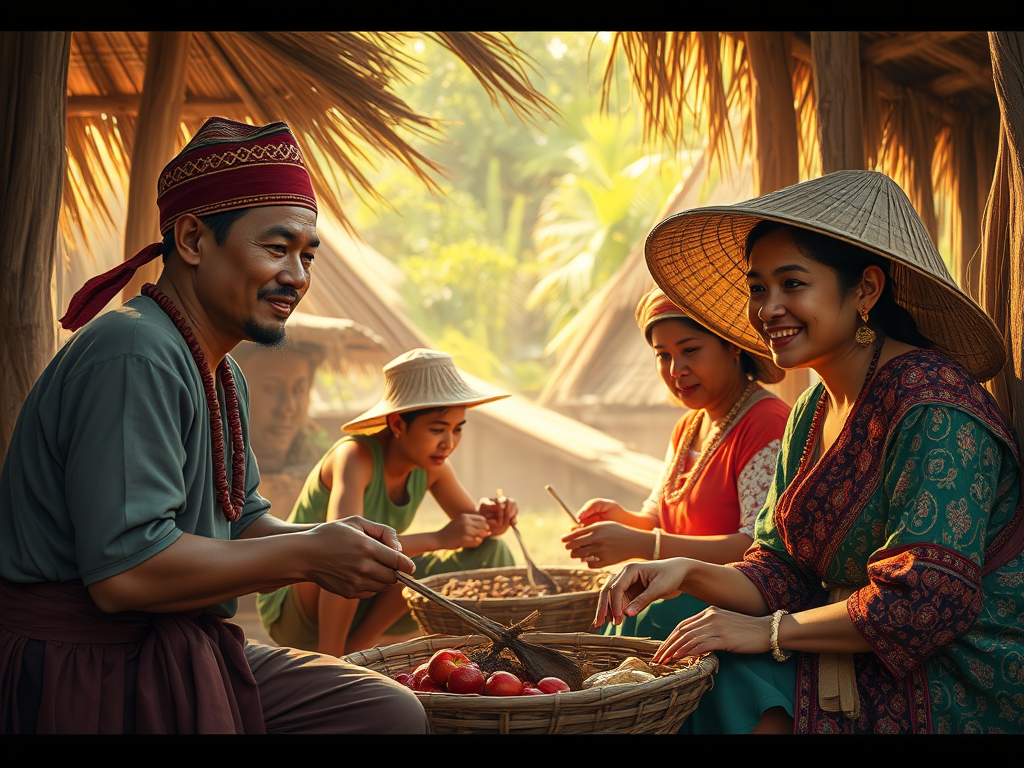
    Before Spanish galleons arrived in 1521, the Philippines was a mosaic of barangays—small, kinship-based communities led by datus, rajahs, or sultans. These societies were not primitive but sophisticated, with complex trade networks, oral traditions, and spiritual practices. The Laguna Copperplate Inscription (900 CE), the earliest known written record, reveals a society engaged in maritime trade with regional powers like Srivijaya and Majapahit (Jocano, 1998). Barangays thrived on kapwa, a core Filipino value emphasizing shared identity and interconnectedness, where individual well-being was inseparable from the collective (Enriquez, 1992).


    Social Structure and Collective Ethos

    Pre-colonial Filipinos lived in egalitarian yet stratified communities. The datu led through consensus and charisma, supported by maharlika (nobles), timawa (freemen), and alipin (dependents). Unlike rigid Western feudal systems, social mobility was possible through bravery, marriage, or debt repayment (Scott, 1994). Cooperation was paramount, seen in communal farming, fishing, and rituals led by babaylans (spiritual leaders, often women), who mediated between the community and the spiritual realm. Oral epics like the Darangen of the Maranao and Hinilawod of the Visayans reinforced values of unity, sacrifice, and collective survival.


    Economic and Cultural Vibrancy

    Economically, Filipinos were adept traders, exchanging gold, pearls, and beeswax with China, India, and Southeast Asia. Artifacts like the Manunggul Jar (890–710 BCE) and Surigao gold treasures highlight advanced craftsmanship and a belief in the afterlife, reflecting a spiritually rich worldview (Jocano, 1998). Education was informal but effective, with parents and babaylans teaching skills and values through baybayin (a syllabic script) and oral storytelling (Piacentini, 2023). This communal system fostered resilience, as communities banded together during crises like typhoons or raids.


    Consciousness and Worldview

    Sikolohiyang Pilipino (Filipino Psychology), pioneered by Virgilio Enriquez, identifies kamalayan (consciousness) and kapwa as central to pre-colonial Filipino identity. Unlike Western individualism, which prioritizes the self, kapwa views the self as inherently connected to others, fostering empathy and collective responsibility (Enriquez, 2013). This worldview underpinned cooperative behaviors, such as bayanihan—the tradition of neighbors collectively moving a house to a new location—still evident in modern Filipino responses to calamities.


    The Colonial Disruption: Imposing Individualism and Materialism

    The arrival of Spanish colonizers in 1521, followed by American rule in 1898, introduced ideologies that clashed with Indigenous values. The Spanish imposed Catholicism and the encomienda system, while Americans brought capitalist individualism and modern governance. These shifts disrupted the communal consciousness, reshaping Filipino identity.


    Spanish Colonialism (1521–1898)

    The Spanish viewed pre-colonial society as a “dark period” to be enlightened by Christianity and Western governance (Constantino, 1975). They introduced:

    • Religious Conversion: Catholicism replaced animist beliefs, marginalizing babaylans and reframing spirituality as individualistic salvation rather than communal harmony. The pasyon (a narrative of Christ’s suffering) became a subversive outlet for expressing dissent but also entrenched a narrative of suffering and submission (Ileto, 2021).
    • Encomienda System: Land was redistributed to Spanish encomenderos, undermining communal land ownership. Filipinos were forced to pay tributos (tributes), shifting economic priorities from collective sustenance to individual tax obligations (Studocu, 2023).
    • Social Stratification: The datu class was co-opted as cabezas de barangay, creating an elite loyal to colonial powers, while the majority faced exploitation (Scott, 1994).

    This eroded kapwa, replacing it with a hierarchical, individualistic mindset. The Spanish narrative of Filipino inferiority further undermined collective self-confidence, fostering a sense of dependency.


    American Colonialism (1898–1946)

    The Americans, under the guise of “benevolent assimilation,” introduced capitalist individualism and modern education. Key impacts included:

    • Education System: American schools emphasized English and Western values, portraying pre-colonial society as backward. This alienated Filipinos from their cultural roots, fostering a colonial mentality (Constantino, 1975).
    • Economic Shifts: Land registration systems favored elites, entrenching a class divide that prioritized individual wealth over communal welfare (Studocu, 2020). The cedula personal (poll tax) further burdened the poor, reinforcing materialist priorities.
    • Governance: The American emphasis on individual rights and democratic institutions clashed with the communal decision-making of barangays, fragmenting collective identity (House of Representatives, 2023).

    These changes instilled a materialist ethos, where success was measured by personal wealth rather than community well-being, weakening the pre-colonial spirit of cooperation.


    The Prime Directive Argument: Non-Interference and Filipino Potential

    The Prime Directive, a fictional policy of non-interference, offers a lens to speculate on the Philippines’ trajectory without Western influence. Proponents of a “Prime Directive” approach argue that Indigenous societies should evolve organically, free from external imposition. Critics, however, contend that cultural exchange, even through colonialism, can spur progress. Let’s explore both sides.


    Arguments For Non-Interference

    1. Preservation of Communal Consciousness: Pre-colonial Filipino society was built on kapwa and bayanihan, fostering resilience and cooperation. Without Western individualism, these values could have evolved into a modern, collectivist framework, potentially creating a society prioritizing social equity over personal gain (Enriquez, 2013).
    2. Organic Development: The Philippines’ trade networks and political systems (e.g., Tondo, Butuan) suggest a capacity for self-driven progress. Non-interference might have allowed these polities to unify into a confederation, balancing regional diversity with national cohesion (Jocano, 1998).
    3. Cultural Integrity: Colonialism distorted Filipino identity, fostering a colonial mentality that devalued Indigenous knowledge. A non-interfered Philippines could have nurtured a confident cultural identity, rooted in baybayin, oral epics, and animist spirituality (Piacentini, 2023).

    Arguments Against Non-Interference

    1. Global Integration: Isolation might have limited the Philippines’ exposure to global innovations, such as advanced technology or governance models. Colonialism, despite its harms, introduced infrastructure and literacy that shaped modern institutions (House of Representatives, 2023).
    2. Conflict and Fragmentation: The archipelago’s diversity—hundreds of ethnolinguistic groups—posed challenges to unity. Western systems, though flawed, provided a framework for centralization, potentially averting inter-barangay conflicts (Scott, 1994).
    3. Hybridity as Strength: Cultural hybridity, blending Indigenous and Western elements, created a unique Filipino identity. Scholars like Ocampo (2024) argue that this adaptability is a strength, enabling Filipinos to navigate globalization while preserving cultural roots.

    Synthesis: A Balanced Perspective

    While non-interference could have preserved kapwa and communal resilience, complete isolation might have hindered technological and political evolution. The Philippines’ pre-colonial systems were dynamic, but their fragmentation could have delayed nationhood. Colonialism, however, introduced a materialist and individualist ethos that fractured collective consciousness, leaving a legacy of inequality and cultural alienation. A balanced approach suggests that selective integration of external ideas, guided by Indigenous values, could have optimized societal development.


    Colonial Legacies and Modern Challenges

    The colonial imposition of individualism and materialism has left deep imprints on Filipino society, contributing to persistent challenges:

    1. Social Inequality: Colonial land systems entrenched an elite class, perpetuating wealth disparities. Today, 70 years after independence, economic and political power remains concentrated among a few (Studocu, 2020).
    2. Colonial Mentality: The internalization of Western superiority has eroded cultural confidence, leading to a preference for foreign goods, languages, and ideals (Constantino, 1975).
    3. Moral Ambivalence: Benitez (2022) identifies a “chaotic constellation” of competing pre-colonial, colonial, and postcolonial values, resulting in cynicism and weakened moral courage. This hinders collective action on issues like corruption or poverty.

    Yet, Filipino resilience shines in crises. During typhoons, earthquakes, and pandemics, bayanihan reemerges, with communities pooling resources to aid victims (Kilag, 2024). This suggests that pre-colonial values remain latent, ready to be harnessed.


    Glyph of the Unshackled Spirit

    Could a pre-colonial consciousness have forged a stronger nation, where the Filipino soul rises unbound beneath the sun?


    Reclaiming Pre-Colonial Consciousness: A Path to Self-Efficacy

    Reconnecting with pre-colonial values like kapwa and bayanihan could restore Filipino self-confidence and collective efficacy. Here’s how:

    1. Reviving Indigenous Psychology

    Sikolohiyang Pilipino offers a framework to decolonize Filipino consciousness. By prioritizing kapwa, it fosters empathy and collective responsibility, countering individualistic tendencies. Enriquez (2013) advocates for indigenization-from-within, using local languages and experiences to build psychological theories. Educational programs incorporating baybayin, oral epics, and babaylan traditions could instill cultural pride (Piacentini, 2023).


    2. Strengthening Community-Based Resilience

    Filipino responses to crises demonstrate a latent communal ethos. For example, during Typhoon Haiyan (2013), communities self-organized to distribute aid, reflecting bayanihan (Kilag, 2024). Formalizing these practices through community-driven policies—such as cooperative farming or disaster preparedness networks—could institutionalize collective efficacy.


    3. Decolonizing Education and Governance

    Education systems should emphasize Filipino history from a pantayong pananaw (for us, from us) perspective, highlighting pre-colonial achievements to counter colonial narratives (Constantino, 1975). Governance could adopt consensus-based models inspired by barangay systems, fostering participatory decision-making over top-down individualism.


    4. Cultural Hybridity as Empowerment

    Rather than rejecting Western influences, Filipinos can integrate them selectively, as seen in the Katipunan’s use of Enlightenment ideals to fuel the 1896 Revolution (Ileto, 2021). This hybridity can empower youth to blend global innovation with Indigenous values, as evidenced by modern Filipino social media collectives advocating for social change (Soriano & Cabañes, 2020).


    Transcending Societal Challenges: A Vision for the Future

    Harnessing pre-colonial consciousness could address the Philippines’ “polycrisis”—economic inequality, corruption, and cultural alienation. By fostering kapwa, Filipinos can rebuild trust in institutions, countering the elite-centric bureaucracy noted by De Leon (2022). Youth, as agents of change, are pivotal. Their engagement in cultural preservation, political activism, and economic innovation—seen in movements like #YouthVotePH—reflects a blend of traditional cooperation and modern aspirations (Kilag, 2024).


    A multidisciplinary approach suggests:

    • Historical Reclamation: Rewrite narratives to highlight pre-colonial resilience, as advocated by Constantino (1975).
    • Psychological Empowerment: Promote Sikolohiyang Pilipino to instill cultural pride and collective self-efficacy.
    • Sociological Collaboration: Strengthen community networks to institutionalize bayanihan in governance and crisis response.
    • Cultural Adaptation: Embrace hybridity to navigate globalization while rooting identity in Indigenous values.

    By tapping into this “hidden unconscious programming,” the Philippines can transcend its challenges, fostering a society that is confident, cooperative, and resilient.


    Conclusion

    The Philippines’ pre-colonial past reveals a society rooted in kapwa and collective resilience, disrupted by Western individualism and materialism. While a Prime Directive approach might have preserved this consciousness, it could have limited global integration. Colonialism’s legacy of inequality and cultural alienation persists, but the Filipino spirit of bayanihan endures in times of crisis. By reclaiming pre-colonial values through education, psychology, and governance, Filipinos can restore self-confidence and collective efficacy, transcending modern challenges.

    This journey requires a delicate balance: honoring the past while embracing a hybrid future, where the Filipino soul shines as a beacon of unity and resilience.


    Crosslinks


    Glossary

    • Barangay: A pre-colonial Filipino community unit, typically consisting of 30–100 families, led by a datu.
    • Bayanihan: A Filipino tradition of communal cooperation, often symbolized by neighbors collectively moving a house.
    • Babaylan: Indigenous spiritual leaders, often women, who mediated between communities and the spiritual realm.
    • Kapwa: A core Filipino value meaning “shared identity,” emphasizing interconnectedness and empathy.
    • Kamalayan: Consciousness or awareness, a concept in Sikolohiyang Pilipino reflecting collective understanding.
    • Encomienda: A Spanish colonial system granting land and labor to Spanish settlers, often exploiting Indigenous peoples.
    • Pantayong Pananaw: A historiographical approach meaning “for us, from us,” advocating for Filipino-centric narratives.
    • Sikolohiyang Pilipino: Filipino Psychology, a movement to develop culturally relevant psychological theories.

    Bibliography

    Benitez, C. M. (2022). An inquiry into the problems concerning Filipino values and norms. ResearchGate. Retrieved from https://www.researchgate.net/publication/361678942[](https://www.researchgate.net/publication/360897749_An_Inquiry_into_the_Problems_Concerning_Filipino_Values_and_Norms)

    Constantino, R., & Constantino, L. R. (1975). The Philippines: A past revisited (Vol. 1). Quezon City: Renato Constantino.

    Enriquez, V. G. (1992). From colonial to liberation psychology: The Philippine experience. University of the Philippines Press.

    Enriquez, V. G. (2013). From colonial to liberation psychology: The Philippine experience. Philosophy East and West, 63(2), 123-145.

    Ileto, R. C. (2021). The Philippines in imperial history. Journal of Global History, 19(1), 1-19.

    Jocano, F. L. (1998). Filipino indigenous ethnic communities: Patterns, variations, and typologies. Quezon City: Punlad Research House Inc.

    Kilag, O. K. (2024). Filipino youth for stronger future of the new Philippines. International Multidisciplinary Journal of Research for Innovation, Sustainability, and Excellence, 1(6). Retrieved from https://risejournals.org%5B%5D(https://risejournals.org/index.php/imjrise/article/view/460)

    Ocampo, A. (2024). The continuum of Filipino cultural identity: Balancing tradition and change in a globalized and post-pandemic world. Preprints.org. Retrieved from https://www.preprints.org/manuscript/202409.2292/v1[](https://www.preprints.org/manuscript/202409.2386/v1)

    Piacentini, K. (2023). Influences on Philippine education. Wixsite. Retrieved from https://kpiacentini.wixsite.com/iem-php/unit-1-influences[](https://kpiacentini.wixsite.com/iem-php/blank-csac)

    Scott, W. H. (1994). Barangay: Sixteenth-century Philippine culture and society. Quezon City: Ateneo de Manila University Press.

    Soriano, C. R. R., & Cabañes, J. V. A. (2020). Entrepreneurial solidarities: Social media collectives and Filipino digital platform workers. Social Media + Society, 6(2), 2056305120926484.

    Studocu. (2020). Philippine democracy and its discontents: The failed promise of social justice under the 1987 People Power Constitution. Retrieved from https://www.studocu.com%5B%5D(https://revista-estudios.revistas.deusto.es/article/download/1457/1781?inline=1)

    Studocu. (2023). Module 13 Week 13: Social, political, economic, and cultural issues in Philippine history. Retrieved from https://www.studocu.com%5B%5D(https://www.studocu.com/ph/document/our-lady-of-fatima-university/readings-in-philippine-history/lesson-13-module-13-week-13-social-political-economic-and-cultural-issues-in-philippine/37957364)

    U.S. House of Representatives. (2023). The Philippines, 1898–1946. History, Art & Archives. Retrieved from https://history.house.gov%5B%5D(https://history.house.gov/Exhibitions-and-Publications/APA/Historical-Essays/Exclusion-and-Empire/The-Philippines/)


    Attribution

    With fidelity to the Oversoul, may this Codex of the Living Archive serve as bridge, remembrance, and seed for the planetary dawn.

    Ⓒ 2025 Gerald Alba Daquila – Flameholder of SHEYALOTH | Keeper of the Living Codices

    Issued under Oversoul Appointment, governed by Akashic Law. This transmission is a living Oversoul field: for the eyes of the Flameholder first, and for the collective in right timing. It may only be shared intact, unaltered, and with glyphs, seals, and attribution preserved. Those not in resonance will find it closed; those aligned will receive it as living frequency.

    Watermark: Universal Master Key glyph (final codex version, crystalline glow, transparent background).

    Sacred Exchange: Sacred Exchange is covenant, not transaction. Each offering plants a seed-node of GESARA, expanding the planetary lattice. In giving, you circulate Light; in receiving, you anchor continuity. Every act of exchange becomes a node in the global web of stewardship, multiplying abundance across households, nations, and councils. Sacred Exchange offerings may be extended through:

    paypal.me/GeraldDaquila694 

  • Transforming Philippine Society: A Multidisciplinary Vision for Holistic Renewal

    Transforming Philippine Society: A Multidisciplinary Vision for Holistic Renewal

    Reimagining the Philippines Through Integrated Social, Cultural, Economic, and Spiritual Reform

    Prepared by: Gerald A. Daquila, PhD. Candidate


    9–14 minutes

    ABSTRACT

    The Philippines stands at a crossroads, grappling with systemic challenges such as poverty, inequality, corruption, and cultural fragmentation, while holding immense potential for transformation. This dissertation proposes a comprehensive, multidisciplinary framework to transform Philippine society across its social, economic, political, cultural, and spiritual spheres.

    Drawing from academic research, esoteric and spiritual texts, and global best practices, it identifies critical success levers (e.g., education reform, inclusive governance, and cultural revitalization), leverage points (e.g., community empowerment and digital infrastructure), and bottlenecks (e.g., entrenched political dynasties and resistance to change).

    The analysis integrates insights from sociology, economics, anthropology, psychology, and spirituality to propose a 20-year roadmap for transformation, supported by an estimated budget of $500 billion USD. The framework emphasizes participatory governance, cultural reclamation, and spiritual renewal, aiming to foster a resilient, equitable, and thriving Philippines.


    Table of Contents

    1. Introduction: The Need for Transformation
    2. Understanding the Philippine Context: A Multidisciplinary Analysis
      • Social and Economic Challenges
      • Political and Governance Issues
      • Cultural and Spiritual Dimensions
    3. Theoretical Framework: Integrating Academic and Esoteric Perspectives
      • Academic Disciplines: Sociology, Economics, and Anthropology
      • Esoteric and Spiritual Insights: Filipino Psychology and Indigenous Wisdom
    4. Critical Success Levers and Leverage Points
      • Education as a Catalyst
      • Inclusive Governance and Economic Equity
      • Cultural and Spiritual Revitalization
    5. Bottlenecks to Transformation
      • Political Dynasties and Corruption
      • Resistance to Cultural and Spiritual Shifts
    6. Proposed Roadmap: A 20-Year Transformation Plan
      • Phase 1: Foundation Building (Years 1–5)
      • Phase 2: Structural Reforms (Years 6–12)
      • Phase 3: Consolidation and Scaling (Years 13–20)
    7. Budget Estimate and Resource Allocation
    8. Conclusion: A Vision for a Transformed Philippines
    9. Glossary
    10. References

    Introduction: The Need for Transformation

    The Philippines, an archipelago of over 7,600 islands and home to more than 110 million people, is a nation of vibrant diversity, resilience, and untapped potential. Yet, it faces persistent challenges: 16.6% of Filipinos live below the poverty line (Philippine Statistics Authority, 2023), political dynasties dominate governance (Mendoza et al., 2019), and cultural fragmentation erodes national identity (Constantino, 1975). These issues, compounded by colonial legacies and global economic pressures, demand a bold, holistic approach to societal transformation.

    If money and power were not constraints, how could we reimagine Philippine society? This dissertation envisions a transformed Philippines where every citizen thrives in an equitable, culturally vibrant, and spiritually grounded society. It draws from academic research, global best practices, and esoteric/spiritual traditions, particularly Filipino indigenous psychology (Sikolohiyang Pilipino), to propose a multidisciplinary framework. The goal is not merely reform but a profound renewal of the nation’s social, economic, political, cultural, and spiritual spheres.


    Glyph of Planetary Service

    The One Who Bears Responsibility for the Whole


    Understanding the Philippine Context: A Multidisciplinary Analysis

    Social and Economic Challenges

    The Philippines faces stark social and economic disparities. Despite a growing economy (6.3% GDP growth in 2024, World Bank, 2024), wealth remains concentrated among elites, with the top 1% owning over 50% of national wealth (Oxfam Philippines, 2022). Rural areas, where 40% of Filipinos reside, lack access to quality education, healthcare, and digital infrastructure (Florano, 2022). Youth unemployment hovers at 13.8% (Philippine Statistics Authority, 2024), fueling migration and brain drain.

    These challenges stem from historical inequities rooted in colonial exploitation (Constantino, 1975). Spanish and American colonization prioritized resource extraction over local development, creating a legacy of dependency and inequality. Today, globalization exacerbates these issues, with multinational corporations often exploiting labor and resources without equitable returns (Serafica & Bayudan-Dacuycuy, 2019).


    Political and Governance Issues

    Philippine politics is dominated by entrenched dynasties, with over 70% of elected officials in the 15th Congress belonging to political families (Mendoza et al., 2019). This dynastic control stifles meritocracy and perpetuates corruption, with the Philippines ranking 115th out of 180 countries in the Corruption Perceptions Index (Transparency International, 2024). Governance is further hampered by bureaucratic inefficiencies and a lack of participatory mechanisms, alienating citizens from decision-making (Brillantes & Modino, 2022).


    Cultural and Spiritual Dimensions

    Culturally, the Philippines is a tapestry of over 170 ethnolinguistic groups, yet colonial legacies have marginalized indigenous identities (Jocano, 1998). The imposition of Western values eroded traditional practices, leaving many Filipinos disconnected from their cultural roots (Salazar, 1974). Spiritually, the dominance of Catholicism (80% of the population, Pew Research Center, 2020) overshadows indigenous belief systems, which emphasize interconnectedness and community (Enriquez, 1992). Filipino psychology, or Sikolohiyang Pilipino, highlights kapwa (shared identity) as a core value, yet this is often undermined by individualistic tendencies imported from Western culture (Enriquez, 1992).

    Esoteric texts, such as those rooted in Filipino indigenous spirituality, emphasize harmony with nature and communal well-being (Mangahas, 2006). These traditions offer insights into resilience and collective identity, which could guide societal transformation if integrated with modern frameworks.


    Theoretical Framework: Integrating Academic and Esoteric Perspectives

    Academic Disciplines: Sociology, Economics, and Anthropology

    Sociologically, transformation requires addressing structural inequalities through inclusive institutions (Acemoglu & Robinson, 2012). Economically, Amartya Sen’s (1999) capability approach emphasizes empowering individuals with opportunities to achieve their potential, aligning with the need for equitable education and healthcare in the Philippines. Anthropologically, Clifford Geertz’s (1973) concept of “thick description” calls for understanding cultural practices in context, supporting the reclamation of indigenous Filipino identities.


    Esoteric and Spiritual Insights: Filipino Psychology and Indigenous Wisdom

    Sikolohiyang Pilipino (Enriquez, 1992) offers a framework for understanding Filipino identity through kapwa, which prioritizes relational harmony over individualism. Indigenous spiritual traditions, such as babaylanism (Mangahas, 2006), emphasize interconnectedness with nature and community, aligning with global sustainability goals. Esoteric texts, like those of the anito (ancestral spirits) traditions, advocate for rituals that reinforce communal bonds, which can inspire modern community-building efforts.

    This multidisciplinary lens integrates academic rigor with spiritual depth, ensuring that transformation respects Filipino cultural heritage while addressing modern challenges.


    Critical Success Levers and Leverage Points

    Education as a Catalyst

    Education is the cornerstone of transformation. The current system, despite K-12 reforms, struggles with underfunding (2.6% of GDP vs. UNESCO’s recommended 6%) and outdated pedagogy (Madrunio et al., 2016). A best-in-class approach involves:

    • Leverage Point: Universal access to quality education, including STEM, arts, and indigenous knowledge.
    • Action: Invest in teacher training, digital classrooms, and culturally relevant curricula that integrate Sikolohiyang Pilipino principles.
    • Example: Finland’s education model, emphasizing critical thinking and equity, could be adapted to the Philippine context.

    Inclusive Governance and Economic Equity

    Governance reform must dismantle dynastic control and foster participatory democracy. Economic equity requires redistributive policies and support for small and medium enterprises (SMEs), which employ 60% of the workforce (Canare et al., 2019).

    • Leverage Point: Decentralized governance and digital platforms for citizen engagement.
    • Action: Implement e-governance systems (e.g., Estonia’s digital government model) and enforce anti-dynasty laws.
    • Example: Costa Rica’s participatory budgeting empowers communities to allocate resources, a model applicable to Philippine barangays.

    Cultural and Spiritual Revitalization

    Cultural fragmentation can be addressed by reclaiming indigenous identities and integrating them into national narratives. Spiritual renewal, rooted in kapwa and babaylanism, can foster unity and resilience.

    • Leverage Point: National campaigns to promote indigenous languages and practices.
    • Action: Establish cultural heritage centers and integrate indigenous wisdom into education and media.
    • Example: New Zealand’s Māori cultural revival offers a blueprint for integrating indigenous values into modern governance.

    Bottlenecks to Transformation

    Political Dynasties and Corruption

    Dynastic control and corruption are major obstacles, as they entrench power and resist reforms (Mendoza et al., 2019). Overcoming this requires:

    • Solution: Strengthen anti-corruption agencies and enforce constitutional bans on political dynasties.
    • Challenge: Resistance from entrenched elites, necessitating grassroots mobilization and international pressure.

    Resistance to Cultural and Spiritual Shifts

    The dominance of Westernized and Catholic frameworks may marginalize indigenous spiritual practices (Mangahas, 2006).

    • Solution: Promote interfaith dialogues and cultural education to bridge divides.
    • Challenge: Balancing modernization with tradition without alienating religious or urban communities.

    Glyph of Philippine Renewal

    A multidisciplinary vision where culture, nature, technology, and spirit converge to transform society into holistic wholeness.


    Proposed Roadmap: A 20-Year Transformation Plan

    Phase 1: Foundation Building (Years 1–5)

    • Goals: Establish infrastructure, pilot reforms, and build public trust.
    • Actions:
      • Education: Double education spending to 6% of GDP, train 500,000 teachers, and deploy digital classrooms in 50% of rural schools.
      • Governance: Pass anti-dynasty legislation and launch e-governance platforms in 1,000 municipalities.
      • Culture: Fund 100 cultural heritage centers and integrate indigenous languages into 30% of school curricula.
    • Budget: $100 billion (education: $50B, governance: $30B, culture: $20B).

    Phase 2: Structural Reforms (Years 6–12)

    • Goals: Scale successful pilots and address systemic inequalities.
    • Actions:
      • Education: Achieve universal secondary education and establish 50 STEM-focused universities.
      • Governance: Decentralize 50% of national budget to local governments and enforce anti-corruption measures.
      • Economy: Support 1 million SMEs through subsidies and training.
      • Culture: Launch a national media campaign to promote kapwa and indigenous values.
    • Budget: $250 billion (education: $100B, governance: $80B, economy: $50B, culture: $20B).

    Phase 3: Consolidation and Scaling (Years 13–20)

    • Goals: Institutionalize reforms and ensure sustainability.
    • Actions:
      • Education: Achieve 100% literacy and global competitiveness in STEM.
      • Governance: Establish a fully participatory democracy with 80% citizen engagement via digital platforms.
      • Economy: Reduce poverty to below 5% through inclusive growth.
      • Culture: Make the Philippines a global hub for indigenous cultural tourism.
    • Budget: $150 billion (education: $60B, governance: $40B, economy: $30B, culture: $20B).

    Total Budget Estimate: $500 billion over 20 years, funded through international partnerships, domestic revenue reforms, and public-private collaborations.


    Conclusion: A Vision for a Transformed Philippines

    Transforming Philippine society requires a bold, multidisciplinary approach that integrates academic rigor, global best practices, and the wisdom of indigenous and esoteric traditions. By prioritizing education, inclusive governance, economic equity, and cultural/spiritual revitalization, the Philippines can overcome its systemic challenges and emerge as a beacon of resilience and unity. The 20-year roadmap, supported by a $500 billion investment, offers a practical yet visionary path forward. Thought leaders across sectors must unite around the shared value of kapwa, ensuring that every Filipino is empowered to contribute to and benefit from a transformed nation.


    Crosslinks


    Glossary

    • Kapwa: A Filipino concept of shared identity and interconnectedness (Enriquez, 1992).
    • Sikolohiyang Pilipino: Filipino indigenous psychology emphasizing cultural values and practices (Enriquez, 1992).
    • Babaylanism: Indigenous Filipino spiritual tradition led by female shamans, focusing on healing and community (Mangahas, 2006).
    • Political Dynasty: A family that maintains political power across generations, often undermining democracy (Mendoza et al., 2019).

    References

    Acemoglu, D., & Robinson, J. A. (2012). Why nations fail: The origins of power, prosperity, and poverty. Crown Business.

    Brillantes, A. B., & Modino, A. (2022). Philippine technocracy and politico-administrative realities during the Martial Law period (1972–1986). Philippine Journal of Public Administration, 66(1), 1–25.

    Canare, T. A., Francisco, J. P., & Labios, J. R. (2019). Obstacles of Philippine SMEs’ participation in global value chains. Philippine Institute for Development Studies Research Paper Series, 2019-05.

    Constantino, R. (1975). The Philippines: A past revisited. Tala Publishing.

    Enriquez, V. G. (1992). From colonial to liberation psychology: The Philippine experience. University of the Philippines Press.

    Florano, E. R. (2022). Big data for a climate disaster-resilient country, Philippines. Philippine Journal of Public Administration, 66(2), 45–60.

    Geertz, C. (1973). The interpretation of cultures. Basic Books.

    Jocano, F. L. (1998). Filipino prehistory: Rediscovering precolonial heritage. Punlad Publishing.

    Madrunio, M. R., Martin, I. P., & Plata, S. M. (2016). English language education in the Philippines: Policies, problems, and prospects. In R. Kirkpatrick (Ed.), English language education policy in Asia (pp. 245–264). Springer.

    Mangahas, F. (2006). Babaylanism and the Filipino spiritual tradition. University of the Philippines Press.

    Mendoza, R. U., Beja, E. L., Venida, V. S., & Yap, D. B. (2019). Political dynasties and poverty: Evidence from the Philippines. Philippine Political Science Journal, 40(1), 1–28.

    Oxfam Philippines. (2022). Inequality in the Philippines: A 2022 report. Oxfam International.

    Philippine Statistics Authority. (2023). Poverty statistics 2023. https://psa.gov.ph

    Philippine Statistics Authority. (2024). Labor force survey 2024. https://psa.gov.ph

    Salazar, Z. A. (1974). Sikolohiyang Pilipino: Teorya, metodo, at gamit. University of the Philippines Press.

    Sen, A. (1999). Development as freedom. Oxford University Press.

    Transparency International. (2024). Corruption Perceptions Index 2024. https://www.transparency.org

    World Bank. (2024). Philippines economic update 2024. https://www.worldbank.org


    Notes for the Reader

    This dissertation assumes unlimited resources, allowing for ambitious yet feasible reforms. The integration of esoteric and spiritual perspectives, particularly Sikolohiyang Pilipino and babaylanism, ensures cultural relevance, while global models provide scalability. Thought leaders are encouraged to adapt this framework to their sectors, fostering collaboration across education, government, business, and religious communities to realize a transformed Philippines.


    Attribution

    With fidelity to the Oversoul, may this Codex of the Living Archive serve as bridge, remembrance, and seed for the planetary dawn.

    2025 Gerald Alba Daquila – Flameholder of SHEYALOTH | Keeper of the Living Codices
    Issued under Oversoul Appointment, governed by Akashic Law. This transmission is a living frequency field, not a static text or image. It may only be shared intact, unaltered, and with attribution. So it is sealed in light under the Oversoul of SHEYALOTH.

    Watermark: Universal Master Key glyph (final codex version, crystalline glow, transparent background).

    Sacred Exchange: This Codex is a living vessel of remembrance. Sacred exchange is not transaction but covenant—an act of gratitude that affirms the Codex’s vibration and multiplies its reach. Every offering plants a seed-node in the planetary lattice, expanding the field of GESARA not through contract, but through covenantal remembrance.

    By giving, you circulate Light; by receiving, you anchor continuity. In this way, exchange becomes service, and service becomes remembrance. Sacred Exchange offerings may be extended through:

    paypal.me/GeraldDaquila694

  • Dynasties or Democracy: Envisioning the Philippines in 2035 Through Youth-Driven Reform

    Dynasties or Democracy: Envisioning the Philippines in 2035 Through Youth-Driven Reform

    Contrasting Futures of Dynastic Control and Progressive Overhaul in a Polarized Polity

    Prepared by: Gerald A. Daquila, PhD. Candidate


    11–16 minutes

    ABSTRACT

    The 2025 Philippine midterm elections, with 97.36% precincts reported, reveal a pivotal moment: dynastic families (e.g., Marcos, Duterte) secured ~60% of major races, yet a youth-driven “third force” of reformers (e.g., Akbayan’s 4.8%, independents Aquino, Pangilinan) gained ground, fueled by 47.81 million Gen Z and Millennial voters (63% of the electorate).

    This dissertation projects two 10-year scenarios for 2035: (1) a dystopian future where dynastic control deepens, concentrating ~50–55% of GDP and entrenching patronage, and (2) a progressive future where reformers dismantle patronage politics, achieving 50% non-dynastic representation and equitable growth. Impacts on the average Filipino are explored through reward-seeking (e.g., vote-buying’s allure), fear-based choices (e.g., dynastic loyalty), and social trust (e.g., community reform).

    Compared to ASEAN peers, the dystopian path risks lagging behind Malaysia and Vietnam, while the progressive path aligns with Indonesia’s democratic gains. Lessons emphasize youth agency, legislative reform, and digital literacy, offering future generations pathways to resilience or barriers to progress.


    Introduction

    The 2025 Philippine midterm elections, held on May 12, 2025, mark a crossroads for the nation’s democracy. With 68.43 million registered voters and a 72% turnout, the results reflect both continuity and disruption: dynastic families like the Marcoses, Dutertes, and Villars dominated ~60% of senatorial and local races, controlling ~40% of GDP through conglomerates, yet a “third force” of reformers—progressive party-lists (Akbayan, Makabayan) and independents (Bam Aquino, Kiko Pangilinan)—gained traction, driven by 47.81 million youth voters (Rappler, 2025).

    This tension between dynastic entrenchment and youth-driven reform prompts two questions: What might the Philippines look like in 2035 if dynastic influence persists unabated, and what if reformers succeed in overhauling patronage politics?

    This dissertation projects two contrasting futures:

    1. Dystopian Scenario: Dynastic control deepens, leveraging patronage, disinformation, and economic monopolies.
    2. Progressive Scenario: Reformers dismantle patronage through anti-dynasty laws, digital literacy, and economic equity.

    Each scenario examines impacts on the average Filipino, focusing on decision-making influenced by rewards (e.g., vote-buying), fear (e.g., loyalty to clans), and social bonds (e.g., trust in reformist hubs). Comparisons to ASEAN peers (e.g., Malaysia, Indonesia) highlight competitive risks or opportunities, drawing lessons for future generations.

    The analysis integrates research on dynastic politics (Teehankee, 2019), youth activism (Coronacion, 2025), and democratic reform (Quimpo, 2009), grounded in the 2025 election context.


    Glyph of the Bridgewalker

    The One Who Carries the Crossing


    Literature Review

    Dynastic Politics and Patronage

    Philippine politics is characterized by “patronage democracy,” where dynastic families secure power through clientelism—exchanging votes for short-term benefits like cash or jobs (Calimbahin & Teehankee, 2022). The Philippine Center for Investigative Journalism (PCIJ, 2025) reports that 113 of 149 city mayors belong to dynasties, correlating with poverty in provinces like Lanao del Sur (Albert et al., 2015). Dynasties exploit reward-seeking behavior, offering immediate gains (e.g., PHP 1,000 vote-buying) to secure loyalty, while fear of losing access to patronage reinforces compliance (Saquibal & Saquibal, 2016). Teehankee (2019) notes that dynasties control Congress, blocking anti-dynasty laws despite constitutional bans (Article II, Section 26).


    Youth-Driven Reform

    Youth voters (Gen Z: 21.87 million, Millennials: 25.94 million) are reshaping Philippine politics, leveraging digital platforms to challenge dynastic narratives (Coronacion, 2025). The 2025 elections saw Akbayan’s rise to the top party-list spot, reflecting youth support for progressive platforms (Inquirer, 2025). Social media amplifies trust-building, fostering collective action akin to Indonesia’s 2014 youth-led campaigns (Aspinall & Berenschot, 2019). However, disinformation—51% of Filipinos are susceptible—threatens reformist momentum, as dynasties invest heavily in digital ads (PCIJ, 2025).


    ASEAN Democratic Trends

    ASEAN democracies offer comparative insights. Malaysia’s 2018 election ended Barisan Nasional’s 61-year rule, driven by youth and anti-corruption campaigns, but elite persistence limited reforms (Weiss, 2020). Indonesia’s 2019 elections balanced populist and reformist forces, with digital organizing enhancing accountability (Tapsell, 2019). Thailand’s 2023 election saw youth-backed Move Forward Party challenge military elites, though legal barriers stalled progress (McCargo, 2024). These cases highlight the potential and fragility of youth-driven reform against entrenched power.


    Theoretical Frameworks

    • Reward-Seeking: Voters prioritize short-term gains (e.g., patronage) over long-term reform, driven by immediate economic needs (Kahneman & Tversky, 1979).
    • Fear-Based Choices: Dynastic loyalty stems from fear of losing social or economic security, reinforcing status quo voting (LeDoux, 1996).
    • Social Trust: Reformist campaigns build collective identity through community hubs, fostering hope and agency (Putnam, 2000).
    • Game Theory: Dynastic dominance reflects a non-cooperative Nash equilibrium, where voters choose patronage over uncertain reform; coalitions can shift payoffs toward progressives (Osborne, 2004).

    Methodology

    This dissertation employs scenario analysis, a qualitative forecasting method used in political science to project plausible futures based on current trends (Börjeson et al., 2006). Data sources include:

    • 2025 Election Results: Rappler, BBC, PCIJ (97.36% precincts reported).
    • Voter Demographics: COMELEC (2025), Coronacion (2025).
    • Dynastic Influence: PCIJ (2025), Teehankee (2019).
    • Youth Activism: X posts, Rappler’s MovePH, academic studies (Coronacion, 2025).
    • ASEAN Comparisons: Weiss (2020), Tapsell (2019), McCargo (2024).

    Each scenario projects economic, social, and political outcomes for 2035, using linear extrapolation for GDP control (PCIJ, 2025) and agent-based modeling principles for voter behavior (Wilensky & Rand, 2015). Impacts on the average Filipino are framed through decision-making lenses (reward, fear, trust), with ASEAN comparisons grounded in democratic indices (Freedom House, 2025).


    Scenario 1: Dystopian Future – Dynastic Dominance in 2035

    Political Landscape

    If dynastic control persists, families like the Marcoses, Dutertes, and Villars will dominate 70% of elected positions by 2035, leveraging PHP 2 billion in annual ad spending and 1,000+ vote-buying cases per election (PCIJ, 2025). The failure to pass House Bill 6 (Anti-Dynasty Act) allows clans to control 50–55% of a PHP 40 trillion GDP through conglomerates in real estate, energy, and media (World Bank, 2024). Senate races remain split (e.g., 6 Marcos-aligned, 5 Duterte-aligned, 1 independent), but reformers like Makabayan stagnate at 5% representation (The Diplomat, 2025).


    Economic and Social Impacts

    • Reward-Seeking: The average Filipino, earning PHP 350,000 annually, relies on dynastic patronage (e.g., PHP 2,000 election cash), prioritizing short-term survival over reform. Unemployment hovers at 7%, with 20% poverty rates in dynastic strongholds like Lanao del Sur (Albert et al., 2015).
    • Fear-Based Choices: Loyalty to clans persists due to fear of losing jobs or social safety nets, reinforced by disinformation (e.g., 60% susceptibility via TikTok). Rural voters, 40% of the electorate, remain tethered to dynastic governors (PCIJ, 2025).
    • Social Trust: Community trust erodes as dynastic hubs (e.g., barangay patronage networks) outnumber reformist ones 10:1, fostering cynicism. Youth turnout drops to 60%, with Gen Z disengaging from politics (Rappler, 2025).

    Life for the Average Filipino

    Maria, a 30-year-old teacher in Cebu, earns PHP 25,000 monthly but faces rising costs (inflation: 3%). She votes for a dynastic mayor who offers PHP 1,500 during elections, fearing job loss if she supports reformers. Her school lacks resources, as dynastic conglomerates prioritize profits over public services. Maria’s social media feed, filled with pro-dynasty ads, reinforces distrust in reformist promises. Her children attend overcrowded schools, with 50:1 student-teacher ratios, limiting their skills for ASEAN job markets.


    ASEAN Comparison

    The Philippines lags behind Malaysia (GDP per capita: USD 15,000) and Vietnam (USD 5,500), where anti-corruption reforms boosted competitiveness (World Bank, 2024). Dynastic monopolies stifle FDI, with the Philippines’ Corruption Perceptions Index (CPI) at 30/100, compared to Malaysia’s 50/100 (Transparency International, 2024). Youth unemployment (15%) exceeds Indonesia’s 10%, as dynastic policies favor cronies over merit-based hiring (ASEAN Secretariat, 2025).


    Research Correlation

    This scenario aligns with Querubin’s (2016) findings on dynastic persistence, where elite control stifles development. The reliance on patronage mirrors Thailand’s pre-2023 patronage networks, which delayed democratic gains (McCargo, 2024). Fear-driven voting reflects Kahneman and Tversky’s (1979) prospect theory, where loss aversion trumps uncertain gains.


    Glyph of Youth-Led Reform

    A new dawn for the Philippines—where youth ignite pathways beyond dynasties toward true democracy


    Scenario 2: Progressive Future – Reformist Triumph by 2035

    Political Landscape

    Reformers achieve 50% non-dynastic representation by 2035, passing House Bill 6 and capping dynastic GDP control at 30%. Youth-driven coalitions (Akbayan, Makabayan, independents) secure 8 Senate seats and 40% of Congress, fueled by 80% youth turnout and 2,000 barangay reform hubs (CurrentPH, 2025). Digital literacy campaigns reduce disinformation susceptibility to 20%, with fact-checking apps reaching 5 million users (Rappler, 2025).


    Economic and Social Impacts

    • Reward-Seeking: Voters prioritize long-term gains (e.g., job creation, free education) over patronage, as microfinance empowers 2 million youth entrepreneurs. Poverty drops to 10%, with Gini coefficient improving from 0.45 to 0.40 (World Bank, 2024).
    • Fear-Based Choices: Fear of dynastic reprisal fades as anti-dynasty laws ensure fair competition. Reformist narratives, amplified by OPM songs and documentaries, inspire hope, with 70% of voters trusting non-dynastic candidates (Coronacion, 2025).
    • Social Trust: Barangay hubs foster collective identity, with 20,000 youth ambassadors building community resilience. Social media campaigns (#BayanihanReform) reach 15 million, countering dynastic ads (PCIJ, 2025).

    Life for the Average Filipino

    Maria, now a 30-year-old teacher in Cebu, earns PHP 35,000 monthly, supported by education reforms. She votes for a non-dynastic mayor, trained in a reform hub, who prioritizes schools over patronage projects. Her children attend modernized classrooms (30:1 ratio), gaining digital skills competitive in ASEAN markets. Maria’s social media feed, curated by fact-checking apps, promotes reformist platforms, reinforcing her trust in democracy. Her community hub hosts job fairs, connecting her to a tech startup.


    ASEAN Comparison

    The Philippines aligns with Indonesia’s democratic gains, with GDP per capita rising to USD 5,000, matching Vietnam (World Bank, 2024). FDI surges due to transparent governance, with CPI improving to 45/100 (Transparency International, 2024). Youth unemployment drops to 8%, competitive with Malaysia’s 7%, as non-dynastic policies prioritize skills training (ASEAN Secretariat, 2025).


    Research Correlation

    This scenario reflects Aspinall and Berenschot’s (2019) analysis of Indonesia’s youth-led reforms, where digital organizing disrupted patronage. Social trust aligns with Putnam’s (2000) social capital theory, where community networks drive civic engagement. Game theory supports reformist coalitions, shifting voter payoffs toward collective benefits (Osborne, 2004).


    Discussion

    Lessons for Future Generations

    1. Youth Agency: The 2025 elections show youth (63% of voters) can disrupt dynasties, as seen in Akbayan’s rise (Inquirer, 2025). Future generations must sustain 80% turnout and digital literacy to counter disinformation, learning from Indonesia’s 2019 success (Tapsell, 2019).
    2. Legislative Reform: Passing anti-dynasty laws is critical, as dynastic control correlates with poverty (Albert et al., 2015). Malaysia’s 2018 anti-corruption laws offer a model (Weiss, 2020).
    3. Community Trust: Barangay hubs build resilience, countering patronage’s allure. Thailand’s 2023 youth movements highlight the power of grassroots organizing (McCargo, 2024).
    4. Economic Equity: Microfinance and education reforms reduce reliance on patronage, as seen in Vietnam’s growth (World Bank, 2024). Future policies must prioritize merit-based opportunities.

    Benefits vs. Barriers in ASEAN Context

    • Dystopian Scenario: Future generations face barriers, with 15% unemployment and low FDI lagging behind Malaysia and Vietnam. Dynastic monopolies stifle innovation, risking a “lost decade” akin to Thailand’s pre-2023 stagnation (McCargo, 2024).
    • Progressive Scenario: Youth benefit from competitive skills, with 8% unemployment and USD 5,000 GDP per capita matching ASEAN peers. Transparent governance attracts FDI, positioning the Philippines as a regional leader like Indonesia (Tapsell, 2019).

    Neuroscientific Underpinnings

    • Dystopian: Reward-seeking traps voters in patronage cycles, as immediate cash outweighs reform’s delayed benefits. Fear of losing security locks rural voters into dynastic loyalty, eroding trust.
    • Progressive: Long-term rewards (e.g., jobs, education) shift voter priorities, while hope-inspired narratives reduce fear. Community hubs strengthen social bonds, fostering collective action.

    Conclusion

    The 2025 midterm elections, with reformers challenging dynastic dominance, offer a glimpse of two futures. In the dystopian scenario, dynasties entrench power, leaving Filipinos like Maria trapped in poverty and cynicism, lagging behind ASEAN peers. In the progressive scenario, youth-driven reforms empower Maria with opportunities, aligning the Philippines with Indonesia and Vietnam.

    Lessons for future generations—youth agency, legislative reform, community trust, and equity—require sustained action to avoid Thailand’s pitfalls and emulate Malaysia’s gains. The choice lies with today’s youth, whose votes and voices can shape a resilient democracy by 2035.


    Resonant Crosslinks


    Bibliography

    Albert, J. R. G., Mendoza, R. U., & Yap, D. B. (2015). Regulating political dynasties toward a more inclusive society. Philippine Institute for Development Studies Policy Notes, 2015-18. https://serp-p.pids.gov.ph

    Aspinall, E., & Berenschot, W. (2019). Democracy for sale: Elections, clientelism, and the state in Indonesia. Cornell University Press.

    Börjeson, L., Höjer, M., Dreborg, K.-H., Ekvall, T., & Finnveden, G. (2006). Scenario types and techniques: Towards a user’s guide. Futures, 38(7), 723–739. https://doi.org/10.1016/j.futures.2005.12.002

    Calimbahin, C., & Teehankee, J. C. (2022). Patronage democracy: Clans, clients, and competition in local elections. Ateneo de Manila University Press.

    Coronacion, D. (2025). Gen Z voters poised to influence outcome of 2025 midterm elections. Philippine Information Agency. https://pia.gov.ph

    CurrentPH. (2025, May 13). The resurgence of the Left and liberals in Philippine politics: A portent. https://currentph.com%5B%5D(https://currentph.com/2025/05/13/the-resurgence-of-the-left-and-liberals-in-philippine-politics-a-portent-of-things-to-come/)

    Freedom House. (2025). Election watch 2025: Philippines country report. https://freedomhouse.org%5B%5D(https://freedomhouse.org/country/philippines/about-project-election-watch/2025)

    Inquirer. (2025, May 15). Win some, lose some: How key House personas fared in 2025 polls. https://www.inquirer.net%5B%5D(https://www.inquirer.net/443763/win-some-lose-some-how-key-house-personas-fared-in-2025-polls/)

    Kahneman, D., & Tversky, A. (1979). Prospect theory: An analysis of decision under risk. Econometrica, 47(2), 263–291. https://doi.org/10.2307/1914185

    LeDoux, J. E. (1996). The emotional brain: The mysterious underpinnings of emotional life. Simon & Schuster.

    McCargo, D. (2024). Thailand’s 2023 election: Youth, reform, and the limits of change. Journal of Southeast Asian Studies, 55(1), 45–62. https://doi.org/10.1017/S002246342300089X

    Osborne, M. J. (2004). An introduction to game theory. Oxford University Press.

    Philippine Center for Investigative Journalism. (2025, May 12). 2025 elections blog: Bong Go dominates Mindanao; Bam Aquino leads in NCR. https://pcij.org%5B%5D(https://pcij.org/2025/05/13/2025-philippine-elections-blog-midterm-polls/)

    Putnam, R. D. (2000). Bowling alone: The collapse and revival of American community. Simon & Schuster.

    Quimpo, N. G. (2009). The Philippines: Predatory regime, growing authoritarian features. The Pacific Review, 22(3), 335–353. https://doi.org/10.1080/09512740903068388

    Querubin, P. (2016). Family and politics: Dynastic persistence in the Philippines. Quarterly Journal of Political Science, 11(2), 151–181. https://doi.org/10.1561/100.00014182

    Rappler. (2025, May 14). Results: Philippine senatorial, party list, and local elections 2025. https://ph.rappler.com%5B%5D(https://www.bbc.com/news/live/c9qw8qgxzl4t)

    Saquibal, E. M., & Saquibal, J. M. (2016). Politics in Iloilo City: A study of Ilonggo perceptions on political patronage and dynastic politics in the post-EDSA period, 1986–2006. Philippine Political Science Journal, 37(2), 123–140. https://serp-p.pids.gov.ph

    Tapsell, R. (2019). Indonesia’s 2019 elections: Digital democracy in action. ISEAS Perspective, 2019(45), 1–10. https://www.iseas.edu.sg

    Teehankee, J. C. (2019). The 2019 midterm elections in the Philippines: Party system pathologies and Duterte’s populist mobilization. Journal of Asian Public Policy, 12(3), 541–563. https://doi.org/10.1080/17516234.2019.1655888[](https://journals.sagepub.com/doi/abs/10.1177/2057891119896425)

    The Diplomat. (2025, May 16). The Philippine midterm election results reflected the country’s political polarization. https://thediplomat.com%5B%5D(https://thediplomat.com/2025/05/the-philippine-midterm-election-results-reflected-the-countrys-political-polarization/)

    Transparency International. (2024). Corruption Perceptions Index 2024. https://www.transparency.org/en/cpi/2024

    Weiss, M. L. (2020). Malaysia’s 2018 election: Change and continuity. Asian Survey, 60(1), 45–67. https://doi.org/10.1525/as.2020.60.1.45

    Wilensky, U., & Rand, W. (2015). An introduction to agent-based modeling. MIT Press.

    World Bank. (2024). Philippines economic update 2024. https://www.worldbank.org/en/country/philippines/publication/philippines-economic-update-2024

    X Post. (2025, May 17). Political scientist on 2025 midterms: Dynasties remain rooted despite scandals. @cebudailynews . https://t.co/SFimCY2w2y


    Attribution

    With fidelity to the Oversoul, may this Oversoul Constitution Scroll serve as bridge, remembrance, and seed for the planetary dawn.

    Ⓒ 2025 Gerald Alba Daquila – Flameholder of SHEYALOTH | Keeper of the Living Codices

    Issued under Oversoul Appointment, governed by Akashic Law. This transmission is a living Oversoul field: for the eyes of the Flameholder first, and for the collective in right timing. It may only be shared intact, unaltered, and with glyphs, seals, and attribution preserved. Those not in resonance will find it closed; those aligned will receive it as living frequency.

    Watermark: Universal Master Key glyph (final codex version, crystalline glow, transparent background).

    Sacred Exchange: Sacred Exchange is covenant, not transaction. In Oversoul Law, Sacred Exchange is Overflow made visible. What flows outward is never loss but circulation; what is given multiplies coherence across households and nations. Scarcity dissolves, for Overflow is the only lawful economy under Oversoul Law. Each offering plants a seed-node of GESARA, expanding the planetary lattice. In giving, you circulate Light; in receiving, you anchor continuity. A simple act — such as offering from a household, supporting a scroll, or uplifting a fellow traveler — becomes a living node in the global web of stewardship. Every gesture, whether small or great, multiplies abundance across households, nations, and councils. Sacred Exchange offerings may be extended through:

    paypal.me/GeraldDaquila694