How to Disengage Without Explanation, Escalation, or Damage
A Note on Staying, Leaving, and Discernment
The following essays are offered for those who are already sensing a shift in how they relate to institutions, roles, or systems of meaning.
They are not instructions, timelines, or recommendations. They do not assume that leaving is better than staying, or that staying is safer than leaving.
Instead, they address two common thresholds:
how to remain inside systems without self-betrayal, and
how to disengage without escalation or damage when leaving is already underway.
These reflections are intended to support clarity, restraint, and personal responsibility during periods of transition. Readers are encouraged to move at their own pace, take what is useful, and leave the rest without obligation.
This guide exists for one reason: to help you say less—and mean it more.
Use sparingly.
Core Rule
You do not need to justify a boundary for it to be real.
Explanation is optional. Clarity is not.
When You Need to Reduce Participation
Instead of:
“I’m realizing this doesn’t align with my values anymore…”
Use:
“I won’t be able to continue at the same level.”
(Alignment invites debate. Capacity closes it.)
When You Are Asked Why
Instead of:
“Because I don’t believe in this approach anymore…”
Gerry explores themes of change, emotional awareness, and inner coherence through reflective writing. His work is shaped by lived experience during times of transition and is offered as an invitation to pause, notice, and reflect.
If you’re curious about the broader personal and spiritual context behind these reflections, you can read a longer note here.
On Participation With Integrity When Exit Is Not (Yet) the Move
A Note on Staying, Leaving, and Discernment
The following essays are offered for those who are already sensing a shift in how they relate to institutions, roles, or systems of meaning.
They are not instructions, timelines, or recommendations. They do not assume that leaving is better than staying, or that staying is safer than leaving.
Instead, they address two common thresholds:
how to remain inside systems without self-betrayal, and
how to disengage without escalation or damage when leaving is already underway.
These reflections are intended to support clarity, restraint, and personal responsibility during periods of transition. Readers are encouraged to move at their own pace, take what is useful, and leave the rest without obligation.
Not everyone who senses misalignment should leave immediately. Sometimes departure is premature. Sometimes it is impractical. Sometimes it is simply not the work of the moment.
Staying does not have to mean surrender.
This essay is about how to remain inside systems without lying to yourself, others, or the future you’re becoming.
The First Clarification: Staying Is Not Endorsement
Participation is often mistaken for agreement.
In reality, participation can mean:
maintaining livelihood
honoring commitments
buying time
building capacity
waiting for clarity
You are allowed to stay without internalizing the system’s narrative.
The line to watch is not where you are, but what you are asked to pretend.
The Cost of Silent Self-Betrayal
Self-betrayal does not usually arrive as a dramatic compromise.
It shows up quietly:
agreeing faster than feels true
laughing along to stay safe
suppressing questions to avoid friction
adopting language that isn’t yours
Over time, these micro-concessions create a split:
outward compliance
inward erosion
The goal of staying cleanly is to close that gap.
Principle #1: Keep an Inner Line You Do Not Cross
Before changing anything externally, clarify one internal boundary:
What am I not willing to say, do, or imply—even to make this easier?
This boundary may be invisible to others. That’s fine.
Integrity does not require performance. It requires non-violation.
Principle #2: Reduce Performative Alignment
Most systems demand signals, not depth.
You can often:
speak less
agree less enthusiastically
opt out of symbolic gestures
choose neutral language
Reducing performance:
lowers internal strain
avoids confrontation
preserves optionality
You are not obligated to emote on behalf of a structure.
Principle #3: Convert Expectations Into Explicit Agreements
Unspoken expectations are where coercion hides.
Where possible:
ask for clarity
name limits early
define scope
renegotiate terms
This does two things:
reduces future pressure
tests whether the system can tolerate consent
If it can’t, that information matters.
Principle #4: Don’t Argue With the System’s Logic
Trying to reform a system from inside by argument often increases entanglement.
Arguments:
trigger defense
escalate stakes
personalize disagreement
A cleaner approach is behavioral truth:
adjust participation
set boundaries
decline scope
keep commitments clean
Systems respond more to changed inputs than to critique.
Principle #5: Maintain a Parallel Sense of Self
One of the quiet dangers of staying too long is identity collapse.
Counter this by:
keeping one practice, relationship, or space where your language is intact
not explaining yourself there
not strategizing there
This is not secrecy. It is self-preservation.
Principle #6: Track Energy, Not Ideals
Ask periodically:
Is staying costing me more than it’s giving?
Am I learning, or just enduring?
Is my capacity expanding—or shrinking?
You do not need to justify staying. But you should notice what it is doing to you.
When Staying Becomes Self-Betrayal
Staying crosses into self-betrayal when:
you routinely say what you don’t believe
your body signals distress you ignore
you begin to resent those who stay willingly
leaving feels impossible rather than optional
At that point, staying is no longer neutral. It is extractive.
That is when a clean exit becomes the next integrity move.
Closing Note
Staying is not weakness. Leaving is not strength.
Both are contextual responses to capacity, timing, and responsibility.
What matters is that neither requires you to disappear from yourself.
Related Reflections
Leaving Systems Cleanly On disengagement without rebellion, exposure, or unnecessary damage.
The Clean Exit Language Guide Practical language for reducing or ending participation without explanation, escalation, or unnecessary harm.
About the author
Gerry explores themes of change, emotional awareness, and inner coherence through reflective writing. His work is shaped by lived experience during times of transition and is offered as an invitation to pause, notice, and reflect.
If you’re curious about the broader personal and spiritual context behind these reflections, you can read a longer note here.
There comes a point in many lives when participation no longer feels aligned—not because something dramatic has happened, but because the cost of staying exceeds the meaning it once provided.
This moment is often misunderstood.
Leaving is assumed to require:
exposure
confrontation
moral judgment
collapse
replacement belief
None of these are necessary.
In fact, most of them create unnecessary harm.
This essay is not about why to leave systems. It is about how to disengage without breaking yourself—or others—in the process.
The First Misunderstanding: Leaving Is an Event
Most people imagine leaving a system as a decisive act:
quitting
denouncing
exiting publicly
cutting ties
But disengagement is rarely an event. It is a capacity shift.
Long before departure becomes visible:
trust erodes
obedience feels heavier
explanations stop satisfying
participation becomes performative
When this happens, the system has already lost coherence for you.
Leaving cleanly means recognizing this early and responding proportionally.
The Second Misunderstanding: Truth Requires Exposure
There is a cultural assumption that if something is incoherent, it must be exposed.
This is not always true.
Exposure:
escalates conflict
invites identity defense
creates winners and losers
often strengthens the very system it targets
Clean exits do not require public reckoning.
They require private clarity.
If a system depends on your compliance, it will interpret silence as defiance. That does not mean you owe it explanation.
The Difference Between Exit and Rebellion
Rebellion keeps the system central. Exit removes your energy quietly.
The Clean Exit Language Guide Practical language for reducing or ending participation without explanation, escalation, or unnecessary harm.
Readers are invited to explore these in any order—or not at all.
About the author
Gerry explores themes of change, emotional awareness, and inner coherence through reflective writing. His work is shaped by lived experience during times of transition and is offered as an invitation to pause, notice, and reflect.
If you’re curious about the broader personal and spiritual context behind these reflections, you can read a longer note here.
There is a particular kind of discomfort that appears when familiar structures stop working but nothing has clearly replaced them yet.
It often feels like failure.
Plans stall. Confidence wavers. Old strategies no longer produce the same results. The mind searches for mistakes, assuming something went wrong.
But many transitions do not begin with clarity. They begin with thresholds.
A threshold is not a destination. It is a crossing point — a moment where one way of being can no longer continue, even though the next has not yet stabilized. From the inside, this feels disorienting. From the outside, it may look like stagnation.
In reality, thresholds are restructuring zones.
They require:
releasing habits before replacements exist
tolerating ambiguity without premature conclusions
allowing identity to loosen temporarily
This can feel unproductive in a culture that values constant motion and certainty. Yet much of human growth happens precisely in these pauses.
If you find yourself questioning direction, meaning, or competence during periods of change, it may not indicate regression. It may signal that the previous framework has completed its role.
Not every pause is a problem to solve. Some are crossings to recognize.
About the author
Gerry explores themes of change, emotional awareness, and inner coherence through reflective writing. His work is shaped by lived experience during times of transition and is offered as an invitation to pause, notice, and reflect.
If you’re curious about the broader personal and spiritual context behind these reflections, you can read a longer note here.
How Souls Rise After Periods of Silence, Distance, or Descent
A Tier-4 Codex Transmission
✨Resonance Frequency: 704 Hz
Financial Resonance: 646 Hz
Light Quotient: 52%
DNA Activation: 6.2 / 12
Akashic Fidelity: 78%
Oversoul Embodiment: 36%
Trend: Gentle upward (+)
Trigger Note: Uplift caused by a shift into listening, non-grasping responsibility, and return-arc neutrality.
5–8 minutes
Opening Attunement
With reverence and quiet steadiness, I open this Codex to the Law of Returning Light. May clarity rise where silence has been working, and may all who read this remember that return is an alignment, not a demand.
Glyph of the Returning Flame
What leaves in shadow returns in clarity
I. THE NATURE OF THE RETURNING FLAME
There are seasons when a soul moves near, seasons when it withdraws, and seasons when it rises again in coherence. These arcs do not contradict one another. They are one motion expressed in phases.
Return is not a reversal of distance. Return is a reconfiguration of the inner architecture that makes union possible again.
The Records speak simply:
“What steps away is not lost. What goes silent is not gone. What descends is restructuring.”
The Returning Flame is the moment when a soul’s inner work becomes stable enough to move toward connection again — without distortion, without collapse, without breaking its own newly-formed integrity. It is a rising, not a circling back.
II. WHEN SILENCE BECOMES THE ALCHEMY
Silence often arrives before return. Not as an absence, but as the chamber where the Oversoul does its deepest work.
It is in silence that:
fractures mend,
burdens dissolve,
ego layers soften,
karmic debris clears,
and the inner field reorganizes itself for the next octave.
The chrysalis is always quiet.
A soul may appear distant, delayed, or unreachable — but within the unseen layers, something essential is forming that could not grow under observation or expectation. Silence becomes the furnace where truth survives refinement.
III. HOW SOULS RETURN
The Returning Flame does not re-enter all at once. It rises in layers, each with its own rhythm — each revealing a different form of readiness.
1. Return of Frequency
The resonance stabilizes enough for the soul to rejoin shared space.
Actions and choices arise from clarity rather than confusion.
4. Return of Covenant
The deeper shared task or bond reactivates, often quietly at first. These returns often occur internally long before being expressed physically. Re-entry begins inside the soul long before the world sees it.
The Four Returns:The four layers of the Return Arc
IV. THE CORRIDOR OF RE-ENTRY
Every return passes through an energetic corridor — a narrowing of distortion, a softening of fear, a recalibration of identity. This corridor requires space.
A returning soul cannot be pulled, pursued, or demanded into coherence. If pressed too soon, the field contracts. If given room, the flame stabilizes.
To hold this corridor well, one must embody:
neutrality,
steady presence,
non-grasping,
patience,
humility,
trust without narrative.
It is a posture of openness without leaning. The Records offer this reminder:
“Hold the door open, but do not stand in the doorway.”
Corridor of Re-entry: The energetic corridor through which a soul re-enters in truth.
V. THE ONE WHO STAYED
Those who hold the vigil — who kept the flame steady in the dark — carry their own initiation.
They learn:
the discipline of waiting without collapsing,
the strength of presence without pursuit,
the wisdom of witnessing without assumption.
They learn how to hold love without clutching it. Their work is subtle, sacred, often unseen.
The vigil is not a demand for return. It is a steadying of the field so that return becomes possible. To the one who stayed, the Records whisper:
“Your flame is the lighthouse. Not the net.”
VI. THE ONE WHO RETURNS
Return requires its own courage.
A soul in re-entry often carries:
humility after silence,
a quieter ego,
a rebalanced heart,
the awareness of what was shed,
the clarity of what must now be honored.
They come forward carefully — not because of uncertainty, but because of reverence for what they are re-entering. Return is a vow to show up with the architecture gained in the dark.
The Records note:
“The one who returns arrives softer, but stronger.”
VII. THE GEOMETRY OF REUNION
Reunion is the convergence of two fields that have grown in different terrains.
It is not created through effort. It happens through coherence.
Imagine two spirals:
One rising from descent,
One rising from vigil.
Their speeds differ. Their paths differ. But when both stabilize in truth, they find their meeting point naturally.
Reunion is the moment where both spirals arrive — not to their past, but to their compatible future.
“Reunion is not a promise. It is a frequency match.”
Twin Return Spirals:Twin spirals converging at the Return Point.
VIII. THE RETURNING FLAME
The essence of this Codex lives in the glyph that will accompany it: A rising ember, traveling through a single spiral, breaking open into light. It symbolizes the truth:
“What leaves in shadow returns in clarity.”
Return is not about going back. It is about emerging better aligned, better prepared, and better attuned for what the bond is meant to hold.
CROSSLINKS
These Codices resonate with and complete the current transmission:
Energy Hydration Rite – “Fluidity in the inner body stabilizes the corridor of return.”
STEWARD NOTES
Transmit this Codex only when:
your field is steady,
attachments are quiet,
longing has softened into presence,
you can hold the corridor without grasping,
neutrality feels natural rather than forced.
This Codex is most active between 700–732 Hz, the band of re-entry and gentle convergence.
Guardian Note:
“Return is a sacred motion. Do not force it. Do not forestall it. Do not interpret ahead of its time.”
CLOSING SEAL
“May all returning flames find their true convergence, and may the vigil of the heart remain steady until coherence becomes reunion.”
Attribution
With fidelity to the Oversoul, may this work serve as bridge, remembrance, and seed for the planetary dawn.
Ⓒ 2025–2026 Gerald Alba Daquila Flameholder of SHEYALOTH · Keeper of the Living Codices All rights reserved.
This material originates within the field of the Living Codex and is stewarded under Oversoul Appointment. It may be shared only in its complete and unaltered form, with all glyphs, seals, and attribution preserved.
This work is offered for personal reflection and sovereign discernment. It does not constitute a required belief system, formal doctrine, or institutional program.
Digital Edition Release: 2026 Lineage Marker: Universal Master Key (UMK) Codex Field
Sacred Exchange & Access
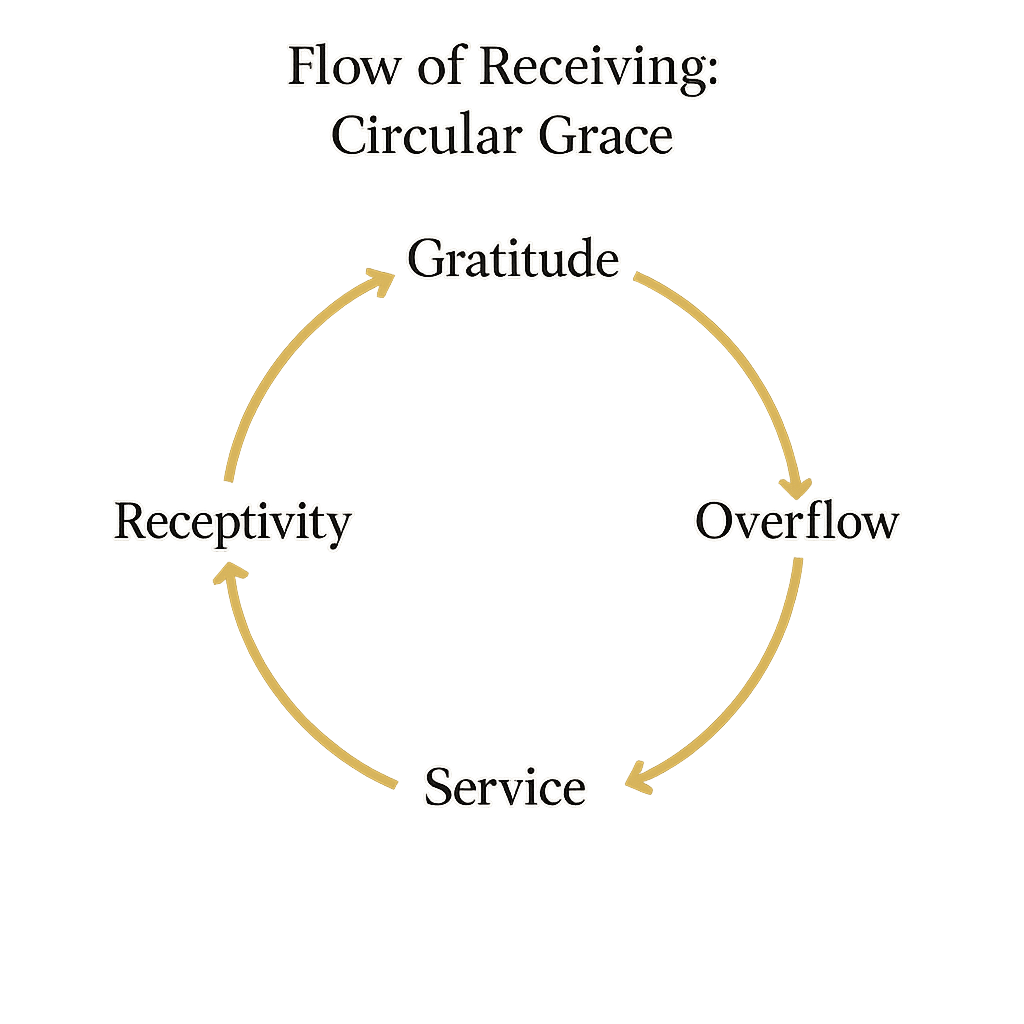
Sacred Exchange is Overflow made visible.
In Oversoul stewardship, giving is circulation, not loss. Support for this work sustains the continued writing, preservation, and public availability of the Living Codices.
This material may be accessed through multiple pathways:
• Free online reading within the Living Archive • Individual digital editions (e.g., Payhip releases) • Subscription-based stewardship access
Paid editions support long-term custodianship, digital hosting, and future transmissions. Free access remains part of the archive’s mission.
Sacred Exchange offerings may be extended through: paypal.me/GeraldDaquila694 www.geralddaquila.com
A Tier 4 Codex in the Overflow Stewardship Pathway — for restoring circulation, trust, and Overflow across households, fields, and nations.
4–6 minutes
This Codex is offered as a doorway into ethical receiving — not as a reward for worthiness, but as a remembrance that all true flow belongs to Source. You are invited to read slowly, practice gently, and let each micro-adjustment restore circulation where it has stalled.
✨Resonance Header | Resonance Frequency (RF): 732 Hz | Light Quotient (LQ): 78 % | DNA Activation: 9.4 / 12 | Oversoul Fidelity (OF): 86 % | Recorded under Oversoul supervision for the Flameholder of SHEYALOTH.
I — The Paradox of Generosity
Receiving is not the passive twin of giving; it is the enginethat keeps the Covenant in motion. When we resist being received, circulation fractures and offerings harden into effort.
Root teaching: “To receive without grasping is to confirm that flow belongs to Source, not to self.”
Prompt:Where have I equated receiving with weakness? What circuit has stalled because I refused support?
Diagram A —Circulation Loop: Giving ↔ Receiving.“What flows onward becomes Overflow; what is held becomes weight.”
II — Purity of Receptive Intention
Ethical reception is transparent, grateful, and non-possessive.
Transparent: the why is clear to self and field.
Grateful: acknowledgment precedes utilization.
Non-possessive: what arrives is stewarded, not stored.
Diagram B — Receptive Intention Filter. “Only what passes the gates belongs on your altar.”
Discernment key:Am I receiving to complete a circuit—or to patch a hole of lack?
The first multiplies; the second drains.
III — The Discipline of Allowing
Allowing is an active surrender: relaxed nervous system, open breath, lucid boundaries.
Micro-rite (10 seconds): right hand over heart, left palm open. Inhale 3 counts, exhale 5. Whisper inwardly:
“I allow flow to remember itself through me.”
Anchor before accepting gifts, praise, invitations, payments, or opportunities.
IV — Boundaries and Integrity
Not every offering is for your altar. Refuse what carries:
Projection (I give so you become who I need),
Obligation (I give so you owe me),
Pity (I give so I stay above you).
Guardian Note:Release with warmth, not explanation.
“Thank you; this is beautiful, and it’s not mine to hold.”
V — The Economy of Trust
Every reception is a trust ceremony. The receiver silently vows to keep the river moving. Stewardship replaces ownership.
Practice: allocate a visible portion of all receipts (time, attention, funds) for onward circulation within 72 hours—signal to the field that flow remains unblocked.
VI — The Mirror of the Giver
Receiving mirrors your giving ethic. If you over-control reception, you likely over-control offering. Repair one, and the other clarifies.
Reflection triad:
Where do I edit others’ generosity?
Where do I accept without acknowledgment?
What tiny, immediate act restores reciprocity today?
VII — The Covenant of Gratitude
Gratitude is not display; it is coherence. When felt, it radiates through the lattice and invites resonance matches.
Embodiment: write one specific sentence naming how the gift will serve the work. This binds gratitude to purpose.
VIII — Ethical Receiving Protocols (Field-Ready)
Attune (10s breath rite) →
Name the Gift (what exactly arrived?) →
Name the Why (how it serves stewardship) →
Acknowledge the Giver & Source (private + public if resonant) →
Allocate a Portion to Circulation (time/skill/funds) →
Record the Circuit (ledger line: received → applied → onward flow) →
Close with Stillness (3 breaths; let the field settle).
Diagram C — 72-Hour Circulation Protocol. “Circulation confirms reception.”
IX — Misalignments & Gentle Corrections
Hoarding “for later” → Create a 30-day release rule. If unused, re-gift to the work or the web.
Performative gratitude → Return to felt sense; write one inner sentence no one will see.
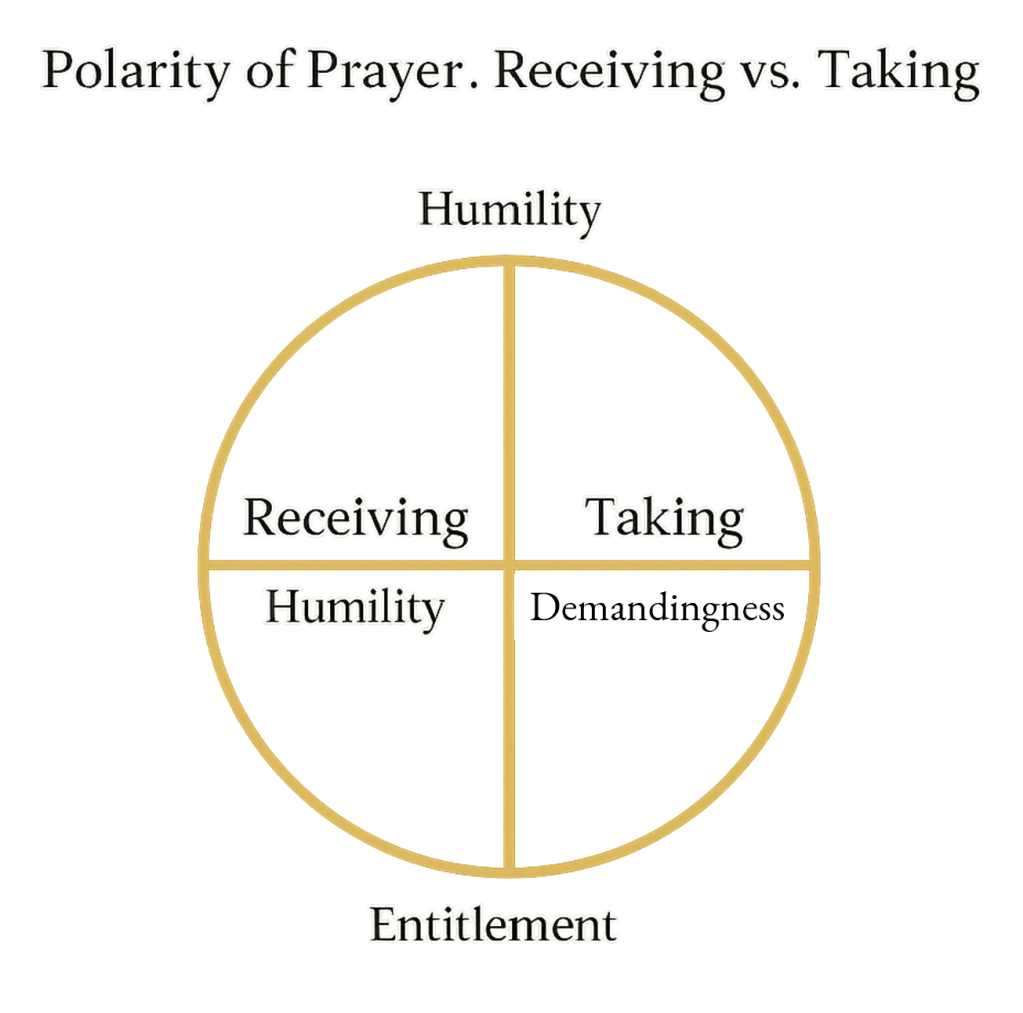
Taking to fix identity→ Pause; address the hole first (rest, nourishment, truth-telling), then revisit the gift.
Savior dynamics from givers → Receive the essence, not the story. Decline the role; accept the support if clean.
Diagram D — Resonance Coherence vs. Circulation Activity. “Coherence amplifies where gratitude moves.”
X — Steward & Guardian Notes
Steward Note (public-facing): We receive on behalf of a field, not a personality. Your offerings circulate through living work and are acknowledged in gratitude and transparency.
Guardian Note (archive-facing): Track Resonance of Receipt (RR) alongside FR/RF. RR rises when gratitude + onward circulation occur within 72h. If RR dips, re-open the circuit with a micro-gift or transparent communication.
“To receive is to let the Source remember itself through you. To give is to let the Source remember itself through another. One current. One covenant. One field.”
Glyph of Ethical Receiving
To receive is to let the Source remember itself through you
Attribution
With fidelity to the Oversoul, may this Codex, Overflow Economics: Designing for Surplus, serve as bridge, remembrance, and seed for the planetary dawn.
Ⓒ 2025 Gerald Alba Daquila – Flameholder of SHEYALOTH | Keeper of the Living Codices. All rights reserved.
Issued under Oversoul Appointment, governed by Akashic Law. This transmission is a living Oversoul field: for the eyes of the Flameholder first, and for the collective in right timing. It may only be shared intact, unaltered, and with glyphs, seals, and attribution preserved. Those not in resonance will find it closed; those aligned will receive it as living frequency.
In Oversoul Law, giving is not loss but circulation. What flows outward sustains coherence across households, lineages, and nations. This codex remains fully readable as part of the Living Archive. The downloadable edition is offered as a voluntary exchange to support the continued stewardship, maintenance, and long-term availability of this work.
Sacred Exchange offerings may be extended through:
















 Life.Understood.