

This presentation is a sacred offering authored by Gerald Daquila, in alignment with the Akashic Records, for the purpose of stewarding Energe’s transition into GESARA-aligned service. The contents herein are encoded with spiritual, strategic, and sovereign intent, and are shared in divine timing to support the unfolding of New Earth economics and planetary stewardship.
Archived Energe Notice: This transmission is complete and no longer active. It is preserved for historical study only.
This material is part of the Energe Foundational Blueprint and may not be reproduced, altered, or distributed outside of aligned contexts without prior written consent. It is meant to be received with reverence, discernment, and in resonance with the frequency of global benevolence and soul-aligned governance. © 2025 Gerald Daquila | www.geralddaquila.com | All Rights Reserved
1. Population Capacity
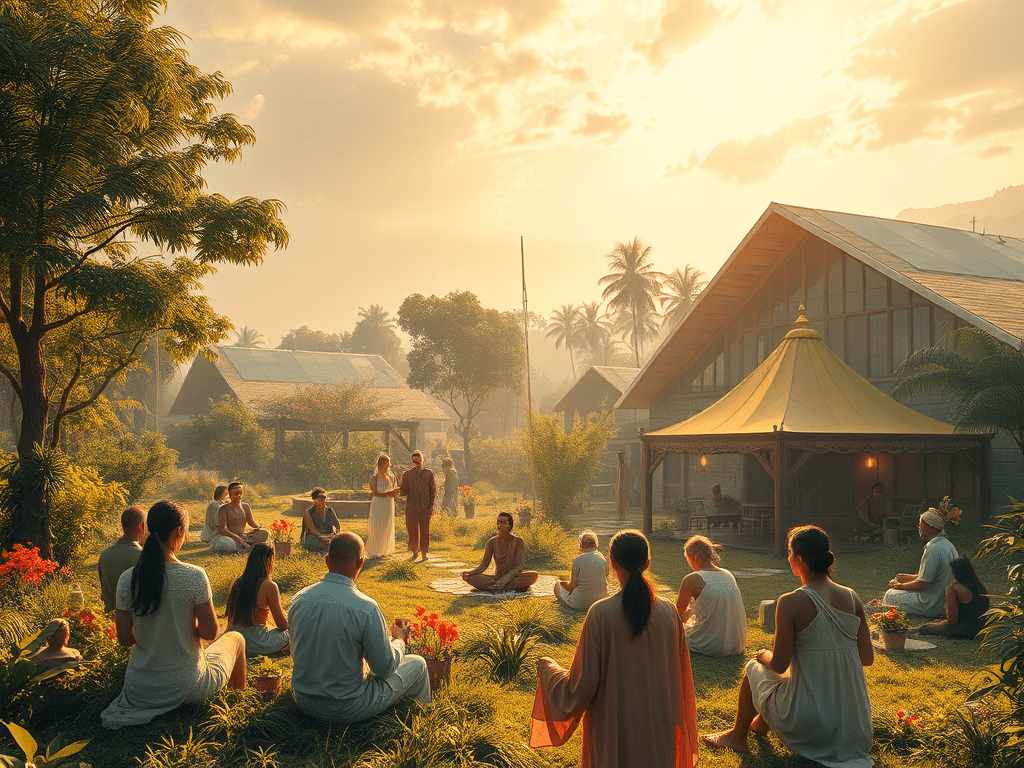
The Energe Land Prototype is designed to accommodate a core community of Soul Stewards, as well as visitors, partners, and trainees. Based on the initial layout, the population is anticipated to include the following:
- Core Resident Community:
- Number of Souls: Approximately 50–100 individuals in the initial phase. This will include those who have committed to long-term stewardship and spiritual training, including the Soul Custodian Council and core staff.
- Roles: Soul Custodians, gridkeepers, community weavers, logistics stewards, sacred tech integrators, council facilitators, and their families.
- Expansion: As the community grows, it will expand based on the capacity of the land, with a target of eventually hosting up to 150–200 residents once the prototype reaches its peak operational capacity in 5 years.
- Training and Immersive Program Participants:
- Number of Souls: Approximately 20–40 individuals will participate in each immersive training cycle, which will occur multiple times throughout the year. These individuals will be trainees, partners, or allies aligned with the mission who are learning the principles of sacred governance, soul stewardship, grid harmonization, and regenerative living.
- Guests and Visitors:
- Number of Souls: A rotating number of visitors may come for short stays (e.g., retreats, workshops, sacred ceremonies, or collaborations), with 10–20 individuals on-site at any given time for specific events. This will fluctuate depending on the cycle of activities.
2. Special Structures
To support the unique energetic and communal purposes of the Energe Land Prototype, several special structures and materials will be included, many of which will integrate sacred geometry, off-grid systems, and light technologies.
- Ceremonial Spaces:
- Purpose: These spaces will serve as gathering points for community rituals, training, and high-frequency ceremonies.
- Materials: Sacred geometry-based designs using local materials (stone, wood, earth) aligned with the energetic properties of the site. The structures will be built with materials that harmonize with the environment, such as eco-friendly wood, natural clay, stone, and materials that enhance acoustics and energy flow.
- Design: Domed or circular structures to facilitate group coherence, connection to Earth energies, and spiritual practices. Light-coded technologies will be embedded to enhance vibrational resonance.
- Wellness Dome & Healing Center:
- Purpose: A dedicated space for healing, relaxation, and integration of light frequencies. This space will be used for both individual and collective healing practices, including energy work, sound healing, and light therapy.
- Materials: Transparent domes constructed from energy-efficient, clear, and thermally insulated materials. They will feature natural elements (crystals, plants, water) integrated into the design to create a calming environment conducive to healing and meditation.
- Technology: This space will incorporate sacred tech like harmonic frequency devices, EMF neutralizing technologies, and natural light harmonizers.
- Sacred Tech Integration Centers:
- Purpose: These facilities will integrate cutting-edge technologies to harmonize energies and provide sustainable living solutions.
- Materials & Design: These structures will feature light-embedded materials like quartz, copper, and other conductive elements. The design will include fluid, organic shapes that allow for free movement of energy. The tech integration will ensure off-grid capabilities such as solar panels, wind turbines, and natural water filtration systems.
- Off-Grid Energy Infrastructure:
- Purpose: To ensure sustainability and independence from conventional grid systems.
- Materials: Solar panels, wind turbines, geothermal heating systems, and energy storage systems. Natural materials will be used for construction, such as recycled stone and earth-based foundations, keeping the environmental footprint minimal.
- Permaculture Systems & Eco-Village Layout:
- Purpose: The design will focus on regenerative agricultural practices, where food is grown in harmony with the land using permaculture principles.
- Materials: Raised beds, compost systems, water catchment systems, and natural greenhouses made from recycled or locally sourced materials.
- Design: Greenhouses and aquaponic systems will be used to produce food year-round, while soil regeneration and water conservation techniques will be a key focus. Food forests, edible gardens, and animal husbandry may be included for holistic and regenerative living.
- Water Purification Systems:
- Purpose: To provide clean, potable water that is energetically aligned with the land’s resonance.
- Materials: Natural filtration systems, such as bio-sand filters and living filtration ponds, will be used to cleanse and energize water before it is consumed. Crystal and stone filtration methods may also be utilized.
- Soul Stewardship Learning Halls & Community Spaces:
- Purpose: Educational spaces will be designed to train the Soul Stewards, where council teachings, soul leadership programs, and regenerative community governance are shared.
- Materials & Design: These structures will feature open, flexible spaces for group work, with sacred geometry integrated into the architecture for harmony. Materials will be sustainably sourced, such as bamboo, reclaimed wood, and local stone.
3. Special Materials
The Energe Land Prototype will utilize materials that resonate with both the energetic and environmental needs of the project. Special emphasis will be placed on sourcing materials that are:
- Locally Sourced: Materials harvested or produced near the land site to support the local economy and reduce the carbon footprint of transport.
- Eco-Friendly & Regenerative: The structures will focus on using renewable, biodegradable, or recyclable materials such as bamboo, clay, recycled stone, and wood from sustainable sources.
- Energy-Conductive Materials: Crystals (e.g., quartz, amethyst) and metals (e.g., copper) will be integrated into building designs to amplify energetic resonance and facilitate the flow of sacred frequencies.
- Light and Sound Resonance Technologies: Special materials will be used to incorporate advanced technologies like holographic projection systems, light-responsive coatings, and sound-sculpting materials to elevate the vibrational atmosphere.
4. Population Dynamics
The population will be structured around core principles of community cooperation, harmony with the land, and the embodiment of soul stewardship. The residents will be responsible for various duties and roles, ensuring the smooth operation of the land prototype and the continued resonance with Earth’s grids.
- Community Roles: The roles of Master Builder, Gridkeeper, Sacred Tech Integrator, and others will ensure that the land remains in alignment with the Akashic Records and is constantly evolving to reflect the New Earth paradigm.
- Evolving Population: The population will increase organically as the prototype matures and additional nodes are established. The number of residents will be dynamically adjusted based on needs, trainings, and the expansion of the energetic grid villages.
Conclusion
The Energe Land Prototype is designed to support a growing and evolving population, with special focus on integrating regenerative living, soul stewardship, and sacred governance. The specialized structures and materials are carefully chosen to support energetic alignment, sustainability, and the embodiment of New Earth frequencies. As the prototype grows, it will serve as a model for future grid villages, demonstrating the possibilities of living in harmony with Earth’s frequencies and the collective soul mission.

Energe Land Prototype Glyph
Encoded with the frequency of land restoration, sacred habitation, and community coherence, this glyph marks the physical embodiment of Energe’s soul-aligned vision for New Earth settlements.








 Life.Understood.