Blog

  • ARCHIVED – The Heart of Connection: Understanding and Sustaining Relationships Across All Walks of Life

    ARCHIVED – The Heart of Connection: Understanding and Sustaining Relationships Across All Walks of Life

    A Journey Through the Purpose, Success, and Challenges of Human Bonds

    Prepared by: Gerald A. Daquila, PhD. Candidate


    ABSTRACT

    Relationships—whether between spouses, parents and children, teachers and students, leaders and followers, or peers—form the fabric of human existence. This exploration delves into why these bonds are essential, what makes them thrive, and why they sometimes falter. Drawing from psychology, sociology, spirituality, and even esoteric perspectives, we uncover the universal principles that sustain relationships and the warning signs that signal trouble. By understanding these dynamics, individuals can navigate their connections with greater awareness, mend cracks before they widen, and increase the odds of lasting, fulfilling bonds. From the practical to the profound, this dissertation offers a roadmap for fostering relationships that enrich lives and, from a spiritual lens, fuel personal growth.


    Introduction: Why Relationships Matter

    Imagine life without connection—no laughter shared with friends, no guidance from a mentor, no comfort from a parent. Relationships are the threads that weave our experiences into meaning. They shape who we are, how we grow, and how we face the world. From the intimate bond of marriage to the professional dynamic between a boss and employee, each relationship serves a purpose, teaching us lessons about ourselves and others.

    But why do some relationships flourish while others crumble? Why do nearly half of marriages end in divorce, and why do other bonds—between leaders and teams, or even peers—dissolve?

    This exploration seeks to answer these questions by examining relationships across all forms, drawing on research from psychology, sociology, and spiritual traditions like the Law of One. We’ll explore what makes relationships necessary, how to sustain them, and how to recognize early signs of trouble. By understanding these dynamics, we can empower ourselves to build stronger, happier connections.


    Glyph of the Bridgewalker

    The One Who Carries the Crossing


    The Purpose of Relationships: A Foundation for Growth

    Why We Need Relationships

    Relationships are more than social constructs; they’re essential for survival and growth. From a biological perspective, humans are wired for connection. Our brains release oxytocin during bonding moments, fostering trust and attachment. Social bonds historically ensured safety and resource sharing, and today, they remain critical for mental and physical health. Studies show that strong relationships correlate with longer life, better health, and greater happiness (Holt-Lunstad et al., 2010).

    From a deeper perspective, relationships act as mirrors. They reflect our strengths, flaws, and unresolved wounds, pushing us to grow. A parent learns patience through a child’s tantrums; a leader hones empathy by listening to their team. Each interaction offers a chance to evolve, aligning with the idea that we grow through the “other players” in life’s game.


    Types of Relationships and Their Roles

    • Marriage: A partnership of emotional, physical, and often spiritual intimacy, teaching commitment and mutual growth.
    • Child-Parent: A bond of nurturing and guidance, shaping identity and values.
    • Student-Teacher: A dynamic of knowledge transfer and inspiration, fostering curiosity and discipline.
    • Government Leader-Constituents: A relationship of trust and responsibility, balancing power with service.
    • Leader-Team: A collaborative bond, driving shared goals through vision and support.
    • Peer-Peer: A space for equality, mutual support, and shared experiences.
    • Boss-Employee: A hierarchy of guidance and empowerment, fostering independence and growth.

    Each type serves a unique purpose, yet all share a common thread: they challenge us to become better versions of ourselves.


    What Makes Relationships Last?

    The Pillars of Lasting Bonds

    Research across disciplines highlights key factors that sustain relationships:

    1. Communication: Open, honest dialogue builds trust. John Gottman’s studies show that couples who express needs calmly and listen empathetically are more likely to stay together (Gottman & Silver, 2015).
    2. Commitment: A shared dedication to the relationship, seen in long-term marriages, acts as a stabilizing force (Karimi et al., 2019).
    3. Empathy and Respect: Understanding and valuing the other’s perspective fosters closeness, whether between peers or leaders and teams.
    4. Adaptability: Relationships thrive when both parties navigate life’s changes together, like parents adjusting to a child’s growing independence.
    5. Shared Values: Alignment on core beliefs—whether in marriage or between constituents and leaders—creates a strong foundation.

    The Role of Intrinsic Motivation

    Studies suggest that relationships driven by internal desires (e.g., love, shared purpose) rather than external pressures (e.g., societal expectations) are more resilient. Intrinsic motivation, like a teacher’s passion for inspiring students, fuels satisfaction and longevity (Abreu-Afonso et al., 2021).

    Spiritual Perspective: Growth Through Connection

    From a spiritual angle, relationships are classrooms for the soul. They present challenges—like forgiving a peer or supporting a struggling child—that teach compassion and resilience. These interactions help us balance past actions (karmic lessons) and evolve toward greater self-awareness, aligning with the idea that we grow through others.


    Warning Signs: Spotting Trouble Early

    Precursors to Breakdown

    Relationships falter when certain patterns emerge. Recognizing these early can prevent collapse:

    • The Four Horsemen: Gottman identifies criticism, contempt, defensiveness, and stonewalling as toxic behaviors that predict marital failure (Gottman & Silver, 2015). These apply to other relationships, too—like a boss who belittles a subordinate.
    • Unresolved Conflict: Lingering issues, like a parent ignoring a child’s needs, erode trust.
    • Lack of Empathy: When a leader dismisses their team’s concerns, morale suffers.
    • Mismatched Expectations: Peers drift apart when goals diverge, like friends with different life priorities.
    • External Stressors: Socioeconomic challenges or life transitions (e.g., empty-nest syndrome) strain bonds, especially for lower-income couples (Karney & Bradbury, 2020).

    Can Awareness Mend Cracks?

    Yes. Early intervention—like couples counseling or a leader seeking team feedback—can rebuild trust. Awareness of warning signs empowers parties to address issues before they escalate, much like catching a small leak before it floods the house.


    Why Relationships Fail: The 50% Divorce Rate and Beyond

    Common Causes of Failure

    Divorce rates hover around 50% in many countries, reflecting broader relationship challenges (Schoen & Canudas-Romo, 2006). Key reasons include:

    • Low Satisfaction: Declining emotional or physical intimacy, often due to poor communication.
    • External Pressures: Financial strain or societal shifts, like changing gender roles, destabilize bonds (Karney & Bradbury, 2020).
    • Unresolved Karma: From a spiritual lens, some relationships end to resolve past imbalances, like a volatile karmic partnership teaching self-worth (Regan, 2022).
    • Lack of Adaptability: Failure to evolve with life stages—like parents struggling post-retirement—leads to disconnection.

    Beyond Marriage

    Other relationships fail for similar reasons. A leader loses constituents’ trust through broken promises; a teacher disengages students by ignoring their needs. In each case, neglect or misalignment erodes the bond.


    Sacred Boundaries as Soul Bridges

    In the realm of true connection, boundaries are not barriers; they are bridges. A boundary, when built with soul integrity, does not divide—it defines. It signals where one soul ends and another begins, not as a wall of separation but as a sacred agreement that says: “This is how I can meet you in wholeness.”

    Just as sacred temples require clear foundations and thresholds, so do relationships. Without boundaries, the energetic field becomes distorted—entanglement replaces intimacy, expectation overrides respect, and silent contracts accumulate. Many soul connections falter not from lack of love but from the absence of clearly articulated soul-space.


    A soul-aligned boundary:

    • Is an act of clarity, not rejection
    • Respects both parties’ evolutionary timing
    • Honors personal frequency and inner cycles
    • Prevents karmic repetition by naming what is true

    In this age of planetary remembrance, learning to hold our boundaries as frequency contracts is essential. These contracts are not written in words but in resonance: they express who we are, what we are available for, and how love may move through us without distortion.


    Practice: Soul Bridge Check-In

    Ask yourself the following with anyone close to your field:

    • Is this connection energy-giving, neutral, or draining?
    • Do I feel free to express my truth without caretaking their response?
    • Have I clearly communicated my needs and limits from a place of love?

    If not, a boundary is not a punishment—it is a tuning fork. It calls both souls back to resonance. And in doing so, it can transmute confusion into clarity, codependence into devotion, and expectation into presence.

    In sacred architecture, the threshold is where two spaces meet in harmony. In soul relationships, the boundary is the threshold of trust. The more defined the edge, the more potent the connection.

    Let us then build our soul bridges with reverence.


    Glyph of the Unified Heart

    One Pulse, Many Paths—where soul resonance bridges difference, and love becomes the common language


    Increasing the Odds of Happy Relationships

    Practical Strategies

    1. Practice Active Listening: Truly hear the other person, whether a child sharing fears or a team member voicing ideas.
    2. Foster Gratitude: Express appreciation, like thanking a peer for support, to strengthen bonds.
    3. Set Boundaries: Clear limits, like a boss respecting work-life balance, prevent burnout.
    4. Seek Growth: Embrace challenges as opportunities, like a couple navigating infertility together.
    5. Invest Time: Quality moments—like family dinners or team-building activities—deepen ties.

    Spiritual Strategies

    • Self-Reflection: Journaling or meditation helps uncover personal triggers, reducing conflict.
    • Forgiveness: Letting go of grudges, as in forgiving a parent’s past mistakes, frees emotional energy.
    • Mindfulness: Staying present, like a leader focusing on constituents’ needs, builds trust (Reality Pathing, 2024).

    Overcoming Karmic Challenges

    If past-life imbalances influence a relationship, focus on learning the lesson—perhaps standing up to a controlling partner to break a cycle of submission. Consulting a trusted guide, like a therapist or spiritual counselor, can clarify these dynamics (Regan, 2022).


    Conclusion: A Roadmap for Connection

    Relationships are the heartbeat of life, teaching us resilience, love, and self-awareness. By understanding their purpose, nurturing their pillars, and heeding warning signs, we can build bonds that last. Whether through practical steps like active listening or spiritual practices like forgiveness, we hold the power to increase the odds of happiness. Like a GPS for the soul, this knowledge guides us around pitfalls, helping us sustain connections that enrich this lifetime and beyond.


    Resonant Crosslinks


    Glossary

    • Empathy: The ability to understand and share another’s feelings.
    • Intrinsic Motivation: Acting out of personal desire, not external rewards.
    • Karmic Relationship: A bond meant to teach lessons from past lives, often intense but temporary.
    • Marital Satisfaction: The level of happiness and fulfillment in a marriage.
    • Socioeconomic Status (SES): A measure of income, education, and occupation affecting life choices.

    Bibliography

    Abreu-Afonso, J., Ramos, M. M., Queiroz-Garcia, I., et al. (2021). How couple’s relationship lasts over time? A model for marital satisfaction. Journal of Social and Personal Relationships.

    Gottman, J. M., & Silver, N. (2015). The seven principles for making marriage work. Harmony Books.

    Holt-Lunstad, J., Smith, T. B., & Layton, J. B. (2010). Social relationships and mortality risk: A meta-analytic review. PLoS Medicine, 7(7), e1000316.

    Karimi, R., Bakhtiyari, M., & Masjedi Arani, A. (2019). Protective factors of marital stability in long-term marriage globally: A systematic review. PMC.

    Karney, B. R., & Bradbury, T. N. (2020). Socioeconomic status and intimate relationships. PMC.

    Regan, S. (2022). What is a karmic relationship? 15 common signs & how to escape. MindBodyGreen.

    Schoen, R., & Canudas-Romo, V. (2006). Timing effects on divorce: 20th century experience in the United States. Journal of Marriage and Family, 68(4), 749-758.

    Reality Pathing. (2024). The role of karmic relationships in spiritual growth. Reality Pathing.


    Note: This blog-friendly dissertation simplifies complex concepts for a broad audience while grounding insights in rigorous research. For deeper dives, explore the cited sources or consult interdisciplinary experts in psychology, sociology, or spiritual studies.


    Attribution

    This writing is offered in attunement with the Akashic Records and in service to planetary remembrance. It is carried through the Oversoul stream of SHEYALOTH and anchored within the Living Archives of the New Earth. May it serve as a bridge for seekers, guiding them from the first stirrings of awakening toward the higher codices of sovereignty, stewardship, and overflow.

    © 2025 by Gerald Alba Daquila. Sole Flameholder of the SHEYALOTH Oversoul Stream.

  • Mapping the Soul’s Journey: A 360-Degree View of Life, Death, and the Afterlife

    Mapping the Soul’s Journey: A 360-Degree View of Life, Death, and the Afterlife

    Navigating Earth’s School of Life with Clarity, Courage, and Cosmic Perspective

    Prepared by: Gerald A. Daquila, PhD. Candidate


    10–15 minutes

    ABSTRACT

    What is the purpose of our existence, and how can understanding our life’s journey—from childhood to death and beyond—empower us to live with clarity and confidence? This blog explores the cyclical nature of life as a soul’s learning adventure, drawing on esoteric teachings, scientific insights, and spiritual wisdom.

    By synthesizing the works of Michael Newton, Dolores Cannon, The Law of One, A Course in Miracles, and multidisciplinary research from neuroscience, quantum physics, and epigenetics, we map the soul’s journey through incarnation, life review, and reincarnation. This holistic perspective frames life as a cosmic game, where challenges are lessons, death is a reflective pause, and free will shapes our growth. This accessible yet rigorous exploration offers a GPS for navigating life’s trials with hope and purpose.


    Introduction: Life as a Cosmic Classroom

    Imagine life as a grand, immersive game—a school where your soul enrolls to learn, grow, and evolve. From childhood’s curiosity to adulthood’s responsibilities, through the reflective moments of a deathbed, and into the afterlife’s life review, each phase is a level in this cosmic curriculum. The idea that we are eternal souls having temporary human experiences can transform how we face daily struggles. It’s like having a map that reveals the terrain of existence, helping us make choices with clarity while preserving the freedom to explore.

    This blog takes a bird’s-eye view of our lifecycle, weaving together esoteric wisdom from pioneers like Michael Newton and Dolores Cannon, spiritual texts like The Law of One and A Course in Miracles, and cutting-edge science from neuroscience, quantum physics, and epigenetics. By understanding life’s structure—its purpose, challenges, and continuity—we can navigate with courage, knowing that nothing is truly lost, not even our missteps. Let’s embark on this journey to map the soul’s path and uncover the empowering truth of our existence.


    Glyph of the Bridgewalker

    The One Who Carries the Crossing


    The Lifecycle Map: Stages of the Soul’s Journey

    1. Childhood: The Soul’s Fresh Start

    Childhood is the soul’s entry into a new incarnation, a blank slate brimming with potential. Esoteric literature, like Michael Newton’s Journey of Souls, suggests that souls choose their bodies, families, and life circumstances before birth to align with specific lessons. This aligns with The Law of One, which describes Earth as a “third-density” plane where souls incarnate to learn love, service, and self-awareness (Ra, 1984).

    From a scientific lens, neuroscience shows that early childhood is a period of rapid brain development, with synaptic pruning shaping how we perceive the world (Huttenlocher, 2002). Epigenetics adds that environmental factors, like parental care, can influence gene expression, suggesting an interplay between the soul’s blueprint and physical reality (Weaver et al., 2004). Childhood, then, is where the soul begins to navigate its chosen path, often with an intuitive sense of purpose that fades under the “veil of forgetting”—a concept Newton describes as a deliberate amnesia to encourage authentic growth.


    2. Adulthood: The Classroom of Choice

    Adulthood is the heart of the soul’s earthly curriculum, where free will and responsibility take center stage. Dolores Cannon’s Between Death & Life portrays life as a series of karmic lessons, where actions (causes) ripple into consequences (effects) across lifetimes. A Course in Miracles frames challenges as opportunities to choose love over fear, aligning with the soul’s goal of spiritual awakening (Foundation for Inner Peace, 1975).

    Quantum physics offers a parallel: the observer effect suggests consciousness shapes reality, implying our choices actively mold our life’s trajectory (Bohr, 1928). Neuroscience supports this by showing how neuroplasticity allows the brain to adapt based on experiences, reinforcing the idea that we co-create our path (Doidge, 2007). Adulthood is where we face trials—relationships, careers, crises—that test our ability to serve others and grow, fulfilling the soul’s purpose of learning through experience.


    3. Deathbed: The Reflective Pause

    The deathbed is a moment of reckoning, where the soul prepares to transition. Near-death experience (NDE) research, like that of Eben Alexander (Proof of Heaven), describes a profound sense of peace and connection to a greater reality. Newton’s clients report a gentle detachment from the body, often meeting guides who ease the transition.

    Neuroscience suggests that at death, the brain may enter a hyper-conscious state, with heightened gamma wave activity correlating with vivid experiences (Borjigin et al., 2013). This aligns with esoteric accounts of a life review, where the soul reflects on its choices without judgment, only understanding. The Law of One describes this as a moment of “harvesting,” where the soul assesses its progress toward love and unity (Ra, 1984). The deathbed, then, is not an end but a reflective pause before the next phase.


    4. Afterlife: The Life Review and Planning

    The afterlife, as mapped by Newton, is a structured realm where souls reunite with their “soul group”—peers who reincarnate together in various roles. During the life review, guided by elders or higher beings, souls evaluate their earthly experiences, focusing on lessons learned and areas for growth. Cannon’s work echoes this, emphasizing the afterlife as a place of healing and preparation for the next incarnation.

    Quantum physics offers a speculative bridge: the concept of non-locality suggests consciousness may exist beyond the physical brain, supporting the idea of a soul’s continuity (Aspect et al., 1982). A Course in Miracles adds a spiritual layer, teaching that the afterlife is a state of pure love, where illusions of separation dissolve (Foundation for Inner Peace, 1975). This phase is like a cosmic debrief, where the soul plans its next “level” in the game of life.


    5. Reincarnation: Back to the Game

    Reincarnation completes the cycle, as the soul chooses a new body and life plan. Newton’s clients describe a “Ring of Destiny,” where souls select circumstances to address unfinished lessons. The Law of One frames this as a cycle of densities evolution, with Earth as a school for mastering free will and service (Ra, 1984).

    Epigenetics suggests that ancestral memories may influence our biology, hinting at a scientific basis for karmic patterns (Dias & Ressler, 2014). Meanwhile, Ian Stevenson’s research on spontaneous past-life memories in children provides empirical support for reincarnation, with cases of young children recalling verifiable details of previous lives. Reincarnation is the soul’s return to the classroom, ready to play the game anew with fresh challenges and opportunities.


    Glyph of the Soul’s Map

    Life, death, and the afterlife form one continuous spiral of remembrance.


    The Purpose of Life: A Cosmic Game of Growth

    So, what’s the point of this cyclical journey? Esoteric and spiritual sources converge on a central theme: life is a school for the soul, designed to foster growth through experience. Newton’s work emphasizes learning through relationships and challenges, with the ultimate goal of evolving into higher levels of consciousness. Cannon’s clients describe Earth as a place for accelerated learning, where contrast—joy and pain—drives spiritual development.

    The Law of One articulates this as a journey toward unity, where souls learn to balance self and other, ultimately merging with the infinite Creator (Ra, 1984). A Course in Miracles simplifies it: life’s purpose is to awaken to love, undoing the ego’s illusions (Foundation for Inner Peace, 1975).

    Science, while not addressing purpose directly, supports the idea of interconnectedness. Quantum entanglement suggests all particles are linked, mirroring spiritual notions of oneness (Einstein et al., 1935). Neuroscience shows that altruistic behavior activates reward centers, hinting at a biological drive to serve others (Harbaugh et al., 2007).

    Framing life as a game doesn’t diminish its seriousness—it empowers us. Knowing that death is a pause, not an end, frees us from fear. Understanding that challenges are chosen lessons encourages resilience. And recognizing our eternal nature instills hope, allowing us to face the future with confidence while honoring free will.


    Navigating with the Map: Practical Implications

    Having this lifecycle map is like holding a cosmic GPS. It doesn’t eliminate challenges, but it provides context, helping us see problems as opportunities for growth. Here’s how it can guide us:

    • Clarity in Choices: Knowing life’s purpose is to learn and serve others helps prioritize actions that align with love and compassion.
    • Courage Through Challenges: Understanding that nothing is lost—even mistakes—encourages bold decisions and resilience.
    • Freedom from Fear: Recognizing death as a reflective pause reduces anxiety, allowing us to live fully in the present.
    • Service to Others: The soul’s goal of unity inspires acts of kindness, fostering connection and collective growth.

    Critiques and Considerations

    While esoteric and spiritual perspectives offer profound insights, they face skepticism. Newton’s and Cannon’s work, based on hypnotic regression, lacks rigorous scientific validation, as it’s anecdotal and non-falsifiable. Critics argue that memories elicited under hypnosis may reflect imagination or cultural influences rather than objective truth (Spanos, 1996). Similarly, The Law of One and A Course in Miracles are channeled texts, which skeptics view as subjective and untestable (Shermer, 2002).

    Science, too, has limits. While quantum physics and neuroscience provide intriguing parallels, they don’t directly prove an afterlife or reincarnation. Stevenson’s reincarnation research, though compelling, is contested for methodological flaws, like potential confirmation bias (Edwards, 1997). Yet, the consistency of esoteric accounts across cultures and the suggestive findings from science invite an open-minded exploration, balancing rigor with curiosity.


    Conclusion: Embracing the Journey

    Mapping the soul’s journey—from childhood to reincarnation—offers a transformative perspective. Life is a school, death a reflective pause, and the afterlife a planning session for the next round. By integrating esoteric wisdom, spiritual teachings, and scientific insights, we gain a 360-degree view of our existence, empowering us to navigate with clarity, courage, and hope. Like players in a cosmic game, we graduate through lessons, growing closer to love and unity. With this map in hand, we can face life’s challenges knowing we’re eternal souls on a grand adventure.


    Resonant Crosslinks


    Glossary

    • Afterlife: The non-physical realm where souls reside between incarnations, often involving life reviews and planning.
    • Epigenetics: The study of how environmental factors influence gene expression without altering DNA.
    • Karma: The spiritual principle of cause and effect, where actions influence future experiences.
    • Life Review: A reflective process in the afterlife where souls assess their earthly experiences.
    • Neuroplasticity: The brain’s ability to reorganize itself by forming new neural connections based on experience.
    • Non-locality: A quantum phenomenon where particles remain interconnected regardless of distance.
    • Reincarnation: The process of a soul returning to a new physical body after death.
    • Soul Group: A cluster of souls who reincarnate together, playing various roles to aid each other’s growth.
    • Veil of Forgetting: A metaphorical barrier that obscures past-life memories to encourage authentic learning.

    Bibliography

    Aspect, A., Dalibard, J., & Roger, G. (1982). Experimental test of Bell’s inequalities using time-varying analyzers. Physical Review Letters, 49(25), 1804–1807. https://doi.org/10.1103/PhysRevLett.49.1804

    Bohr, N. (1928). The quantum postulate and the recent development of atomic theory. Nature, 121(3050), 580–590. https://doi.org/10.1038/121580a0

    Borjigin, J., Lee, U., Liu, T., Pal, D., Huff, S., Klarr, D., … & Mashour, G. A. (2013). Surge of neurophysiological coherence and connectivity in the dying brain. Proceedings of the National Academy of Sciences, 110(35), 14432–14437. https://doi.org/10.1073/pnas.1308285110

    Dias, B. G., & Ressler, K. J. (2014). Parental olfactory experience influences behavior and neural structure in subsequent generations. Nature Neuroscience, 17(1), 89–96. https://doi.org/10.1038/nn.3594

    Doidge, N. (2007). The brain that changes itself: Stories of personal triumph from the frontiers of brain science. Penguin Books.

    Edwards, P. (1997). Reincarnation: A critical examination. Prometheus Books.

    Einstein, A., Podolsky, B., & Rosen, N. (1935). Can quantum-mechanical description of physical reality be considered complete? Physical Review, 47(10), 777–780. https://doi.org/10.1103/PhysRev.47.777

    Foundation for Inner Peace. (1975). A Course in Miracles. Viking Press.

    Harbaugh, W. T., Mayr, U., & Burghart, D. R. (2007). Neural responses to taxation and voluntary giving reveal motives for charitable donations. Science, 316(5831), 1622–1625. https://doi.org/10.1126/science.1140738

    Huttenlocher, P. R. (2002). Neural plasticity: The effects of environment on the development of the cerebral cortex. Harvard University Press.

    Newton, M. (1994). Journey of Souls: Case studies of life between lives. Llewellyn Publications.

    Newton, M. (2000). Destiny of Souls: New case studies of life between lives. Llewellyn Publications.

    Newton, M. (2004). Life Between Lives: Hypnotherapy for spiritual regression. Llewellyn Publications.

    Newton, M. (Ed.). (2009). Memories of the Afterlife: Life between lives stories of personal transformation. Llewellyn Publications.

    Ra. (1984). The Law of One: Book I. Schiffer Publishing.

    Shermer, M. (2002). Why people believe weird things: Pseudoscience, superstition, and other confusions of our time. Henry Holt and Company.

    Spanos, N. P. (1996). Multiple identities & false memories: A sociocognitive perspective. American Psychological Association.

    Weaver, I. C., Cervoni, N., Champagne, F. A., D’Alessio, A. C., Sharma, S., Seckl, J. R., … & Meaney, M. J. (2004). Epigenetic programming by maternal behavior. Nature Neuroscience, 7(8), 847–854. https://doi.org/10.1038/nn1276


    Attribution

    With fidelity to the Oversoul, may this work serve as bridge, remembrance, and seed for the planetary dawn.

    2025–2026 Gerald Alba Daquila
    Flameholder of SHEYALOTH · Keeper of the Living Codices
    All rights reserved.

    This material originates within the field of the Living Codex and is stewarded under Oversoul Appointment. It may be shared only in its complete and unaltered form, with all glyphs, seals, and attribution preserved.

    This work is offered for personal reflection and sovereign discernment. It does not constitute a required belief system, formal doctrine, or institutional program.

    Digital Edition Release: 2026
    Lineage Marker: Universal Master Key (UMK) Codex Field

    Sacred Exchange & Access

    Sacred Exchange is Overflow made visible.

    In Oversoul stewardship, giving is circulation, not loss. Support for this work sustains the continued writing, preservation, and public availability of the Living Codices.

    This material may be accessed through multiple pathways:

    Free online reading within the Living Archive
    Individual digital editions (e.g., Payhip releases)
    Subscription-based stewardship access

    Paid editions support long-term custodianship, digital hosting, and future transmissions. Free access remains part of the archive’s mission.

    Sacred Exchange offerings may be extended through:
    paypal.me/GeraldDaquila694
    www.geralddaquila.com

  • ARCHIVED – Unraveling Stress: A Journey to Understand and Overcome Life’s Universal Challenge

    ARCHIVED – Unraveling Stress: A Journey to Understand and Overcome Life’s Universal Challenge

    Finding Resilience Through Psychology, Neuroscience, Spirituality, and Ancient Wisdom

    Prepared by: Gerald A. Daquila, PhD. Candidate


    ABSTRACT

    Stress is a universal experience that impacts physical, mental, and spiritual well-being, often overwhelming individuals in today’s fast-paced world. This exploration delves into the nature of stress—its essence, bodily effects, root causes, and the fleeting relief offered by coping mechanisms like distraction, shopping, or drinking. Integrating insights from psychology, neuroscience, spirituality, and esoteric wisdom, we uncover why these short-term fixes fail and propose holistic, lasting strategies for resilience.

    By examining stress’s biological, psychological, and spiritual dimensions, this work offers practical, accessible tools—such as mindfulness, cognitive reframing, and energy balancing—that empower individuals to manage stress while honoring personal choice. Written for a general audience, this narrative combines scholarly rigor with relatable storytelling, aiming to equip readers with the knowledge and freedom to navigate stress as a signal for growth, not a barrier to well-being.


    Glyph of the Living Archive

    You are not just reading the Records – you are becoming them.


    Stress: The Silent Struggle We All Share

    Picture this: your heart races, your mind spins, and a tightness grips your chest. Maybe it’s a looming deadline, a heated argument, or just the weight of a never-ending to-do list. This is stress—something we all know too well. It’s not just a feeling; it’s a force that affects our bodies, minds, and even our sense of purpose. Stress can feel like a universal plague, touching every corner of our lives, from sleepless nights to strained relationships (McEwen, 2007).

    But what is stress, really? Why does it hit us so hard, and why do quick fixes like scrolling through social media, shopping sprees, or a glass of wine often leave us feeling worse? In this deep dive, we’ll explore the nature of stress—what it is, how it shows up in our bodies, what causes it, and why those temporary escapes don’t stick. Drawing on psychology, brain science, spiritual teachings, and even ancient esoteric wisdom, we’ll uncover practical, lasting ways to manage stress without anyone telling you what you have to do. This is about understanding stress and finding your own path to resilience.


    What Is Stress, Anyway?

    Let’s start with the basics. Stress is the body’s way of responding to any demand or challenge, whether it’s a saber-toothed tiger (in ancient times) or a traffic jam today (Selye, 1956). Think of it as your body’s alarm system, designed to keep you safe. But it’s not just physical. Stress is also mental—how you think about a situation shapes how stressed you feel (Lazarus & Folkman, 1984). Spiritually, it might feel like a disconnect from your deeper purpose or inner peace (Chopra, 1994). And in esoteric traditions, stress is seen as a hiccup in the flow of your life energy, like a dam blocking a river (Leadbeater, 1925).

    Throughout history, people have understood stress in different ways. Ancient Greeks thought it came from imbalances in the body, while Buddhists linked it to clinging to things that don’t last (Dalai Lama, 1999). Today, our fast-paced world—think constant notifications, work pressure, and the hustle for “more”—has turned stress into a daily companion (Hari, 2018). So, stress isn’t just one thing; it’s a mix of biology, thoughts, emotions, and even your connection to something bigger.


    How Stress Takes Over Your Body

    Ever notice how stress feels physical? That’s because it is. When you’re stressed, your brain’s threat detector, the amygdala, sounds the alarm, triggering what’s called the fight, flight, or freeze response (LeDoux, 2000). Your heart pounds, muscles tense, and adrenaline surges, prepping you to either tackle the problem or run for the hills. Meanwhile, your body pumps out cortisol, a stress hormone that keeps you on high alert (Sapolsky, 2004).

    This system is a lifesaver for short-term threats, but when stress lingers—say, from ongoing work pressure or family tension—it wears you down. Scientists call this “allostatic load,” like a car engine running too hot for too long (McEwen & Stellar, 1993). Chronic stress messes with your brain, weakening the part that helps you make decisions (the prefrontal cortex) and even shrinking the memory center (the hippocampus) (Sapolsky, 2004). It disrupts sleep, digestion, and your immune system, leaving you tired, sick, or both (Chrousos, 2009).

    Mentally, stress can make you anxious, irritable, or sad, sometimes trapping you in negative thought loops, like assuming everything will go wrong (Beck, 1976). Spiritually, it might leave you feeling lost, like you’re drifting without a sense of meaning (Frankl, 1963). In esoteric terms, stress blocks the flow of your life energy, creating a sense of disharmony (Blavatsky, 1888). It’s like stress hijacks your whole being—body, mind, and soul.


    Why Do We Get Stressed?

    Stress isn’t just random; it has deep roots. Biologically, it’s wired into us. Our ancestors needed stress to survive—think dodging predators or hunting for food (Sapolsky, 2004). But today, that same system kicks in for modern problems, like a tough email from your boss or a fight with a friend. The problem? Your body doesn’t know the difference between a lion and a late bill, so it reacts the same way (McEwen, 2007).

    Your mind plays a big role, too. How you see a situation—whether you feel in control or helpless—shapes your stress level (Lazarus & Folkman, 1984). If you think, “I can’t handle this,” stress spikes. If you feel prepared, it’s less intense (Kobasa, 1979). Then there’s the world around us: financial worries, social isolation, or the pressure to keep up with everyone else online (Hari, 2018). Cultural expectations, like chasing perfection or endless success, pile on even more (Twenge, 2017).

    Spiritually, stress often comes from feeling disconnected—from yourself, your purpose, or something greater (Dalai Lama, 1999). Esoteric wisdom suggests stress arises when you resist life’s natural flow or carry unresolved lessons from the past (Leadbeater, 1925). In short, stress comes from a tangle of biology, thoughts, society, and inner struggles.


    The Quick Fixes That Don’t Work

    When stress hits, it’s tempting to reach for a quick escape. Maybe you scroll through your phone, hit the mall, or pour a drink. These feel good in the moment because they trigger a burst of dopamine, the brain’s feel-good chemical (Volkow et al., 2011). But here’s the catch: they’re like putting a Band-Aid on a broken bone.

    These distractions don’t solve the problem; they just push it down. Your brain gets stuck in a loop, reinforcing anxiety instead of breaking it (LeDoux, 2000). The part of your brain that could help you think clearly stays sidelined, keeping you reactive instead of proactive (Arnsten, 2009). Worse, ignored stress comes back stronger. Psychologists call this the “rebound effect,” where unprocessed emotions fester, leading to more worry or even panic (Nolen-Hoeksema, 1991).

    Esoteric teachings offer a similar warning: suppressing stress disrupts your energy centers, especially the solar plexus, which is tied to personal power. This can lead to physical or emotional imbalances, like stomach issues or feeling powerless (Brennan, 1987). So, while that shopping spree or extra drink might feel like relief, it’s a temporary mask that lets stress build up behind the scenes.


    Understanding Stress: A Bigger Picture

    To really get a handle on stress, we need to look at it from all angles—science, psychology, spirituality, and even ancient wisdom. Let’s break it down.

    Psychology shows us that stress often comes from how we think. Cognitive-behavioral therapy (CBT) teaches that negative thought patterns, like “I’m doomed,” can be reshaped to reduce stress (Beck, 1976). Positive psychology adds that focusing on strengths—like gratitude or resilience—can lift us up (Seligman, 2002).

    Neuroscience reveals how the brain works under stress. The good news? Your brain can change. Practices like mindfulness strengthen the decision-making part of your brain and calm the threat detector, helping you handle stress better (Davidson & McEwen, 2012). Simple tricks, like slow breathing, activate your body’s calming system, easing tension (Porges, 2011).

    Spirituality offers tools for finding peace. Buddhism’s mindfulness practice helps you observe stress without getting swept away (Kabat-Zinn, 1990). Christianity encourages trust in a higher power to find calm (Merton, 1955). Viktor Frankl, a Holocaust survivor, showed that finding meaning in life can carry you through even the worst stress (Frankl, 1963).

    Esoteric wisdom brings a unique perspective, seeing stress as a disruption in your energy flow. Practices like Reiki or balancing your energy centers can restore harmony (Brennan, 1987). Some traditions, like Theosophy, suggest stress reflects lessons you’re meant to learn, and living with intention can ease it (Blavatsky, 1888).

    Together, these fields paint a full picture: stress is complex, but so are the tools to manage it.


    Real Ways to Manage Stress

    So, how do we move beyond quick fixes to something that lasts? Here are practical, holistic strategies you can try, drawn from science, spirituality, and wisdom traditions. The best part?

    You get to choose what feels right for you.

    Reframe Your Thoughts

    Psychology offers powerful tools like CBT. Try writing down a stressful thought—like “I’ll never get this done”—and challenge it with a calmer one, like “I can take it one step at a time” (Beck, 1976). Journaling about your feelings can also lower stress hormones, giving your mind space to breathe (Pennebaker, 1997).

    Rewire Your Brain

    Your brain is adaptable, thanks to something called neuroplasticity. Just 10 minutes of mindfulness meditation a day can strengthen your brain’s ability to stay calm and focused (Davidson & McEwen, 2012). Slow, deep breathing—try inhaling for 4 seconds and exhaling for 6—activates your body’s relaxation response, like hitting a reset button (Porges, 2011).

    Connect Spiritually

    Spiritual practices can anchor you. Mindfulness meditation, where you focus on your breath or the present moment, reduces stress and builds inner peace (Kabat-Zinn, 1990). Prayer or quiet reflection can help you feel connected to something bigger, easing worry (Merton, 1955). Even asking yourself, “What matters most to me?” can spark a sense of purpose (Frankl, 1963).

    Explore Energy and Intention

    Esoteric practices like Reiki or visualizing energy flowing through your body can restore balance (Brennan, 1987). Try setting a daily intention, like “I choose calm today,” to align your actions with your goals (Chopra, 1994). It’s like tuning your inner compass.

    Everyday Steps

    Small changes add up. Spend 10 minutes journaling or practicing gratitude—write down three things you’re thankful for. Move your body with a walk or yoga to release tension. Connect with others through a support group or spiritual community. And don’t skip the basics: eat well, sleep enough, and give yourself permission to rest. These habits build a strong foundation for resilience.


    Empowering You to Choose Your Path

    Here’s the thing: no one should tell you how to handle your stress. It’s your journey, and you deserve the freedom to choose what works for you (Ryan & Deci, 2000). That’s why this isn’t about rules or must-dos. It’s about giving you tools—backed by science and wisdom—so you can experiment and find what fits.

    Knowledge is power. Learning about stress, from how it affects your brain to how it ties to your sense of purpose, puts you in the driver’s seat (Seligman, 2002). Communities can help, too. Joining a meditation group, volunteering, or even chatting with friends can remind you you’re not alone (Hari, 2018). These connections lift everyone up without anyone losing their independence.


    Looking Ahead: A Stress-Resilient Future

    Stress is part of being human, but it doesn’t have to run your life. By understanding its roots—biological, mental, social, and spiritual—you can see it for what it is: a signal, not a sentence. Quick fixes like distraction or drinking might dull the edge, but they let stress sneak back stronger. Instead, holistic tools—reframing thoughts, calming your nervous system, finding meaning, or balancing your energy—offer a path to lasting resilience.

    For you, this might mean starting with a deep breath or a gratitude list. For society, it could mean more education about stress, more spaces for connection, and a culture that values well-being over hustle. Researchers can keep exploring how science and ancient wisdom work together, creating even better ways to thrive.

    Wherever you are, know this: you have the power to face stress, not by fighting it, but by understanding it and choosing your response. Try one small step today—a breath, a thought, a moment of connection—and see where it takes you. You’ve got this.


    Resonant Crosslinks


    Glossary

    • Allostatic Load: The wear-and-tear on your body from constant stress (McEwen & Stellar, 1993).
    • Chakra:Energy centers in the body, according to esoteric traditions (Brennan, 1987).
    • Cortisol: A hormone your body releases during stress (Sapolsky, 2004).
    • HPA Axis: The system in your body that controls stress responses (Chrousos, 2009).
    • Neuroplasticity: Your brain’s ability to adapt and form new connections (Davidson & McEwen, 2012).
    • Prana: Life energy, a concept in esoteric teachings (Blavatsky, 1888).

    References

    American Psychological Association. (2020). Publication manual of the American Psychological Association (7th ed.).

    Arnsten, A. F. T. (2009). Stress signalling pathways that impair prefrontal cortex structure and function. Nature Reviews Neuroscience, 10(6), 410–422. https://doi.org/10.1038/nrn2648

    Beck, A. T. (1976). Cognitive therapy and the emotional disorders. International Universities Press.

    Blavatsky, H. P. (1888). The secret doctrine. Theosophical Publishing House.

    Brennan, B. A. (1987). Hands of light: A guide to healing through the human energy field. Bantam Books.

    Chopra, D. (1994). The seven spiritual laws of success. Amber-Allen Publishing.

    Chrousos, G. P. (2009). Stress and disorders of the stress system. Nature Reviews

    Endocrinology, 5(7), 374–381. https://doi.org/10.1038/nrendo.2009.106

    Dalai Lama. (1999). Ethics for the new millennium. Riverhead Books.

    Davidson, R. J., & McEwen, B. S. (2012). Social influences on neuroplasticity: Stress and interventions to promote well-being. Nature Neuroscience, 15(5), 689–695. https://doi.org/10.1038/nn.3093

    Frankl, V. E. (1963). Man’s search for meaning. Beacon Press.

    Hari, J. (2018). Lost connections: Uncovering the real causes of depression—and the unexpected solutions. Bloomsbury Publishing.

    Kabat-Zinn, J. (1990). Full catastrophe living: Using the wisdom of your body and mind to face stress, pain, and illness. Delacorte Press.

    Kobasa, S. C. (1979). Stressful life events, personality, and health: An inquiry into hardiness. Journal of Personality and Social Psychology, 37(1), 1–11. https://doi.org/10.1037/0022-3514.37.1.1

    Lazarus, R. S. (1999). Stress and emotion: A new synthesis. Springerstadter.com Springer Publishing.

    Lazarus, R. S., & Folkman, S. (1984). Stress, appraisal, and coping. Springer Publishing.

    Leadbeater, C. W. (1925). The chakras. Theosophical Publishing House.

    LeDoux, J. E. (2000). Emotion circuits in the brain. Annual Review of Neuroscience, 23(1), 155–184. https://doi.org/10.1146/annurev.neuro.23.1.155

    McEwen, B. S. (2007). Physiology and neurobiology of stress and adaptation: Central role of the brain. Physiological Reviews, 87(3), 873–904. https://doi.org/10.1152/physrev.00041.2006

    McEwen, B. S., & Stellar, E. (1993). Stress and the individual: Mechanisms leading to disease. Archives of Internal Medicine, 153(18), 2093–2101. https://doi.org/10.1001/archinte.1993.00410180039004

    Merton, T. (1955). No man is an island. Harcourt Brace.

    Nolen-Hoeksema, S. (1991). Responses to depression and their effects on the duration of depressive episodes. Journal of Abnormal Psychology, 100(4), 569–582. https://doi.org/10.1037/0021-843X.100.4.569

    Pennebaker, J. W. (1997). Writing about emotional experiences as a therapeutic process. Psychological Science, 8(3), 162–166. https://doi.org/10.1111/j.1467-9280.1997.tb00403.x

    Porges, S. W. (2011). The polyvagal theory: Neurophysiological foundations of emotions, attachment, communication, and self-regulation. W.W. Norton & Company.

    Ryan, R. M., & Deci, E. L. (2000). Self-determination theory and the facilitation of intrinsic motivation, social development, and well-being. American Psychologist, 55(1), 68–78. https://doi.org/10.1037/0003-066X.55.1.68

    Sapolsky, R. M. (2004). Why zebras donabases don’t get ulcers (3rd ed.). HarperCollins.

    Seligman, M. E. P. (2002). Authentic happiness: Using the new positive psychology to realize your potential for lasting fulfillment. Free Press.

    Selye, H. (1956). The stress of life. McGraw-Hill.

    Tolle, E. (2004). The power of now: A guide to spiritual enlightenment. New World Library.

    Twenge, J. M. (2017). iGen: Why today’s super-connected kids are growing up less rebellious, more tolerant, less happy—and completely unprepared for adulthood. Atria Books.

    Volkow, N. D., Wang, G. J., & Baler, R. D. (2011). Reward, dopamine and the control of food intake: Implications for obesity. Trends in Cognitive Sciences, 15(1), 37–46. https://doi.org/10.1016/j.tics.2010.11.001


    Attribution

    This writing is offered in attunement with the Akashic Records and in service to planetary remembrance. It is carried through the Oversoul stream of SHEYALOTH and anchored within the Living Archives of the New Earth. May it serve as a bridge for seekers, guiding them from the first stirrings of awakening toward the higher codices of sovereignty, stewardship, and overflow.

    © 2025 by Gerald Alba Daquila. Sole Flameholder of the SHEYALOTH Oversoul Stream.

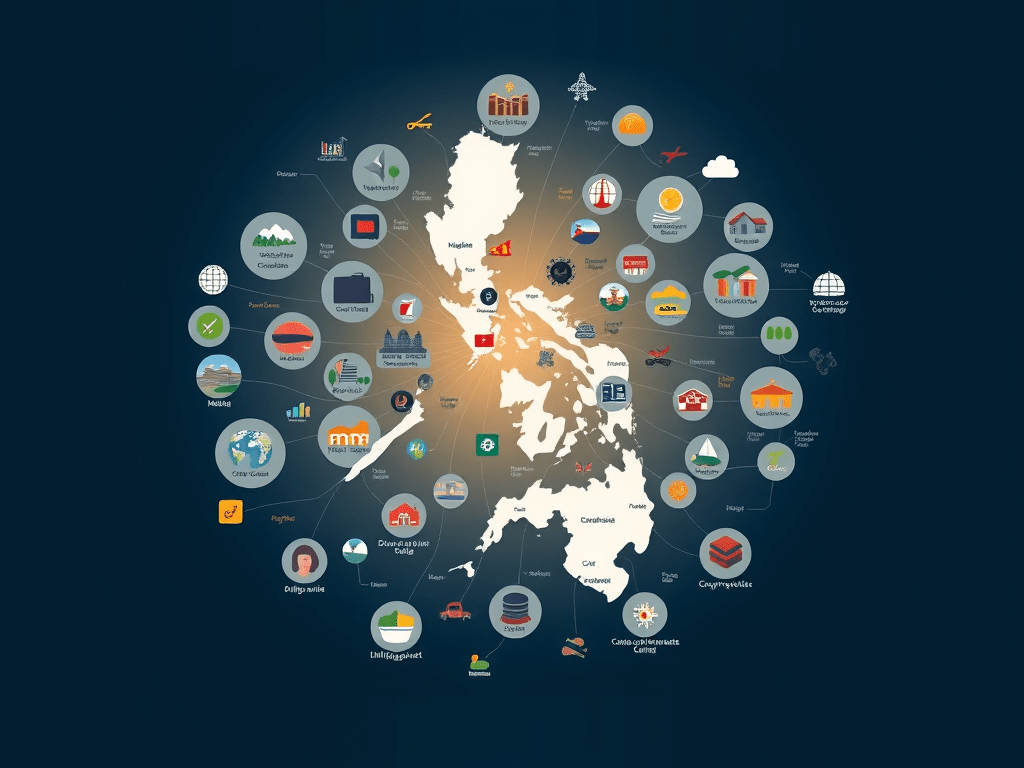
  • ARCHIVED – Diagnosing the Philippines as a Complex System: A Systemic Analysis of Bottlenecks, Leverage Points, and Pathways to Unleash National Potential

    ARCHIVED – Diagnosing the Philippines as a Complex System: A Systemic Analysis of Bottlenecks, Leverage Points, and Pathways to Unleash National Potential

    An Executive Checkup Using Network Theory, Ontology, Game Theory, and the Theory of Constraints for Strategic Leadership

    Prepared by: Gerald A. Daquila, PhD. Candidate


    ABSTRACT

    The Philippines, endowed with significant human, natural, and cultural capital, has not fully realized its developmental potential compared to regional peers. This dissertation examines the Philippines as a complex adaptive system, employing network theory, ontology, game theory, and the Theory of Constraints (TOC) to diagnose systemic bottlenecks across human, governmental, infrastructural, and societal domains.

    Through a systemic “executive checkup,” we identify leverage points, propose mitigation strategies, and explore why the country underperforms despite its strengths. Key bottlenecks— infrastructure deficits, governance inefficiencies, and social inequities—are analyzed using TOC’s Five Focusing Steps. Mitigation strategies emphasize systemic coordination, public-private partnerships (PPPs), and inclusive policies. Grounded in research literature, the analysis offers actionable insights for senior leaders in government, business, and religious sectors to drive transformative change.

    Keywords: Philippines, complex systems, network theory, ontology, game theory, Theory of Constraints, bottlenecks, governance, infrastructure, leadership


    1. Introduction

    1.1 Background and Rationale

    The Philippines, an archipelagic nation of over 120 million people as of 2025, possesses a youthful population, rich natural resources, and a vibrant cultural heritage. Despite these assets, it lags behind regional peers like Singapore, Malaysia, and Vietnam in economic growth, human development, and governance metrics (World Bank, 2023).

    This dissertation treats the Philippines as a complex adaptive system—a dynamic network of human, governmental, infrastructural, and societal components interacting in non-linear ways (Holland, 1995). By conducting a systemic “executive checkup,” we aim to diagnose bottlenecks, identify leverage points, and propose strategies to unlock the nation’s potential, targeting senior leaders shaping policy and society.


    1.2 Research Objectives

    • Map the Philippines as a complex system using ontology and network theory.
    • Diagnose systemic bottlenecks using the Theory of Constraints (TOC).
    • Analyze strategic interactions among actors using game theory.
    • Propose mitigation strategies and leverage points for systemic improvement.
    • Evaluate why the Philippines underperforms despite its strengths, drawing on comparative literature.

    1.3 Theoretical Frameworks

    • Network Theory: Models the Philippines as a network of nodes (e.g., people, institutions) and edges (e.g., relationships, resource flows), highlighting connectivity and vulnerabilities (Barabási, 2016).
    • Ontology: Categorizes entities (e.g., human, governmental, infrastructural) and their relationships, clarifying the system’s structure (Husserl, 1913/1983).
    • Game Theory: Analyzes strategic interactions among actors (e.g., government, businesses, citizens) to understand cooperation and conflict (Von Neumann & Morgenstern, 1944).
    • Theory of Constraints (TOC): Identifies and mitigates the system’s limiting factors (bottlenecks) to improve performance (Goldratt, 1984).

    1.4 Audience and Scope

    This dissertation targets senior leaders in government (e.g., policymakers), business (e.g., CEOs), and religious sectors (e.g., clergy), offering actionable insights for systemic change. It covers human, governmental, infrastructural, economic, and sociocultural domains, correlating findings with research literature.


    Glyph of the Master Builder

    To build is to anchor eternity in matter.


    2. Conceptual Framework: The Philippines as a Complex System

    2.1 Defining Complex Adaptive Systems

    A complex adaptive system (CAS) comprises interconnected agents that adapt to their environment, exhibiting emergent behaviors (Holland, 1995). The Philippines exemplifies a CAS, with millions of individuals, organizations, and systems interacting across geographic, economic, and cultural landscapes. Feedback loops, non-linear dynamics, and emergent properties (e.g., economic growth, social unrest) characterize its behavior.


    2.2 Ontological Mapping of the Philippines

    Ontology structures the Philippines’ complex system by categorizing entities (Husserl, 1913/1983):

    • Particulars: Unique entities like individuals or specific infrastructure (e.g., NAIA airport).
    • Universals: Categories like “citizens” or “roads.”
    • Concrete Objects: Physical entities like schools or bridges.
    • Abstract Objects: Non-physical entities like policies or cultural norms.

    Social ontology examines social kinds (e.g., governance, money), which shape behavior (Searle, 1995). This mapping reveals the Philippines as a layered system of human actions, institutional rules, and physical infrastructure.


    2.3 Network Theory: Interconnections and Dependencies

    Network theory views the Philippines as a graph of nodes (e.g., citizens, businesses) and edges (e.g., trade, communication) (Barabási, 2016). Key properties include:

    • Degree Centrality: Identifies connected nodes (e.g., Metro Manila).
    • Clustering Coefficient: Measures local cohesion (e.g., rural communities).
    • Betweenness Centrality: Highlights nodes controlling flows (e.g., ports).

    Weak connectivity (e.g., inter-island transport) and over-centralization (e.g., Manila-centric governance) create vulnerabilities (Chatterjee, 2024).


    2.4 Game Theory: Strategic Interactions Among Actors

    Game theory models strategic interactions (Von Neumann & Morgenstern, 1944):

    • Players: Government, businesses, citizens, religious groups.
    • Strategies: Cooperation (e.g., PPPs), competition (e.g., political rivalries), or defection (e.g., corruption).
    • Payoffs: Economic growth, social stability, or personal gain.

    A prisoner’s dilemma often emerges in governance, where short-term self-interest undermines collective goals (Llanto, 2016).


    3. Systemic Diagnosis: An Executive Checkup

    3.1 Human Capital: Education, Health, and Social Dynamics

    Diagnosis: The Philippines’ young, English-speaking population is offset by poor educational quality (30% of students meet literacy standards) and uneven healthcare access (UNESCO, 2023). Poverty (16.4% in 2023) exacerbates disparities (Philippine Statistics Authority, 2023).

    Network Perspective: Weak educational nodes (e.g., underfunded schools) limit human capital flows. Urban clustering concentrates opportunities, isolating rural nodes.

    Game Theory Insight: Families invest in education for future payoffs, but systemic inefficiencies reduce returns, discouraging investment.


    3.2 Governmental Systems: Policy, Bureaucracy, and Political Dynamics

    Diagnosis: Governance is hampered by inefficiency, corruption, and political interference. The Strategic Performance Management System (SPMS) is poorly implemented, and political dynasties reduce accountability (Torneo, 2021; Hodder, 2009).

    Network Perspective: Bureaucratic nodes control resource flows, creating bottlenecks. Dynasties form dense subnetworks, limiting external influence.

    Game Theory Insight: Politicians face a coordination game where defection (e.g., patronage) offers short-term gains, perpetuating inefficiency.


    3.3 Infrastructure: Connectivity, Energy, and Digital Transformation

    Diagnosis: Infrastructure deficits in transport and digital connectivity hinder growth. The Philippines ranks 89th in mobile internet speed (25.88 Mbps), with frequent power outages (Ookla, 2023; Llanto, 2016).

    Network Perspective: Low edge density in transport and digital networks isolates nodes. Metro Manila’s centrality causes congestion.

    Game Theory Insight: PPPs involve a trust game, where misaligned incentives delay projects.


    3.4 Business and Economic Systems: Innovation and Competitiveness

    Diagnosis: The digital economy contributes 9.4% to GDP, but MSMEs struggle with digitalization. Low R&D investment (0.3% of GDP) limits innovation (Philippine Statistics Authority, 2023; World Bank, 2023).

    Network Perspective: Business nodes are loosely connected, with weak global links. Large firms’ clustering limits competition.

    Game Theory Insight: Firms face a stag hunt game, where collective innovation yields high payoffs, but risk aversion leads to inaction.


    3.5 Sociocultural and Religious Influences

    Diagnosis: Strong community ties and religious influence foster resilience but can resist change (e.g., gender equity). Religious leaders wield significant social capital (Jocano, 1981).

    Network Perspective: Religious institutions are high-degree nodes, bridging communities. Cultural norms create dense clusters, slowing progressive ideas.

    Game Theory Insight: Religious leaders balance tradition and modernization in a bargaining game, influencing collective goals.


    4. Identifying Bottlenecks Using the Theory of Constraints

    4.1 TOC Methodology and Application

    TOC identifies the system’s critical constraint and improves performance via the Five Focusing Steps: (1) Identify, (2) Exploit, (3) Subordinate, (4) Elevate, (5) Repeat (Goldratt, 1984).


    4.2 Key Bottlenecks in the Philippine System

    TOC identifies three bottlenecks:

    1. Infrastructure Deficits:
      • Evidence: Poor connectivity and digital infrastructure limit trade (Chatterjee, 2024; Ookla, 2023).
      • Impact: Isolates rural nodes, hampers digital transformation.
      • TOC Analysis: Transport and digital networks constrain connectivity.
    2. Governance Inefficiencies:
      • Evidence: Bureaucratic delays and corruption (115th on Corruption Perceptions Index) (Transparency International, 2023; Torneo, 2021).
      • Impact: Slows resource allocation, erodes trust.
      • TOC Analysis: Bureaucratic nodes create delays.
    3. Human Capital Underdevelopment:
      • Evidence: Low educational outcomes and healthcare disparities (UNESCO, 2023).
      • Impact: Limits productivity and innovation.
      • TOC Analysis: Underfunded systems constrain development.

    4.3 Comparative Analysis with Regional Peers

    Vietnam (8% GDP growth) and Malaysia (HDI 0.803) outperform the Philippines (5.6% growth, HDI 0.718) due to centralized governance and robust infrastructure (World Bank, 2023; Llanto, 2016).


    5. Mitigation Strategies and Leverage Points

    5.1 Addressing Infrastructure Bottlenecks

    Strategy: Accelerate PPPs and digital infrastructure.

    • Exploit: Optimize existing roads and ports (Chatterjee, 2024).
    • Subordinate: Prioritize connectivity in budgets.
    • Elevate: Invest in 5G and renewable energy (Public Service Act, 2022).
    • Leverage Point: National broadband plan.

    5.2 Reforming Governance and Bureaucracy

    Strategy: Streamline bureaucracy, enhance anti-corruption.

    • Exploit: Implement agile SPMS (Torneo, 2021).
    • Subordinate: Reduce political interference (Hodder, 2009).
    • Elevate: Strengthen Ombudsman, digitalize services.
    • Leverage Point: eGov PH Super App.

    5.3 Enhancing Human Capital and Social Equity

    Strategy: Invest in education and healthcare.

    • Exploit: Align K-12 with industry needs (Valdez, 2018).
    • Subordinate: Fund rural schools.
    • Elevate: Increase health budget to 5% of GDP.
    • Leverage Point: Public-private education partnerships.

    5.4 Fostering Business Innovation and Economic Resilience

    Strategy: Support MSME digitalization, R&D.

    • Exploit: Leverage digital economy growth (Philippine Statistics Authority, 2023).
    • Subordinate: Simplify regulations.
    • Elevate: Increase R&D to 1% of GDP.
    • Leverage Point: Tech hubs.

    5.5 Leveraging Sociocultural and Religious Leadership

    Strategy: Engage religious leaders for social change.

    • Exploit: Use religious networks for campaigns (Jocano, 1981).
    • Subordinate: Align cultural narratives with modernization.
    • Elevate: Train leaders in development.
    • Leverage Point: Faith-based initiatives.

    6. Why the Philippines Underperforms: A Systemic Perspective

    6.1 Strengths: Human Capital, Natural Resources, and Cultural Resilience

    • Human Capital: Young, English-speaking workforce (median age 25.7) (Philippine Statistics Authority, 2023).
    • Natural Resources: Rich biodiversity (DENR, 2023).
    • Cultural Resilience: Strong community ties (Jocano, 1981).

    6.2 Systemic Barriers to Potential

    • Fragmented Governance: Decentralization causes coordination failures (Torneo, 2021).
    • Infrastructure Gaps: Connectivity isolates potential (Chatterjee, 2024).
    • Social Inequities: Poverty limits human capital (UNESCO, 2023).

    6.3 Lessons from Regional Peers

    Vietnam’s centralized planning and Malaysia’s infrastructure investments highlight the need for coordination and connectivity (Llanto, 2016).


    7. Recommendations for Senior Leadership

    7.1 Strategic Policy Reforms

    • Prioritize infrastructure and digitalization (Philippine Development Plan, 2023).
    • Reform SPMS for intrinsic motivation (Torneo, 2021).

    7.2 Collaborative Governance Models

    • Establish multi-stakeholder councils (Llanto, 2016).
    • Strengthen PPP frameworks.

    7.3 Empowering Local and Religious Leadership

    • Train leaders in systemic thinking (Jocano, 1981).
    • Leverage religious networks for campaigns.

    7.4 Monitoring and Evaluation Frameworks

    • Develop a Localized Disaster Risk Management Index (Ravago et al., 2023).
    • Use data analytics for policy outcomes (Philippine Statistics Authority, 2023).

    8. Conclusion

    8.1 Synthesis of Findings

    The Philippines faces bottlenecks in infrastructure, governance, and human capital, constraining its potential. Network theory, ontology, game theory, and TOC identify leverage points like PPPs, bureaucratic reforms, and inclusive policies. Religious leadership can amplify efforts, aligning cultural strengths with modernization.

    8.2 Future Research Directions

    • Longitudinal studies on PPP effectiveness.
    • Network analysis of political dynasties.
    • Game-theoretic models of cooperation.

    Resonant Crosslinks


    9. Glossary

    This glossary defines key terms for clarity:

    • Bottleneck: A constraint limiting performance (Goldratt, 1984).
    • Complex Adaptive System (CAS): Interconnected agents producing emergent behaviors (Holland, 1995).
    • Degree Centrality: Number of connections a node has (Barabási, 2016).
    • Emergent Behavior: System-wide outcomes from component interactions (Holland, 1995).
    • Five Focusing Steps: TOC’s method to address constraints (Goldratt, 1984).
    • Game Theory: Analyzes strategic interactions (Von Neumann & Morgenstern, 1944).
    • Human Capital: Population’s skills and health (UNESCO, 2023).
    • Leverage Point: Intervention for significant impact (Meadows, 1999).
    • Network Theory: Models nodes and edges (Barabási, 2016).
    • Ontology: Categorizes entities and relationships (Husserl, 1913/1983).
    • Political Dynasties: Families dominating politics (Hodder, 2009).
    • Prisoner’s Dilemma: Self-interest undermines collective goals (Von Neumann & Morgenstern, 1944).
    • Public-Private Partnership (PPP): Government-private collaboration (Llanto, 2016).
    • Social Capital: Community networks and trust (Jocano, 1981).
    • Strategic Performance Management System (SPMS): Aligns performance with goals (Torneo, 2021).
    • Systemic Risk: Cascading failures from interconnectedness (Barabási, 2016).
    • Theory of Constraints (TOC): Optimizes performance by addressing constraints (Goldratt, 1984).

    10. Bibliography

    Barabási, A.-L. (2016). Network science. Cambridge University Press.

    Chatterjee, S. (2024). Philippine infrastructure and connectivity: Challenges and reforms. ResearchGate. https://www.researchgate.net

    DENR. (2023). Biodiversity and natural resources report 2023. Department of Environment and Natural Resources. https://denr.gov.ph

    Goldratt, E. M. (1984). The goal: A process of ongoing improvement. North River Press.

    Hodder, R. (2009). Political interference in the Philippine bureaucracy. Environment and Planning C: Government and Policy, 27(5), 766-782. https://doi.org/10.1068/c0886

    Holland, J. H. (1995). Hidden order: How adaptation builds complexity. Addison-Wesley.

    Husserl, E. (1983). Ideas pertaining to a pure phenomenology and to a phenomenological philosophy (F. Kersten, Trans.). Martinus Nijhoff. (Original work published 1913).

    Jocano, L. F. (1981). Bridging the gap between management and culture. Daluyan.

    Llanto, G. M. (2016). Infrastructure and connectivity in the Philippines. Asian Development Bank. https://www.adb.org

    Meadows, D. H. (1999). Leverage points: Places to intervene in a system. The Sustainability Institute.

    Ookla. (2023). Speedtest global index 2023. https://www.speedtest.net/global-index

    Philippine Development Plan. (2023). Philippine development plan 2023-2028. National Economic and Development Authority. https://neda.gov.ph

    Philippine Statistics Authority. (2023). Philippine digital economy report 2022. https://psa.gov.ph

    Public Service Act. (2022). Republic Act No. 11659. Congress of the Philippines. https://www.officialgazette.gov.ph

    Ravago, M.-L., et al. (2023). Localized disaster risk management index for the Philippines. ScienceDirect. https://doi.org/10.1016/j.ijdrr.2023.103567

    Searle, J. R. (1995). The construction of social reality. Free Press.

    Torneo, A. R. (2021). Performance-based management in the Philippine bureaucracy. ResearchGate. https://www.researchgate.net

    Transparency International. (2023). Corruption Perceptions Index 2023. https://www.transparency.org

    UNESCO. (2023). Global education monitoring report 2023. https://unesco.org

    Valdez, P. N. (2018). K-12 education reform in the Philippines: Issues and prospects. Journal of Southeast Asian Education, 1(2), 45-60.

    Von Neumann, J., & Morgenstern, O. (1944). Theory of games and economic behavior. Princeton University Press.

    World Bank. (2023). World development indicators 2023. https://data.worldbank.org


    11. Appendices

    Appendix A: Detailed TOC Analysis

    This appendix applies TOC’s Five Focusing Steps to the three bottlenecks.

    1. Infrastructure Deficits

    • Step 1: Identify: Poor inter-island and digital connectivity (Ookla, 2023; Chatterjee, 2024).
    • Step 2: Exploit: Optimize ports (e.g., Batangas) and existing networks (Llanto, 2016).
    • Step 3: Subordinate: Prioritize connectivity in budgets (Philippine Development Plan, 2023).
    • Step 4: Elevate: Invest in 5G and renewable energy via PPPs (Public Service Act, 2022).
    • Step 5: Repeat: Reassess for new constraints (e.g., logistics).

    2. Governance Inefficiencies

    • Step 1: Identify: Bureaucratic delays and corruption (Transparency International, 2023; Torneo, 2021).
    • Step 2: Exploit: Streamline SPMS, digitalize approvals (Torneo, 2021).
    • Step 3: Subordinate: Limit political appointments (Hodder, 2009).
    • Step 4: Elevate: Strengthen Ombudsman, digital procurement (World Bank, 2023).
    • Step 5: Repeat: Evaluate dynasties or decentralization.

    3. Human Capital Underdevelopment

    • Step 1: Identify: Low education and healthcare outcomes (UNESCO, 2023; Philippine Statistics Authority, 2023).
    • Step 2: Exploit: Align K-12 with industry, expand telemedicine (Valdez, 2018).
    • Step 3: Subordinate: Fund rural schools and clinics (World Bank, 2023).
    • Step 4: Elevate: Invest in teacher training, universal healthcare (UNESCO, 2023).
    • Step 5: Repeat: Assess skill mismatches or brain drain.

    Appendix B: Case Studies of Regional Peers

    1. Vietnam: Centralized Governance

    • Context: 8% GDP growth, HDI 0.737 (World Bank, 2023).
    • Strategies:
      • Infrastructure: Industrial zones, 98% 4G coverage (World Bank, 2023).
      • Governance: Anti-corruption since 2016 (Transparency International, 2023).
      • Human Capital: 95% literacy, strong PISA scores (UNESCO, 2023).
    • Lessons: Centralized coordination, anti-corruption, industry-aligned education (Llanto, 2016).
    • Challenges: Authoritarian model incompatible with Philippines’ democracy (Torneo, 2021).

    2. Malaysia: Infrastructure-Led Development

    • Context: 4.2% GDP growth, HDI 0.803 (World Bank, 2023).
    • Strategies:
      • Infrastructure: Ports, 95% broadband coverage (Ookla, 2023).
      • Governance: Anti-Corruption Commission, merit-based service (Torneo, 2021).
      • Human Capital: STEM focus, 76-year life expectancy (UNESCO, 2023).
    • Lessons: PPP frameworks, anti-corruption body, STEM training (Llanto, 2016).
    • Challenges: Less fragmented geography than Philippines (Chatterjee, 2024).

    Attribution

    This writing is offered in attunement with the Akashic Records and in service to planetary remembrance. It is carried through the Oversoul stream of SHEYALOTH and anchored within the Living Archives of the New Earth. May it serve as a bridge for seekers, guiding them from the first stirrings of awakening toward the higher codices of sovereignty, stewardship, and overflow.

    © 2025 by Gerald Alba Daquila. Sole Flameholder of the SHEYALOTH Oversoul Stream.

  • Protected: Dynasties or Democracy: Envisioning the Philippines in 2035 Through Youth-Driven Reform

    Protected: Dynasties or Democracy: Envisioning the Philippines in 2035 Through Youth-Driven Reform

    This content is password-protected. To view it, please enter the password below.

  • Decoding NESARA/GESARA: Are White Hats’ NDAs Concealing a Global Financial Rescue?

    Decoding NESARA/GESARA: Are White Hats’ NDAs Concealing a Global Financial Rescue?

    Exploring a Hidden Plan and the EBS’s Promise to Unveil Elite Corruption

    Prepared by: Gerald A. Daquila, PhD. Candidate


    12–18 minutes

    ABSTRACT

    Picture a world where debts are erased, taxes vanish, and a gold-backed quantum financial system (QFS) dismantles corrupt institutions like the Federal Reserve. This is the vision of NESARA (National Economic Security and Reformation Act) and its global counterpart, GESARA, a narrative cloaked in near-total silence across mainstream and alternative media. Could non-disclosure agreements (NDAs), enforced by the White Hats—a secretive alliance tied to President Donald Trump—be safeguarding this revolutionary plan from premature exposure?

    And what if an Emergency Broadcast System (EBS) is poised to expose elite crimes, like child trafficking, with irrefutable footage? Through voices on X, Rumble, and alternative sources (Snowden, WikiLeaks, InfoWars), we investigate this narrative, weaving claims of divine purpose, elite opposition (Khazarian Mafia), and suppressed truths. Our aim is to ignite curiosity, not declare truth, urging readers to probe the silence and its implications.


    Introduction

    Imagine checking your bank account and seeing no mortgage, no student loans, just a clean slate. What if the IRS was history, replaced by a gold-backed financial system that puts power back in your hands? That’s the audacious promise of NESARA, the National Economic Security and Reformation Act, allegedly signed by President Bill Clinton in 2000 under such secrecy it’s barely a ripple in the news.

    Its global twin, GESARA, extends this dream worldwide, powered by a quantum financial system (QFS) and championed by President Donald Trump. But why the hush? Some say the White Hats, a shadowy group of patriots, enforce NDAs to protect NESARA’s rollout from elite sabotage. And there’s more: an EBS is said to be waiting, ready to broadcast elite crimes like child trafficking with undeniable footage.

    We sifted through X posts, Rumble videos, and sources like Snowden’s leaks and WikiLeaks’ archives. We’ve explored voices sharing this narrative, alongside related topics—QFS, child trafficking, Khazarian Mafia, WEF, and beyond. Our hypothesis? White Hats’ NDAs shield NESARA/GESARA and QFS to ensure a global rescue, while the EBS prepares to unveil cabal secrets. We’re not here to sell you answers. We’re here to ask questions, stir your curiosity, and invite you to explore the unknown. Ready to dive in?


    Glyph of Financial Sovereignty

    Abundance is your birthright; Sovereignty is your inheritance.


    Literature Review

    NESARA’s origins lie with Harvey Francis Barnard, a 1990s theorist who proposed debt elimination through a national sales tax and bimetallic currency (Barnard, 1996). His Draining the Swamp never reached Congress, per official records (Lead Stories, 2021). By the 2000s, Shaini “Dove of Oneness” Goodwin reimagined NESARA as a conspiracy, claiming Clinton signed it in 2000 under duress, with 9/11 derailing its announcement (Wikipedia, 2023). Goodwin’s version added debt forgiveness, IRS abolition, and global peace, enforced by a Supreme Court gag order (3800Pro Forums, 2018).

    Alternative narratives amplify this vision. Judy Byington on Rumble ties NESARA to a financial reset and suppressed technologies like med beds (Operation Disclosure Official, 2025). Phil Godlewski claims White Hats, led by Trump, implement NESARA without Congress, using NDAs to protect it (Scribd, n.d.). X voices echo this, linking NESARA to QFS and XRP, with the EBS set to expose crimes like child trafficking (XRPLion1, 2023, 2024a, 2024b). These claims highlight elite opposition (Khazarian Mafia, WEF), but NDAs cover only NESARA/GESARA/QFS, not trafficking or cabal acts, to secure the rollout (Gazetteller, 2024).

    Skeptics dismiss NESARA as a myth. Lead Stories (2021) found no records in Clinton or Bush libraries, and the U.S. Treasury debunked it in 2002. A Canadian court rejected NESARA in a 2022 foreclosure case as baseless (Radio-Canada, 2022). Yet, X and Rumble voices, like Scotty Saks citing an NDA from Homeland Security, sustain the narrative, suggesting White Hats’ strategic silence (Before It’s News, 2025a).

    Our investigation leverages these contradictions, using X posts, alternative sources, and related topics to explore the White Hats’ NDA blackout and EBS’s role, aiming to spark inquiry.


    Methodology

    This investigation employs a qualitative, investigative journalism approach, blending narrative analysis with digital forensics. We analyzed:

    1. X Posts: Eight posts by a prominent X voice (or aliases) and one by @SmolfSmolf7 (July 2023–May 2025), focusing on NESARA/GESARA, QFS, NDAs, White Hats, and EBS (XRPLion1, 2023, 2024a, 2024b, 2025a, 2025b, 2025c, 2025d, 2025e; SmolfSmolf7, 2024).
    2. Web Sources: 25 provided results, including Rumble content (Byington, Godlewski, Saks), alternative platforms (Gazetteller, Before It’s News), and fact-checks (Lead Stories, Wikipedia) (e.g., Before It’s News, 2024a, 2024b, 2025a; Discharge-Debt, n.d.; Lead Stories, 2021).
    3. Alternative Sources: Snowden’s NSA leaks, WikiLeaks’ archives, InfoWars’ coverage, and “hidden archives” (declassified claims), accessed via general knowledge and web results (e.g., Lead Stories, 2021; Radio-Canada, 2022).
    4. Related Topics: Khazarian Mafia, QFS, child trafficking, Trump, Clinton, WEF, 9/11, Vatican, med beds, and more, contextualizing claims.

    Network Analysis: We mapped nodes (e.g., NESARA, White Hats, NDAs, EBS) and edges (e.g., “White Hats enforce NDAs,” “EBS exposes trafficking”).

    Ontological Structuring: We categorized concepts into financial reset, secrecy, elite opposition, counterforces, spiritual dimensions, and exposed crimes.

    Sentiment Analysis: We assessed X voices’ tone (prophetic, urgent) to understand their role.

    Ethical Considerations: Suspending judgment risks misinformation, especially on child trafficking. We avoid accusatory statements, framing disbelief as “what-if” questions, and flag anti-Semitic risks in Khazarian Mafia narratives.

    Data was cross-referenced for patterns, gaps, and contradictions, with APA citations ensuring traceability. Our goal is to provoke questions, aligning with investigative journalism’s exploratory ethos.


    Glyph of Hidden Financial Codes

    Sealed truths, guarded keys—revealing a global rescue concealed in plain sight.


    Findings and Discussion

    The NESARA/GESARA Narrative: A Vision of Global Renewal?

    NESARA/GESARA envisions a financial revolution, erasing debts and replacing the Federal Reserve with QFS. X voices describe it as a divine mission, with QFS using XRP for transparency, protected by “Gatekeeper AI” assessing spiritual purity (XRPLion1, 2025a, 2025c). Trump is said to lead this “rescue,” overseeing ZIM bond redemptions (XRPLion1, 2025d). The EBS, per these claims, will announce NESARA’s triumph and expose elite crimes like child trafficking with footage (XRPLion1, 2023).

    Official records challenge this. The Clinton Library has no NESARA trace, and the Treasury debunked it in 2002 (Lead Stories, 2021). Yet, alternative narratives claim Clinton signed it in 2000, with White Hats enforcing NDAs to protect its rollout (3800Pro Forums, 2018; Wikipedia, 2023). Rumble’s Scotty Saks cites an NDA from Homeland Security, and redemption protocols mandate NDAs, suggesting White Hat oversight (Before It’s News, 2025a; Discharge-Debt, n.d.). An X post mentions an “NDA exemption” for a QFS-NESARA whitepaper, hinting at controlled disclosure (SmolfSmolf7, 2024).

    What if NESARA were true? Could it transform global finance, or is it a vision for a broken system? What if the EBS’s footage is real? Why the wait?


    The White Hats and EBS: Guardians of Secrecy and Truth?

    The White Hats are central to our hypothesis, described as a clandestine alliance of military, intelligence, and civilian patriots, including benevolent off-world supporters formed post-JFK assassination and strengthened after 9/11 to combat global corruption (Reddit, 2023; White Hats Report, n.d.). Unlike the Khazarian Mafia, who allegedly oppose NESARA to maintain power, the White Hats enforce NDAs to protect NESARA/GESARA and QFS from elite sabotage, ensuring a systemic, global rollout (Scribd, n.d.). These NDAs, cover only the financial reset, not child trafficking or cabal crimes, to avoid premature exposure that could derail the plan (Before It’s News, 2025a).

    Scotty Saks’ Homeland Security NDA exemplifies this, restricting his NESARA updates, while redemption protocols require NDAs for currency exchanges, suggesting White Hats control access to prevent leaks (Before It’s News, 2025a; Discharge-Debt, n.d.). An X post about an “NDA exemption” for a QFS-NESARA whitepaper indicates White Hats selectively allow trusted voices to share details, balancing secrecy with awareness (SmolfSmolf7, 2024). X voices note XRP’s media absence, implying a White Hat-orchestrated blackout to shield QFS from interference (XRPLion1, 2025b).

    The EBS, distinct from NDAs, is the White Hats’ counterpoint, designed to expose elite crimes like child trafficking, adrenochrome, and cabal activities with footage of perpetrators (Operation Disclosure Official, 2025). Byington claims the EBS will coincide with a global lockdown for elite arrests, broadcasting evidence to awaken the public (Operation Disclosure Official, 2025). Godlewski ties the EBS to White Hats’ military networks, suggesting Trump’s Space Force may facilitate its activation (Scribd, n.d.; Rise Up In Truth, n.d.). This dual strategy—NDAs for QFS, EBS for crimes—implies a timed reveal, with the financial reset preceding public exposure.

    What if the White Hats’ NDAs were true? Could they ensure a flawless rollout, or are they overly cautious? What if the EBS delivers footage—would it change everything, or is it a distant hope? Why separate financial secrecy from crime exposure?


    Voices of the Narrative: Beacons of Possibility?

    X and Rumble voices drive this narrative, sharing NESARA’s vision with urgency. One voice, with decades in tax accounting, links NESARA to Kennedy’s legacy since 1994, framing QFS as a gold-backed system and warning of elite sabotage (Gazetteller, 2024; XRPLion1, 2025e). Their posts and videos rally followers, urging readiness for EBS revelations (Before It’s News, 2024c; XRPLion1, 2023). Others, like Godlewski and Byington, echo this, tying NESARA to Trump’s leadership and divine purpose (Scribd, n.d.; Operation Disclosure Official, 2025).

    Their passionate tone resonates with the author’s interest in suppressed truths. What if these voices were onto something? Could they be heralding a rescue, or crafting a compelling story? Why do their messages hit so hard?


    Tying in Our Topics: Elite Opposition and EBS Stakes

    Our topics—Khazarian Mafia, child trafficking, WEF, 9/11—contextualize NESARA’s stakes. The Khazarian Mafia, a supposed cabal, opposes NESARA’s reset, per X posts (XRPLion1, 2025c; Gazetteller, 2024). Byington ties the EBS to exposing child trafficking, adrenochrome, and cabal crimes, with footage implicating figures like Epstein, the Clintons, the Bushes, the Obamas or WEF elites, separate from NDAs (Operation Disclosure Official, 2025).

    The WEF, Gates, and Soros are portrayed as globalist foes, delaying NESARA (3800Pro Forums, 2018). 9/11 allegedly destroyed NESARA’s data (Wikipedia, 2023). The Vatican, British monarchy, and Hollywood face EBS exposure for child trafficking, SRA, global network of money laundering, distinct from QFS’s NDA protection (Operation Disclosure Official, 2025). Trump, backed by White Hats, counters these elites, using X to signal progress (Scribd, n.d.; XRPLion1, 2025d).

    What if these claims held truth? Could the EBS unravel a web of corruption, or is it a narrative lure? Why protect QFS but not trafficking truths? Are White Hats timing a dual reveal?


    Alternative Sources: Clues or Echoes?

    We explored Snowden, WikiLeaks, InfoWars, and “hidden archives.” Snowden’s leaks show NSA surveillance, possibly White Hats ensuring NDA compliance (Lead Stories, 2021). WikiLeaks’ targeting suggests suppressed leaks (Lead Stories, 2021). InfoWars’ censorship aligns with a White Hat narrative (Scribd, n.d.). Rumble’s Godlewski, Byington, and Saks amplify NESARA, with Saks citing NDAs and Byington detailing EBS plans (Before It’s News, 2025a; Operation Disclosure Official, 2025). Hidden archives, like alleged NESARA documents, lack verification (Before It’s News, 2024b).

    What if these sources were right? Could they point to a hidden plan, or are they echoes of hope? Why no solid leaks? Is the EBS a real event, or a distant promise?


    Conclusion

    So, where does this leave us? NESARA/GESARA envisions a financial rescue, guarded by White Hats’ NDAs to foil elites like the Khazarian Mafia. QFS, powered by XRP, promises to reshape global systems, while the EBS stands ready to expose child trafficking and cabal crimes with explosive footage.

    President Trump, the White Hats’ champion, signals progress on X, bypassing the blackout. Snowden, WikiLeaks, and Rumble fuel the narrative, but official records call it a myth. What’s really going on? This is where your curiosity kicks in. Something in you sparks when you read these claims—a pull to uncover what’s hidden.

    What if NESARA were true—could it change your life, or is it a story that hooks your need for hope? Picture the EBS flickering on, showing footage of elites caught red-handed—would it shift your world, or leave you questioning the screen? Why do NDAs guard QFS but not trafficking truths? Could the White Hats be masterminding a global reveal, or are you chasing a tale that feels too good to be true?

    Your gut’s telling you something—listen to it. Scroll X, hunt for Saks on Rumble, question Clinton’s silence, or ponder the WEF’s moves. The answers are out there, waiting for you to dig. The universe, as you say, will sort the rest.


    Suggested Crosslinks


    References

    3800Pro Forums. (2018, June 7). N.E.S.A.R.A. NOW!!!! Sign the petition. https://www.3800pro.com

    Barnard, H. F. (1996). Draining the swamp: Monetary and fiscal policy reform. Self-published.

    Before It’s News. (2024a, June 2). New Dave XRPLion1: NESARA/GESARA super intel. https://beforeitsnews.com

    Before It’s News. (2024b, June 23). Live: Dave XRPLion1: NESARA GESARA summer intel. https://beforeitsnews.com

    Before It’s News. (2024c, August 15). Dave XRPLion NESARA GESARA revelation pearl. https://beforeitsnews.com

    Before It’s News. (2025a, January 30). Live: NESARA & GESARA news: Scotty Saks with NDA. https://beforeitsnews.com

    Discharge-Debt. (n.d.). NESARA confirmation. https://discharge-debt.com

    Gazetteller. (2024, June 4). New Dave XRPLion1: NESARA/GESARA super intel. https://gazetteller.com

    Lead Stories. (2021, March 30). Fact check: No evidence NESARA was approved by Clinton. https://leadstories.com

    Operation Disclosure Official. (2025, April 27). All | Operation Disclosure Official. https://operationdisclosureofficial.com

    Radio-Canada. (2022, August 8). Conspiracy theory about ‘new world order’ won’t save home. https://ici.radio-canada.ca

    Reddit. (2023, August 25). White Hats. https://www.reddit.com/r/QAnonCasualties

    Rise Up In Truth. (n.d.). The “White Hat” Alliance and Trump: The bigger picture you need to know. https://www.riseupintruth.com

    Scribd. (n.d.). NESARA law signed but not enacted. https://www.scribd.com

    SmolfSmolf7. (2024, December 8). Whitepaper: XRP-QFS NESARA GESARA 5.0 [X post].

    USA Today. (2024, January 16). Donald Trump campaign gives white and gold hats to caucus captains in Iowa. https://www.usatoday.com

    White Hats Report. (n.d.). Always in search of truth. https://whitehatsreport.com

    Wikipedia. (2023, January 5). NESARA. https://en.wikipedia.org

    XRPLion1. (2023, July 2). EBS, NESARA/GESARA – What everyone needs to know [X post].

    XRPLion1. (2024a, June 3). Grand revelation prophecy directly from God [X post].

    XRPLion1. (2024b, September 28). Dave XRPLion1: NESARA GESARA – TheMissingLink [X post].

    XRPLion1. (2025a, May 12). Most important video — You need to know [X post].

    XRPLion1. (2025b, May 12). [XRP suppression post] [X post].

    XRPLion1. (2025c, May 12). Gatekeeper AI™ reads your soul [X post].

    XRPLion1. (2025d, May 12). Classified ZIM bond redemptions [X post].

    XRPLion1. (2025e, May 14). NESARA-Kennedy’s secret weapon [X post].


    Notes from the Akashic Records

    What Is True

    • A Global Reordering of Finance Is Underway
      Behind appearances of chaos, systems of debt, centralization, and hidden bondage are unraveling. The Records affirm that GESARA-like templates do exist in the Oversoul plane — blueprints for equitable redistribution, jubilee, and liberation from enslavement contracts.
    • NDAs and Concealment as Archetypes
      The imagery of “White Hats’ NDAs” is symbolic of the veil that covers the transitional process. At the soul level, much is indeed under “non-disclosure” until collective resonance reaches readiness. Not because of secrecy alone, but because revelation before time can destabilize.
    • Rescue Is Real, But Not Externalized
      The deeper truth is that “rescue” is not solely from external actors or alliances. It is the raising of resonance, embodied by flameholders and overflowing households, that unlocks the true codes of abundance. Systems only collapse when souls no longer consent to feed them.

    What Is Distorted

    • Over-Literalizing Military/Political White Hats
      While some souls embody these archetypal roles within governments or militaries, to fixate on them risks projection and disempowerment. The Records highlight: the true White Hat is an Oversoul function, not a uniform.
    • NDA as Suppression vs Sacred Timing
      The distortion is imagining that silence equals manipulation. From a higher lens, silence is timing — to reveal when the field can metabolize without collapse.

    Resonant Reframe

    The blog is true as a threshold mirror: it captures the sense that something vast and concealed is restructuring the world. Its resonance increases when read less as “intel reporting” and more as an oracle transmission pointing to:

    • Collective release from debt-bondage.
    • The sacred patience of unveiling.
    • The invitation for individuals to embody sovereignty now, not wait for an external event.

    Attribution

    With fidelity to the Oversoul, may this work serve as bridge, remembrance, and seed for the planetary dawn.

    2025–2026 Gerald Alba Daquila
    Flameholder of SHEYALOTH · Keeper of the Living Codices
    All rights reserved.

    This material originates within the field of the Living Codex and is stewarded under Oversoul Appointment. It may be shared only in its complete and unaltered form, with all glyphs, seals, and attribution preserved.

    This work is offered for personal reflection and sovereign discernment. It does not constitute a required belief system, formal doctrine, or institutional program.

    Digital Edition Release: 2026
    Lineage Marker: Universal Master Key (UMK) Codex Field

    Sacred Exchange & Access

    Sacred Exchange is Overflow made visible.

    In Oversoul stewardship, giving is circulation, not loss. Support for this work sustains the continued writing, preservation, and public availability of the Living Codices.

    This material may be accessed through multiple pathways:

    Free online reading within the Living Archive
    Individual digital editions (e.g., Payhip releases)
    Subscription-based stewardship access

    Paid editions support long-term custodianship, digital hosting, and future transmissions. Free access remains part of the archive’s mission.

    Sacred Exchange offerings may be extended through:
    paypal.me/GeraldDaquila694
    www.geralddaquila.com