

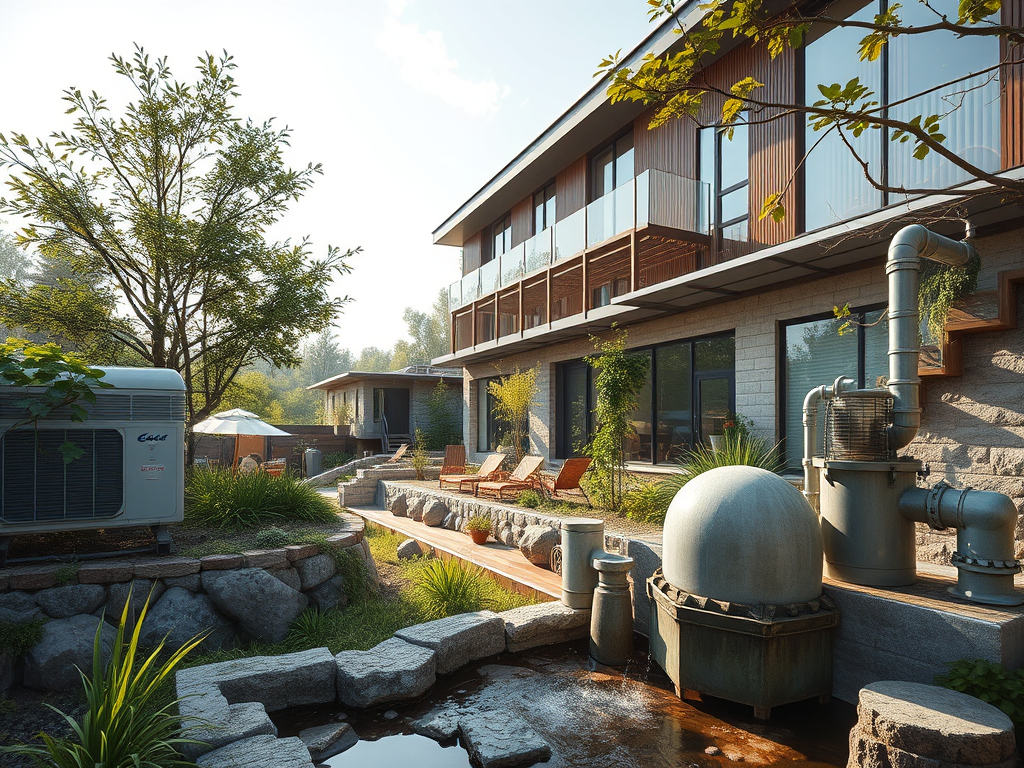
Focus: Water sovereignty, waste cycles, spatial design
Volume II extends Applied Stewardship beyond food systems into water infrastructure, waste management, and built environment design.
These manuals focus on resource cycles, spatial psychology, and structural resilience necessary for sustainable community development.
This volume addresses the physical systems that stabilize long-term habitation.
What This Volume Contains
4. Greywater & Brownwater Recycling Systems
- Gravity-fed greywater models
- Filtration layer construction
- Reed bed biological systems
- Code compliance considerations
- Health and safety protocols
5. Rainwater Harvesting & Storage
- Catchment calculations
- First-flush diverter systems
- Storage tank sizing
- Redundancy planning
- Drought resilience modeling
6. Healing & Community Space Design
- Passive cooling principles
- Natural light psychology
- Circular vs axial layouts
- Trauma-informed spatial design
- Acoustic containment
- Flow and congregation dynamics
Who This Is For
- Sustainable community designers
- Eco-village planners
- Retreat center builders
- Regenerative architects
- Infrastructure-oriented stewards
Design Standard
Each guide includes:
- Systems diagrams
- Implementation phases
- Cost tier comparisons
- Legal & environmental compliance notes
- Critical failure variables
- Glossary
- Research citations
Structural Position Within the Archive
Volume II anchors:
- Water sovereignty
- Waste circularity
- Structural resilience
- Psychologically coherent built space
It forms the infrastructural stabilization layer of Applied Stewardship.
Applied Stewardship Field Guides
Research-backed regenerative infrastructure design
© 2026 Gerald Alba Daquila
Educational materials. Consult local codes and professionals before implementation.
 Life.Understood.