
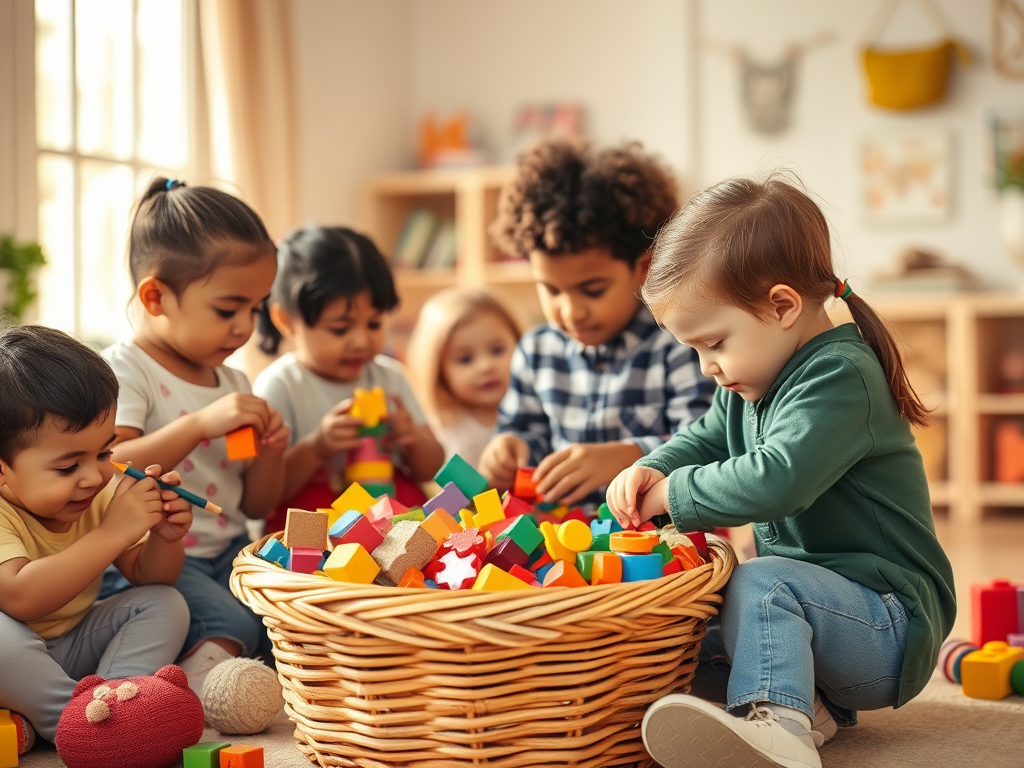
Imagine a group of children in a room with a big basket of toys.
At first, everyone is playing happily. Someone builds with blocks. Someone draws. Someone shares a puzzle.
Then one child suddenly worries:
“What if there aren’t enough toys?”
So they grab a pile and hold it close.
Another child sees this and thinks,
“Oh no — I better grab mine too.”
Soon, everyone is holding toys tightly. No one is really playing anymore. They’re just guarding.
Nothing actually changed about the number of toys in the room.
But the story in their heads changed:
“Maybe there isn’t enough.”
“Maybe I’m on my own.”
“Maybe I have to compete.”
That story creates a different kind of world.
Two Stories Humans Can Live By
As humans, we grow up inside stories about how life works. Most of us never realize they are stories — they feel like reality itself.
Here are two very different ones.
The Separation Story
This story says:
“I am on my own.”
“There isn’t enough for everyone.”
“If you get more, I get less.”
“I have to protect what’s mine.”
When people believe this, certain behaviors make sense:
Competing
Hoarding
Trying to get ahead
Being suspicious of others
Measuring worth by winning
From inside this story, it seems logical. Even necessary.
The Connection Story
This story says:
“We are connected.”
“What happens to you affects me.”
“There can be enough when we care for things wisely.”
“We can do better together than alone.”
From this story, different behaviors make sense:
Sharing
Cooperating
Taking care of the land and each other
Thinking long-term
Valuing fairness, not just advantage
Same humans. Different story. Very different world.
How the Separation Story Took Over
A long time ago, life for humans was often dangerous and uncertain. Food could run out. Weather could destroy homes. Other groups could attack.
In those conditions, thinking
“Me and my family first”
helped people survive.
Over time, this survival way of thinking got built into our systems:
Our economies
Our schools
Our workplaces
Even our ideas about success
We learned to compete for grades, jobs, money, status, attention.
The separation story became normal.
Not because humans are bad.
But because an old survival pattern became the foundation for a whole society.
What Separation Looks Like in Everyday Life
You can see the separation story at work in small, ordinary ways:
A child feels they must be the best in class to be worthy.
An adult works until exhaustion, afraid to fall behind.
Companies take more from the Earth than can be replaced.
People compare their lives constantly and feel they are not enough.
Underneath all of this is the same quiet belief:
“There isn’t enough. I have to secure my place.”
This creates a world of stress, competition, and constant pressure.
What Connection Changes
Now imagine those children in the room again.
This time, someone says,
“There are lots of toys. We can take turns. If we share, we can all play longer.”
Suddenly, the room feels different.
No one has to guard.
No one has to prove they deserve a toy.
Energy goes back into playing, building, creating.
When humans remember connection, life doesn’t become perfect overnight. But the direction changes.
Instead of asking,
“How do I get more than you?”
we begin asking,
“How do we make this work for everyone?”
Instead of extracting as much as possible, we think about how to care for what we depend on.
Seeing Without Blaming
It’s important to understand:
People living from the separation story are not villains. They are often scared, pressured, or simply repeating what they were taught.
Just like children grabbing toys when they worry there isn’t enough.
When we see this clearly, we don’t need an “us versus them.”
We can say,
“Ah. This is the story we’ve been living inside.”
And we can also ask,
“Is there another way we want to try now?”
A Quiet Invitation
You don’t have to change the whole world to begin.
You can notice:
Where do I act from fear there won’t be enough?
Where do I forget that my well-being is tied to others’?
Where do I treat life like a competition instead of a relationship?
Every small moment of sharing, caring, and cooperation is like one child loosening their grip on the toys.
It doesn’t force others.
It just makes another way visible.
And sometimes, that’s how a new story begins.
About the author
Gerry explores themes of change, emotional awareness, and inner coherence through reflective writing. His work is shaped by lived experience during times of transition and is offered as an invitation to pause, notice, and reflect.
If you’re curious about the broader personal and spiritual context behind these reflections, you can read a longer note here.
 Life.Understood.
What stirred your remembrance? Share your reflection below—we’re weaving the New Earth together, one soul voice at a time.